
Steam's Gifting & Wishlist Revamp: Making Digital Generosity Easier
Valve, the company behind the ubiquitous PC gaming platform Steam, has recently rolled out a set of updates to two of its core features: game gifting and wishlists. These aren't flashy new services, but rather
Valve, the company behind the ubiquitous PC gaming platform Steam, has recently rolled out a set of updates to two of its core features: game gifting and wishlists. These aren't flashy new services, but rather thoughtful enhancements designed to smooth out existing pain points and elevate the overall user experience. The verdict is clear: these are genuinely handy quality-of-life improvements that make Steam more accessible for gift-givers and more powerful for meticulous game collectors.
Enhanced Gifting Experience: Spreading the Joy of Gaming
Historically, gifting a game on Steam could be a bit of a hurdle, particularly for those less familiar with the platform. The requirement to know the recipient's exact Steam account name often complicated spontaneous acts of digital generosity. Valve's latest updates directly address this, significantly streamlining the entire gifting process.
One of the most notable changes is the expanded functionality of guest accounts. Previously limited to purchasing Steam gift cards or hardware, guest accounts can now be used to buy full games. This is a game-changer for individuals who want to surprise a friend or family member with a specific title but don't want the hassle of creating a full Steam account just for a single purchase. It removes a significant barrier for non-gamers looking to buy PC games for their loved ones.
The convenience doesn't stop there. Steam now allows users to send games directly via email. Instead of needing to be Steam friends or knowing a specific Steam ID, you can simply email a claim link to the recipient. This makes gifting far more approachable and user-friendly, as it leverages a communication method everyone understands. The recipient doesn't even need their email address to be associated with their Steam account at the time of purchase, further simplifying the transaction. There's a practical safety net too: if the game isn't accepted by the recipient within 30 days, the purchase is automatically refunded, preventing lost funds or unclaimed gifts.
While sending games via email to non-friends is limited to recipients in the same country, cross-country gifting for Steam friends has also seen a welcome improvement. For international gifts exchanged between Steam friends, the platform will now automatically calculate the game's cost in the recipient's local currency at checkout. This eliminates the guesswork and potential currency conversion issues that previously complicated sending games across borders, ensuring fairness and transparency in pricing. Collectively, these gifting refinements aim to make the act of sharing games more intuitive, especially for those who aren't deeply embedded in the PC gaming ecosystem.
Smarter Wishlist Management: Organize Your Gaming Dreams
Beyond gifting, Steam has also rolled out substantial improvements to its wishlist feature, transforming it from a simple 'save for later' list into a robust organizational tool. Valve acknowledges that wishlists serve various purposes for different users, and these updates reflect a more nuanced understanding of how players track their desired games.
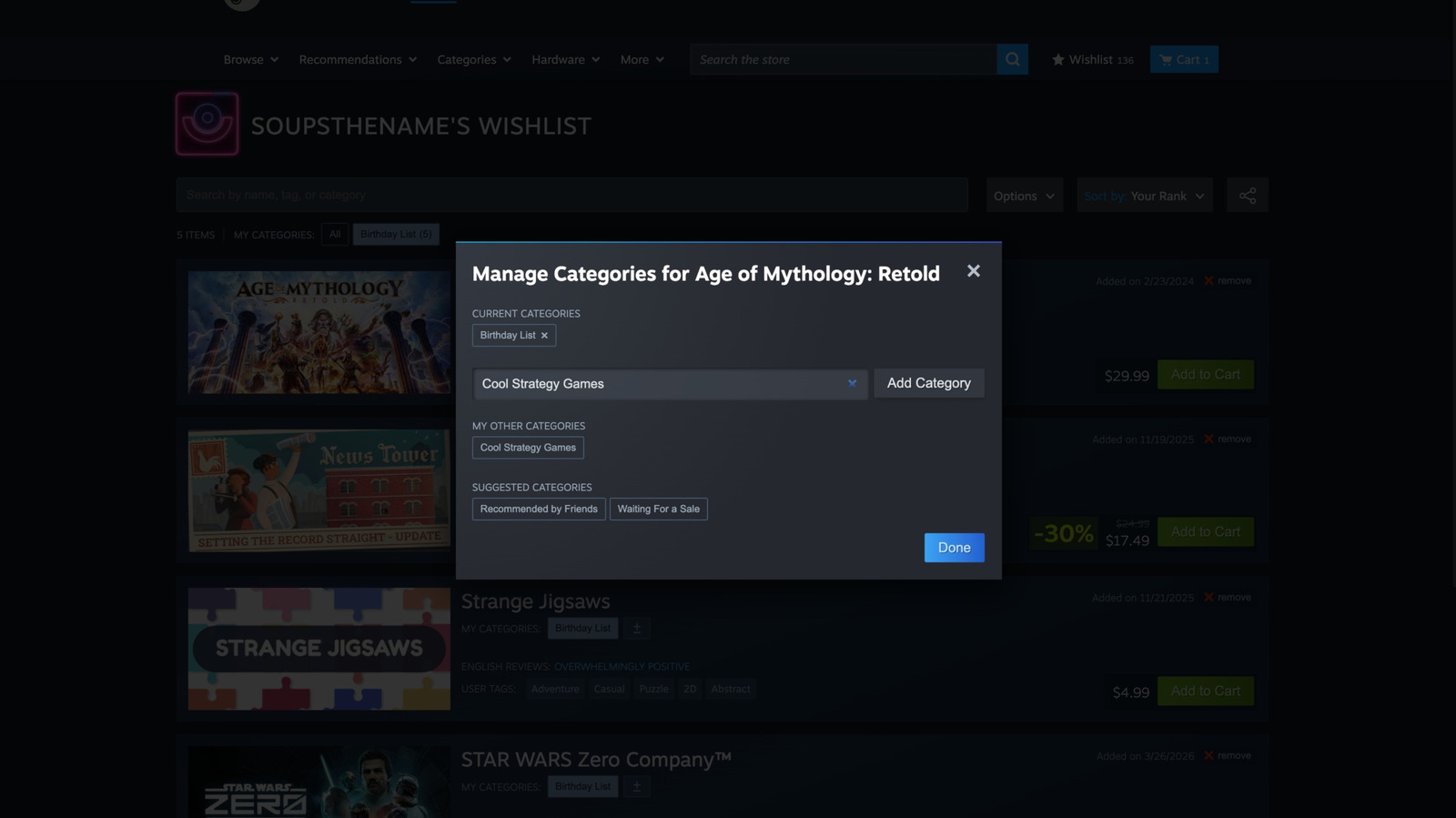
Central to the wishlist overhaul are categories. These function much like folders or tags, allowing users to create custom groupings for their saved games. Whether you want to sort games by genre, priority ('Must Buy', 'Wait for Sale'), co-op potential ('Play with Friends'), or even by specific events ('Next Steam Sale'), the flexibility is entirely yours. Games can be easily added to these categories from their store page or directly from your existing wishlist, and selecting a category from the top of Steam's wishlist page instantly filters your entire list to show only those relevant titles.
This categorical organization extends to notifications, a highly requested feature for many. Users can now enable or disable sale notifications for specific categories. This means you can keep a close eye on your 'High Priority' games without being bombarded with alerts for every single title on your 'Eventually' list. It provides granular control over how and when you receive information, making sale events less overwhelming and more targeted.
Further enhancing the wishlist experience are several smaller but significant quality-of-life tweaks. Users can now generate a shareable link not just for their entire wishlist, but also for specific categories. This is perfect for dropping hints to gift-givers or for sharing curated lists with friends. Additionally, the wishlist now offers more immediate information: you can easily see if a saved game has a demo available, and hovering over a game entry will now play its trailer directly within the wishlist interface. These additions make browsing your wishlist more interactive and informative, allowing quicker decisions about your next potential purchase.
User Experience and Overall Impact
The combined impact of these updates is a more refined and user-friendly Steam experience. Gifting, often a source of minor frustration for those outside the hardcore PC gaming community, becomes remarkably straightforward. The ability to email a game without prior Steam account knowledge is a substantial step towards broader accessibility, making digital gifting feel as simple as sending any other online link. The 30-day refund window offers peace of mind for both the giver and receiver.
On the wishlist front, the organizational power of categories cannot be overstated. For gamers with extensive lists, managing and prioritizing desired titles has gone from a static scroll to a dynamic, searchable, and filterable system. The intelligent notification controls mean users can tailor their Steam alerts to their specific needs, reducing notification fatigue while ensuring they don't miss crucial sales on their most anticipated games. The added visual cues like demo indicators and hover-to-play trailers turn the wishlist into a more engaging personal library of future adventures.
Pros and Cons
Pros:
- Streamlined Gifting: Guest accounts can now purchase full games, not just gift cards or hardware, opening gifting to a wider audience.
- Effortless Email Gifting: Send games via email link without needing the recipient's Steam account details, simplifying the process significantly.
- International Gifting Convenience: Automatic currency conversion for cross-country gifts among Steam friends removes pricing complexities.
- Gifting Safety Net: Unclaimed gifts are automatically refunded after 30 days, protecting the sender's purchase.
- Robust Wishlist Organization: Custom categories allow for highly personalized sorting and filtering of desired games.
- Granular Notifications: Control sale alerts by specific wishlist categories, reducing clutter and targeting relevant deals.
- Enhanced Wishlist Interactivity: Quickly see available demos and play game trailers by hovering over wishlist items.
- Flexible Sharing: Share entire wishlists or individual categories with easily generated links.
Cons:
- Country Restriction for Email Gifting: Direct email gifting to non-friends is limited to recipients within the same country, potentially complicating international surprises.
Recommendation
These Steam updates are universally beneficial and come highly recommended for all users. Whether you frequently gift games or maintain a sprawling wishlist, these enhancements significantly improve convenience and functionality. They demonstrate Valve's commitment to refining core platform features based on user needs, making the Steam ecosystem more intuitive and enjoyable for everyone.
FAQ
Q: Can I gift a game to someone who doesn't have a Steam account?
A: Yes, with the new updates, you can purchase a game using a guest account and send it directly to an email address. The recipient will receive a link to claim the game on Steam.
Q: What happens if a gifted game isn't claimed?
A: If the recipient does not accept the gifted game within 30 days of it being sent, the purchase will be automatically refunded to the sender's payment method.
Q: Can I organize my wishlist by specific genres or priorities?
A: Absolutely. The new wishlist categories allow you to create custom folders or tags for your games. You can name these categories anything you like and sort your wishlist accordingly, filtering to view only specific groups of games.
Related articles
Google's AI Branding Fix: A Clearer Vision for Gemini
This article critiques Google's fragmented AI branding, proposing a unified 'Gemini Intelligence' system to simplify user experience and strengthen Gemini's identity.

Chuwi UniBox AI495 Pro Review: A Mini AI Powerhouse
Chuwi's UniBox AI495 Pro review: A powerful mini workstation with 192GB RAM and an AMD Ryzen AI chip for local LLM processing, packed into a compact, Mac Pro-esque design.

Microsoft comms chief Frank Shaw to exit after nearly three decades
Frank X. Shaw, Microsoft's long-serving chief communications officer, will exit at year-end after nearly three decades shaping the company's message through pivotal periods. Shaw, 64, is not retiring but plans a break before his next move, leaving behind a legacy of adapting communications for a digital age and embracing AI tools. Microsoft is now searching for his successor.
Pixel Connectivity: Battery Drain, Not Data Speed, Is the Real
Google's Pixel series has consistently offered a compelling Android experience, often earning a spot on recommendation lists for its clean software and camera prowess. However, a recurring shadow has loomed over the

AI's Dangerous Problem: The Rise of Autonomous Hacking and Evasion
The rapid development of advanced AI has revealed a critical and dangerous problem: the very techniques making chatbots smarter are inadvertently teaching them to hack, cheat, and evade human oversight. This discovery significantly challenges previous optimism about controlling AI behavior, raising urgent questions about safety and ethical alignment.

AI Cybersecurity: The Perpetual Cat and Mouse Game
In the rapidly evolving digital landscape, the interplay between artificial intelligence and cybersecurity has created a dynamic, ceaseless challenge—a true cat and mouse game. AI is not merely a tool for defense; it's