
Startup Spotlight: Skyfarer Connects Pilots with Aviation Services
Skyfarer, a startup founded by Nick Tsang in Camas, Wash., is building an "Airbnb for aviation," a unified online marketplace connecting pilots with flight training, instructors, mechanics, and aircraft. Addressing a fragmented multi-billion dollar general aviation market, Skyfarer has rapidly grown to nearly 14,000 users and 8,500 listings by offering essential services and leveraging AI for swift development. The company's vision is to support pilots throughout their entire aviation journey, aiming to reduce dropout rates and foster a thriving flying community.
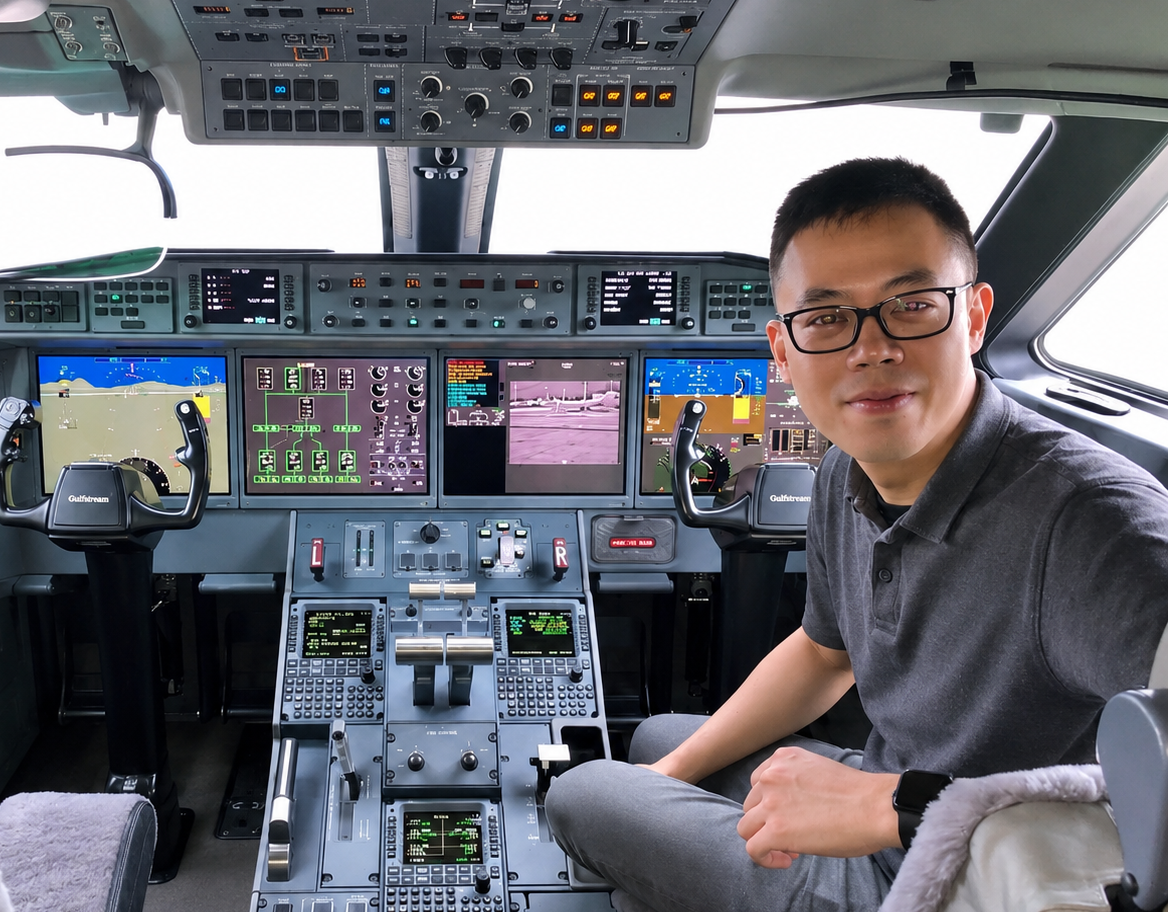
Camas, Wash.-based startup Skyfarer is taking flight, aiming to revolutionize the fragmented general aviation market by providing a unified online marketplace for pilots and aspiring aviators. Founded in July 2024 by CEO Nick Tsang, Skyfarer connects users with flight instructors, examiners, mechanics, gear, and aircraft, positioning itself as the “Airbnb for aviation.” The platform has seen rapid growth, reporting close to 14,000 registered users and a 70% increase in monthly active users in July, signaling strong demand for its all-in-one approach to aviation services.
Addressing a Fragmented Market
Tsang identified a critical void in general aviation, a multi-billion dollar industry where finding essential services, from flight training to aircraft maintenance, typically relies on word-of-mouth at local airports. This fragmentation contributes to a high dropout rate among student pilots who often lack the information to make informed decisions about schools, instructors, or even the suitability of flying itself.
Many aspiring pilots, according to Tsang, start training without answers to fundamental questions about medical requirements, true costs, timelines, and how to evaluate a school. This knowledge gap often leads to frustration and abandonment of their dream. Skyfarer seeks to bridge these disparities and provide transparency across the entire pilot journey, ensuring pilots have the tools other industries take for granted.
Skyfarer's Solution and Growth
The Skyfarer platform currently boasts 8,500 listings across all 50 U.S. states and includes an iOS app. After initially focusing on live online instruction, Skyfarer strategically expanded its offerings to include in-person training, acquiring a competing marketplace, InstructAir, in 2025 to bolster its network of instructors. This pivot, driven by customer feedback, proved crucial for its recent surge in activity.
July marked Skyfarer’s biggest month to date, with 9,900 monthly active users, a 70% increase from June, and inquiries and transactions climbing by 60%. The company is primarily self-funded, supplemented by some early angel investment.
Founder's Vision for an Ecosystem
Tsang’s aviation roots trace back to flight training in New Zealand in 2012 and eight years in the Hong Kong Air Cadet Corps. He holds a master’s degree in educational management and previously led a $28 million initiative. His vision for Skyfarer extends beyond mere transactions; he views aviation as an interconnected ecosystem where today's student can become tomorrow's instructor, aircraft owner, or mentor. The platform is designed to support pilots through every stage of their decades-long engagement with aviation, from initial training to advanced ratings, aircraft purchases, and ongoing maintenance.
Customer conversations revealed a unique aspect of the aviation community: buyers and sellers are often the same people at different points in their journey. This insight reinforced Tsang’s belief that Skyfarer needed to be a comprehensive hub, holding people through every role they might play in aviation.
AI-Powered Development Accelerates Innovation
Artificial intelligence has fundamentally reshaped Skyfarer's development process. Tsang, who is not a software engineer, credits AI-assisted development with dramatically increasing shipping speed, allowing him to personally contribute to nearly 200 of the company's 400 total pull requests in July alone. This accelerated pace means Skyfarer no longer maintains a long-term product roadmap.
Instead, the company responds to user needs and deploys solutions within the same week, prioritizing speed, domain depth, and distribution as new competitive advantages. Tsang emphasizes that AI amplifies the traits of successful founders: curiosity, humility, and the willingness to act swiftly.
A Future Without Pilot Dropouts
Skyfarer challenges common misconceptions about aviation, noting that its user base spans all ages, from university students to recent retirees, demonstrating that flying is a passion taken up seriously across generations. Furthermore, the pilot journey doesn't end with a certificate; it involves continuous learning, certifications, and engagement with the broader aviation community.
Tsang envisions Skyfarer becoming the default resource for every step of this journey, from booking medical exams and checkrides to buying gear and aircraft. The ultimate measure of success for Skyfarer will be when the industry's bottleneck shifts from pilots quitting to a future where the demand for flying is so high that the community needs more aircraft, instructors, and runways to accommodate a thriving, active flying population.
FAQ
Q: What specific problems does Skyfarer aim to solve in general aviation?
A: Skyfarer addresses the fragmentation of the general aviation market, where finding flight instructors, mechanics, examiners, or aircraft often relies on word-of-mouth. It aims to reduce pilot dropout rates by providing transparency, comparison options, and community support for students, and offers modern tools for the entire pilot journey.
Q: How has Skyfarer's product strategy evolved since its inception?
A: Skyfarer initially focused on live online instruction but pivoted to include in-person flight training after customer feedback indicated the importance of in-person experiences. This strategic shift involved fully committing to in-person training and acquiring a competitor, InstructAir, to expand its supply network more rapidly.
Q: What is Nick Tsang's long-term vision for Skyfarer's impact on the aviation community?
A: Tsang envisions Skyfarer becoming the default platform for the entire pilot journey, from initial training and certification to advanced ratings, aircraft acquisition, and ongoing maintenance. He aims to shift the industry's challenge from high pilot dropout rates to a future where the demand for flying is so high that the community needs more aircraft, instructors, and infrastructure.
Related articles

Apple Unveils iPhone Duo: Pricey Foldable Sees Soaring Demand
Apple has officially entered the foldable smartphone arena with the long-anticipated launch of the iPhone Duo. Priced starting at a hefty $1,999, the device features a 5.4-inch outer display and a larger 7.6-inch inner

in-depth: Chicago-Area Cops Helped HSI Spy on Minnesota Anti-ICE
Chicago-area law enforcement, including local police and HSI agents, conducted undercover surveillance on Minnesota anti-ICE activists at an April 2, 2022, talk in Chicago. This operation was part of a federal conspiracy probe into 15 Minnesota activists facing felony charges related to immigration enforcement resistance. Civil liberties advocates have condemned the surveillance as a troubling intrusion into protected political activity.

Mark Wahlberg on using AI in film ‘the right way’ and being open to
Actor Mark Wahlberg believes AI has a place in filmmaking if used responsibly for enhancement, not script generation or actor replacement. At TechCrunch Disrupt, he expressed openness to an AI likeness carrying on his legacy, managed by his family, and emphasized storytelling.

Tesla Unveils Thruster-Equipped Roadster, 2028 Production Targeted
Tesla has unveiled its second-generation Roadster, featuring cold-gas thrusters co-developed with SpaceX, enabling it to jump and flip. The electric sports car demonstrated 0-60mph in an astonishing 0.81 seconds, with production targeted for 2028. This highly anticipated reveal also serves as a key recruitment tool for Tesla's ambitious AI and robotics initiatives.

Amazon Prime Video Launches AI-Powered Prime 360 for NBA Coverage
Amazon Prime Video is elevating its NBA coverage with the introduction of Prime 360, an AI-powered replay system offering immersive, 'fly through' views of the action. Kicking off its second season, Prime Video also adds Yahoo fantasy integration and gains exclusive Eastern Conference Finals rights, expanding its tech-driven sports broadcast. The new features aim to deliver a unique and interactive viewing experience for basketball fans.
regional: A two-person Seattle startup lands $1M to reinvent
Seattle startup TriMagnetix has secured $1 million to develop semiconductor chips that consume 800 times less energy and are radiation-resistant. The two-person company, leveraging nanomagnetic technology, is targeting space applications and data centers. With new funding and key partnerships, TriMagnetix aims for commercial sales within a year.