
Starship: Revolutionary Potential, Challenging Reality
The US space enterprise stands at a precipice, its future launch ambitions heavily pinned on the success of SpaceX’s Starship. Touted as a true revolution in spaceflight, Starship promises unprecedented payload capacity
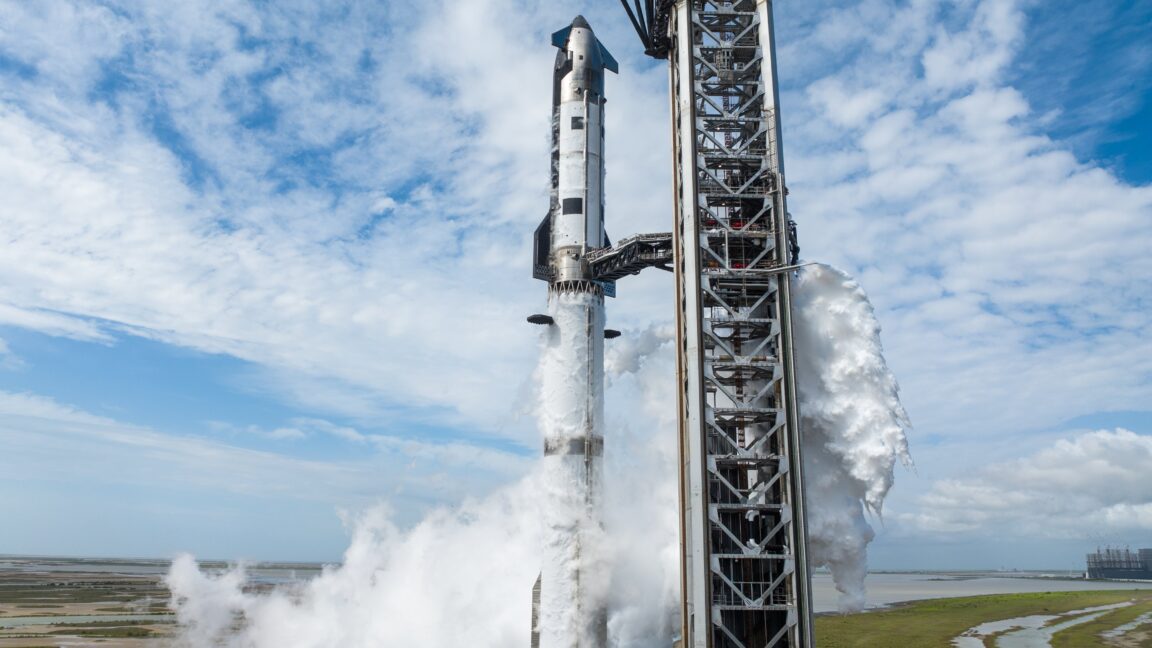
The US space enterprise stands at a precipice, its future launch ambitions heavily pinned on the success of SpaceX’s Starship. Touted as a true revolution in spaceflight, Starship promises unprecedented payload capacity and drastically reduced costs. However, after years of intense development and a decidedly mixed flight record, the burning question remains: will it finally deliver?
Initially, one might forget that SpaceX, now valued in the trillions thanks to ventures in Starlink, AI, and chip manufacturing, cut its teeth on rocket science. Yet, this colossal valuation and all future aspirations are tethered to Starship—a vehicle that has yet to reach orbit reliably or deliver a single payload. With its V3 iteration poised for flight after a seven-month hiatus, the stakes couldn't be higher, not just for SpaceX's burgeoning empire, but for the entire space industry waiting in the wings.
Starship V3: Engineered for the Future
Starship V3 represents a culmination of "hundreds of lessons learned" from its predecessors, V1 and V2, aiming for enhanced performance, reliability, and robustness. The sheer scale of investment underscores its importance, with SpaceX having poured an estimated $15 billion into the program over the last decade, including 11 test flights, a massive Starbase facility, and extensive manufacturing capabilities.
Key Design & Engineering Enhancements:
- Raptor Engine (V3): The powerhouse behind both stages, the V3 Raptor engine has seen a mass reduction from 1,630 kg to 1,525 kg. This, combined with simplifications to vehicle-side commodities, contributes to nearly a ton of mass savings per engine.
- Booster Stage (Super Heavy): The fuel transfer system has been completely redesigned for greater reliability and the capability of simultaneous Raptor engine startup. Grid fins, crucial for control during descent, have been reduced from four to three and repositioned lower to protect them during hot staging—a maneuver where the upper stage ignites before separating.
- Hot Staging Ring: Crucially, the hardware supporting hot staging is now integrated into the booster, making it reusable.
- Upper Stage (Starship): A "clean sheet" redesign of the propulsion system addresses prior V2 flight issues. This includes a new Raptor startup method, increased propellant tank volume, and an improved reaction control system for steering. Design changes also aim to reduce areas where propellant leakage could be trapped.
- Launch Pad: A new and improved launch pad features larger propellant storage, designed to support faster fueling operations.
These modifications are not trivial; they reflect a meticulous, iterative engineering process that is a hallmark of SpaceX's "Test Like You Fly" philosophy. However, this process has been anything but smooth.
The Rocky Road to Reliability
Starship's journey has been a testament to the immense challenges of developing the world's largest and most powerful rocket for rapid reuse. Despite significant progress in late 2024, including successful booster captures and a controlled upper stage splashdown, 2025 proved disastrous.
Three consecutive flights in early 2025 resulted in the loss of control during ascent, showering debris. The ninth flight, in May 2025, marked a nadir, losing both the upper stage and the Super Heavy booster. Subsequent V2 flights provided data, but a V3 booster explosion during a pressure test in November underscored ongoing difficulties.
2026 started equally slowly. Early February saw an automatic abort during a static fire test, damaging half of the Raptor engines. Mid-April brought another early abort due to a ground-side sensor issue. Finally, a successful full-duration static fire in early May signaled readiness, but the path has been fraught with “highs are high, the lows are low” moments, as one senior manager put it.
Pros and Cons of the Starship Program
Pros:
- Revolutionary Cost Reduction: Potential to bring launch costs down from thousands to hundreds of dollars per kilogram, an order of magnitude decrease.
- Massive Payload Capacity: Capable of carrying several times the mass of a Falcon 9, easing the current launch-capacity crunch.
- Enabler for Future Missions: Essential for deploying vast orbital data centers, large Starlink constellations, and critical for NASA’s Artemis III lunar landing and in-space refueling goals.
- Advanced, Iterative Engineering: V3 incorporates extensive lessons learned, showcasing SpaceX's commitment to overcoming complex technical hurdles.
- Significant Investment: Billions invested in development and infrastructure highlight the long-term vision.
Cons:
- Persistent Delays: Three years and many flights in, it remains firmly in test mode, significantly behind initial ambitious timelines.
- Unproven Reliability: A history of in-flight failures, explosions, and test aborts raises concerns about its operational readiness.
- Uncertain Commercial Availability: Widespread commercial use is not expected until 2028 or 2029, a long wait for businesses banking on its capabilities.
- High Development Risk: The program continues to be a high-risk endeavor, with substantial resources (including Falcon 9 infrastructure) being redirected towards it.
Starship vs. the Competition
Starship’s revolutionary design aims to make existing rockets, even SpaceX's own Falcon 9, obsolete. Here's how it stacks up against current and upcoming alternatives:
| Feature | Starship (Projected Operational) | Falcon 9 (Current Workhorse) | Key Alternatives (Vulcan, New Glenn, Ariane 6) |
|---|---|---|---|
| Payload Capacity | Several times Falcon 9 | High | Medium to High |
| Cost/kg | Low hundreds of dollars | Low thousands of dollars | Higher than Falcon 9 |
| Commercial Avail. | Est. 2028-2029 (limited initially) | Readily available, high demand | Limited capacity, delays, or years from debut |
| Reliability | Currently mixed, in test phase | Highly proven, extremely reliable | Mixed, some technical issues/delays |
| Cadence Goal | 25+ missions/year | 165 launches in 2025 | Low (e.g., Ariane 6: 6-8/year) |
| Status | Revolutionary potential, high risk | Market dominant, essential | Struggling to meet demand or enter market |
While Falcon 9 remains the Western world's most in-demand rocket, SpaceX is already shifting resources, including launch pads and landing platforms, to prioritize Starship. Competitors like ULA's Vulcan, Blue Origin's New Glenn, and Arianespace's Ariane 6 are facing their own technical hurdles and limited cadences, leaving a significant launch capacity gap that only Starship could fill.
The Verdict: A Risky, Yet Unavoidable Bet
For the US space enterprise and businesses eyeing the next frontier, Starship is less a choice and more a necessity. Its potential to unlock entirely new economic models and accelerate deep space exploration is undeniable. However, it comes with a hefty dose of reality: significant delays, operational setbacks, and an uncertain path to consistent commercial availability. SpaceX’s internal Starlink deployments and NASA’s Artemis missions will consume initial capacity, pushing wider commercial access to 2028-2029 or beyond.
If your plans demand a truly revolutionary leap in space access and cost, and you have the patience and capital to withstand a challenging development phase, Starship is the only game in town. For immediate, reliable, and cost-effective launches for conventional payloads, the Falcon 9, despite SpaceX’s strategic pivot, remains the king. Starship will deliver, eventually, but the wait is far from over.
FAQ
Q: Is Starship currently available for commercial launch services?
A: No, Starship is still in its extensive test and development phase. While it holds immense commercial promise, widespread availability for external customers is not estimated until 2028 or 2029, with initial flights prioritized for SpaceX's Starlink and NASA's Artemis missions.
Q: How does Starship's projected cost and capacity compare to the Falcon 9?
A: Starship is designed to carry several times the payload mass of a Falcon 9 and aims to reduce launch costs per kilogram from the Falcon 9's low thousands of dollars to potentially the low hundreds of dollars, representing an order of magnitude improvement.
Q: What are the biggest risks for organizations relying on Starship for future missions?
A: The primary risks include continued development delays, potential for further test failures or setbacks, and the long wait for commercial availability. Businesses and government agencies relying on Starship must account for its unproven operational reliability and the extended timeline for achieving its full potential.
Related articles
Ars Technica's Rocket Report: Your Essential Space Industry Briefing
Quick Verdict Ars Technica's Rocket Report, presented by veteran space reporter Stephen Clark, offers an invaluable and meticulously organized weekly (or similar frequency, implied by "Edition 9.15") digest of the most

Apple iPhone Duo: A Daring Debut with Notable Compromises
Apple's highly anticipated iPhone Duo, priced at $2,000, has gone on pre-order. While hailed as "Apple's most exciting device in a decade" for its innovative foldable design and immersive display, it comes with significant drawbacks like the absence of FaceID and a premium camera.
KDE Plasma 6.8: A Future-Focused 30th Anniversary Update
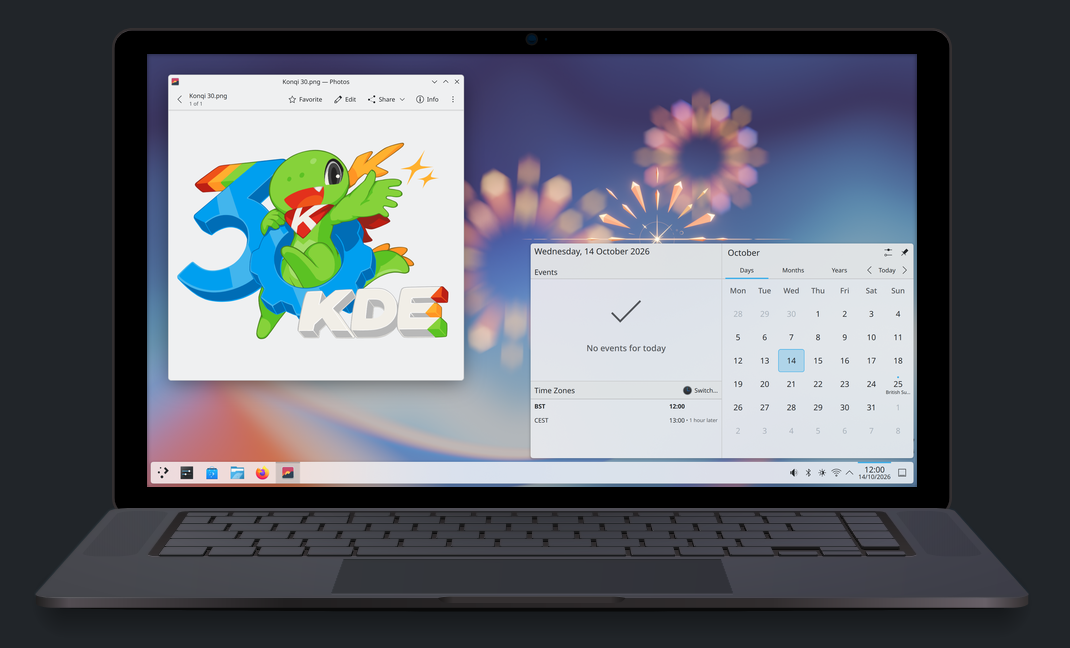
Quick Verdict KDE Plasma 6.8, arriving as the "30th Anniversary Edition," is a pivotal release that decisively pushes the desktop environment into the future. With a definitive farewell to native X11 sessions and a

Kojima Compares Divisive New Film 'Digger' to MGS2's Prescient Vision
Gaming icon Hideo Kojima has praised the divisive 2026 film *Digger*, drawing intriguing parallels to his own prophetic game, *Metal Gear Solid 2*. Both works, he explains, uniquely explore the dangers of misinformation and a fragmented digital reality, anxieties he shares with *Digger*'s director, Alejandro González Iñárritu.
Galaxy Watch One UI 9 Beta: Promising Progress, But Patience Needed
Galaxy Watch 8, Watch Ultra, and Watch 7 are receiving a new One UI 9 Watch beta build with bug fixes and a security patch. Active development signals progress, but a stable release date remains elusive.

Enterprise AI Beyond Chatbots: A Vision for Actionable Intelligence
Quick Verdict: Redefining Enterprise AI's Potential TechRadar Pro's opinion piece, "What it takes to move enterprise AI beyond the chatbot," delivers a refreshingly honest and vital perspective on the current state and