
Star Wars: Andor Book Unearths Coruscant's Deepest Design Secrets
The new book _The Art of Andor_ reveals fascinating insights into how showrunner Tony Gilroy meticulously crafted Coruscant for the Disney+ series. Discover four major design secrets, including Gilroy's "non-Marvel" aesthetic and the hidden details of key locations that define the show's gritty realism.
Star Wars: Andor Book Unearths Coruscant's Deepest Design Secrets
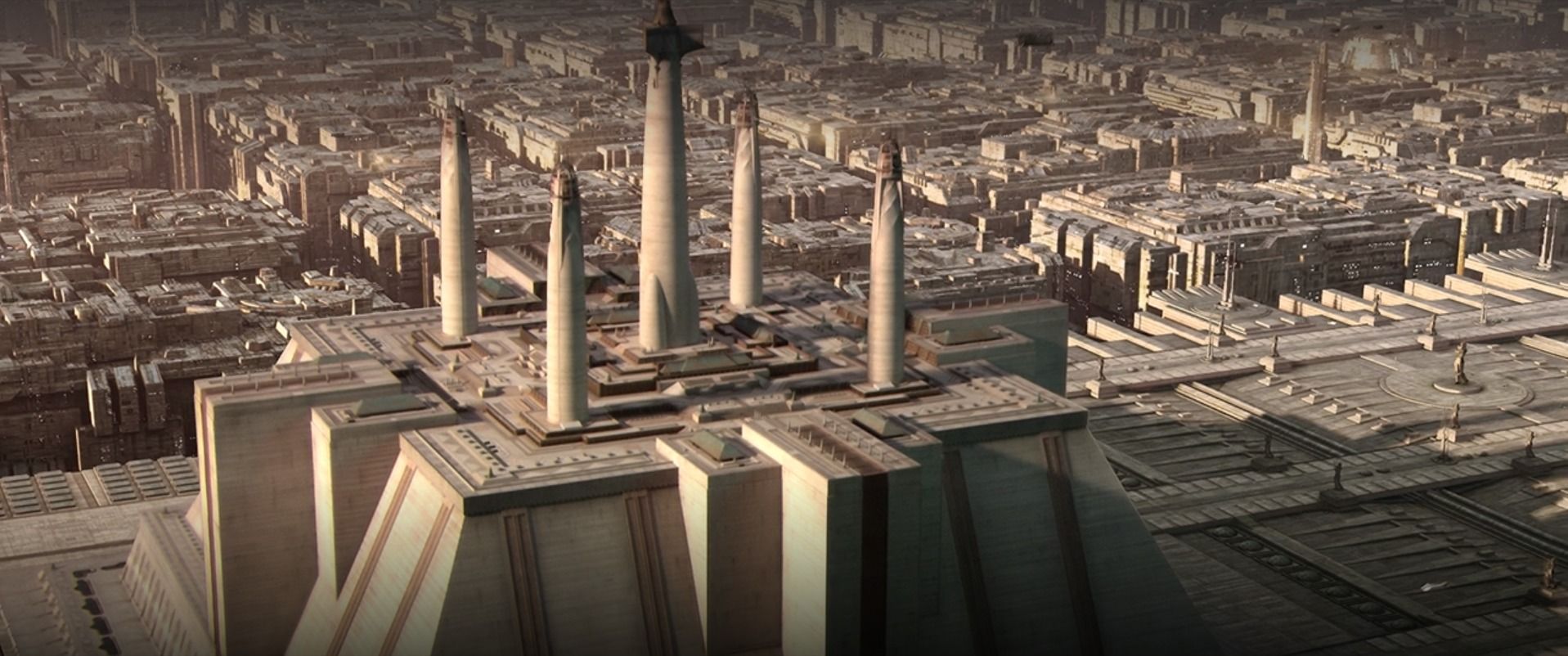
Star Wars fans know Coruscant. It's the bustling heart of the galaxy, a planet-spanning city that's seen some of the most pivotal moments in galactic history, from Anakin's fall to Palpatine's rise. When Andor arrived, showrunner Tony Gilroy had a colossal task: redefine this iconic world for a gritty, grounded series while keeping it instantly recognizable. Now, thanks to Abrams Books' recently released The Art of Andor, we're getting an unprecedented look into how Gilroy and his team painstakingly crafted their vision for Coruscant. This behind-the-scenes companion dives deep, revealing four fascinating secrets about the galaxy's most important planet and its role in the critically acclaimed Disney+ series.
The 'Anti-Marvel' Mandate for Coruscant
One of the most striking revelations comes directly from Tony Gilroy's own design manifesto from November 2019. He explicitly aimed for a Coruscant aesthetic that was “non-Marvel.” This wasn't just a casual remark; it was a foundational principle. Gilroy sought to infuse the city-planet with “non-Marvel funk” and avoid anything that felt like “soapy, wealth-porn slick.” Instead, he envisioned a world that was “vibrant but blemished,” “crazy, credible, and fascinating.” It's a bold statement that speaks to a desire for a more raw, authentic feel.
Industrial Light and Magic VFX supervisor Mohen Leo later elaborated on Gilroy's philosophy, explaining that for Coruscant — and indeed all Andor locations — only elements that genuinely advanced the story and characters were retained. Anything that might detract from this cohesive vision was ruthlessly stripped away, proving that “funk” could, paradoxically, be achieved through a highly focused and refined approach to storytelling and environment.
Luthen's Stealthy Escape Pod: A Hidden Docking Bay
Luthen Rael, the enigmatic antique dealer and Rebel spymaster, is constantly on the move, whisking away in his distinct Fondor Haulcraft. While we see his gallery frequently, the exact location of his ship has always been a mystery, though fans rightly assumed it had to be close at hand. The Art of Andor finally confirms those suspicions with a delightful revelation from production designer Luke Hull. The Fondor was designed with folding wings not just for its unique look, but for a practical purpose: to fit into tight spaces.
Specifically, Hull envisioned a secret docking bay directly behind Luthen's gallery. “It's like a big ring donut, you land through it, then the wings come down, and you pull into your space,” Hull described in the book. The idea was that Luthen could walk straight off his ship's ramp into the back of his gallery, a truly seamless escape route. Unfortunately, this incredibly cool sequence was never filmed, largely due to its significant cost. It’s a shame, but at least now we know the ingenious design behind Luthen's quick getaways!
Dedra Meero's Impenetrable Ivory Tower
Coruscant's stratified society is often depicted through its architecture, with access to natural light serving as a clear indicator of status. The higher you go, the more light and luxury you find, as seen in the opulent apartments of characters like Mon Mothma. This makes the details about Imperial Security Bureau officer Dedra Meero's apartment particularly revealing. First appearing in Andor season 2, Dedra's living space is described by Luke Hull as “government-supplied.”
It’s a sterile, white-walled environment, devoid of personal touches, perfectly reflecting Dedra's cold, calculating nature and her detached view from the “dregs of society” she so ruthlessly hunts. Hull even likened it to an apartment provided by the KGB — functional, perhaps bugged, and designed to serve the state, not comfort or individuality. It’s a chillingly effective piece of characterization woven right into the very fabric of her environment, emphasizing her role within the rigid Imperial hierarchy.
The Axis Safehouse: A Living, Breathing Space
In stark contrast to Dedra's spartan, elevated quarters is the Axis safehouse, a location that almost becomes a character in its own right. While situated in an upper-working-class area, it deliberately projects a “slightly run-down, lower-middle-class vibe,” as set decorator Rebecca Alleyway explains. This grungy, worn-and-torn aesthetic, complete with the suggestion of being “squatted in” like a rental, speaks volumes about the Rebellion's resources and the lives of those dedicated to it.
Showrunner Tony Gilroy emphasized the importance of the safehouse's evolution. “As a character, I think the safe house, what it goes through, and what it looks like, and how it plays all the way through, and what it says, is as strong as any character in the show,” Gilroy stated in the Coruscant chapter. From Cassian and Bix's initial time there to Kleya's eventual rescue, the apartment's changing appearance and the story it silently tells are a testament to the scenic crew's dedication to making every detail resonate. It's a masterclass in environmental storytelling, showcasing how even a seemingly mundane apartment can become a powerful narrative tool.
The Art of Andor isn't just a collection of pretty pictures; it's a deep dive into the creative philosophy that made Andor such a standout Star Wars entry. Tony Gilroy's commitment to a grounded, “non-Marvel” aesthetic shines through in every detail of Coruscant, from the hidden ingenuity of Luthen's ship to the deliberate contrasts between Dedra's cold, state-issued comfort and the gritty, lived-in reality of the Axis safehouse. This book offers fans a chance to truly appreciate the meticulous world-building that elevated Andor into a class of its own. It’s available now, so dive in and uncover even more layers of this incredible galaxy far, far away.
FAQ
Q: What is The Art of Andor and who published it?
A: The Art of Andor is the official behind-the-scenes companion book for the Disney+ Star Wars series Andor. It was released by Abrams Books and written by Phil Szostak.
Q: What does "non-Marvel funk" mean in the context of Andor's design?
A: According to showrunner Tony Gilroy, "non-Marvel funk" was a directive to create a Coruscant aesthetic that avoided generic superhero movie tropes or "wealth-porn slick." Instead, it aimed for something "vibrant but blemished," "crazy, credible, and fascinating," focusing on elements that solely enhanced the story and characters.
Q: Was Luthen's Fondor Haulcraft meant to have a hidden docking bay in the show?
A: Yes, production designer Luke Hull designed a secret docking bay directly behind Luthen's gallery on Coruscant for his ship. While never shown in the series due to cost, the Fondor's folding wings were specifically created to allow it to fit into this tight, concealed space for seamless access.
Related articles

Apple Unveils iPhone Duo: Pricey Foldable Sees Soaring Demand
Apple has officially entered the foldable smartphone arena with the long-anticipated launch of the iPhone Duo. Priced starting at a hefty $1,999, the device features a 5.4-inch outer display and a larger 7.6-inch inner

TCG Pocket Responds: A Much-Needed Pace Shift for Pokémon Fans
Pokémon TCG Pocket is rolling out a major update for its second anniversary, primarily addressing player concerns about overwhelming content releases by shifting to a six-week set schedule. This aims to curb player decline and improve overall engagement by giving trainers more time to collect and strategize. The update also adds new collection methods, improved deck-building features, and enhanced trading functionality.

regional: A two-person Seattle startup lands $1M to reinvent
Seattle startup TriMagnetix has secured $1 million to develop semiconductor chips that consume 800 times less energy and are radiation-resistant. The two-person company, leveraging nanomagnetic technology, is targeting space applications and data centers. With new funding and key partnerships, TriMagnetix aims for commercial sales within a year.

Kojima Compares Divisive New Film 'Digger' to MGS2's Prescient Vision
Gaming icon Hideo Kojima has praised the divisive 2026 film *Digger*, drawing intriguing parallels to his own prophetic game, *Metal Gear Solid 2*. Both works, he explains, uniquely explore the dangers of misinformation and a fragmented digital reality, anxieties he shares with *Digger*'s director, Alejandro González Iñárritu.

Ubisoft Proposes German Studio Workforce Reduction Amidst
Ubisoft is planning a voluntary departure program for about 100 employees across its Düsseldorf, Berlin, and Mainz studios in Germany. This move is part of a larger, ongoing cost-reduction and restructuring effort by the publisher, aiming to better position its studios for future projects.

regional: ‘What is fusion?’ Helion Energy harnesses the power of
Helion Energy, the Everett-based fusion startup, gained mainstream attention this week after being featured as a clue on the popular game show "Jeopardy!". The $800 clue, part of a "Y Combinator" category, highlighted Helion's mission to build the first fusion power plant, bringing the concept of clean energy to a wider audience. CEO David Kirtley celebrated the "surreal" moment as a sign that reliable clean power is becoming more accessible.