
Spike's Iconic Buffy Line: Still One of TV's Greatest After 23 Years
Twenty-three years on, Spike's "No, you don't. But thanks for saying it" from the Buffy finale remains a masterclass in character redemption. This line perfectly encapsulates his arduous journey from villain to selfless hero, rejecting false comfort for hard-won truth and cementing his legacy as one of TV's most complex vampires.
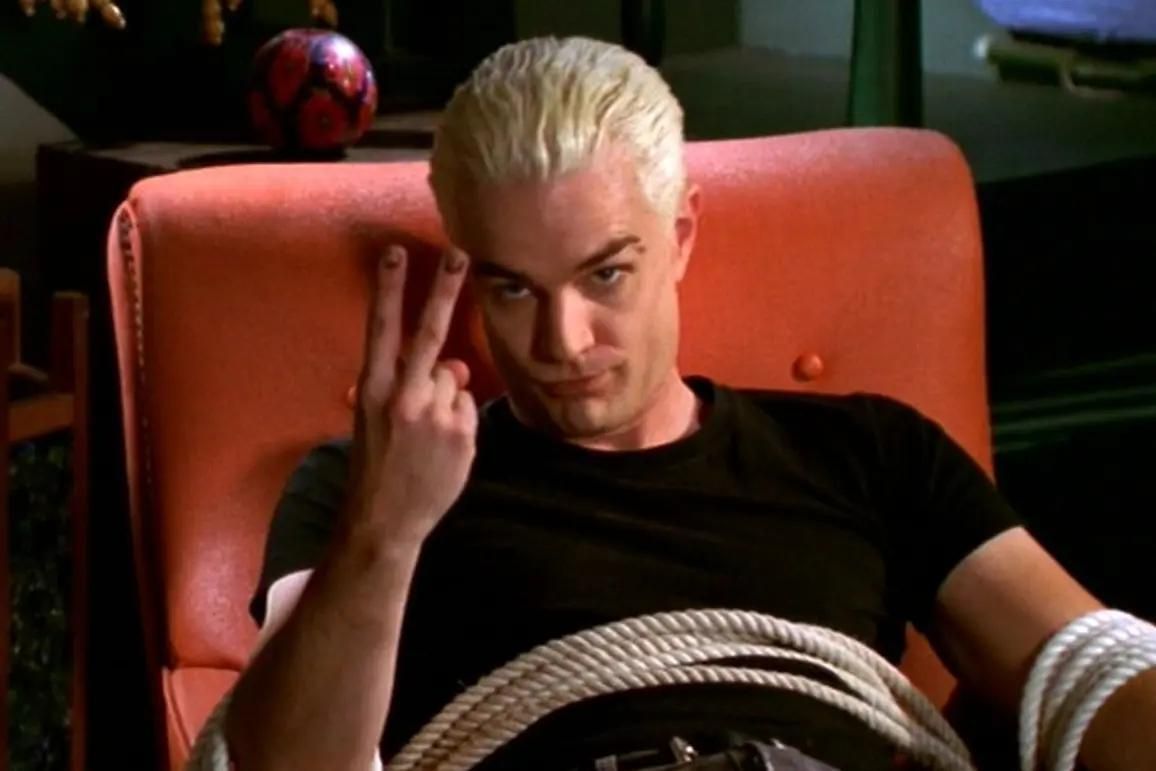
Buffy the Vampire Slayer is a cultural phenomenon, a show brimming with memorable characters who left an indelible mark on television history. From the titular Slayer to her fiercely loyal friends like Willow and Anya, there was a character for every viewer. Yet, even among this stellar ensemble, one character consistently stood in a league of his own: the platinum-blonde punk vampire, Spike, portrayed by the incomparable James Marsters. Beloved as both a formidable foe and an unlikely love interest, Spike's journey throughout the series was arguably one of its most complicated, making him central to Buffy's most enduring storylines. While the show was a goldmine of clever one-liners – who could ever forget the iconic "Out. For. A. Walk. Bitch."? – Spike's most poignant and powerful utterance comes in the series finale, "Chosen." This single line isn't just a great quote; it's the natural, definitive endpoint for a character constantly wrestling between inherent selfishness and burgeoning heroism, representing one of the greatest moments of truth in TV history.
The Vampire Who Defied Expectations
Spike burst onto the scene in Buffy the Vampire Slayer's second season as a fresh, anarchic villain. With his distinct punk rock attitude and a tumultuous romance alongside his equally unhinged vampire paramour, Drusilla, he was an immediate fan favorite. He transitioned from antagonist to series regular, evolving into one of Buffy's most reluctant, yet crucial, allies. What made Spike so uniquely captivating, especially within the burgeoning vampire romance genre, was his distinct nature: for the vast majority of his tenure, he was soulless, a stark contrast to Buffy's other significant vampire beau, Angel. This lack of a soul meant he wasn't perpetually tortured by his past; more often than not, he was simply having a grand old time being a vampire. This inherent unpredictability, this constant edge of menace despite his growing attachment to the Scooby Gang, kept audiences — and Buffy herself — on their toes, cementing his status as one of the most interesting and complex characters on television.
From Rock Bottom to Redemption's Peak
Spike's path to heroism was anything but linear. His journey hit an undeniable all-time low in season six, a dark period where his desperation for Buffy manifested in an attempted assault, pushing their already complicated relationship to an almost irredeemable point. This traumatic rock bottom served as a profound catalyst. Driven by a desperate need to truly be worthy of Buffy and to atone for his actions, he embarked on a solitary quest to regain his soul, enduring immense pain and struggle. Upon his return to Sunnydale, now tormented by his conscience, it was Buffy, surprisingly, who was the first and often only member of the Scoobies to extend him protection and a fragile trust. Watching Spike's painstaking evolution from a gleefully soulless monster to a hero grappling with profound self-awareness and complex layers stands out as one of the show's most profoundly rewarding character arcs. The writers' decision to deliver his ultimate, defining act of redemption in his very last scene was a stroke of genius, ensuring his character was immortalized at his absolute best, his story concluded before it could ever dilute or morph into anything less impactful. (And yes, he does pop up as a ghost in the Angel spin-off, but if you prefer his Buffy ending as his true farewell, that's perfectly valid.)
A Love Confession, A Truthful Rejection
The climax of Buffy the Vampire Slayer is a maelstrom of chaos and heroism. As Buffy and her allies wage their final, desperate battle against the hordes of demons pouring from the collapsing Hellmouth, the very fabric of Sunnydale begins to unravel. With the cavern threatening to swallow everything, Buffy's friends flee, desperate to escape. It is in this moment of ultimate crisis that Spike makes his decisive choice: he stays behind. Empowered by a mystical amulet, he acts as the singular bulwark, preventing countless demons from escaping. Buffy, recognizing his impending sacrifice, implores him to leave. As the world crumbles around them, she reaches for his hand and utters the words he has longed to hear: "I love you." But the newly ensouled Spike, hardened by his journey and truly understanding the nature of love and truth, rejects the comfort of this sentiment. With unwavering conviction, he replies: "No, you don’t. But thanks for saying it." This profound exchange is the series finale's most emotional and consequential beat, setting the stage for his definitive sacrifice.
The Enduring Impact of a Single Line
Spike’s response to Buffy's declaration is the ultimate testament to how profoundly he has transformed. An earlier, soulless version would have greedily devoured any form of love or comfort she offered, having previously manipulated his way into her life. This evolved, ensouled Spike, however, possesses the clarity and self-awareness to see Buffy’s "I love you" for what it truly is in that moment: an outpouring of gratitude, respect, and perhaps a flicker of deep connection, but not the romantic love he once craved and demanded. He chooses the raw, difficult truth of their dynamic over the comforting fantasy, recognizing that true redemption lies not in receiving love under false pretenses, but in earning respect through genuine sacrifice. He dies not with a romanticized ideal, but with Buffy’s hard-won recognition and profound respect. His final act and his final words combine to create one of television's most poignant and powerful character send-offs, a moment where the complicated, often toxic, relationship between Buffy and Spike finally aligns in an unexpected, selfless grace. It’s a line that resonates because it speaks to genuine growth, self-acceptance, and the difficult, beautiful choice of truth over easy comfort, ensuring its place in the pantheon of great TV quotes.
Conclusion
Twenty-three years after "Chosen" first aired, Spike's simple, honest reply continues to echo with profound significance. It encapsulates an entire character arc, a testament to the messy, difficult, yet ultimately triumphant journey of redemption. James Marsters brought Spike to life with an unmatched blend of menace, wit, and vulnerability, and this quote stands as the crown jewel of his performance and the character's narrative. It reminds us that sometimes, the most heroic act isn't just saving the world, but saving yourself by accepting the truth, even when it stings. For fans of Buffy and brilliant television writing alike, Spike’s unforgettable parting words remain a powerful reminder of what makes complex characters and compelling storytelling truly timeless.
FAQ
Q: What is Spike's best quote from Buffy the Vampire Slayer?
A: According to many fans and critics, Spike's best quote is from the series finale, "Chosen," where he tells Buffy, "No, you don’t. But thanks for saying it."
Q: What makes Spike's quote in the finale so significant?
A: The quote signifies Spike's complete redemption. By rejecting Buffy's "I love you" as an act of truth rather than desperate affection, he shows his self-awareness and growth, choosing the reality of their relationship over a romantic fantasy, and dying a true hero.
Q: Where can I stream Buffy the Vampire Slayer to revisit Spike's journey?
A: Buffy the Vampire Slayer is currently available for streaming on Hulu.
Related articles

TCG Pocket Responds: A Much-Needed Pace Shift for Pokémon Fans
Pokémon TCG Pocket is rolling out a major update for its second anniversary, primarily addressing player concerns about overwhelming content releases by shifting to a six-week set schedule. This aims to curb player decline and improve overall engagement by giving trainers more time to collect and strategize. The update also adds new collection methods, improved deck-building features, and enhanced trading functionality.

Kojima Compares Divisive New Film 'Digger' to MGS2's Prescient Vision
Gaming icon Hideo Kojima has praised the divisive 2026 film *Digger*, drawing intriguing parallels to his own prophetic game, *Metal Gear Solid 2*. Both works, he explains, uniquely explore the dangers of misinformation and a fragmented digital reality, anxieties he shares with *Digger*'s director, Alejandro González Iñárritu.

Ubisoft Proposes German Studio Workforce Reduction Amidst
Ubisoft is planning a voluntary departure program for about 100 employees across its Düsseldorf, Berlin, and Mainz studios in Germany. This move is part of a larger, ongoing cost-reduction and restructuring effort by the publisher, aiming to better position its studios for future projects.

TGS 2026: These Forward-Looking Cosplays Are Already Living in the
Tokyo Game Show 2026 showcased incredible cosplay, with many fans embodying characters from unreleased games like *Blast Blade* and *Mononoke No Kuni*. This gallery highlights the community's foresight, alongside debut *Palworld* cosplay and refreshed takes on classics. It’s a testament to the passion that brings gaming's future to life.

Beyond the Bugs: Conquering Studio Headaches in Indie Dev
This guide, part three in a series on running an indie studio, tackles the crucial but often overlooked aspect of dealing with non-development related issues. It introduces creating a shared 'studio backlog' for collective problems and using the IDS (Identify, Discuss, Solve) framework to address them constructively. The core message is to build powerful habits that keep studios from getting quietly derailed by lingering challenges.

Apple's HomeView & New Smart Home: A Promising, Pricey Ecosystem
Apple's HomeView smart display leads a substantial expansion into the smart home market, alongside new Apple TV 4K, HomePod Mini 2, and third-party accessories. This new lineup offers deep ecosystem integration but comes with premium pricing and staggered release dates.