
Rocket Report: SpaceX & ULA Shifts, Global Space Race Unpacked
Rocket Report: SpaceX and ULA Shake-Ups Reviewed Verdict: The latest "Rocket Report" delivers a crucial snapshot of an aerospace industry in flux, highlighting both astounding progress and significant hurdles across the

Rocket Report: SpaceX and ULA Shake-Ups Reviewed
Verdict: The latest "Rocket Report" delivers a crucial snapshot of an aerospace industry in flux, highlighting both astounding progress and significant hurdles across the globe. For anyone tracking the space sector, this report is an essential, comprehensive, and honest analysis of the rapid evolution in rocket technology, market dynamics, and geopolitical considerations. It paints a clear picture of an increasingly competitive and challenging landscape, dominated by American reusability but with determined efforts from China and persistent struggles for other nations.
In-Depth Look: A Dynamic Global Launch Landscape
This edition of the "Rocket Report" from Ars Technica covers a broad spectrum of critical developments, offering a detailed perspective on the current state of space launches worldwide. From major powerhouses to emerging players, the report meticulously tracks successes, failures, and strategic shifts.
China's Rapid Rebound and Reusability Push: The report details China's swift recovery from a Long March 7A failure, demonstrating the resilience of its space program. The successful return to flight of YF-100 engines and the impending launch of the Chang'e 7 lunar lander underscore China's ambition. Significantly, China's reusability efforts are gaining momentum, with both LandSpace's Zhuque-3 and a Long March 10B booster achieving successful recoveries. This marks a pivotal moment, signaling China's intent to challenge the reusable rocket paradigm set by SpaceX. While still behind in launch cadence, the shift to reusability could dramatically alter their capabilities.
Emerging Nations Face Setbacks: The report candidly discusses challenges faced by Taiwan and South Korea. Taiwan's prototype satellite launcher veered off course, leading to self-destruction, while South Korean startup Innospace experienced its second consecutive failure with its Sebit rocket. These incidents highlight the immense technical difficulties and risks inherent in developing new launch capabilities, even for suborbital tests. For these nations, the path to independent space access remains steep.
SpaceX's Dominance and Future Transition: SpaceX continues to reshape the launch market, but not without generating new anxieties. The report outlines concerns among commercial satellite operators about the impending retirement of the workhorse Falcon 9, possibly as early as 2028 for commercial missions. SpaceX's increasing focus on its own Starlink V3 satellites and orbital data centers, optimized for the larger Starship, suggests a strategic shift that could leave other commercial payloads scrambling for alternatives. On a positive note, the unexpected recovery of a Starship test flight from the Indian Ocean provides invaluable hardware for engineers, crucial for refining heat shield designs and achieving full reusability.
Interestingly, the report also notes the rare, but not unprecedented, impact of a spent Falcon 9 upper stage on the Moon, which created a fresh 60-foot crater. This event, while unintentional, offered a unique "learning opportunity" for scientists to study pristine lunar material and refine asteroid tracking methods, showcasing an unexpected scientific dividend.
ULA's Leadership Change and Mounting Challenges: United Launch Alliance (ULA) faces a critical juncture. The promotion of Mark Peller to president and CEO follows the departure of Tory Bruno and comes amid significant operational and competitive pressures. The grounding of ULA's new Vulcan rocket after an anomaly, coupled with the loss of its long-standing position as the Pentagon's preferred launch contractor, paints a picture of a company needing to rapidly adapt to a changed market where rapid reusability and cost-efficiency are paramount.
Europe's Stalled Progress: The report highlights Europe's continued struggle to remain competitive. The European Space Agency (ESA) has shelved plans for the Ariane 6 Block 3 upgrade, including the lightweight Icarus upper stage, due to lack of member state support. This decision, along with launch costs significantly higher than those in the United States, underscores the difficult position Europe finds itself in, caught between the need for independent access to space and the economic realities of a market transformed by reusable rockets.
Geopolitical Dimensions and Lunar Ambitions: The report also touches upon critical geopolitical developments. Ukraine's strike on Russia's Progress Rocket Space Center, a key manufacturer of Soyuz rockets, raises questions about potential disruptions to Russia's human spaceflight capabilities and its broader space program. Meanwhile, China's Chang'e 7 mission to the Moon's south pole is highlighted as a highly strategic endeavor. The mission's target – Shackleton Crater – is described as some of the most "coveted real estate" due to the potential presence of water ice. This mission emphasizes the global race for lunar resources and establishing a long-term presence on the Moon, with significant implications for future international cooperation and competition.
Launch Market Comparison: Cost Per Kilogram to Orbit
The report provides compelling data quantifying the disparity in launch costs globally, largely attributed to the adoption of reuse by SpaceX. This stark difference underscores the economic pressures faced by nations relying on expendable launch systems.
| Region/Nation | Average Cost per kg to Orbit | Key Insight |
|---|---|---|
| United States | $3,225 | Significant gains from reusable rockets (e.g., Falcon 9) |
| Japan | $5,287 | |
| China | $5,809 | Entering reusable rocket era |
| Russia | $6,682 | Relies on workhorse Soyuz vehicles |
| Europe | $9,897 | Launch costs three times higher than US |
| India | ~$15,000 | Highest among listed nations |
Reading Experience and Recommendations
The "Rocket Report" is presented in a clear, well-structured format, breaking down complex developments into digestible sections. The use of subheadings for different rocket lift capacities (small, medium, heavy-lift) helps organize the diverse information, making it easy to navigate. Each section is well-sourced, linking to more in-depth Ars Technica articles or external reports, which is a significant plus for readers seeking further details. The tone is consistently informative and objective, providing facts without unnecessary embellishment.
Pros:
- Comprehensive Coverage: Addresses a wide array of global rocket developments and geopolitical implications.
- Timely and Up-to-Date: Reflects very recent events and trends in the rapidly evolving space industry.
- Data-Driven Insights: Includes specific data points, such as launch costs, to support analysis.
- Clear and Organized: Well-structured with logical flow and easy-to-read sections.
- Well-Sourced: Provides links to original reporting for deeper dives.
Cons (or Challenges Highlighted):
- Lack of Detail on Chinese Failures: Acknowledges Chinese officials don't publicly release info on failures, but this can leave readers wanting more analytical insight into the root causes where possible.
- Industry Uncertainty: The report highlights significant uncertainties (Falcon 9 retirement, ULA's future) that, while accurately reported, may be concerning for industry stakeholders reading it.
For anyone with a serious interest in space technology, geopolitics, or the commercial aerospace sector, the "Rocket Report" is an indispensable read. Its balanced presentation of successes, failures, and market shifts provides critical context for understanding the future of space exploration and utilization. Subscribing to this report or making it a regular read is highly recommended to stay informed on the pulse of the global rocket industry.
FAQ
Q: What is the biggest takeaway about the global launch market from this report?
A: The report clearly shows the United States, driven by SpaceX's reusable Falcon 9, has achieved significant dominance in payload to orbit and substantially lower launch costs compared to other nations, compelling others, particularly China, to rapidly pursue reusability.
Q: Should commercial satellite operators be concerned about SpaceX's future plans?
A: Yes, the report indicates a growing concern among commercial satellite operators that SpaceX intends to phase out commercial Falcon 9 launches after 2028, potentially prioritizing its own Starlink payloads on Starship, creating a future launch crunch for external customers.
Q: What does China's Chang'e 7 mission signify?
A: The Chang'e 7 mission to the Moon's south pole highlights China's advanced lunar exploration capabilities and its strategic interest in accessing potentially water-rich regions, which are considered prime real estate for future long-term lunar settlement and resource utilization.
Related articles
Android 17 QPR2 Beta 7.1: The Performance Relief You've Been Waiting
Android 17 QPR2 Beta 7.1: Finally Fixing the QPR1 Performance Woes Verdict: Android 17 QPR2 Beta 7.1 is a crucial and highly anticipated software update for Google Pixel users, specifically targeting and resolving the

DJI Solo Video Setups: Smart Choices for Lone Creators
This review delves into DJI's recommended solo video setups, highlighting the Osmo Pocket 3 Creator Combo as a top pick for its integrated camera, gimbal, and mic. It also covers stabilizers like the Osmo Mobile 8 and RS 4, and the DJI Mic Mini series for enhanced audio, providing honest pros, cons, and clear buying advice.

Ars Technica's Rocket Report: Your Essential Space Industry Briefing
Quick Verdict Ars Technica's Rocket Report, presented by veteran space reporter Stephen Clark, offers an invaluable and meticulously organized weekly (or similar frequency, implied by "Edition 9.15") digest of the most

Apple iPhone Duo: A Daring Debut with Notable Compromises
Apple's highly anticipated iPhone Duo, priced at $2,000, has gone on pre-order. While hailed as "Apple's most exciting device in a decade" for its innovative foldable design and immersive display, it comes with significant drawbacks like the absence of FaceID and a premium camera.

Tesla Unveils Thruster-Equipped Roadster, 2028 Production Targeted
Tesla has unveiled its second-generation Roadster, featuring cold-gas thrusters co-developed with SpaceX, enabling it to jump and flip. The electric sports car demonstrated 0-60mph in an astonishing 0.81 seconds, with production targeted for 2028. This highly anticipated reveal also serves as a key recruitment tool for Tesla's ambitious AI and robotics initiatives.
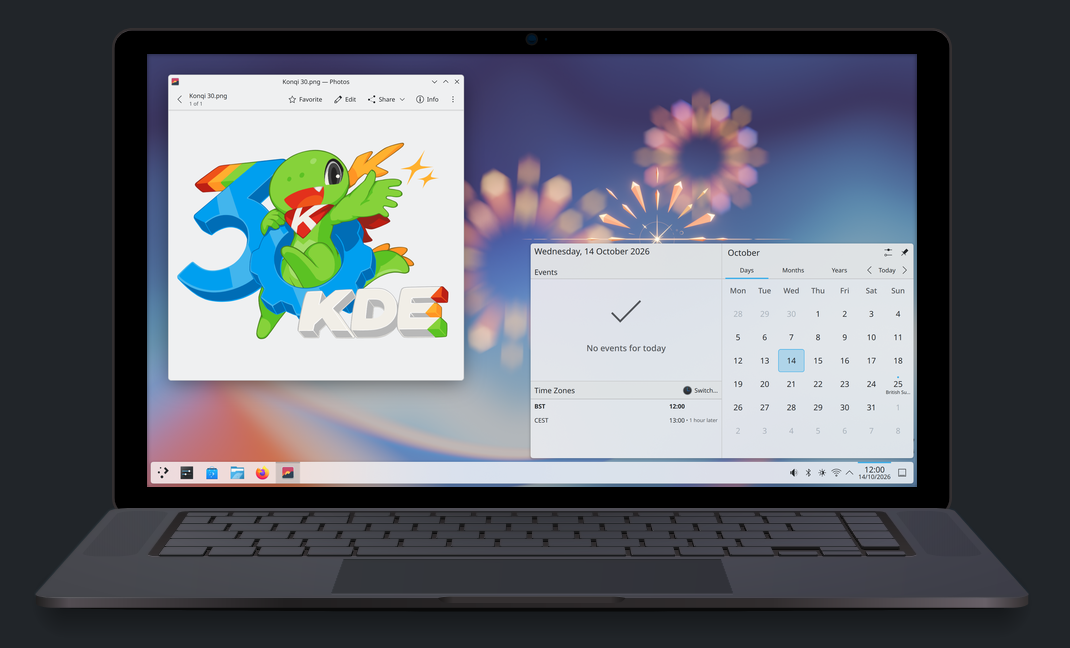
KDE Plasma 6.8: A Future-Focused 30th Anniversary Update
Quick Verdict KDE Plasma 6.8, arriving as the "30th Anniversary Edition," is a pivotal release that decisively pushes the desktop environment into the future. With a definitive farewell to native X11 sessions and a