
Robotaxi companies refuse to say how often their AVs need remote
Senator Ed Markey's investigation found that leading autonomous vehicle companies, including Waymo and Tesla, are refusing to disclose how often their AVs need remote human assistance. This lack of transparency has led Markey to call for a federal probe by the NHTSA and to propose new legislation aimed at imposing stricter guardrails on AV remote operations.

Massachusetts Senator Ed Markey's recent investigation into autonomous vehicle (AV) companies has revealed a widespread refusal by leading robotaxi and self-driving truck developers to disclose how frequently their vehicles require remote human intervention. Aurora, May Mobility, Motional, Nuro, Tesla, Waymo, and Zoox all declined to provide specific figures on the usage of their remote assistance operators, prompting Senator Markey to call for a National Highway Traffic Safety Administration (NHTSA) probe and promising new legislation. This lack of transparency underscores growing concerns as AV technology moves from testing into commercial deployment on public roads.
Senator Markey initiated his inquiry in February after a Senate Commerce Committee hearing where Waymo's chief safety officer, Mauricio Peña, acknowledged that their vehicles occasionally rely on "remote assistance" staff for guidance in complex situations. Peña also revealed that approximately half of Waymo's remote support team is based in the Philippines. Following these revelations, Markey dispatched detailed letters containing 14 questions to the seven prominent AV firms, seeking clarity on their remote operations, including the frequency of intervention, team sizes, locations, licensing, and security protocols.
Stalling on Transparency
Despite the comprehensive nature of the questions, a critical piece of information remained elusive: none of the companies directly answered how often their remote staff assist AVs. Waymo and May Mobility explicitly stated this data constituted "confidential business information," while Tesla's response conspicuously omitted the question entirely. This collective silence, as highlighted by Markey's office, points to a "stunning lack of transparency" and a "patchwork of safety practices" across the industry, operating without clear federal standards.
Further details from the investigation revealed varying operational approaches among the companies. Waymo was the sole company to confirm the use of overseas remote assistance workers, noting that these employees hold local drivers' licenses. However, Markey's office questioned the adequacy of foreign licenses compared to U.S. standards, citing potential differences in traffic laws. Most companies, excluding Tesla, asserted that their remote assistance workers do not possess the capability for direct vehicle control.
Tesla, conversely, acknowledged that its remote operators are authorized to temporarily assume direct vehicle control as a "final escalation maneuver." This intervention is limited to vehicles moving at 2 miles per hour or less, with the operator restricted to a maximum speed of 10 miles per hour. Tesla justified this capability by stating it allows for prompt vehicle relocation in compromising positions, reducing reliance on first responders. This contrasts with recent criticisms faced by Waymo in San Francisco, where city officials raised concerns about its dependence on emergency services to resolve situations involving stuck robotaxis, a distinct issue from Markey's focus on remote assistance but indicative of broader operational challenges.
Operational Details Emerge
The report also shed light on other aspects of remote operations, such as the latency involved in assistance interactions, which varied by company; May Mobility reported the longest worst-case figure at 500 milliseconds. Companies also outlined measures to combat worker fatigue and protect data. While Waymo stated that improvements to its self-driving system have "materially reduced" help requests per mile, and that its system often resolves issues before an agent provides an answer, no specific data or proof was offered to substantiate these claims.
As autonomous vehicles become an increasingly common sight on urban streets and highways, the demand for greater transparency regarding their operational dependencies and safety protocols is intensifying. Senator Markey's investigation marks a significant escalation in regulatory scrutiny, setting the stage for potential legislative action. The ongoing reluctance of AV companies to share critical performance data is likely to keep them under a spotlight, as policymakers and the public alike seek assurance that these advanced technologies are deployed safely and responsibly.
FAQ
Q: What prompted Senator Markey's investigation into autonomous vehicle companies?
A: The investigation was launched after Waymo's chief safety officer, Mauricio Peña, publicly discussed the company's reliance on "remote assistance" staff for its AVs during a Senate Commerce Committee hearing in February.
Q: Which autonomous vehicle companies were involved in Senator Markey's investigation?
A: Senator Markey sent letters to Aurora, May Mobility, Motional, Nuro, Tesla, Waymo, and Zoox as part of his inquiry into their remote assistance operations.
Q: What were the primary concerns raised by Senator Markey's office regarding AV remote assistance?
A: Markey's office expressed concerns about a "stunning lack of transparency" from AV companies, a "patchwork of safety practices," significant variations in operator qualifications, response times, and the use of overseas staffing, all occurring without federal standards.
Related articles

Apple Unveils iPhone Duo: Pricey Foldable Sees Soaring Demand
Apple has officially entered the foldable smartphone arena with the long-anticipated launch of the iPhone Duo. Priced starting at a hefty $1,999, the device features a 5.4-inch outer display and a larger 7.6-inch inner

in-depth: Chicago-Area Cops Helped HSI Spy on Minnesota Anti-ICE
Chicago-area law enforcement, including local police and HSI agents, conducted undercover surveillance on Minnesota anti-ICE activists at an April 2, 2022, talk in Chicago. This operation was part of a federal conspiracy probe into 15 Minnesota activists facing felony charges related to immigration enforcement resistance. Civil liberties advocates have condemned the surveillance as a troubling intrusion into protected political activity.
TCG Pocket Responds: A Much-Needed Pace Shift for Pokémon Fans
Pokémon TCG Pocket is rolling out a major update for its second anniversary, primarily addressing player concerns about overwhelming content releases by shifting to a six-week set schedule. This aims to curb player decline and improve overall engagement by giving trainers more time to collect and strategize. The update also adds new collection methods, improved deck-building features, and enhanced trading functionality.

Mark Wahlberg on using AI in film ‘the right way’ and being open to
Actor Mark Wahlberg believes AI has a place in filmmaking if used responsibly for enhancement, not script generation or actor replacement. At TechCrunch Disrupt, he expressed openness to an AI likeness carrying on his legacy, managed by his family, and emphasized storytelling.

Tesla Unveils Thruster-Equipped Roadster, 2028 Production Targeted
Tesla has unveiled its second-generation Roadster, featuring cold-gas thrusters co-developed with SpaceX, enabling it to jump and flip. The electric sports car demonstrated 0-60mph in an astonishing 0.81 seconds, with production targeted for 2028. This highly anticipated reveal also serves as a key recruitment tool for Tesla's ambitious AI and robotics initiatives.
Amazon Prime Video Launches AI-Powered Prime 360 for NBA Coverage
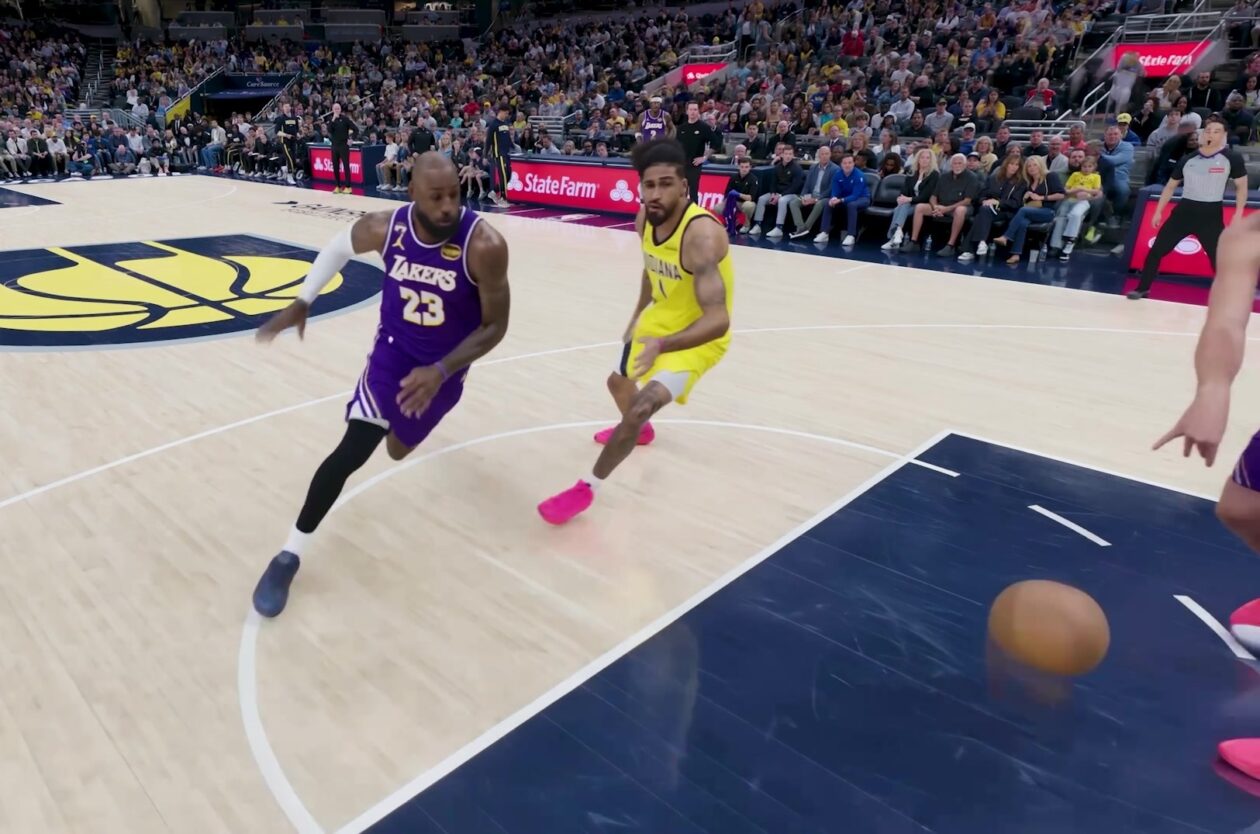
Amazon Prime Video is elevating its NBA coverage with the introduction of Prime 360, an AI-powered replay system offering immersive, 'fly through' views of the action. Kicking off its second season, Prime Video also adds Yahoo fantasy integration and gains exclusive Eastern Conference Finals rights, expanding its tech-driven sports broadcast. The new features aim to deliver a unique and interactive viewing experience for basketball fans.