
Rivian CEO: Autonomy Will Usher In 'Dramatically Different' Car
Rivian CEO RJ Scaringe foresees autonomous technology leading to "dramatically different" vehicle designs beyond current models, culminating in the future R4. This vision, articulated at TechCrunch Disrupt, drives Rivian's significant investment in autonomy, even at the cost of immediate profitability. Scaringe emphasizes that while robotaxis are emerging, the majority of future autonomous miles will still be in personally-owned vehicles, necessitating unique designs for this segment.

Rivian CEO RJ Scaringe announced last week at TechCrunch Disrupt that he anticipates advanced autonomous vehicle software will unlock "dramatically different" vehicle designs, moving far beyond the company's current lineup of electric SUVs and trucks. This strategic commitment to developing self-driving capabilities, even if it temporarily delays profitability, highlights Rivian's long-term vision for transforming personal transportation.
Scaringe conveyed his excitement about the future during an interview with TechCrunch, stating, "Where it gets really interesting is when you think beyond R2 and R3 and start to imagine the form factors that you want to build for a personally-owned autonomous vehicle. You know, it opens up all kinds of design opportunities. It can create dramatically different experiences.” He added, “I’m wildly excited about what the next 10 years look like in transportation because of what this enables us to dream and think about."
A Vision for Future Mobility
The notion of radical vehicle design enabled by autonomy isn't entirely new. A decade ago, numerous automakers and tech companies envisioned a "Cambrian explosion" of new mobility concepts. Mercedes-Benz showcased futuristic pod-like designs and feature-rich sedans, while Toyota presented "rooms on wheels." Even Hyundai explored unconventional ideas, including a car with robotic legs.
However, these ambitious concepts largely remained in the prototype or theoretical stages. The anticipated rapid development of autonomy proved more challenging than expected, and manufacturers grappled with the complexities of producing and marketing entirely new vehicle categories.
Learning from the Past: Why Now is Different
What differentiates Scaringe's current outlook is the tangible progress in autonomous technology. Today, actual robotaxis are operating in various cities globally, demonstrating a level of software sophistication capable of safe public road operation, despite ongoing integration challenges within complex urban environments. Concurrently, the cost of EV components has decreased, and companies like Rivian and Tesla have significantly advanced their ability to scale electric vehicle manufacturing.
This confluence of technological maturity in both autonomy and EV production positions companies like Rivian to potentially realize these once-futuristic designs. The foundation for a new era of vehicle form factors appears more solid than ever before.
Rivian's Autonomous Journey and Ownership Philosophy
Before fully driverless vehicles become widespread, Rivian faces the considerable task of scaling production for its R2 SUV. Successfully launching the R2 is critical for the company to reverse its years of losses and solidify its position as a major EV manufacturer.
In terms of autonomy, Rivian is still in the earlier stages, having recently restructured its approach to self-driving software. The company has already introduced a driver assistance system that enables hands-off driving under driver supervision. By the end of this year, Rivian aims to release software capable of “point-to-point navigation” without intervention, though still requiring driver oversight. The ultimate goal is full autonomy, planned for robotaxi versions of its R2 SUV, which are slated for deployment on Uber's ride-hail app.
Crucially, Scaringe believes that the majority of autonomous driving will occur in personally-owned vehicles. He emphasized that 95% of miles driven in the U.S. are in vehicles owned by individuals or households. While this figure might slightly decrease with Level 4 autonomy, he anticipates the vast majority will remain personally owned, driven by "societal and psychological reasons." This conviction underpins his focus on developing distinctive designs for privately-owned autonomous Rivians.
The Enigmatic R4 and Beyond
While Scaringe spoke enthusiastically about the potential for future designs, he remained tight-lipped about the specifics of what these vehicles might look like. He confirmed the progression of Rivian's model line: “So we did R1, then we did R2, then we did R3. The thing after R3 is going to be called R4 — we just haven’t shown what it looks like.” He confidently added, “It’s going to be cool. It’s going to be great.”
FAQ
Q: What is Rivian's CEO's core prediction about autonomous vehicles?
A: Rivian CEO RJ Scaringe predicts that the advent of autonomous vehicle technology will enable "dramatically different" vehicle designs, moving beyond traditional form factors and creating novel experiences, particularly for personally-owned vehicles.
Q: How does Rivian plan to implement autonomy?
A: Rivian currently offers a hands-off driver assistance system and aims to introduce supervised "point-to-point navigation" by year-end. The company's long-term goal includes full autonomy for both personally-owned vehicles and R2 robotaxis intended for services like Uber.
Q: What role does vehicle ownership play in Scaringe's vision?
A: Scaringe believes that even with advanced Level 4 autonomy, the vast majority of miles driven will continue to be in personally-owned vehicles. This belief drives Rivian's focus on designing unique and innovative autonomous vehicles for individual ownership, alongside their robotaxi plans.
Related articles

Disney Agrees to Hire Majority of Character.AI’s Workforce
Disney has agreed to hire at least 60 employees from the recently bankrupt chatbot startup Character.AI, offering $60 million in annual compensation. This move provides a lifeline for the majority of Character.AI's workforce, which faced high costs and legal challenges. The agreement comes as Disney’s new CTO is Character.AI’s former CEO.

Video game ownership bill introduced in Congress: Video Games — Key
A new bill, the "Power To The Players Act," has been introduced in the U.S. Congress by Rep. Ritchie Torres to ensure consumers truly own, rather than just license, the video games they purchase. It mandates offline modes for games before server shutdowns, addressing concerns over unplayable digital titles and future-proofing consumer investments in gaming.

Lenovo Legion Go S with SteamOS Plummets to $999.99
Lenovo's Legion Go S handheld gaming PC, featuring SteamOS and a Ryzen Z1 Extreme, is now $999.99 at Best Buy, a 37% reduction. This deal offers double the RAM and storage, a sharper 120Hz display, and a faster processor than the base Steam Deck OLED, making it a compelling high-value option.
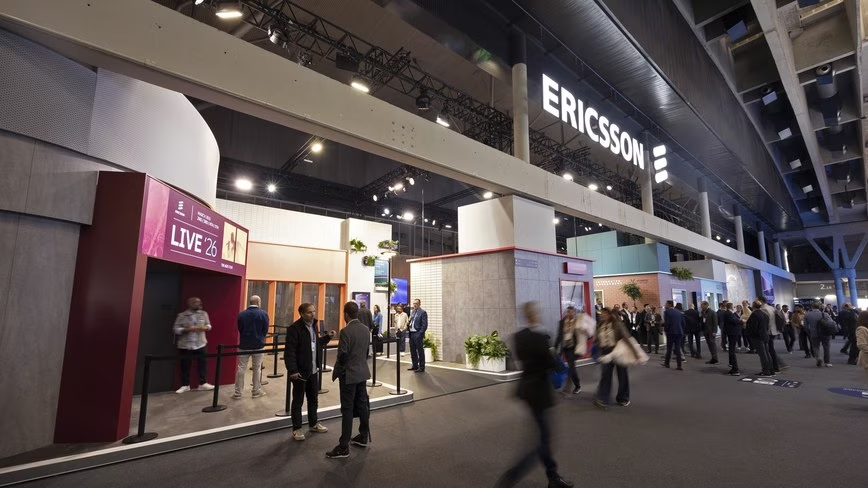
Ericsson Rides 7% Organic Sales Surge Amidst Major Asia Restructuring
STOCKHOLM — Ericsson has reported robust third-quarter results for 2026, with organic sales climbing by an impressive 7%, largely fueled by its Networks division. The Swedish telecommunications giant also announced a

Replit makes OpenAI its default over Anthropic, CEO says: AI Coding
Replit, the AI coding platform, announced a significant shift, making OpenAI its default artificial intelligence model over previous partner Anthropic. CEO Amjad Masad cited superior performance, cost-efficiency, and a stronger partnership with OpenAI as key drivers for the change. While Anthropic models remain accessible, the default switch is expected to substantially redirect Replit's AI spending.

Mercedes-AMG Unveils 1,153HP Electric GT SUV, First Ground-Up EV
Mercedes-AMG has officially pulled back the curtain on its most ambitious electric vehicle yet: the 2028 Mercedes-AMG GT SUV. This groundbreaking, all-electric full-size SUV marks a significant milestone as the