
Quantum Superconductivity Experiment: Intriguing, Early-Stage
This isn't a review of a physical gadget or a piece of software you can buy off the shelf. Instead, we're diving deep into a groundbreaking piece of scientific research that's pushing the boundaries of quantum mechanics
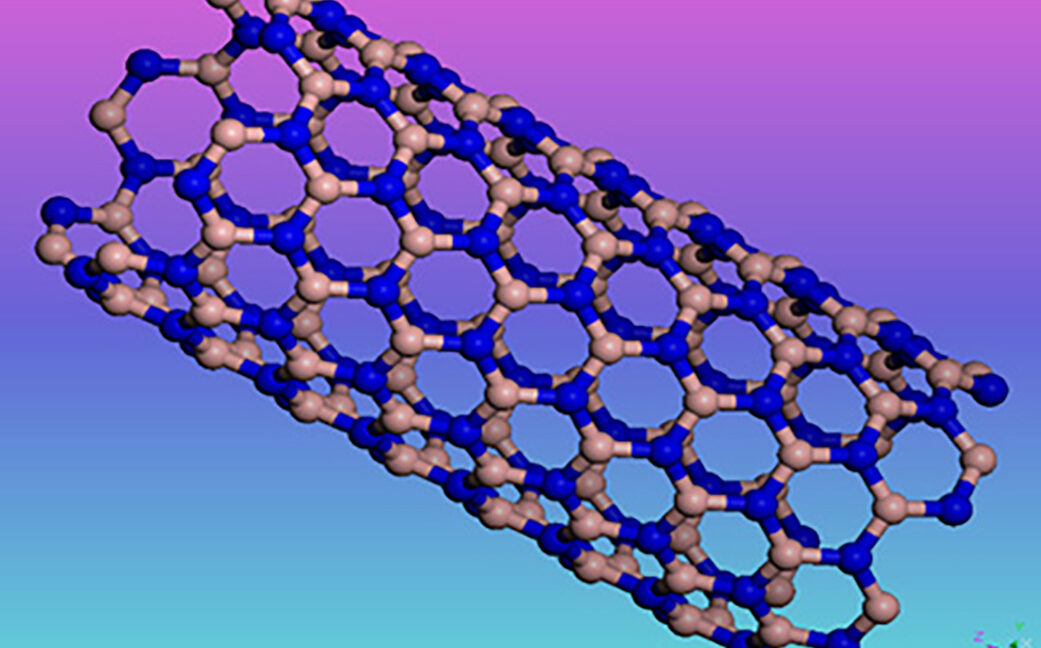
This isn't a review of a physical gadget or a piece of software you can buy off the shelf. Instead, we're diving deep into a groundbreaking piece of scientific research that's pushing the boundaries of quantum mechanics and our understanding of superconductivity. While it won't be in your home anytime soon, this experiment offers a fascinating glimpse into the weirder aspects of the universe, demonstrating how 'non-existent' particles can still have a measurable impact.
Our quick verdict? This research is a compelling, albeit highly theoretical, step forward in fundamental physics, providing a novel testbed for quantum field theory. It's not about making everyday superconductors better today, but about understanding the very fabric of reality at a foundational level. For those captivated by quantum oddities, it’s a must-watch space; for practical applications, it's a long, long road ahead.
What Exactly Is This 'Product'? Unpacking the Core Concept
At its heart, this isn't a story about practical superconductivity – the kind that could, one day, power lossless grids without extreme cooling. Rather, it leverages superconductivity as a sensitive detector for the more obscure consequences of quantum mechanics. The 'product' here is an experimental setup that allows researchers to observe the influence of 'virtual photons' – particles of light that aren't truly 'there' in the classical sense, yet still exert a measurable force – on a superconducting material. It's a testament to how creative scientific inquiry can illuminate unseen forces.
The Quantum Mechanics Under the Hood: Key 'Specs'
The foundational 'spec' for this research lies in quantum field theory, a notoriously complex area of physics. Simplified, it posits that even seemingly empty space isn't truly void; it's permeated by quantum fields. Particles, like photons, are merely energetic excitations within these fields. While 'real' photons can be emitted, detected, and tracked, quantum field theory also predicts the existence of 'virtual photons'. These cannot be directly observed but are understood to mediate fundamental forces, such as electromagnetism, between other particles. A key insight driving this research is that regions with strong electromagnetic fields can effectively be filled with these virtual photons, even when no tangible light is present. This theoretical framework is the conceptual engine driving the entire experiment.
The Role of Boron Nitride: Design & Engineering
To create an environment where these elusive virtual photons could be harnessed, the researchers turned to boron nitride. This material shares structural similarities with graphene, forming layers of interlinked hexagonal rings. However, boron nitride exhibits a unique interaction with light. While light generally gets absorbed or scattered when hitting the material head-on, it can travel between the planes of atoms when oriented along the sheets. This intricate atomic 'design' essentially creates a microscopic waveguide or resonant cavity, allowing for the concentration and manipulation of electromagnetic fields – and by extension, virtual photons – within the material's structure, thereby influencing the nearby superconductor. It's an elegant piece of material engineering serving a profound quantum investigation.
Performance & Impact: What Did They Find?
The core 'performance metric' of this experiment was the observation of how the virtual photons influenced the behavior of the adjacent superconductor. The finding was clear: these non-existent particles of light actually degraded the superconductor's performance, making it worse. While this might sound like a 'con' for practical applications, it's a profound 'pro' for fundamental physics. It experimentally validates a highly counter-intuitive aspect of quantum field theory – that virtual particles, though undetectable directly, have tangible effects. This measured deterioration provides concrete evidence for the influence of a quantum vacuum state on macroscopic quantum phenomena.
Real-World Implications & User Experience (Future Potential)
From a 'user experience' perspective, this research isn't for the average consumer. Its immediate implications are not in new superconductors for energy grids or consumer electronics. However, the 'pros' lie in its potential to deepen our understanding of superconductivity itself. If we can better understand how even the quantum vacuum interacts with these materials, it could eventually lead to new theoretical models and pathways for designing better superconductors in the future, possibly even those that work at higher temperatures. It's foundational science laying groundwork that could have far-reaching technological impacts years or decades down the line.
Current Limitations & The 'Cons'
The primary 'con' is straightforward: this isn’t about practical superconductivity for everyday use. The superconductivity involved still requires 'exotic refrigeration' – meaning extremely low temperatures. This research is firmly in the realm of fundamental physics, not applied technology. It will likely take a significant amount of time before the insights gained from this type of experiment translate into actionable improvements for room-temperature superconductors, if they ever do. It’s complex, highly theoretical, and far from market-ready.
Who Is This For? (Recommendation)
This 'product' – the research itself – is highly recommended for quantum physicists, materials scientists, and anyone with a deep interest in the fundamental workings of the universe. It's for those who find the bizarre consequences of quantum mechanics thrilling and are patient enough for scientific breakthroughs to slowly unravel. It serves as a powerful new tool for testing quantum field theory and offers a unique perspective on the nature of 'empty' space. It is not for investors looking for the next big tech startup or consumers hoping for a new energy solution next year.
Q: Is this research going to lead to practical, room-temperature superconductors soon? A: No, not directly or in the near future. This research is fundamental, using superconductivity as a testbed for quantum mechanics. While it may eventually inform future developments, it's not a direct path to practical applications in its current state.
Q: Does this mean 'empty space' isn't actually empty? A: According to quantum field theory, yes. This research reinforces the idea that what we perceive as empty space is teeming with quantum fields and virtual particles that can have real, measurable effects.
Q: How does boron nitride help in this experiment? A: Boron nitride's unique atomic structure allows for the concentration of electromagnetic fields – and thus, virtual photons – in specific orientations. This provides the environment needed to effectively expose the superconductor to these 'non-existent' particles and observe their influence.
Related articles
Android 17 QPR2 Beta 7.1: The Performance Relief You've Been Waiting
Android 17 QPR2 Beta 7.1: Finally Fixing the QPR1 Performance Woes Verdict: Android 17 QPR2 Beta 7.1 is a crucial and highly anticipated software update for Google Pixel users, specifically targeting and resolving the

DJI Solo Video Setups: Smart Choices for Lone Creators
This review delves into DJI's recommended solo video setups, highlighting the Osmo Pocket 3 Creator Combo as a top pick for its integrated camera, gimbal, and mic. It also covers stabilizers like the Osmo Mobile 8 and RS 4, and the DJI Mic Mini series for enhanced audio, providing honest pros, cons, and clear buying advice.

Ars Technica's Rocket Report: Your Essential Space Industry Briefing
Quick Verdict Ars Technica's Rocket Report, presented by veteran space reporter Stephen Clark, offers an invaluable and meticulously organized weekly (or similar frequency, implied by "Edition 9.15") digest of the most

Apple iPhone Duo: A Daring Debut with Notable Compromises
Apple's highly anticipated iPhone Duo, priced at $2,000, has gone on pre-order. While hailed as "Apple's most exciting device in a decade" for its innovative foldable design and immersive display, it comes with significant drawbacks like the absence of FaceID and a premium camera.
KDE Plasma 6.8: A Future-Focused 30th Anniversary Update
Quick Verdict KDE Plasma 6.8, arriving as the "30th Anniversary Edition," is a pivotal release that decisively pushes the desktop environment into the future. With a definitive farewell to native X11 sessions and a

Kojima Compares Divisive New Film 'Digger' to MGS2's Prescient Vision
Gaming icon Hideo Kojima has praised the divisive 2026 film *Digger*, drawing intriguing parallels to his own prophetic game, *Metal Gear Solid 2*. Both works, he explains, uniquely explore the dangers of misinformation and a fragmented digital reality, anxieties he shares with *Digger*'s director, Alejandro González Iñárritu.