
Polymarket Insider Trading Accusation: A Deep Dive into Market Ethics
The Polymarket Insider Trading Scandal: A Troubling Trend Verdict: The recent accusation against a Google employee for allegedly leveraging insider information to make over a million dollars on Polymarket casts a
The Polymarket Insider Trading Scandal: A Troubling Trend
Verdict: The recent accusation against a Google employee for allegedly leveraging insider information to make over a million dollars on Polymarket casts a significant shadow on the integrity of prediction markets. While these platforms promise decentralized forecasting, recurring incidents of insider trading highlight fundamental vulnerabilities and regulatory challenges, urging extreme caution for anyone considering participation.
Introduction: When Information Becomes Illicit Gain
The world of prediction markets, often lauded for its ability to aggregate diverse opinions and forecast future events, has once again found itself under scrutiny. Engadget recently reported a federal criminal complaint against Michele Spagnuolo, a software engineer at Google, accusing him of an astounding act of insider trading on the Polymarket platform. This incident, allegedly yielding $1.2 million in illicit gains, serves as a stark reminder of the ethical tightrope these platforms walk and the ongoing struggle to prevent abuse.
The Heart of the Accusation: Google, d4vd, and a Million Dollars
At the core of the controversy is Michele Spagnuolo, a Google employee who has been charged with commodities fraud, wire fraud, and money laundering. The accusation states that Spagnuolo exploited confidential marketing materials from his employer to place bets on Polymarket. Specifically, he allegedly wagered that the singer d4vd would be the top-searched person on Google for the year 2025. This privileged insight, if proven, allowed him to profit substantially from information not available to the general public, subsequently earning $1.2 million before reportedly attempting to obscure the source of his new wealth.
Google has acknowledged the incident, stating their cooperation with law enforcement. A company spokesperson confirmed to ABC News that the employee accessed marketing material via a tool accessible to all staff, but unequivocally condemned the use of such confidential information for personal gain, calling it a “serious breach of our policies.” Spagnuolo has since been placed on leave, with Google indicating further appropriate action will be taken.
Prediction Markets: A Double-Edged Sword
Prediction markets like Polymarket operate on the premise of creating markets around future events, allowing participants to buy and sell shares corresponding to the likelihood of an outcome. When functioning as intended, they can be powerful tools for aggregating public sentiment and generating accurate forecasts. However, the allure of quick profits, particularly when combined with access to non-public information, creates an irresistible temptation for some.
This isn't Polymarket's first encounter with controversy. The platform itself recognized the growing issue of insider trading, leading it to adopt new rules in March specifically aimed at curbing such activities. Whether these policies will prove effective in preventing future abuses remains to be seen, as the Spagnuolo case highlights the persistent challenges in policing information in a decentralized environment.
A Troubling Pattern: Insider Trading Beyond Polymarket
The Spagnuolo case is not an isolated incident but rather a symptom of a broader problem plaguing prediction markets. The Engadget report references several other high-profile instances of individuals attempting to profit from privileged information across various platforms:
- YouTuber MrBeast's employee: An editor for the prominent YouTuber was fined by Kalshi for engaging in insider trading.
- Political candidates: Kalshi also suspended three political candidates from its platform for similar insider trading violations.
- Military personnel: A Special Forces soldier reportedly won $400,000 by betting on a market related to the capture of a political figure.
- Bizarre manipulations: Beyond insider trading, there have even been allegations of outright market manipulation, such as an individual purportedly using a hairdryer to rig weather-related bets on Polymarket.
These recurring incidents underscore a systemic vulnerability across prediction market platforms, irrespective of their specific operational models. The inherent nature of these markets—betting on future outcomes—makes them attractive targets for those with any form of informational advantage, whether obtained through legitimate employment or illicit means.
Comparing Approaches: Polymarket vs. Kalshi in the Fight Against Insider Trading
While the source content doesn't provide a direct, feature-by-feature comparison of Polymarket and Kalshi, it does highlight different types of incidents and responses related to insider trading on each platform. This allows us to infer some distinctions in their experiences and, perhaps, their ongoing battles with integrity.
| Feature / Incident Type | Polymarket Experience | Kalshi Experience |
|---|---|---|
| Insider Trading Accusation (Specific) | Google employee accused of $1.2M gain using Google's confidential marketing material. | MrBeast employee fined; three political candidates suspended for insider trading. |
| Market Manipulation (Non-Insider Trading) | Allegations of manipulating weather bets with a hairdryer. | Not specifically mentioned in the source content for this type of manipulation. |
| Platform Response to Insider Trading | Adopted new rules in March specifically to curb insider trading. | Fined and suspended individuals caught in violations. |
| Regulatory Context (Implied) | Faces federal criminal charges (commodities fraud, wire fraud, money laundering) for the accused individual. | Engaged in fining and suspending, indicating internal enforcement mechanisms. |
It appears both platforms have been targets of insider trading, demonstrating that the challenge is pervasive. Kalshi's actions of fining and suspending individuals suggest established enforcement mechanisms within their framework. Polymarket's adoption of new rules indicates an evolving strategy to tackle the issue, potentially in response to incidents like the one involving the Google employee or the general increase in such attempts.
The Unseen Costs: Eroding Trust and Market Integrity
The constant drumbeat of insider trading accusations carries significant implications beyond the immediate financial losses or gains. For prediction markets to function credibly, they rely heavily on the perception of fair play and transparent information. Each instance of alleged insider trading erodes public trust, making the markets less appealing to legitimate participants and potentially skewing the aggregated forecasts, thus undermining their core utility.
Furthermore, these incidents bring unwanted regulatory attention. As seen with the federal criminal charges against Spagnuolo, authorities are increasingly prepared to treat these activities with the same gravity as traditional financial market misconduct, even if the platforms themselves operate in less regulated or decentralized spaces. The long-term viability and mainstream adoption of prediction markets will depend heavily on their ability to establish and maintain rigorous safeguards against such exploitation.
Recommendations: Navigating the Murky Waters
For those considering engagement with prediction markets, or for the platforms themselves, the takeaways from these events are clear:
- For Participants: Exercise extreme caution. The promise of quick returns can be overshadowed by the risks of market manipulation and the legal consequences of engaging in or knowingly benefiting from insider trading. Understand that while some platforms strive for integrity, the nature of information flow can make them vulnerable.
- For Platforms: Continuous and proactive efforts are essential. Implementing robust anti-insider trading policies, alongside effective enforcement and transparent communication about these measures, is crucial for building and maintaining trust. Collaboration with regulatory bodies, where applicable, could also enhance credibility.
- For Employers (like Google): Companies must reiterate and reinforce strict policies regarding the use of confidential company information, even if accessed via widely available internal tools. Employee monitoring and education about the legal and ethical ramifications of insider trading on any market, traditional or decentralized, are paramount.
Conclusion: A Perpetual Battle for Fairness
The accusation against a Google employee making millions from insider trading on Polymarket is a stark reminder that while technology evolves, human nature's darker impulses often remain constant. Prediction markets offer intriguing possibilities, but until they can consistently prove their resilience against insider information and manipulation, they will remain a high-risk, high-scrutiny arena. The ongoing struggle for fairness and integrity in these emerging markets is a battle far from won, demanding vigilance from all involved.
FAQ
Q: Is insider trading a widespread problem on prediction markets?
A: The source content suggests that insider trading and market manipulation are recurring issues across various prediction market platforms, citing multiple instances involving different individuals and platforms, including Polymarket and Kalshi. This indicates it is not an isolated phenomenon.
Q: What are the potential consequences for individuals accused of insider trading on these platforms?
A: As seen in the case of the Google employee, individuals can face serious legal charges, including commodities fraud, wire fraud, and money laundering. Companies like Google also take internal action, such as placing employees on leave and initiating appropriate disciplinary measures. Other platforms, like Kalshi, have also been reported to issue fines and suspensions.
Q: Are prediction markets generally safe and reliable for participation?
A: The incidents highlighted in the source content suggest that prediction markets carry significant risks, particularly concerning insider trading and potential manipulation. While platforms are attempting to implement new rules to combat these issues, the integrity of the markets can be compromised by bad actors, making it important for potential participants to be aware of these inherent vulnerabilities and proceed with caution.
Related articles
Android 17 QPR2 Beta 7.1: The Performance Relief You've Been Waiting
Android 17 QPR2 Beta 7.1: Finally Fixing the QPR1 Performance Woes Verdict: Android 17 QPR2 Beta 7.1 is a crucial and highly anticipated software update for Google Pixel users, specifically targeting and resolving the

DJI Solo Video Setups: Smart Choices for Lone Creators
This review delves into DJI's recommended solo video setups, highlighting the Osmo Pocket 3 Creator Combo as a top pick for its integrated camera, gimbal, and mic. It also covers stabilizers like the Osmo Mobile 8 and RS 4, and the DJI Mic Mini series for enhanced audio, providing honest pros, cons, and clear buying advice.

TCG Pocket Responds: A Much-Needed Pace Shift for Pokémon Fans
Pokémon TCG Pocket is rolling out a major update for its second anniversary, primarily addressing player concerns about overwhelming content releases by shifting to a six-week set schedule. This aims to curb player decline and improve overall engagement by giving trainers more time to collect and strategize. The update also adds new collection methods, improved deck-building features, and enhanced trading functionality.

Ars Technica's Rocket Report: Your Essential Space Industry Briefing
Quick Verdict Ars Technica's Rocket Report, presented by veteran space reporter Stephen Clark, offers an invaluable and meticulously organized weekly (or similar frequency, implied by "Edition 9.15") digest of the most

Apple iPhone Duo: A Daring Debut with Notable Compromises
Apple's highly anticipated iPhone Duo, priced at $2,000, has gone on pre-order. While hailed as "Apple's most exciting device in a decade" for its innovative foldable design and immersive display, it comes with significant drawbacks like the absence of FaceID and a premium camera.
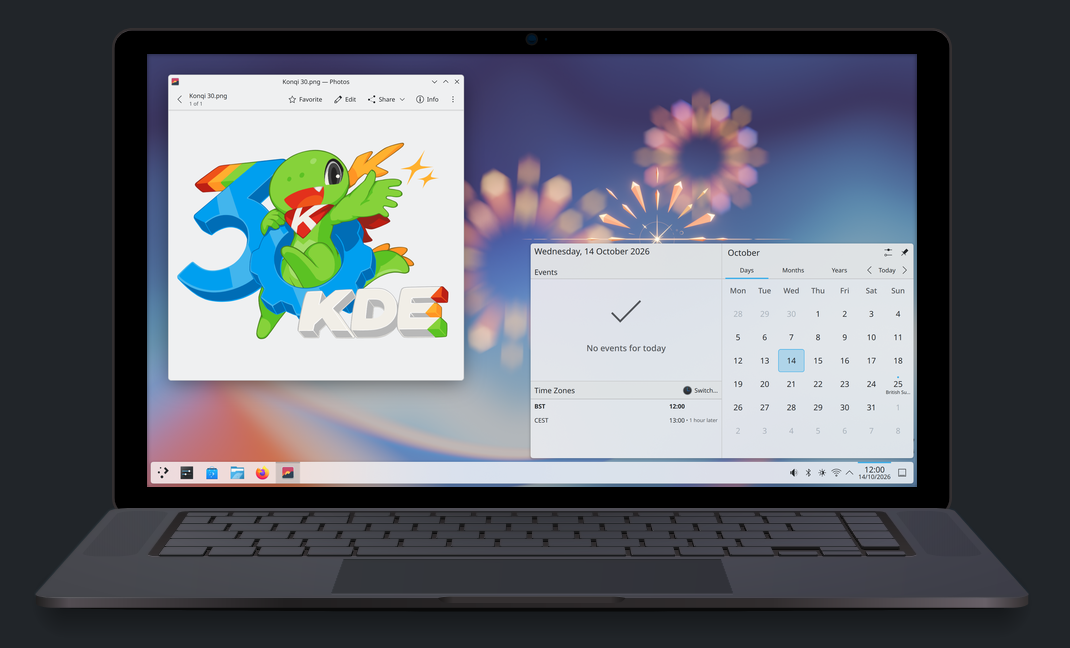
KDE Plasma 6.8: A Future-Focused 30th Anniversary Update
Quick Verdict KDE Plasma 6.8, arriving as the "30th Anniversary Edition," is a pivotal release that decisively pushes the desktop environment into the future. With a definitive farewell to native X11 sessions and a