
policy: See the moment when Republican politicians turned against
A Washington Post analysis reveals a dramatic shift as Republican politicians turned sharply negative on data centers in the past six months, moving from advocates to critics. This change aligns with growing public concerns over environmental impact, job creation, and political motivations, potentially reshaping the future of tech infrastructure development.

Republican politicians have rapidly reversed their public stance on data centers, transitioning from strong advocates to sharp critics over the past six months, according to a recent analysis by The Washington Post. This significant ideological shift, documented in public statements, signals a potential recalibration of conservative views towards the massive digital infrastructure that underpins modern technology and artificial intelligence.
The Post's comprehensive analysis reveals a dramatic transformation in how Republican lawmakers are discussing data centers. What was once a topic often framed with enthusiasm for technological advancement and economic growth is now increasingly met with skepticism and negative framing within conservative discourse. This U-turn has occurred swiftly, becoming noticeable across the party's messaging in early 2026.
A stark illustration of this changing tide comes from Ohio Senator Jon Husted. As recently as 2024, Senator Husted was a vocal champion for data center development, publicly lauding a planned Google project. He asserted that such ventures were crucial for establishing central Ohio as an "important tech hub in America" and declared data centers "essential to our digital lives." His earlier statements underscore the bipartisan, or at least strong Republican, support that these high-tech facilities once enjoyed.
This political pivot appears to align closely with burgeoning grassroots opposition to data center construction in various communities. Public sentiment, often highlighted in reader discussions, frequently raises concerns about the considerable environmental footprint of these facilities, particularly their energy and water consumption. Additionally, critics question the actual number of high-paying jobs they generate and express skepticism regarding the long-term economic benefits often touted by developers and political proponents.
Examples of this local resistance are becoming more common. In June 2026, for instance, Charolette Baierl and Sally Simpson were photographed protesting a proposed data center in Cheswick, Pennsylvania. Such visible public outcry suggests that local concerns about resource strain, noise, and the industrialization of rural areas are increasingly finding a sympathetic ear among Republican lawmakers.
The aggregated negative sentiment from influential Republican officials could have profound and lasting implications for the technology sector and future infrastructure policy across the United States. Developers planning new data center projects might now encounter considerably increased political hurdles, face more stringent regulatory reviews, or see a reduction in government incentives, particularly in states with strong Republican majorities. This evolving political landscape could fundamentally reshape where and how tech expansion occurs.
Ultimately, this sudden and widespread political realignment suggests a broader reassessment of the true costs and benefits associated with large-scale digital infrastructure. As the demand for computing power, driven by advancements in artificial intelligence and other data-intensive applications, continues to escalate, the political appetite for their foundational physical requirements — specifically data centers — is demonstrably waning within a key segment of the political spectrum. This forces a new and critical national conversation about balancing rapid technological progress with the environmental and community concerns of local populations. The industry and policymakers alike will need to adapt to this new reality, potentially exploring more sustainable and integrated development strategies.
FAQ
Q: When did Republican politicians' views on data centers change?
A: According to a Washington Post analysis, Republican politicians' public statements about data centers turned sharply negative over the past six months, culminating around August 2026.
Q: What was the previous Republican stance on data centers?
A: Previously, many Republican politicians, such as Ohio Senator Jon Husted, promoted data centers as beneficial, essential for digital life, and catalysts for establishing tech hubs, as seen with a planned Google project in 2024.
Q: What are some common public concerns about data centers?
A: Public concerns often include the environmental impact of data centers, their limited generation of high-paying jobs, and skepticism regarding the true economic benefits they bring to local communities, as reflected in reader comments and local protests.
Related articles

Apple Unveils iPhone Duo: Pricey Foldable Sees Soaring Demand
Apple has officially entered the foldable smartphone arena with the long-anticipated launch of the iPhone Duo. Priced starting at a hefty $1,999, the device features a 5.4-inch outer display and a larger 7.6-inch inner

in-depth: Chicago-Area Cops Helped HSI Spy on Minnesota Anti-ICE
Chicago-area law enforcement, including local police and HSI agents, conducted undercover surveillance on Minnesota anti-ICE activists at an April 2, 2022, talk in Chicago. This operation was part of a federal conspiracy probe into 15 Minnesota activists facing felony charges related to immigration enforcement resistance. Civil liberties advocates have condemned the surveillance as a troubling intrusion into protected political activity.

Mark Wahlberg on using AI in film ‘the right way’ and being open to
Actor Mark Wahlberg believes AI has a place in filmmaking if used responsibly for enhancement, not script generation or actor replacement. At TechCrunch Disrupt, he expressed openness to an AI likeness carrying on his legacy, managed by his family, and emphasized storytelling.

Tesla Unveils Thruster-Equipped Roadster, 2028 Production Targeted
Tesla has unveiled its second-generation Roadster, featuring cold-gas thrusters co-developed with SpaceX, enabling it to jump and flip. The electric sports car demonstrated 0-60mph in an astonishing 0.81 seconds, with production targeted for 2028. This highly anticipated reveal also serves as a key recruitment tool for Tesla's ambitious AI and robotics initiatives.

Amazon Prime Video Launches AI-Powered Prime 360 for NBA Coverage
Amazon Prime Video is elevating its NBA coverage with the introduction of Prime 360, an AI-powered replay system offering immersive, 'fly through' views of the action. Kicking off its second season, Prime Video also adds Yahoo fantasy integration and gains exclusive Eastern Conference Finals rights, expanding its tech-driven sports broadcast. The new features aim to deliver a unique and interactive viewing experience for basketball fans.
regional: A two-person Seattle startup lands $1M to reinvent
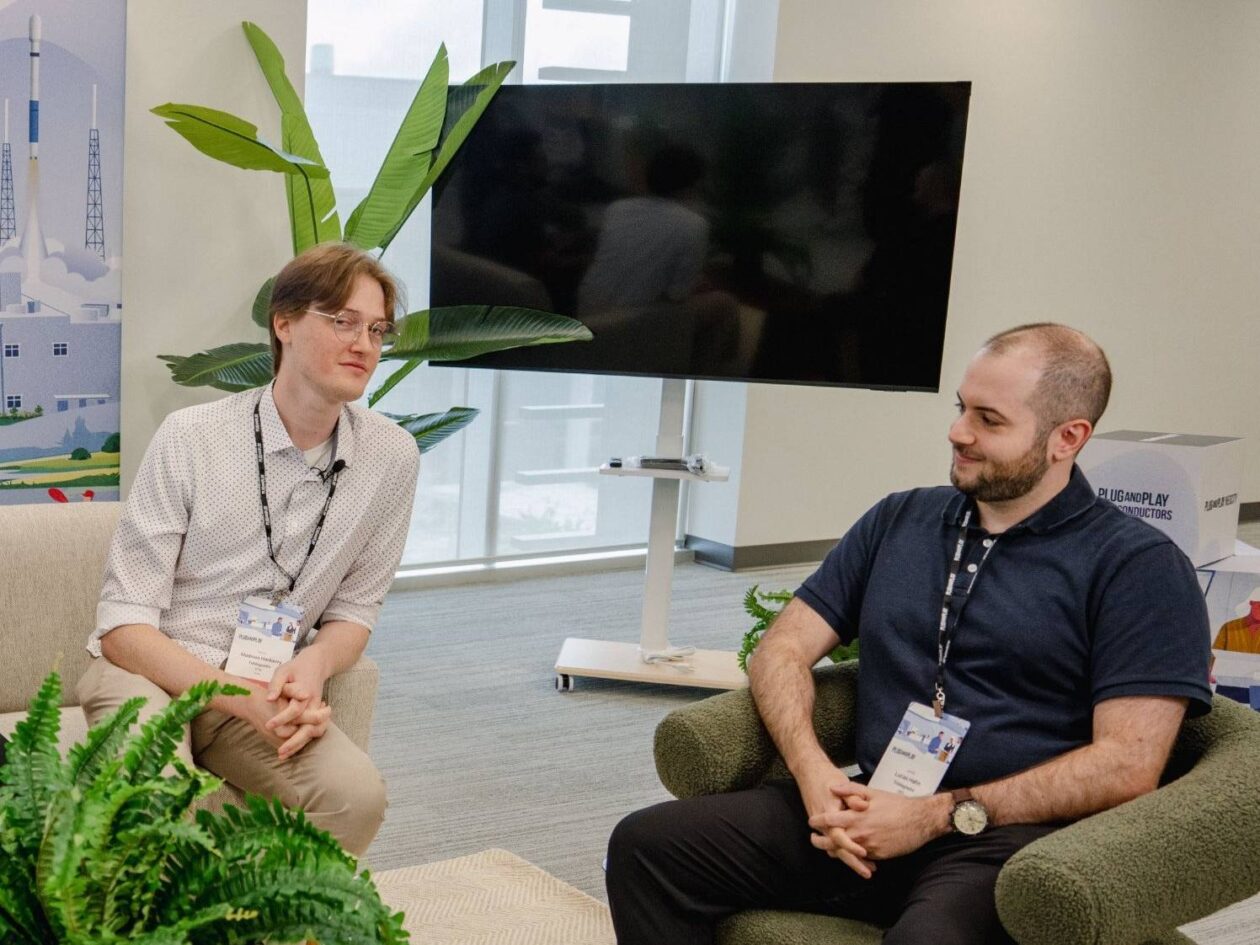
Seattle startup TriMagnetix has secured $1 million to develop semiconductor chips that consume 800 times less energy and are radiation-resistant. The two-person company, leveraging nanomagnetic technology, is targeting space applications and data centers. With new funding and key partnerships, TriMagnetix aims for commercial sales within a year.