
Plug-in Solar: A Glimpse into DIY Energy's Future
Plug-in solar systems, also known as balcony solar, represent a fascinating, accessible frontier in personal renewable energy. Instead of sprawling rooftop arrays, these compact, 'plug-and-play' setups offer a

Plug-in solar systems, also known as balcony solar, represent a fascinating, accessible frontier in personal renewable energy. Instead of sprawling rooftop arrays, these compact, 'plug-and-play' setups offer a simplified way to generate electricity directly at home. While their widespread adoption in the US faces regulatory hurdles, early indicators suggest a promising future for individuals looking to trim utility bills and embrace sustainability without a major financial or installation commitment.
What Exactly Is Plug-in Solar?
Imagine a small solar panel system that you can literally plug into a standard wall outlet. That's essentially what plug-in solar is. These systems typically consist of one or more solar panels, an integrated inverter, and sometimes a small battery. They connect to a home's standard 120-volt outlet and intelligently direct the generated electricity to the nearest active appliance. Forget complex wiring or roof climbing; these units are designed for easy placement on a balcony, in a backyard, or on a patio.
Key specifications and capabilities of these systems generally range from 200W to 1,800W. It's important to understand they're not intended to entirely replace your grid connection or power your entire home. Instead, their purpose is to reduce your dependency on utility companies by offsetting your constant electricity usage, thereby lowering your energy costs. The 'brains' of the operation often involve a microinverter, efficiently converting solar energy into usable household current.
One of the most appealing aspects of plug-in solar is its affordability and ease of entry. As Solar Energy Expert Justin Nielsen from Wolf River Electric notes, these systems circumvent the traditional barriers to solar adoption. Historically tied to homeownership, large solar installations often demand significant upfront costs for permits, professional installation, and inspections. Plug-in solar bypasses these complexities, making clean energy accessible to a broader demographic, including the significant portion of Americans who rent.
User Experience: Simplicity and Portability
If 'easy' is what you're after in an energy solution, plug-in solar delivers. The core promise is a plug-and-play experience, removing the need for specialized knowledge or labor. This means no waiting for installation crews, no complex wiring diagrams, and no intricate permitting processes. Users simply set up their panels in a sunny spot and connect them to an outlet. The modular and portable nature of these systems is another significant user benefit; you can choose the size that fits your needs and even take them with you if you move, a feature unheard of with traditional rooftop solar.
For renters or those in urban apartments, this portability and ease of setup are game-changers. It democratizes access to solar energy, allowing individuals in high-rise buildings or homes without suitable roof space to participate in renewable energy generation. The inherent simplicity means the focus is on generating clean power, not navigating bureaucratic hurdles.
The Regulatory Roadblock: Why Isn't it Everywhere Yet?
Despite the undeniable appeal and global popularity (Germany, for instance, has embraced balcony solar), the US regulatory landscape for utilities wasn't designed with plug-and-play systems in mind. This means widespread legality is a patchwork, not a given.
Pros:
- Accessibility: Open to renters and apartment dwellers, not just homeowners.
- Affordability: Significantly lower upfront investment, bypasses expensive installation costs, permits, and inspections.
- Ease of Use: True 'plug-and-play' setup, no professional installation required.
- Portability: Modular design allows for customization and easy relocation.
- Bill Reduction: Effectively offsets consistent appliance loads, leading to noticeable monthly savings.
- Empowerment: Allows individuals to generate their own clean electricity.
- Safety: Modern systems require UL-certified equipment and anti-islanding protections (as per Utah's law), ensuring safety.
- Global Precedent: Proven effective and safe in countries like Germany.
Cons:
- Limited Legality (US): Currently, Utah is the only state where direct plug-in solar up to 1,200W is fully legalized without traditional utility interconnection. Virginia's law takes effect July 2026, and Colorado and Maine approved legislation in 2026. Many other states have active bills, but it's not yet universally available.
- Regulatory Hurdles: US utilities and electrical regulators harbor concerns about grid instability, backfeeding during outages, overloaded circuits, uncertified inverters, and fire risks. These often stem from a focus on permanent, large-scale systems.
- Utility Resistance: Utilities may resist changes that lead to reduced revenue or control over the grid, slowing legislative progress.
- Small Scale: Not a full home power solution; primarily designed to offset specific loads and reduce consumption, not replace grid dependency.
- State-Specific Rules: The lack of a national approval process means progress is slow and varies state by state.
Saving Money and Powering Your Home: Does it Work?
Yes, plug-in solar demonstrably works to save money, a fact backed by millions of installations in countries like Germany. While these systems won't power your entire home, they excel at offsetting the constant 'vampire draw' of appliances that run continuously. Think refrigerators, Wi-Fi routers, smart home devices, TVs, and even HVAC fans.
For example, a typical plug-in solar setup with two 410W panels can harness between 3 to 5 kWh daily, translating to 90-150 kWh monthly. Depending on your local electricity rates, this could mean monthly savings anywhere from $13 to $35. In states like California, where electricity costs have surged by nearly 40% between 2022 and 2025, these savings become even more impactful. The true value lies in reducing the amount of energy your home consumes from the grid, especially beneficial for those on time-of-use billing with expensive evening rates.
Plug-in Solar vs. Traditional Rooftop Solar
To better understand where plug-in solar fits, let's compare it to its more established counterpart:
| Feature | Plug-in Solar (Balcony/Backyard Solar) | Rooftop Solar (Traditional) |
|---|---|---|
| Installation | DIY, plug-and-play, no professional installation | Requires professional installation, complex wiring |
| Location | Balcony, patio, backyard; portable | Permanent fixture on a home's rooftop |
| Permits/Fees | Bypasses most permits, inspections, interconnection agreements | Requires permits, inspections, utility interconnection agreements |
| System Size | Small scale (200W - 1,800W), modular | Large, comprehensive arrays (often 5,000W+) |
| Energy Output | Offsets specific appliance usage, reduces overall consumption | Can power a significant portion or all of a home, net metering |
| Cost | Affordable initial investment; system only | Higher upfront cost (system + installation) |
| Ownership | Accessible to renters and homeowners | Primarily for homeowners; long-term commitment |
| Legality (US) | Currently limited to a few states; growing | Widely legal and established across most states |
| Portability | Yes, can be easily moved | No, permanent fixture |
| Complexity | Low, direct outlet connection | High, intricate grid integration and approval process |
The Verdict: Should You Plug In?
Plug-in solar is a compelling option for a specific segment of the market. If you're a renter, live in an apartment, or own a home without an ideal rooftop for traditional panels, this technology offers an unprecedented level of accessibility to clean energy. It's an excellent choice for those seeking to reduce their monthly electricity bills with a relatively small, manageable investment and without the headache of permits, inspections, or professional installers.
However, it's crucial to manage expectations. Plug-in solar won't make your home entirely off-grid. Its primary role is to supplement your energy needs and provide savings. The biggest hurdle right now is legality; unless you're in Utah or a state with imminent legislation (like Virginia, Colorado, or Maine), you might have to wait. But with California and dozens of other states actively pursuing similar bills, the future looks bright for this DIY energy solution.
For the environmentally conscious consumer, the budget-minded individual, or anyone keen on personal energy independence, plug-in solar represents a practical, low-barrier entry into the world of renewable energy. Keep an eye on your state's legislative developments – plug-in solar could be coming to an outlet near you sooner than you think.
FAQ
Q: Is plug-in solar legal where I live?
A: Currently, only Utah has fully legalized direct plug-in solar systems up to 1,200W, without requiring traditional utility interconnection agreements. Virginia's law takes effect on July 1, 2026, and Colorado and Maine approved legislation in 2026. Dozens of other states, including California, New York, and Hawaii, have active bills. You should check your specific state's and local utility's regulations for the most up-to-date information.
Q: How much can plug-in solar save me on my electricity bill?
A: Plug-in solar systems are designed to offset your home's constant electricity usage, rather than powering your entire house. A typical system, such as one with two 410W panels, can generate between 90 to 150 kWh monthly. This can lead to estimated monthly savings ranging from $13 to $35, depending on your local electricity rates. Savings are most noticeable when powering continuously running appliances like refrigerators, Wi-Fi equipment, or smart home devices.
Q: Is plug-in solar a suitable alternative to traditional rooftop solar?
A: Plug-in solar is an excellent alternative for individuals who cannot or prefer not to install traditional rooftop solar, such as renters, apartment dwellers, or homeowners seeking a more affordable and less intrusive solution. It offers a low barrier to entry, requires no professional installation, permits, or inspections, and is portable. However, it's designed for smaller energy contributions (typically 200W-1800W) to reduce energy consumption, not to replace full grid dependency or provide the extensive power output of a large rooftop array.
Related articles
Android 17 QPR2 Beta 7.1: The Performance Relief You've Been Waiting
Android 17 QPR2 Beta 7.1: Finally Fixing the QPR1 Performance Woes Verdict: Android 17 QPR2 Beta 7.1 is a crucial and highly anticipated software update for Google Pixel users, specifically targeting and resolving the

DJI Solo Video Setups: Smart Choices for Lone Creators
This review delves into DJI's recommended solo video setups, highlighting the Osmo Pocket 3 Creator Combo as a top pick for its integrated camera, gimbal, and mic. It also covers stabilizers like the Osmo Mobile 8 and RS 4, and the DJI Mic Mini series for enhanced audio, providing honest pros, cons, and clear buying advice.

in-depth: Chicago-Area Cops Helped HSI Spy on Minnesota Anti-ICE
Chicago-area law enforcement, including local police and HSI agents, conducted undercover surveillance on Minnesota anti-ICE activists at an April 2, 2022, talk in Chicago. This operation was part of a federal conspiracy probe into 15 Minnesota activists facing felony charges related to immigration enforcement resistance. Civil liberties advocates have condemned the surveillance as a troubling intrusion into protected political activity.

Ars Technica's Rocket Report: Your Essential Space Industry Briefing
Quick Verdict Ars Technica's Rocket Report, presented by veteran space reporter Stephen Clark, offers an invaluable and meticulously organized weekly (or similar frequency, implied by "Edition 9.15") digest of the most

Apple iPhone Duo: A Daring Debut with Notable Compromises
Apple's highly anticipated iPhone Duo, priced at $2,000, has gone on pre-order. While hailed as "Apple's most exciting device in a decade" for its innovative foldable design and immersive display, it comes with significant drawbacks like the absence of FaceID and a premium camera.
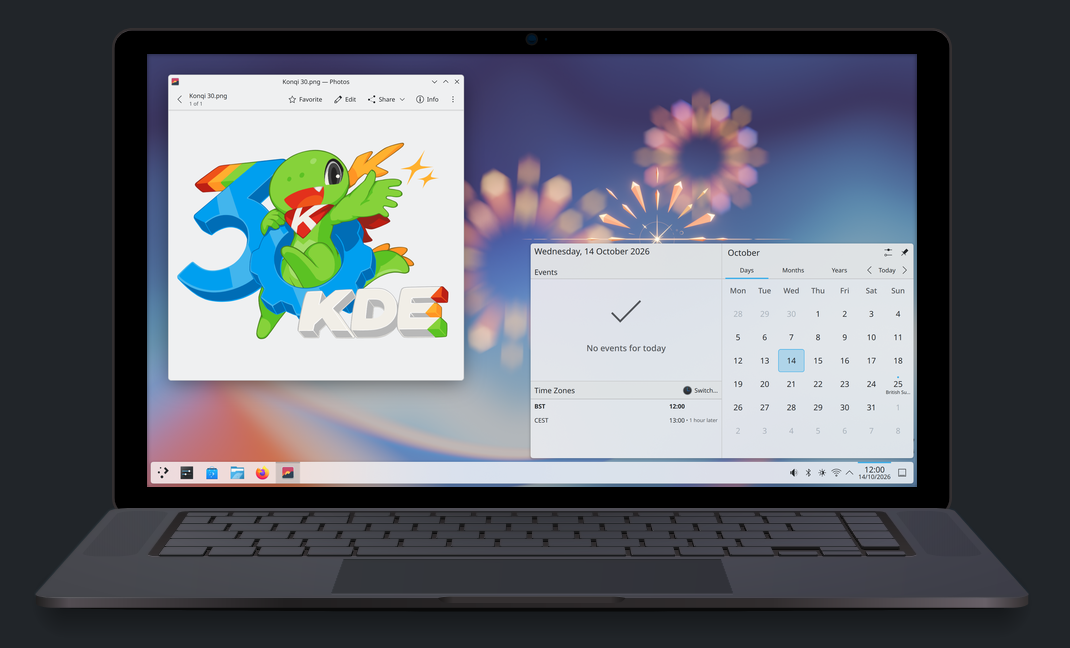
KDE Plasma 6.8: A Future-Focused 30th Anniversary Update
Quick Verdict KDE Plasma 6.8, arriving as the "30th Anniversary Edition," is a pivotal release that decisively pushes the desktop environment into the future. With a definitive farewell to native X11 sessions and a