
Peec AI Skyrockets to $10M ARR in Six Months, Dominating AI Search
Berlin-based startup Peec AI has achieved a remarkable milestone, more than doubling its annual recurring revenue (ARR) to $10 million in just six months. The company's rapid ascent is attributed to its innovative
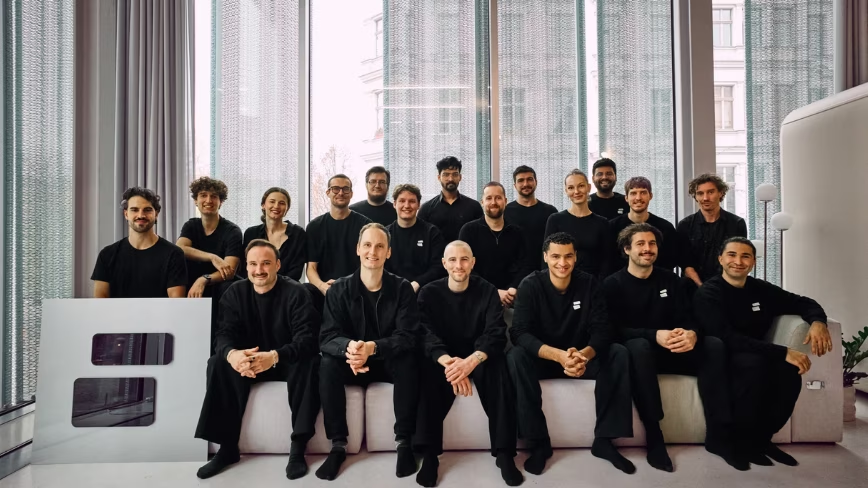
Berlin-based startup Peec AI has achieved a remarkable milestone, more than doubling its annual recurring revenue (ARR) to $10 million in just six months. The company's rapid ascent is attributed to its innovative Generative Engine Optimization (GEO) product, which empowers brands to enhance their visibility within AI-generated search results, including prominent platforms like ChatGPT.
The significant financial leap follows a successful $21 million Series A funding round, secured just half a year ago when Peec AI's ARR stood at approximately $4 million. This accelerated growth pace underscores the burgeoning demand for solutions that help businesses navigate the evolving landscape of artificial intelligence-driven information consumption.
The Rise of Generative Engine Optimization (GEO)
Peec AI operates within the nascent but rapidly expanding category of Generative Engine Optimization. Unlike traditional SEO, which focuses on tracking a brand's ranking on platforms like Google, Peec's platform offers a comprehensive dashboard. This tool allows marketers to monitor, measure, and actively influence their brand's presence when users engage with AI chatbots such as ChatGPT, Claude, Gemini, and Perplexity.
The shift in consumer behavior, moving from clicking traditional search links to posing questions directly to conversational AI, has created a new frontier for brand attention. Companies that successfully appear in AI chatbot responses are now capturing the visibility that search engine results pages once solely provided. Peec AI positions itself as the essential measurement layer for this critical transition.
Market Demand and Competitive Edge
The growth of the GEO category mirrors the broader adoption of AI in marketing. A recent report by Canva revealed that an overwhelming 97% of marketing leaders now integrate AI into their daily operations. Furthermore, Google's own data indicates that AI Overviews are now present in roughly 60% of US search queries, fundamentally altering how brands are discovered online.
For any business reliant on online discoverability, adapting from SEO to GEO is no longer an option but a necessity. Peec AI's platform is designed to meet this demand head-on. While competitors like HubSpot and Semrush are introducing AI search analytics features, Peec AI's CEO, Marius Meiners, emphasizes that their advantage lies in being purpose-built for GEO from its inception, rather than integrating it as an add-on to existing SEO tools.
To better serve the burgeoning US market, particularly its enterprise clients, Peec AI recently established an office in New York. This strategic expansion targets where marketing budgets are largest and where the adoption curve for GEO is currently steepest.
Culture, Growth, and European Tech Momentum
Peec AI's internal culture, shaped by CEO Marius Meiners' background as a top-ranked professional esports athlete, promotes competitive transparency. The company's revenue tracker is openly accessible to all employees, a practice Meiners likens to team members always knowing the score in real-time.
The company has also employed unconventional talent acquisition strategies, notably utilizing physical billboards in Berlin to recruit engineers and engage prospects simultaneously. These billboards were often placed strategically near other tech firms, a deliberate move to signal Peec AI as a compelling opportunity in the intense competition for AI talent.
Peec AI's impressive revenue trajectory places it among a select group of European AI startups that are demonstrating growth rates previously characteristic of US companies. Antler partner Christoph Klink, an investor in Peec AI, highlights this trend, noting that startups like Lovable and Paris-based Mistral are also achieving significant ARR milestones. This pattern suggests a narrowing gap between European and American AI innovation, particularly for companies building genuinely novel solutions in high-demand categories.
Klink attributes the public disclosure of revenue milestones by companies like Peec AI to a desire to demonstrate tangible success and foster a growth-oriented culture. In an investment climate where substance and proven growth are prioritized over inflated valuations, a journalist-verified $10 million ARR carries substantial weight. As AI chatbots increasingly move towards monetization through advertising, the ability to measure and control brand visibility within these conversations will become an even more critical commercial factor, a space Peec AI is poised to dominate.
FAQ
Q: What is Generative Engine Optimization (GEO)?
A: Generative Engine Optimization (GEO) is a new category focused on helping brands track and improve their visibility within AI-generated search results and conversational AI platforms like ChatGPT, Claude, and Gemini. It's distinct from traditional SEO, which targets web search engines.
Q: What is Peec AI's core product?
A: Peec AI offers a dashboard and platform that allows marketers to monitor, measure, and influence how their brand appears when users type prompts or ask questions to AI chatbots. Essentially, it helps brands "show up" in AI conversations.
Q: Why is GEO becoming so important for brands?
A: As consumers increasingly turn to AI chatbots for information and answers, the way brands are discovered online is changing. Google's AI Overviews and the daily use of AI by marketers demonstrate a fundamental shift where appearing in AI-generated responses is becoming crucial for customer acquisition and brand attention, making GEO a necessity.
Related articles

Apple Unveils iPhone Duo: Pricey Foldable Sees Soaring Demand
Apple has officially entered the foldable smartphone arena with the long-anticipated launch of the iPhone Duo. Priced starting at a hefty $1,999, the device features a 5.4-inch outer display and a larger 7.6-inch inner

in-depth: Chicago-Area Cops Helped HSI Spy on Minnesota Anti-ICE
Chicago-area law enforcement, including local police and HSI agents, conducted undercover surveillance on Minnesota anti-ICE activists at an April 2, 2022, talk in Chicago. This operation was part of a federal conspiracy probe into 15 Minnesota activists facing felony charges related to immigration enforcement resistance. Civil liberties advocates have condemned the surveillance as a troubling intrusion into protected political activity.

Mark Wahlberg on using AI in film ‘the right way’ and being open to
Actor Mark Wahlberg believes AI has a place in filmmaking if used responsibly for enhancement, not script generation or actor replacement. At TechCrunch Disrupt, he expressed openness to an AI likeness carrying on his legacy, managed by his family, and emphasized storytelling.

Tesla Unveils Thruster-Equipped Roadster, 2028 Production Targeted
Tesla has unveiled its second-generation Roadster, featuring cold-gas thrusters co-developed with SpaceX, enabling it to jump and flip. The electric sports car demonstrated 0-60mph in an astonishing 0.81 seconds, with production targeted for 2028. This highly anticipated reveal also serves as a key recruitment tool for Tesla's ambitious AI and robotics initiatives.

Amazon Prime Video Launches AI-Powered Prime 360 for NBA Coverage
Amazon Prime Video is elevating its NBA coverage with the introduction of Prime 360, an AI-powered replay system offering immersive, 'fly through' views of the action. Kicking off its second season, Prime Video also adds Yahoo fantasy integration and gains exclusive Eastern Conference Finals rights, expanding its tech-driven sports broadcast. The new features aim to deliver a unique and interactive viewing experience for basketball fans.
regional: A two-person Seattle startup lands $1M to reinvent
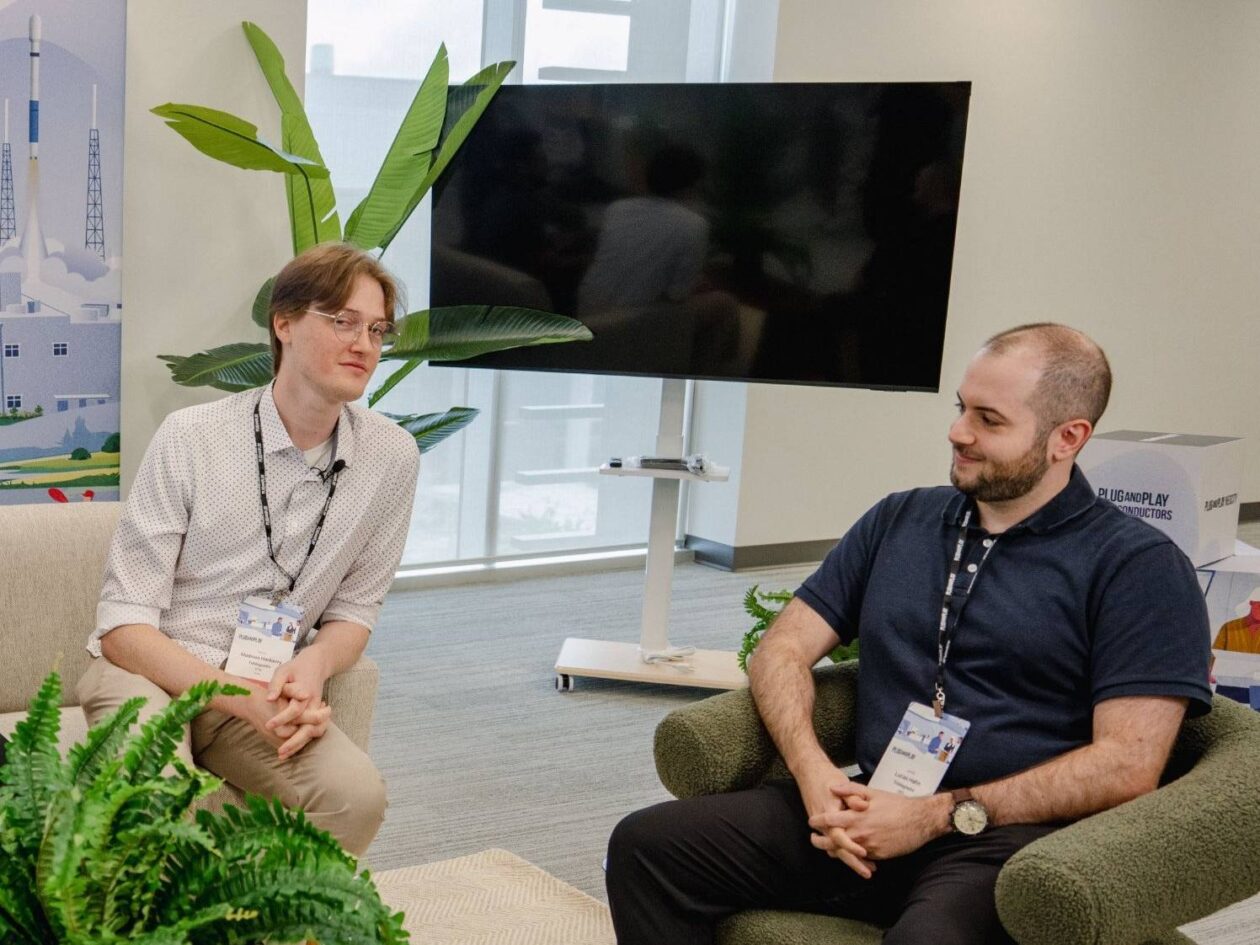
Seattle startup TriMagnetix has secured $1 million to develop semiconductor chips that consume 800 times less energy and are radiation-resistant. The two-person company, leveraging nanomagnetic technology, is targeting space applications and data centers. With new funding and key partnerships, TriMagnetix aims for commercial sales within a year.