
Pearl Cryptocurrency: Early Rush Fades Fast
Our in-depth review of Pearl (PRL), the new AI-compute cryptocurrency, reveals an innovative concept quickly overshadowed by plummeting mining profitability. What began as a potential gold rush has rapidly transformed into a cautionary tale of diminishing returns, making Pearl a highly questionable investment for anyone eyeing their next big crypto windfall.
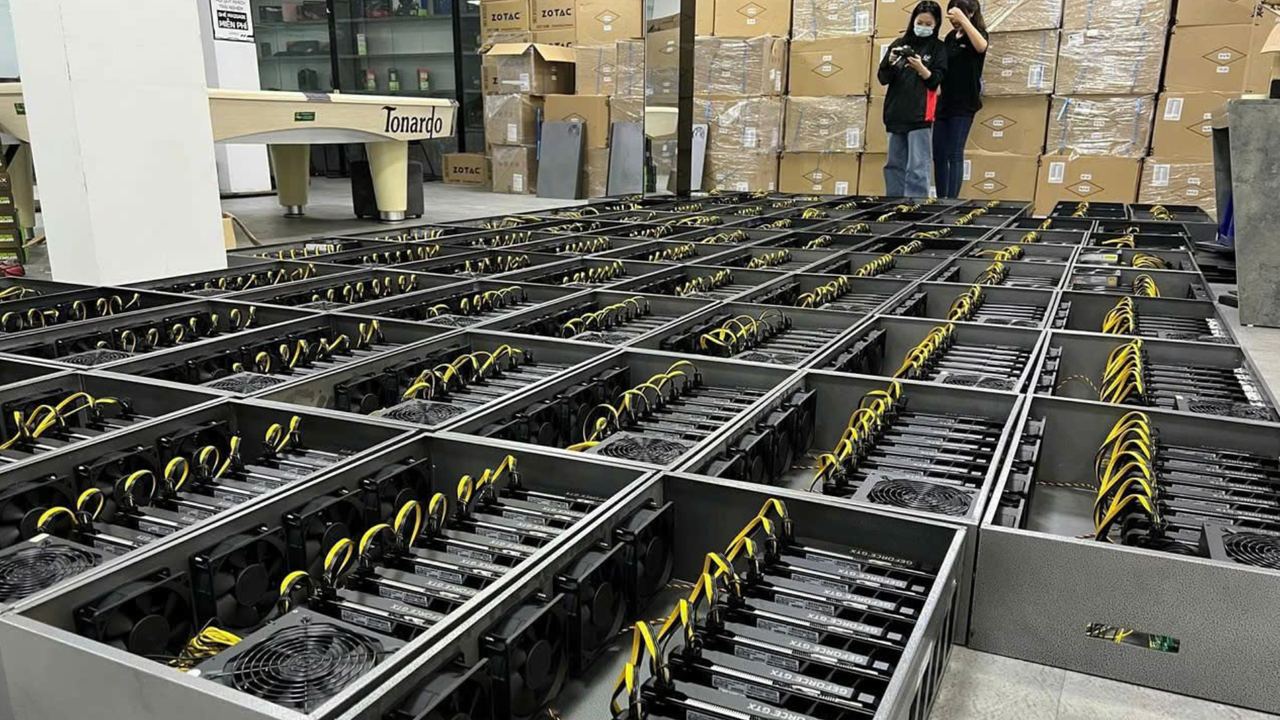
Pearl (PRL) Review: The AI Crypto Dream That Fizzled
Quick Verdict: Pearl (PRL), a new cryptocurrency promising to revolutionize mining through AI computations, sparked an initial GPU mining frenzy with dazzling daily revenues. However, this early gold rush proved short-lived, with profitability plummeting by nearly 50% for top-tier cards like the RTX 5090 within weeks of its mainnet launch. While its core concept of Proof-of-Useful-Work is innovative, the rapid decline in returns and inherent risks for individual miners make it a highly questionable venture at present.
The Allure of AI-Powered Mining
Launched in late April 2026, Pearl (ticker PRL) captured significant attention with its novel approach to blockchain security. Unlike traditional cryptocurrencies that rely on conventional cryptographic hashing, Pearl's blockchain is secured by running the complex matrix multiplication operations typically found in AI workloads, such as training and inference. This mechanism, dubbed 'Proof-of-Useful-Work' (PoUW) by its creators, Pearl Research Labs, aims to ensure that the computational power securing the network also performs tasks that could have real-world utility.
The initial buzz was palpable. Profitability tracker hashrate.no initially reported an RTX 5090 graphics card could yield approximately $33.80 in daily revenue from mining Pearl. This excitement was further fueled by an exclusive partnership announced on May 15th by AI cloud provider Together AI. This collaboration introduced a discounted inference endpoint for an instruction-tuned model, Gemma-4-31B-it-pearl, priced over 25% below the usual rate, with the cost offset by the future value of PRL emissions. Omri Weinstein, co-founder and CEO of Pearl Research Labs, boldly claimed that "Pearl changes the unit economics of AI," positioning the cryptocurrency at the forefront of combining blockchain and artificial intelligence.
The Harsh Reality: Profitability Plummets
Despite the innovative premise and high-profile partnership, the dream of easy AI mining riches quickly evaporated. As more miners, drawn by the initial lucrative returns, piled onto the network, Pearl's network difficulty climbed steeply. This surge in computational power directly translated into a drastic reduction in per-card payouts. Hashrate.no now estimates the daily revenue for an RTX 5090 at a mere $17.19 – a stark 49% reduction from the initial figure of $33.80.
This rapid decline is a critical concern for any potential miner. The speed at which profitability halved underscores the volatility and competitive nature of new cryptocurrency launches, especially when they attract significant attention. The network's hashrate is reportedly still climbing, meaning returns are likely to thin further as more capacity comes online.
Mining Experience and Hardware Considerations
Mining Pearl is exclusively limited to Nvidia hardware. While the protocol is officially optimized for high-end datacenter silicon like H100 and H200 cards, the mining rush has largely been driven by community miners adapting consumer-grade cards, specifically the RTX 4090 and the new RTX 5090, to the task. Much of this mining activity has occurred on rented cloud capacity, with miners spinning up instances on services such as RunPod and Vast.ai and directing them towards community mining pools.
Interestingly, the reliance on rented cloud capacity and the optimization for datacenter hardware suggest that Pearl is unlikely to cause a repeat of the GPU shortages seen in previous crypto booms. Individual consumers looking to purchase gaming cards may not face the same market pressures as before, given that the primary mining power is being sourced from cloud providers rather than retail shelves.
The "Useful Work" Paradox
A central tenet of Pearl is its 'Proof-of-Useful-Work' mechanism. The idea is that the computations securing the network also contribute to genuine AI inference. While Together AI's discounted endpoint does extract a mining proof from genuine, paid inference, the vast majority of current mining activity from individual rigs runs inference that no one has requested or paid for. Consequently, the output from these individual miners simply goes nowhere. By Pearl's own research, computation is only truly useful if someone pays for the result. This creates a significant paradox: for most individual miners, the "useful work" is effectively just "AI-shaped proof-of-work" with no actual utility beyond securing the chain, mirroring the energy consumption debates of traditional proof-of-work systems.
Future Outlook and Risks
The future for Pearl miners appears challenging. As a brand-new blockchain, its block reward is set to decline over time, a common mechanism in new cryptocurrencies to manage inflation and distribution. Coupled with an already rapidly climbing network hashrate and dwindling returns, the financial incentive for individual miners is facing a significant squeeze.
Furthermore, Pearl is currently only available for exchange on minor platforms such as SafeTrade and MEXC. These exchanges are known for thin liquidity, which can make it difficult to buy or sell significant amounts of PRL without impacting its price. This limited accessibility and liquidity add another layer of risk for anyone looking to trade the cryptocurrency.
This scenario is not new. The unwinding of profitability, where initial high returns attract a flood of miners, driving up difficulty and cutting payouts, is a pattern seen repeatedly in past mining booms. Pearl appears to be following a similar trajectory, albeit at an accelerated pace.
Pros and Cons
Pros:
- Innovative Concept: The Proof-of-Useful-Work (PoUW) mechanism, leveraging AI matrix multiplication for blockchain security, represents an interesting technological advancement.
- Initial High Profitability (Brief): For early adopters, there was a window of very high daily revenue, showcasing the potential for rapid returns in nascent crypto projects.
- Strategic Partnership: The collaboration with Together AI offers a legitimate, paid use case for the underlying computational work, demonstrating a viable application of the technology.
Cons:
- Rapidly Declining Profitability: Daily revenue for top-tier GPUs has nearly halved since launch, making current mining efforts significantly less rewarding.
- "Useful Work" Disconnect: For most individual miners, the AI computations performed are not paid for and their output goes unused, undermining the core promise of PoUW.
- Nvidia Hardware Only: This limits participation to users with specific hardware, excluding AMD GPU owners.
- Decreasing Block Rewards: As a new chain, Pearl's block reward is structured to decline over time, further eroding future profitability.
- Rising Network Difficulty: The increasing number of miners continues to drive up difficulty, compressing individual payouts.
- Thin Liquidity on Minor Exchanges: Trading PRL on minor exchanges like SafeTrade and MEXC carries risks due to potentially low trading volumes and price volatility.
- Historical Precedent: The rapid boom-and-bust cycle mirrors previous crypto mining frenzies, suggesting a high risk of continued declining returns.
Recommendation
Based on the current data, entering Pearl mining as an individual with consumer-grade GPUs is not recommended at this time. While the underlying technology of Proof-of-Useful-Work is intriguing, the precipitous drop in profitability, combined with the structural challenges of declining block rewards and increasing network difficulty, presents a high-risk, low-reward scenario for new participants.
The 'useful' aspect of the work remains largely unfulfilled for most individual miners, making the endeavor closer to traditional proof-of-work with an AI twist, rather than a genuinely value-generating enterprise. Unless you are an institutional player like Together AI with a direct mechanism to monetize the inference, or are simply experimenting with spare computational resources, investing significant capital into Pearl mining for profit appears ill-advised. It's a fascinating technological experiment, but one that has quickly proven financially challenging for the average GPU miner.
FAQ
Q: Is Pearl mining still profitable for individual miners?
A: While Pearl initially offered high daily revenues, profitability for individual miners has fallen sharply. An RTX 5090, which once generated around $33.80 daily, now yields approximately $17.19, a 49% reduction. With network difficulty still climbing and block rewards set to decline, profitability is expected to continue decreasing.
Q: Do I need special hardware to mine Pearl?
A: Pearl mining is limited to Nvidia hardware. Although the protocol is officially optimized for datacenter cards like H100 and H200, community miners have adapted consumer-grade Nvidia GPUs such as the RTX 4090 and RTX 5090. Many miners are currently using rented cloud capacity rather than personal hardware.
Q: What is "Proof-of-Useful-Work" and is Pearl truly useful?
A: Proof-of-Useful-Work (PoUW) is Pearl's consensus mechanism, where the computations securing the network involve matrix multiplication used in AI training and inference. While partners like Together AI utilize this for genuine, paid inference, most individual miners perform computations that no one pays for, meaning their output goes unused. According to Pearl's own research, computation is useful only if someone pays for the result, implying that most current individual mining is not truly "useful" in that sense.
Related articles
Android 17 QPR2 Beta 7.1: The Performance Relief You've Been Waiting
Android 17 QPR2 Beta 7.1: Finally Fixing the QPR1 Performance Woes Verdict: Android 17 QPR2 Beta 7.1 is a crucial and highly anticipated software update for Google Pixel users, specifically targeting and resolving the

DJI Solo Video Setups: Smart Choices for Lone Creators
This review delves into DJI's recommended solo video setups, highlighting the Osmo Pocket 3 Creator Combo as a top pick for its integrated camera, gimbal, and mic. It also covers stabilizers like the Osmo Mobile 8 and RS 4, and the DJI Mic Mini series for enhanced audio, providing honest pros, cons, and clear buying advice.

Ars Technica's Rocket Report: Your Essential Space Industry Briefing
Quick Verdict Ars Technica's Rocket Report, presented by veteran space reporter Stephen Clark, offers an invaluable and meticulously organized weekly (or similar frequency, implied by "Edition 9.15") digest of the most

Apple iPhone Duo: A Daring Debut with Notable Compromises
Apple's highly anticipated iPhone Duo, priced at $2,000, has gone on pre-order. While hailed as "Apple's most exciting device in a decade" for its innovative foldable design and immersive display, it comes with significant drawbacks like the absence of FaceID and a premium camera.
KDE Plasma 6.8: A Future-Focused 30th Anniversary Update
Quick Verdict KDE Plasma 6.8, arriving as the "30th Anniversary Edition," is a pivotal release that decisively pushes the desktop environment into the future. With a definitive farewell to native X11 sessions and a
Galaxy Watch One UI 9 Beta: Promising Progress, But Patience Needed
Galaxy Watch 8, Watch Ultra, and Watch 7 are receiving a new One UI 9 Watch beta build with bug fixes and a security patch. Active development signals progress, but a stable release date remains elusive.