
OSI2 ONE Portable MRI: A Game-Changer for Accessible Diagnostics
OSI2 ONE review: This open-source, 3D-printed portable MRI machine for under $70,000 revolutionizes diagnostic access, especially in underserved regions. While its 50mT field strength is low, specialized AI dramatically enhances image quality, making it a powerful, affordable diagnostic tool.
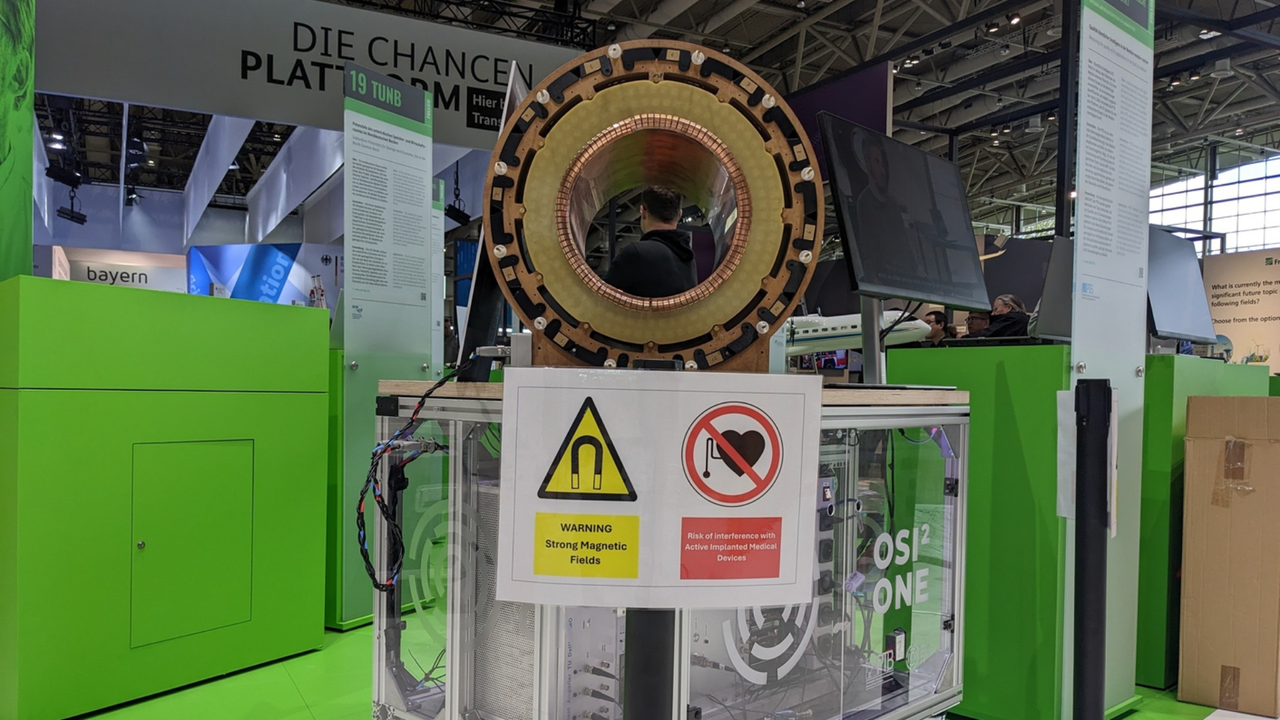
Verdict: A Revolutionary Step Towards Affordable Medical Imaging
The OSI2 ONE, an open-source, 3D-printed portable MRI machine, isn't just a piece of medical equipment; it's a testament to what innovation, open collaboration, and intelligent AI can achieve when focused on a critical problem: the exorbitant cost of diagnostic imaging. While it doesn't aim to fully replicate the ultra-high resolution of multi-million-dollar full-sized MRI units, its ability to provide usable diagnostic images for under $70,000 is nothing short of revolutionary. This machine promises to democratize MRI access, particularly in underserved regions, and represents a significant leap forward in affordable healthcare technology.
Unpacking the OSI2 ONE: What it Is and How it Works
At its core, the OSI2 ONE is an open-source portable MRI scanner developed by the Open Source Imaging Initiative (OSI2). What makes it particularly groundbreaking is its core component, which can be 3D-printed, dramatically slashing manufacturing costs. Compared to a new, full-sized MRI machine that starts at $1.1 million and can exceed $3 million, the OSI2 ONE's price tag of less than $70,000 is astounding – representing less than 7% of the cost of entry-level commercial units.
However, this cost reduction comes with a trade-off in raw hardware capability. The OSI2 ONE operates at a field strength of just 50mT, a stark contrast to the 1.5T to 3T (or even 8T) field strengths common in conventional, high-field MRI systems. This lower field strength inherently leads to lower spatial resolution and a reduced signal-to-noise ratio in the raw image acquisition. Traditionally, such limitations would render a device impractical for many medical diagnoses.
The AI Advantage: Bridging the Resolution Gap
This is where advanced artificial intelligence steps in, transforming the OSI2 ONE from a limited device into a potentially powerful diagnostic tool. Tech analyst Brian Roemmele highlights that low-field MRI environments are precisely where modern AI excels. The AI deployed with the OSI2 ONE is not a general-purpose model; it's a specially trained deep network, either leveraging high-field MRI data (1.5T to 8T) or utilizing physics-informed models to understand the intricacies of MRI image formation.
This specialized AI performs several critical functions: denoising images, correcting for field inhomogeneities, and, crucially, pushing resolution beyond the raw acquisition limits of the 50mT scanner. It can even adapt gradients and RF pulses in real-time based on signal quality. The concept isn't new; scientists have used similar techniques for years, such as training AI on millions of brain scans to improve dementia detection. For institutions lacking access to anonymized patient data for AI training, the open-source nature of the OSI2 ONE allows researchers to build physics models from the publicly available machine information, which the AI can then use for synthetic data generation and training.
Design, Accessibility, and User Experience (DIY Medical Tech)
The open-source and 3D-printable nature of the OSI2 ONE fundamentally changes the design and accessibility paradigm for medical equipment. While specific details on the exact DIY build process aren't provided, the mention of a "3D-printed core" implies a level of modularity and repairability previously unimaginable for such complex medical devices. This ethos is encapsulated by Roemmele's provocative statement, "No one can stop us from building in garages," suggesting a shift towards decentralized medical technology development and deployment.
Crucially, the OSI2 ONE is designed to be portable. This characteristic is a massive advantage over conventional MRI machines, which require extensive, specialized rooms and infrastructure, adding significant costs beyond the unit price. A portable design removes geographical and logistical barriers, making it feasible for deployment in remote clinics, mobile health units, or smaller hospitals that lack the space or budget for a dedicated MRI suite.
From a user perspective (assuming a medical professional or technician), the experience would likely involve operating the scanner and relying heavily on the AI-powered software for image processing and interpretation. The focus shifts from pristine raw data acquisition to robust post-processing and intelligent analysis, making it accessible to a broader range of medical facilities.
Pros and Cons: An Honest Assessment
Pros:
- Unprecedented Affordability: Costs less than $70,000, making MRI diagnostics accessible to institutions with limited budgets. This is a game-changer for global health equity.
- Open-Source Nature: Encourages collaboration, further development, and customization, potentially leading to rapid improvements and adaptations.
- Portability: Significantly reduces infrastructure requirements and allows for deployment in diverse, often underserved, locations.
- AI Enhancement: Specialized AI compensates for hardware limitations, boosting resolution and signal quality to enable medical diagnoses.
- Life-Saving Potential: Provides a diagnostic tool where none existed, allowing doctors to diagnose critical conditions in resource-constrained settings.
Cons:
- Lower Native Resolution: Without AI, the raw images from the 50mT field strength are inherently lower quality than those from high-field machines.
- Reliance on AI: Its diagnostic utility hinges on the effectiveness and accuracy of the specialized AI, which requires ongoing development and validation.
- Regulatory Challenges: May face significant hurdles and skepticism in highly regulated medical environments, particularly in first-world countries.
- Not a Full Replacement: While incredibly useful, it will "never have the resolution of the expensive, full-sized machines" for all diagnostic purposes.
- Training/Expertise: Implementing and effectively utilizing the AI component might require specialized training or expertise.
Comparison to Alternatives
To truly appreciate the OSI2 ONE, it's essential to compare it against existing MRI solutions. The market is typically dominated by high-field proprietary systems, with refurbished options offering a slightly lower entry point.
| Feature | OSI2 ONE Portable MRI | Full-Sized MRI (New) | Refurbished MRI |
|---|---|---|---|
| Cost | Under $70,000 | $1.1M - $3.4M+ | $100,000+ (plus setup) |
| Field Strength | 50mT | 1.5T - 3T (up to 8T) | 1.5T - 3T (up to 8T) |
| Resolution | Lower (AI enhanced) | High | High |
| Portability | Yes | No | No |
| Infrastructure | Minimal | Specialized room required | Specialized room required |
| Access/DIY | Open-source, 3D-printed | Proprietary | Proprietary |
| Target Audience | Low-resource regions, clinics, research | Major hospitals, advanced diagnostics | Hospitals, clinics (cost-conscious) |
Buying Recommendation
The OSI2 ONE is not for everyone, nor is it a direct competitor to top-tier, full-sized MRI machines in well-funded medical centers. Its value proposition is distinctly different: it brings MRI diagnostics to those who previously had no access. For hospitals, clinics, and research institutions operating in regions with low access to advanced medical technology, or those with severe financial constraints, the OSI2 ONE is an undeniably compelling option. It's also ideal for educational institutions and research groups interested in advancing open-source medical hardware and AI-driven imaging.
If your primary need is the absolute highest resolution and diagnostic certainty for the most complex cases in a first-world, well-resourced environment, a traditional high-field MRI remains the gold standard. However, if the choice is between having some MRI capability that can accurately diagnose conditions using advanced AI, or having no MRI capability at all due to prohibitive costs, the OSI2 ONE is a clear winner. It's arguably better to have a device that doctors can use to save lives without costing millions, especially when its specialized AI proves effective and accurate. This device embodies the future of accessible medical imaging, showing how smart technology can bridge significant healthcare disparities.
FAQ
Q: Can the OSI2 ONE replace a traditional MRI in every scenario?
A: No, the OSI2 ONE, despite its AI enhancements, will never achieve the same resolution as expensive, full-sized high-field MRI machines. While it can enable diagnoses in many critical conditions, it is best viewed as a highly effective and accessible alternative, particularly for underserved regions, rather than a direct, universal replacement.
Q: How does the AI specifically improve image quality on a low-field MRI?
A: The specialized AI trained on high-field data or physics-informed models works by denoising the inherently noisy raw images from the 50mT scanner, correcting for field inhomogeneities, and algorithmically enhancing resolution beyond what the raw acquisition limits would allow. It can also adapt imaging sequences in real-time to optimize signal quality.
Q: Is this device legally usable in highly regulated medical environments?
A: The source content notes that some people comment on the challenges of using such a device in highly regulated medical environments typically found in first-world countries. While open-source projects like the OSI2 ONE demonstrate technical feasibility, regulatory approval and certification would be a significant, complex process for widespread adoption in such settings. However, its development is also aimed at regions with lower access to technology and less stringent regulatory frameworks.
Related articles

Chuwi UniBox AI495 Pro Review: A Mini AI Powerhouse
Chuwi's UniBox AI495 Pro review: A powerful mini workstation with 192GB RAM and an AMD Ryzen AI chip for local LLM processing, packed into a compact, Mac Pro-esque design.
Pixel Connectivity: Battery Drain, Not Data Speed, Is the Real
Google's Pixel series has consistently offered a compelling Android experience, often earning a spot on recommendation lists for its clean software and camera prowess. However, a recurring shadow has loomed over the

CNET's NYT Connections: Sports Edition Hints & Answers - Daily Puzzle
CNET's daily guide for NYT Connections: Sports Edition offers clear, spoiler-protected hints and answers, making it an efficient and reliable resource for sports puzzle enthusiasts.
Unofficial Sony Headphone PC Apps: Ditch Your Phone, Take Control
Tired of Sony's mobile app? These unofficial, open-source PC tools like Sony Device Center and SonyBridge offer desktop control over your Sony headphones' ANC, EQ, and more. A convenient, albeit unofficial, solution for Windows, Linux, and Mac users looking to ditch their phone for audio adjustments.
Biren AI Accelerators: Explosive Growth in a Restricted Market
Biren Technology shows explosive 2,000% revenue growth in China's AI accelerator market, benefiting from US export controls. Despite impressive gains from a small base, challenges in manufacturing and software remain.

in-depth: Best Bluetooth Speaker (2026): JBL, Sonos, Marshall, and
WIRED's 2026 guide names the JBL Flip 7 the top Bluetooth speaker, recognizing its balance of sound, durability, and affordability. The updated list highlights significant advancements across the portable audio market, with specialized picks from Sonos, Marshall, and KEF offering enhanced smart features, battery life, and sound quality for diverse user needs.