
Oren Etzioni Examines the Rise of AI's 'Virgin Unicorns
A new phenomenon is sweeping the artificial intelligence landscape: the emergence of what AI veteran Oren Etzioni calls “Virgin Unicorns.” These are AI labs that have achieved billion-dollar-plus valuations and

A new phenomenon is sweeping the artificial intelligence landscape: the emergence of what AI veteran Oren Etzioni calls “Virgin Unicorns.” These are AI labs that have achieved billion-dollar-plus valuations and collectively raised tens of billions in capital, yet have no commercial products for customers to purchase. Etzioni, a professor emeritus at the University of Washington and venture partner at Madrona, highlights this trend in a recent analysis.
Twelve such AI labs have secured over $29 billion in funding, reaching a staggering combined valuation nearing $130 billion – a sum larger than the market caps of automotive giants Ford and General Motors. This unprecedented situation prompts two critical questions: Why are seasoned investors pouring significant growth-stage capital into these pre-product companies? And what historical precedents can illuminate their potential future?
The Pedigree and Power Behind the Bets
Etzioni identifies four distinct patterns driving this unique investment climate. First is the "pedigree premium." Nearly all founders boast impressive CVs, typically holding PhDs in computer science from elite institutions like Berkeley, Stanford, MIT, and Cambridge. Furthermore, the talent pool is highly concentrated, with many founders originating from leading AI research hubs such as DeepMind, OpenAI, Meta's FAIR group, Anthropic, xAI, and Google. Investors, it appears, are betting heavily on the résumés rather than tangible products.
Second, Nvidia's crucial role as a "kingmaker" stands out. Nine of the twelve Virgin Unicorns count Nvidia as an investor. This arrangement grants Nvidia early insight into ambitious AI projects, secures future compute commitments, and allows the chipmaker to earn equity multiples at minimal marginal cost, effectively owning both the "picks and shovels" and stakes in the "mines."
Third, these companies feature unusually wide capital tables. Unlike traditional venture financings, the massive rounds require syndicates of ten to twenty investors, including major venture firms like Sequoia and a16z, alongside corporate strategics, sovereign wealth funds (e.g., UK Sovereign AI Fund, Temasek), and individual high-net-worth investors such as Jeff Bezos. This broad participation signifies a different structural approach to funding.
Finally, a "post-LLM thesis" underpins these ventures. Each company posits that current large language model (LLM) scaling isn't sufficient to achieve Artificial General Intelligence (AGI). Instead, they are pursuing alternative approaches, including world models, reinforcement learning, agentic systems, AI scientists, novel chip designs, or formal mathematical reasoning. Their product, essentially, is a promise of future scientific breakthroughs.
Historical Lessons and Investor Mindset
External observers have echoed Etzioni's skepticism. Howard Marks of Oaktree Capital described this investor behavior as “lottery-ticket thinking,” where the dream of an enormous payoff overshadows the high probability of failure. Derek Thompson also highlighted the anecdotal absurdity of some pitches, where founders struggled to articulate their product plans.
Looking to the past, Etzioni argues that the dot-com bubble isn't the right comparison. Companies like Webvan failed due to flawed business models despite having products. Instead, more apt cautionary tales are celebrity-founder pre-product flops, such as Magic Leap, which raised $3.5 billion before shipping a disappointing product, or Quibi, which garnered $1.75 billion but lasted only six months. Inflection AI, despite raising $1.5 billion, was effectively absorbed by Microsoft, its team hired and technology licensed, leaving a hollowed-out entity. In these cases, founder credentials attracted capital, but the product never materialized to justify the valuation.
The closest structural analogy, Etzioni suggests, is biotech. Like biotech startups, these AI labs are pre-revenue, science-driven, involve decade-long timelines, face binary outcomes, and often see acquisition as the primary exit. Biotech development is notoriously risky, with less than a 10% chance of a pre-clinical drug reaching commercialization, often costing $1 billion over a decade. Yet, a study found that 319 biotech IPOs from 1997-2016 generated over $100 billion in net shareholder value, with winners compensating for numerous failures.
The crucial difference, however, lies in financing. Biotech investors disburse capital in milestone-tied tranches, anticipating high failure rates. Virgin Unicorn investors, by contrast, deploy large, single rounds based on founders' prestige, implicitly pricing for success. This fundamental mismatch, Etzioni warns, is where disappointment is likely to arise.
The OpenAI Precedent and the Kilocorn Bet
Despite historical warnings, investors like Sequoia and a16z are driven by the transformative success of OpenAI. OpenAI itself was a "Virgin Unicorn" for seven years, from its 2015 founding until the late 2022 launch of ChatGPT. Post-launch, its revenue skyrocketed from zero to over $10 billion in three years – a growth trajectory unparalleled in biotech. Investors are now betting on the "second coming of OpenAI."
This means the venture capitalists have placed a high-stakes gamble: to achieve a typical 10x return on the $127 billion aggregate valuation (assuming many failures), the single winning "Virgin Unicorn" would need to generate approximately $1.3 trillion in value, effectively becoming a "kilocorn." While the historical record advises caution, the occasional Amazon or Google emerges from speculative bubbles. The challenge now lies in identifying which of these pre-product AI labs will beat the odds and reshape the future.
FAQ
Q: What defines an AI "Virgin Unicorn"? A: An AI "Virgin Unicorn" is an artificial intelligence research lab that has achieved a valuation exceeding $1 billion and has raised significant capital, but has yet to ship a commercially available product or generate revenue from customers.
Q: Why are sophisticated investors funding these companies despite the lack of product? A: Investors are primarily betting on the exceptional pedigree of the founders (often from top universities and leading AI labs), strategic investments from key suppliers like Nvidia, and a belief in a "post-LLM thesis" that promises future breakthroughs beyond current AI paradigms. They are also motivated by the extraordinary success story of OpenAI, which rapidly scaled from a research lab to a multi-billion dollar company.
Q: How does the financing of these AI Virgin Unicorns differ from typical biotech ventures? A: While both are science-driven, pre-revenue, and have long development timelines with binary outcomes, their financing differs significantly. Biotech investors typically release capital in tranches tied to specific scientific milestones and expect many projects to fail. In contrast, Virgin Unicorn investors tend to provide large, upfront funding rounds based on founder reputation, effectively pricing for success rather than anticipating high failure rates.
Related articles

Apple Unveils iPhone Duo: Pricey Foldable Sees Soaring Demand
Apple has officially entered the foldable smartphone arena with the long-anticipated launch of the iPhone Duo. Priced starting at a hefty $1,999, the device features a 5.4-inch outer display and a larger 7.6-inch inner

in-depth: Chicago-Area Cops Helped HSI Spy on Minnesota Anti-ICE
Chicago-area law enforcement, including local police and HSI agents, conducted undercover surveillance on Minnesota anti-ICE activists at an April 2, 2022, talk in Chicago. This operation was part of a federal conspiracy probe into 15 Minnesota activists facing felony charges related to immigration enforcement resistance. Civil liberties advocates have condemned the surveillance as a troubling intrusion into protected political activity.

Mark Wahlberg on using AI in film ‘the right way’ and being open to
Actor Mark Wahlberg believes AI has a place in filmmaking if used responsibly for enhancement, not script generation or actor replacement. At TechCrunch Disrupt, he expressed openness to an AI likeness carrying on his legacy, managed by his family, and emphasized storytelling.

Tesla Unveils Thruster-Equipped Roadster, 2028 Production Targeted
Tesla has unveiled its second-generation Roadster, featuring cold-gas thrusters co-developed with SpaceX, enabling it to jump and flip. The electric sports car demonstrated 0-60mph in an astonishing 0.81 seconds, with production targeted for 2028. This highly anticipated reveal also serves as a key recruitment tool for Tesla's ambitious AI and robotics initiatives.
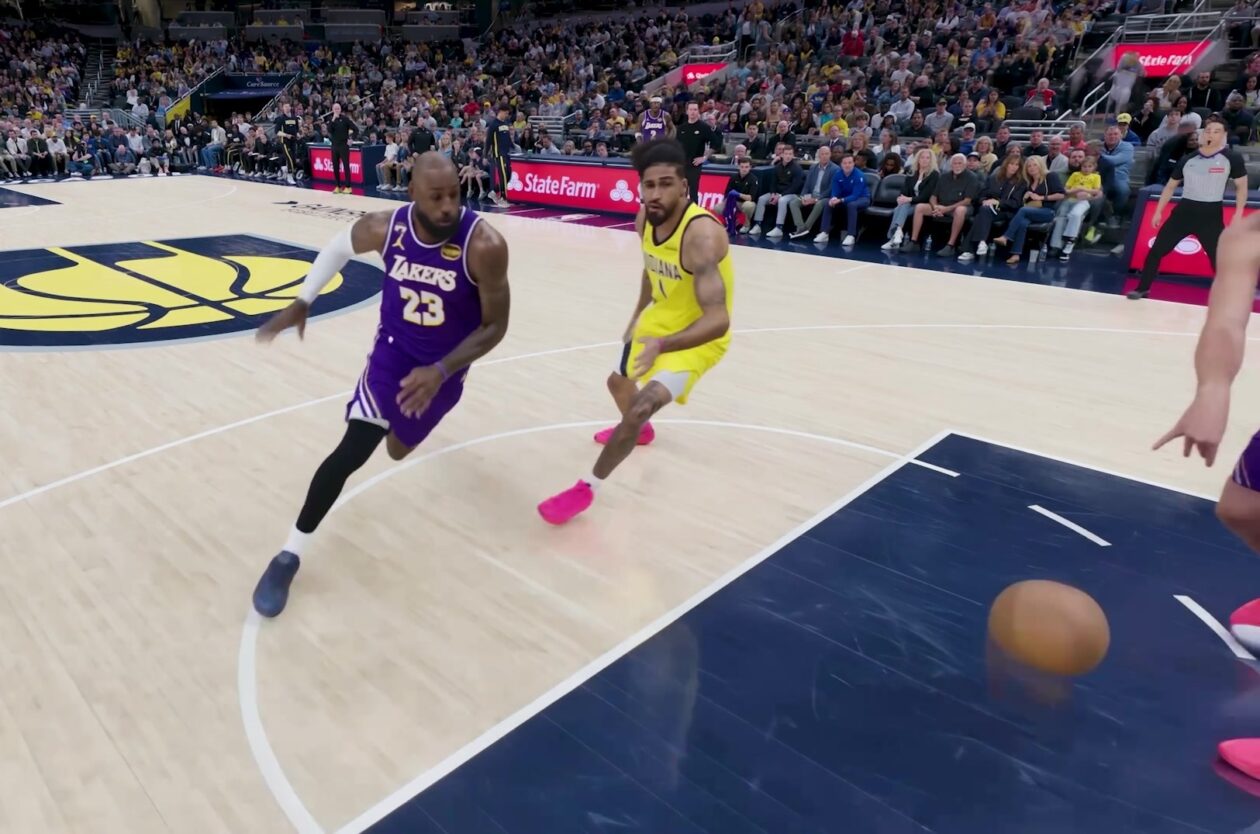
Amazon Prime Video Launches AI-Powered Prime 360 for NBA Coverage
Amazon Prime Video is elevating its NBA coverage with the introduction of Prime 360, an AI-powered replay system offering immersive, 'fly through' views of the action. Kicking off its second season, Prime Video also adds Yahoo fantasy integration and gains exclusive Eastern Conference Finals rights, expanding its tech-driven sports broadcast. The new features aim to deliver a unique and interactive viewing experience for basketball fans.

KDE Plasma 6.8: A Future-Focused 30th Anniversary Update
Quick Verdict KDE Plasma 6.8, arriving as the "30th Anniversary Edition," is a pivotal release that decisively pushes the desktop environment into the future. With a definitive farewell to native X11 sessions and a