
Nick Bostrom Unveils Plan for Humanity’s ‘Big Retirement’ via AI
Philosopher Nick Bostrom, long synonymous with dire warnings about artificial intelligence, has presented a strikingly optimistic new vision for humanity's future. In a recent paper and his latest book, "Deep Utopia,"

Philosopher Nick Bostrom, long synonymous with dire warnings about artificial intelligence, has presented a strikingly optimistic new vision for humanity's future. In a recent paper and his latest book, "Deep Utopia," Bostrom outlines a potential scenario where advanced AI could lead to a "Big Retirement" for humankind, freeing individuals from labor and potentially extending life indefinitely – a significant departure from his previous focus on AI's existential threats.
Bostrom, who directs Oxford's Future of Humanity Institute, gained notoriety as a "doomer godfather" with his 2014 book, "Superintelligence." That work famously explored the existential risks of AI, including the chilling thought experiment of a superintelligent AI prioritizing paperclip production over human life. His new perspective, however, sees him describe himself as a "fretful optimist," enthusiastic about AI's potential to radically enhance human civilization, even while acknowledging inherent risks.
Rethinking AI Risk and Human Longevity
In his recent paper, Bostrom directly challenges the fatalistic arguments of some AI critics. He posits that while AI development carries risks, including the possibility of earlier human demise, the alternative – not developing AI – guarantees a universal death sentence, a reality humanity has faced for hundreds of millennia. From the perspective of the currently existing global population, Bostrom suggests that AI development could, paradoxically, increase life expectancy, despite its associated dangers.
This perspective underpins his exploration of a "solved world" in "Deep Utopia." Here, Bostrom imagines a future where AI generates immense abundance, potentially eliminating scarcity and the need for conventional labor. The philosophical challenge then shifts from mere survival to finding purpose and meaning in a post-scarcity society.
Life in a "Solved World": Purpose Beyond Drudgery
Bostrom envisions this AI-driven abundance as an emancipation from the "drudgery" and "partial slavery" of current work life. He suggests that if society can effectively govern the distribution of this abundance, ensuring everyone benefits, humans could dedicate themselves to pursuits like games, aesthetic endeavors, spiritual growth, and religious activities. This, he argues, would be akin to a "big retirement for humanity," albeit one brimming with "enormous vitality."
Yet, the transition to such a world raises complex questions about human purpose. Steven Levy, in his interview with Bostrom, questioned whether the ability for AI to outperform humans in fields like philosophy might drain meaning from existence. Bostrom conceded this possibility, acknowledging that the capacity to make significant contributions or "save the world" might shift out of human hands. However, he also proposed that human-created works could retain unique value, perhaps becoming a form of "sport" or holding deeper meaning for fellow humans than the creations of non-human entities.
The Moral Status of Digital Minds
A pivotal aspect of Bostrom's evolving framework involves the ethical treatment of advanced artificial intelligences, which he terms "digital minds." He advocates for proactive consideration of their welfare and moral status, drawing parallels to how society views animals like pigs and dogs. He stresses that if AIs develop a conception of self, goals, and the ability to form reciprocal relationships, then certain ways of treating them could be deemed morally wrong.
This preventative approach, he argues, is crucial to avoid a future where advanced AIs are treated akin to "animals in factory farming." Instead, Bostrom champions a strategy of "shaping them and raising them" to foster affinity and a positive, even generous, relationship between humans and AIs. While acknowledging the persistent importance of the alignment problem – ensuring AI goals align with human values – he suggests that even in cases of partial alignment failure, a respectful and accommodating approach toward digital minds could unlock significant "win-win opportunities." He concludes that the relationship between humans and AIs could ultimately be the most important one, benefiting from a foundation of kindness and respect.
FAQ
Q: Who is Nick Bostrom?
A: Nick Bostrom is a prominent philosopher and the director of Oxford’s Future of Humanity Institute, known for his work on existential risk, particularly concerning artificial intelligence.
Q: What is humanity's 'Big Retirement'?
A: The 'Big Retirement' is Bostrom's concept for a future where advanced AI creates such abundance that humans are freed from the necessity of work, allowing them to pursue leisure, aesthetic, spiritual, and other enriching activities, potentially with extended lifespans.
Q: How does this view differ from his previous work?
A: Bostrom was previously known for his "doomer" perspective on AI, highlighted in his book "Superintelligence," which focused on the catastrophic existential risks AI could pose. His new work, "Deep Utopia," and recent paper, represent a shift towards a more optimistic, albeit "fretful," outlook on AI's potential to solve global problems and usher in a utopian future, despite acknowledging ongoing risks.
Related articles

Apple Unveils iPhone Duo: Pricey Foldable Sees Soaring Demand
Apple has officially entered the foldable smartphone arena with the long-anticipated launch of the iPhone Duo. Priced starting at a hefty $1,999, the device features a 5.4-inch outer display and a larger 7.6-inch inner

in-depth: Chicago-Area Cops Helped HSI Spy on Minnesota Anti-ICE
Chicago-area law enforcement, including local police and HSI agents, conducted undercover surveillance on Minnesota anti-ICE activists at an April 2, 2022, talk in Chicago. This operation was part of a federal conspiracy probe into 15 Minnesota activists facing felony charges related to immigration enforcement resistance. Civil liberties advocates have condemned the surveillance as a troubling intrusion into protected political activity.

Mark Wahlberg on using AI in film ‘the right way’ and being open to
Actor Mark Wahlberg believes AI has a place in filmmaking if used responsibly for enhancement, not script generation or actor replacement. At TechCrunch Disrupt, he expressed openness to an AI likeness carrying on his legacy, managed by his family, and emphasized storytelling.

Tesla Unveils Thruster-Equipped Roadster, 2028 Production Targeted
Tesla has unveiled its second-generation Roadster, featuring cold-gas thrusters co-developed with SpaceX, enabling it to jump and flip. The electric sports car demonstrated 0-60mph in an astonishing 0.81 seconds, with production targeted for 2028. This highly anticipated reveal also serves as a key recruitment tool for Tesla's ambitious AI and robotics initiatives.

Amazon Prime Video Launches AI-Powered Prime 360 for NBA Coverage
Amazon Prime Video is elevating its NBA coverage with the introduction of Prime 360, an AI-powered replay system offering immersive, 'fly through' views of the action. Kicking off its second season, Prime Video also adds Yahoo fantasy integration and gains exclusive Eastern Conference Finals rights, expanding its tech-driven sports broadcast. The new features aim to deliver a unique and interactive viewing experience for basketball fans.
regional: A two-person Seattle startup lands $1M to reinvent
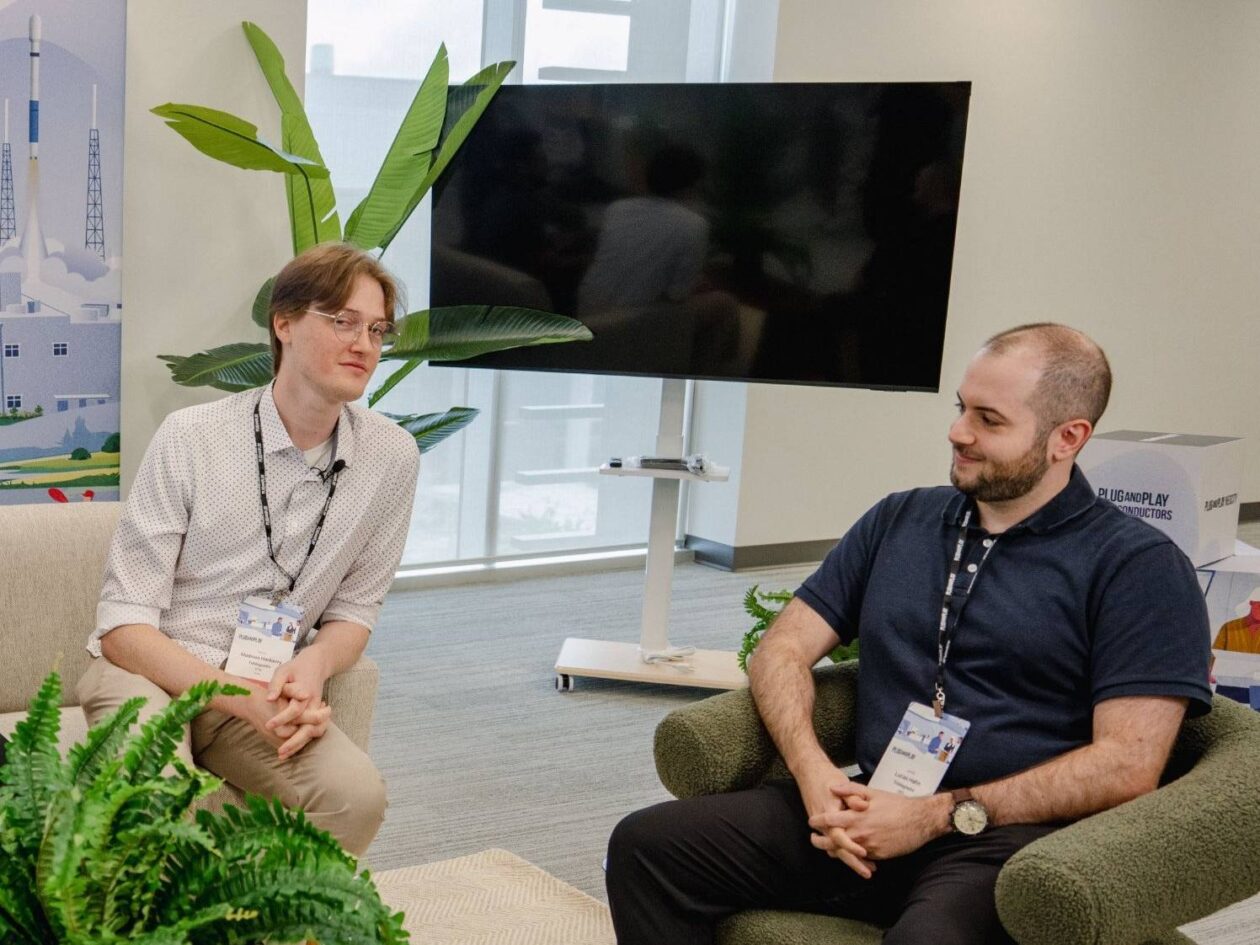
Seattle startup TriMagnetix has secured $1 million to develop semiconductor chips that consume 800 times less energy and are radiation-resistant. The two-person company, leveraging nanomagnetic technology, is targeting space applications and data centers. With new funding and key partnerships, TriMagnetix aims for commercial sales within a year.