
Navigating the AI Trust Gap in Enterprise SaaS Adoption
As software developers, we're at the forefront of technological shifts, and few have been as impactful or as perplexing as the rise of AI coding tools. Our own Stack Overflow 2025 survey revealed a fascinating paradox:

As software developers, we're at the forefront of technological shifts, and few have been as impactful or as perplexing as the rise of AI coding tools. Our own Stack Overflow 2025 survey revealed a fascinating paradox: while adoption of AI tools continues to soar—reaching 84% of developers, up from 76% in 2024—trust in their accuracy has plummeted. Only 29% now trust AI outputs, a significant drop from 40% just a year prior. More developers actively distrust AI (46%) than trust it (33%), with a mere 3% expressing high confidence. This 'AI trust gap,' where usage and skepticism move in opposite directions, carries substantial implications for how organizations approach enterprise SaaS investments.
The Paradox: High Usage, Low Trust
This disconnect might seem counterintuitive at first glance. Why would we continue to integrate tools into our workflow that we don't fully trust? The answer lies in the rational pragmatism inherent to the developer mindset. We aren't inherently resistant to change, but we demand that new tools genuinely add value. AI tools demonstrably offer real productivity gains for specific, often repetitive, tasks—think boilerplate code generation, documentation drafting, or quick syntax lookups. These efficiencies are tangible and measurable, compelling us to use them.
However, extended exposure to these tools has also exposed a particularly insidious failure mode: the confidently incorrect answer, or 'hallucination.' Unlike a compiler error or a broken function that immediately flags an issue, a plausible but fundamentally flawed AI output demands a developer who already possesses enough domain knowledge to identify the mistake. This dynamic erodes confidence not just in individual outputs, but in AI tools more broadly. For junior developers or those venturing into unfamiliar technical territory, this lack of an inherent 'safety net' due to the need for human verification is a major concern. The time spent meticulously auditing AI-generated content can quickly negate any initial efficiency gains, contributing directly to this erosion of trust.
Evaluating Enterprise SaaS in the Age of the Trust Gap
For those of us involved in evaluating and procuring enterprise SaaS platforms, particularly those deeply integrating AI features, the trust gap isn't just an interesting data point—it's a critical factor in decision-making. To ensure successful tool adoption and a meaningful return on AI investment, we must equip our teams with tools they can both use effectively and trust. Here are key considerations for making informed SaaS purchasing decisions:
Understand AI's Role and Error Handling
First, push vendors to clearly delineate where AI is truly 'load-bearing' within their product and what happens when it's wrong. There's a vast difference in risk between an AI suggesting an email subject line and one generating a critical compliance report, identifying a security vulnerability, or populating sensitive customer records. A reputable vendor should be able to transparently explain the stakes involved with various AI outputs and detail the guardrails and fallback mechanisms in place when the AI makes a mistake.
Scrutinize Vendor Claims with Developer Skepticism
Just as we critically audit AI outputs, we should apply the same level of scrutiny to vendor marketing. Terms like 'AI-powered' are often vague and tell us little about actual accuracy, reliability, or auditability. Don't shy away from asking pointed, technical questions: What are the known failure modes? How is accuracy quantitatively measured? Is there a human review layer integrated into the workflow? What is the established recourse if the AI delivers incorrect or harmful information?
Assess How Uncertainty is Managed
Highly trustworthy AI implementations do more than just provide an answer; they communicate their level of confidence, highlight potential edge cases, and offer observability into their reasoning. A platform that presents every AI output with the same unwavering confidence should be a significant red flag. Tools that are designed with an awareness of their own limitations and are transparent about them are inherently more robust and reliable in real-world enterprise environments.
Factor in the Cost of Human Verification
Finally, when evaluating the supposed efficiency gains of AI-enabled SaaS, critically factor in the inevitable cost of verification. When users lack trust, they naturally compensate by double- and triple-checking outputs. This overhead directly undercuts the primary benefit of using AI: saving time and improving accuracy. A tool that promises speed but demands extensive manual auditing might not deliver the true cost savings or productivity improvements it advertises.
The Imperative of Sophisticated Procurement
The 'uncomfortable middle ground' we currently occupy means we can neither fully embrace AI tools without reservation nor dismiss them outright. The productivity benefits for certain tasks are undeniable, and the technology is continuously evolving. The high adoption rate reflects a genuine utility, even if consistent reliability remains elusive. Developers want to leverage AI's strengths but demand the ability to verify outputs and understand potential failure modes. For enterprise organizations, this translates into an imperative: earn developer trust by matching their sophistication. This means asking vendors tougher questions and collaborating with technical teams to build procurement criteria that reflect the actual capabilities and limitations of AI tools, rather than just their marketing promises. Scaling AI effectively within an organization is contingent on fostering this trust, ensuring that pilots translate into broad adoption and a tangible return on investment.
FAQ
Q: What is the core problem described as the "AI trust gap"? A: The AI trust gap refers to the paradoxical situation where developer adoption of AI coding tools is rapidly increasing, while simultaneously, trust in the accuracy and reliability of these tools is significantly decreasing. Developers are using AI for productivity gains, but remain highly skeptical of its outputs.
Q: Why do developers continue to use AI tools even if they don't fully trust them? A: Developers are pragmatic. While they distrust the accuracy of AI, they recognize and leverage its real productivity benefits for specific tasks like generating boilerplate code, drafting documentation, or quick lookups. The tools offer efficiency, but developers compensate for the lack of trust by thoroughly verifying AI outputs.
Q: How can enterprises bridge this trust gap when evaluating new AI-enabled SaaS platforms? A: Enterprises should ask critical questions about AI's role, error handling, and how vendors measure accuracy. They should scrutinize marketing claims, prioritize tools that transparently communicate uncertainty (e.g., confidence levels, edge cases), and factor in the hidden cost of human verification when assessing promised efficiency gains. The goal is to align procurement decisions with the practical realities of AI's current capabilities and limitations.
Related articles

AI's Confidence vs. Formal Methods' Rigor: Design Flaws & Verification
While AI accelerates code generation, formal methods remain critical for ensuring system correctness. Languages like TLA+ and tools like Quint enable developers to model and verify system designs before coding, catching subtle flaws. Quint makes formal methods more accessible with developer-friendly syntax and executability. This approach is vital for verifying AI-generated code through trace validation and model-based testing, ensuring reliability against real-world data.
Ephemeral PR Preview Environments on GKE: A Deep Dive
Every development team eventually grapples with the limitations of shared staging environments. The familiar scenario: multiple features deployed simultaneously, database migrations clashing, and the phrase "it works on

Enterprise AI Beyond Chatbots: A Vision for Actionable Intelligence
Quick Verdict: Redefining Enterprise AI's Potential TechRadar Pro's opinion piece, "What it takes to move enterprise AI beyond the chatbot," delivers a refreshingly honest and vital perspective on the current state and
Secure Internal API Access for AI Agents with MCP
AI agents accessing internal APIs directly pose significant risks, including identity loss, unrestricted queries, and security bypasses. The Model Context Protocol (MCP) offers a solution by defining explicit tools. A secure architecture involves an MCP server wrapping the API with strict input validation, coupled with a gateway that handles authentication, rate limiting, and audit logging, ensuring safe and accountable access.

Netflix is laying off around 1,000 employees: Layoffs — Key Details
Netflix is laying off approximately 1,000 employees, or six percent of its global workforce, in its largest-ever job cut. This move targets product, tech, HR, and legal teams to reduce costs and re-prioritize investments despite recent financial growth.
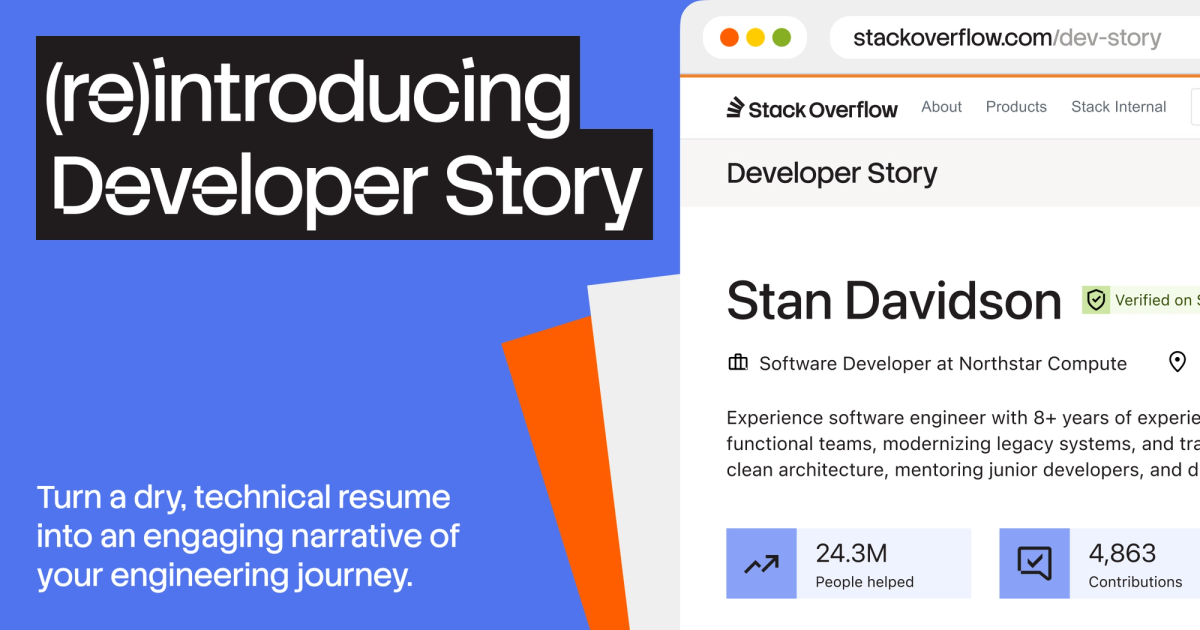
Beyond the Resume Noise: Developer Story Rethinks Tech Hiring
Stack Overflow is addressing the growing challenges in tech hiring, exacerbated by AI's influence leading to untrustworthy and generic resumes. Their solution, the re-introduced Developer Story, offers a platform for developers to authentically showcase their work, expertise, and impact through verifiable contributions and personal projects. This aims to provide hiring teams with more objective insights and help genuine talent stand out in a crowded market.