
Motorola's Hello UI: 5 Features Every Android Needs
Motorola has carved out a fascinating niche in the Android landscape. While the company frequently faces criticism for its inconsistent and often delayed software updates – a valid concern that can’t be overlooked – a
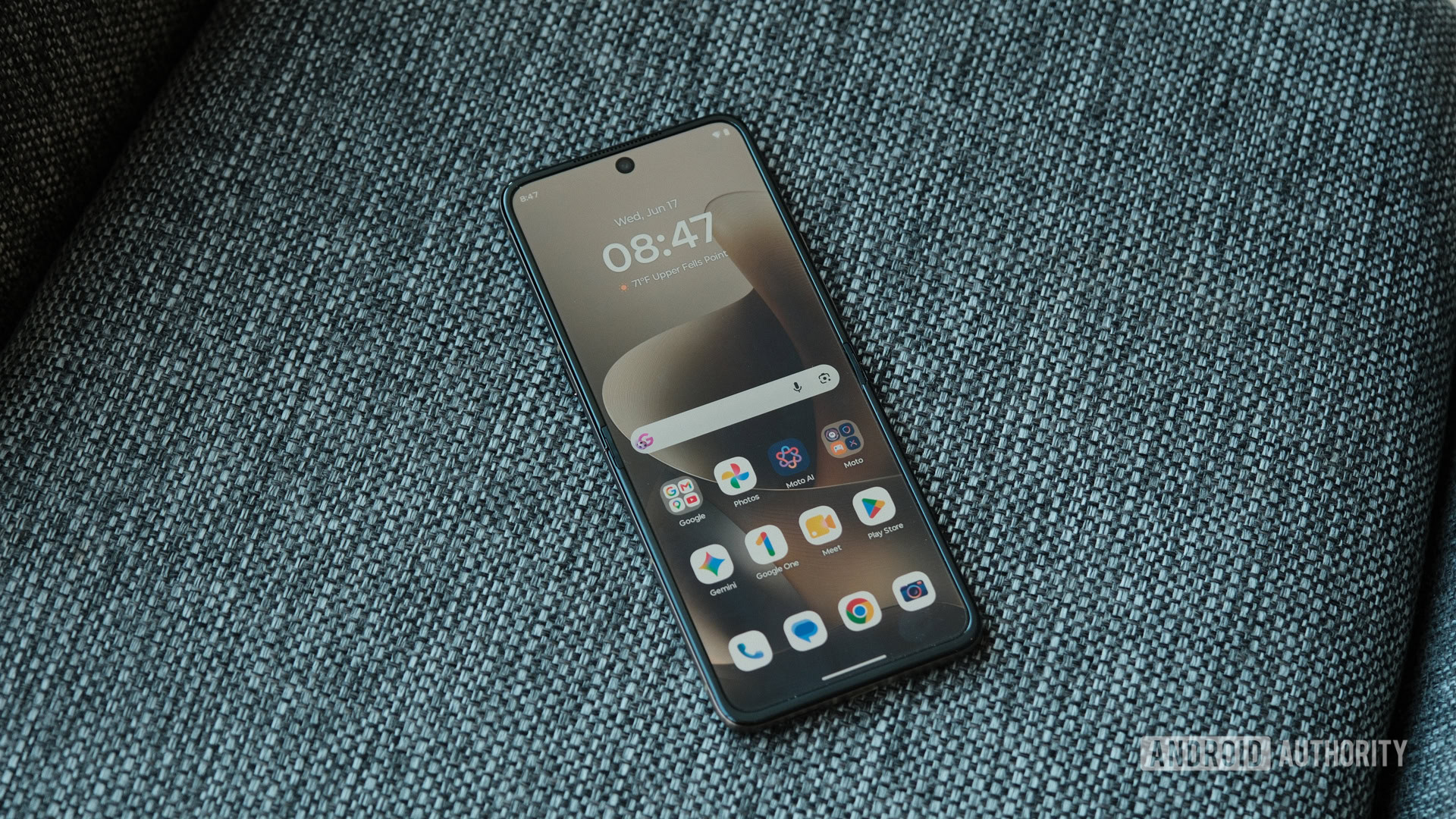
Motorola has carved out a fascinating niche in the Android landscape. While the company frequently faces criticism for its inconsistent and often delayed software updates – a valid concern that can’t be overlooked – a deeper dive into its Hello UI reveals a truly impressive suite of features. For anyone seeking an enhanced Android experience, these five standout software tricks from Motorola demonstrate a thoughtful approach to user interaction that many other manufacturers should emulate.
The Lingering Shadow of Updates
Before we dive into what makes Motorola's software so compelling, it's crucial to address the elephant in the room: software updates. The source content explicitly calls out Motorola's update practices as "nothing short of terrible." This is a significant drawback for any modern Android device, impacting security, access to new OS features, and long-term device relevance. However, if one can look past this critical flaw for a moment, the underlying Hello UI offers an experience that often feels ahead of the curve, proving that great software design isn't solely dependent on the latest Android version number.
Quick Gestures: Intuition in Motion
Few software features feel as natural and indispensable as Motorola's Quick Gestures. Originating from the much-loved original Moto X, these gestures offer a tactile and intuitive way to access essential functions. Forget fumbling for a power button or digging through quick settings; two swift twists of the wrist instantly launch the camera, ready to capture a fleeting moment, even if your phone is locked. Similarly, a double karate chop motion, distinct and satisfying, activates the flashlight with unparalleled speed. The reviewer's personal anecdote of instinctively attempting these gestures on non-Motorola phones perfectly illustrates their deeply ingrained convenience. These aren't mere shortcuts; they are extensions of natural interaction that streamline daily tasks.
Desk Display: The Foldable's Functional Facet
For users of Motorola's foldable devices, the Desk Display feature transforms the phone into a highly functional information hub. When folded, the screen can present glanceable information without requiring any interaction. Whether it's a prominent clock, a combination of time, calendar, and weather, or clear notifications with large, readable text, Desk Display keeps you informed from a distance. For music lovers, it provides immediate media controls. The reviewer highlights its utility both at a desk during the day for streaming and notifications, and bedside at night as an alarm clock. While Samsung offers a similar 'Daily Board' feature, it's restricted to tablets, leaving Motorola's implementation on foldables as a unique and highly practical advantage.
Manual Material You: Unlocking True Customization
Material You, Google's dynamic theming system, is a welcome addition to Android, bringing personalized color palettes to the system UI and apps based on your wallpaper. However, standard Material You can be restrictive, offering only a handful of generated color choices. Motorola elevates this experience with its Manual Material You customization. Beyond the standard presets, users are given a powerful color wheel to select any desired hue, or even a pipette tool to extract a specific color directly from any image stored on the device. This seemingly small detail offers a significant leap in personalization, allowing users to tailor their phone's aesthetic precisely to their liking, going "above and beyond" the default Android offering.
Media Controls: Effortless Audio Command
For those who frequently listen to music, particularly in low-light conditions or while winding down, Motorola's Media Controls offer a simple yet profound convenience. Tucked away in the sound and vibration settings, this feature allows users to control their music playback by simply holding down the volume buttons while the screen is off. A sustained press of the volume-up button skips to the next track, while holding down the volume-down button returns to the previous one. This eliminates the need to wake the screen, unlock the phone, and navigate to media controls, providing a quick, discreet, and effortless way to manage audio playback. It's a prime example of a feature designed for common, recurring scenarios that surprisingly few other Android phones offer.
Smart Connect: Bridging the Device Divide
Perhaps the most ambitious and comprehensive of Motorola's features is Smart Connect. Preloaded on Motorola phones, this application extends cross-device functionality across Android, Windows, and even some iPhone and iPad devices. With a Windows PC, Smart Connect enables a suite of powerful integrations: turning your phone into a wireless webcam, streaming apps, mirroring your phone's screen, or using it as a secondary monitor – a capability reminiscent of Apple’s Universal Control. It even facilitates a wireless connection for Motorola's DeX-like desktop competitor.
The integration of Moto AI with Smart Connect further enhances its utility, allowing users to initiate complex actions with simple voice commands, such as "show my screen on my TV" or "open messages on my PC." For Android-to-Android connections, Smart Connect offers clipboard syncing, instant hotspot creation, and shared gallery access. While its file-sharing capabilities for iOS and iPadOS are less groundbreaking now that many Android phones support AirDrop, the overall ecosystem it creates is truly impressive. Smart Connect is a robust solution for multi-device workflows and stands out as a feature Google would do well to integrate across the entire Android platform, fostering greater interoperability.
The Verdict: A Software Gem, Despite Its Flaws
Ultimately, Motorola’s Hello UI presents a fascinating paradox. On one hand, the company’s struggles with timely Android updates are a genuine concern that users must weigh heavily. On the other hand, the software experience itself, powered by these innovative and user-centric features, is nothing short of fantastic. It manages to feel as smooth and refined as a Google Pixel while offering a feature set that genuinely rivals the depth of Samsung’s One UI. The reviewer's declaration that Hello UI is now their "new favorite Android skin" speaks volumes about the quality and utility of these enhancements. Other smartphone manufacturers, and indeed Google itself, would be wise to take note and integrate similar functionalities to elevate the broader Android experience. These features truly make daily phone interactions more efficient, intuitive, and personalized, proving that Motorola, despite its update woes, still has a lot to teach the industry about intelligent software design.
FAQ
Q: Are these Motorola features available on all Motorola phones? A: The source implies these features are part of Motorola's Hello UI, which is generally consistent across their Android phones, though specific features like 'Desk Display' would naturally require a foldable device like the Razr Fold. Quick Gestures, Manual Material You, and Media Controls are widely available.
Q: Does Motorola's Smart Connect work with all Windows PCs and other Android phones? A: Yes, Smart Connect is designed to be installed on "any Android or Windows device," suggesting broad compatibility. It also supports some iPhones and iPads, though with more limited functionality (file sharing).
Q: How do Motorola's software features compare to other Android skins like Samsung's One UI or Google's Pixel experience? A: The source suggests Motorola's Hello UI, with these features, offers a user experience that is both "as smooth and sleek as a Pixel" and provides "useful features that rival Samsung's One UI," positioning it as a strong contender, or even a preferred choice, for its innovative and intuitive functionalities. The main caveat mentioned is Motorola's update practices.
Related articles

Apple Unveils iPhone Duo: Pricey Foldable Sees Soaring Demand
Apple has officially entered the foldable smartphone arena with the long-anticipated launch of the iPhone Duo. Priced starting at a hefty $1,999, the device features a 5.4-inch outer display and a larger 7.6-inch inner
Android 17 QPR2 Beta 7.1: The Performance Relief You've Been Waiting
Android 17 QPR2 Beta 7.1: Finally Fixing the QPR1 Performance Woes Verdict: Android 17 QPR2 Beta 7.1 is a crucial and highly anticipated software update for Google Pixel users, specifically targeting and resolving the

MapQuest's ALPR Feature: Navigating Surveillance with Intelligence
Quick Verdict MapQuest's latest "Surveillance" feature is a compelling and timely addition, offering users the ability to identify automated license plate reader (ALPR) cameras in their vicinity. While its data sourcing

"thegentlemanpervert": A Catastrophic Failure in Digital Ethics and
"thegentlemanpervert" review: An AI CSAM production and distribution operation, led by a NJ prosecutor, proved to be an absolute and catastrophic failure, resulting in felony charges and a stark warning about digital culpability.

DJI Solo Video Setups: Smart Choices for Lone Creators
This review delves into DJI's recommended solo video setups, highlighting the Osmo Pocket 3 Creator Combo as a top pick for its integrated camera, gimbal, and mic. It also covers stabilizers like the Osmo Mobile 8 and RS 4, and the DJI Mic Mini series for enhanced audio, providing honest pros, cons, and clear buying advice.

Elorian’s first AI model wants to reason with images, not just about
Elorian, a Palo Alto AI startup, has launched Glimpse, its inaugural AI model. It features a "visual scratch space" that allows it to actively reason *with* images by dynamically revisiting visual data during processing, rather than just inferring *about* them. Elorian claims Glimpse outperforms some frontier models and aims to evolve it for direct action and robotic control.