
Mortal Kombat 3: Is the Next Fatal Blow for the Film Franchise
Mortal Kombat 2 director Simon McQuoid offers insights into the film's ending and the uncertain future of a third movie. He details Liu Kang's mysterious fate and stresses that a sequel depends on MK2's full audience reception, not just initial box office.
Mortal Kombat 3: Is the Next Fatal Blow for the Film Franchise?
"Toasty!" or "Flawless Victory"? Fans are split on what the future holds for the Mortal Kombat cinematic universe. After the epic, if somewhat divisive, conclusion of Mortal Kombat 2 this year, many of us were left with burning questions. Will our favorite fighters return from the brink? What really happened to Liu Kang after his climactic showdown with Shao Kahn? And perhaps most importantly: after screenwriter Jeremy Slater hinted at a greenlit sequel last year, will we actually get a Mortal Kombat 3 movie?
We sat down with director Simon McQuoid to get some answers straight from the source. Prepare for some heavy spoilers if you haven't witnessed Mortal Kombat 2's intense conclusion yet!
The Box Office Finish Him!
Let's cut to the chase: Mortal Kombat 2's theatrical run delivered a surprisingly meager performance, raking in $129 million globally against its reported $80 million budget. While that's an improvement over the 2021 reboot's $84 million (which faced a simultaneous HBO Max release), it's far from a guaranteed "get over here" for a third installment. This is especially true given the current "uncertain period" at Warner Bros. The first film was a significant streaming hit, which might be a saving grace, but box office numbers speak loudest in Hollywood. The audience, it seems, has the final say.
A Brotherhood Broken: Liu Kang and Kung Lao's Arc
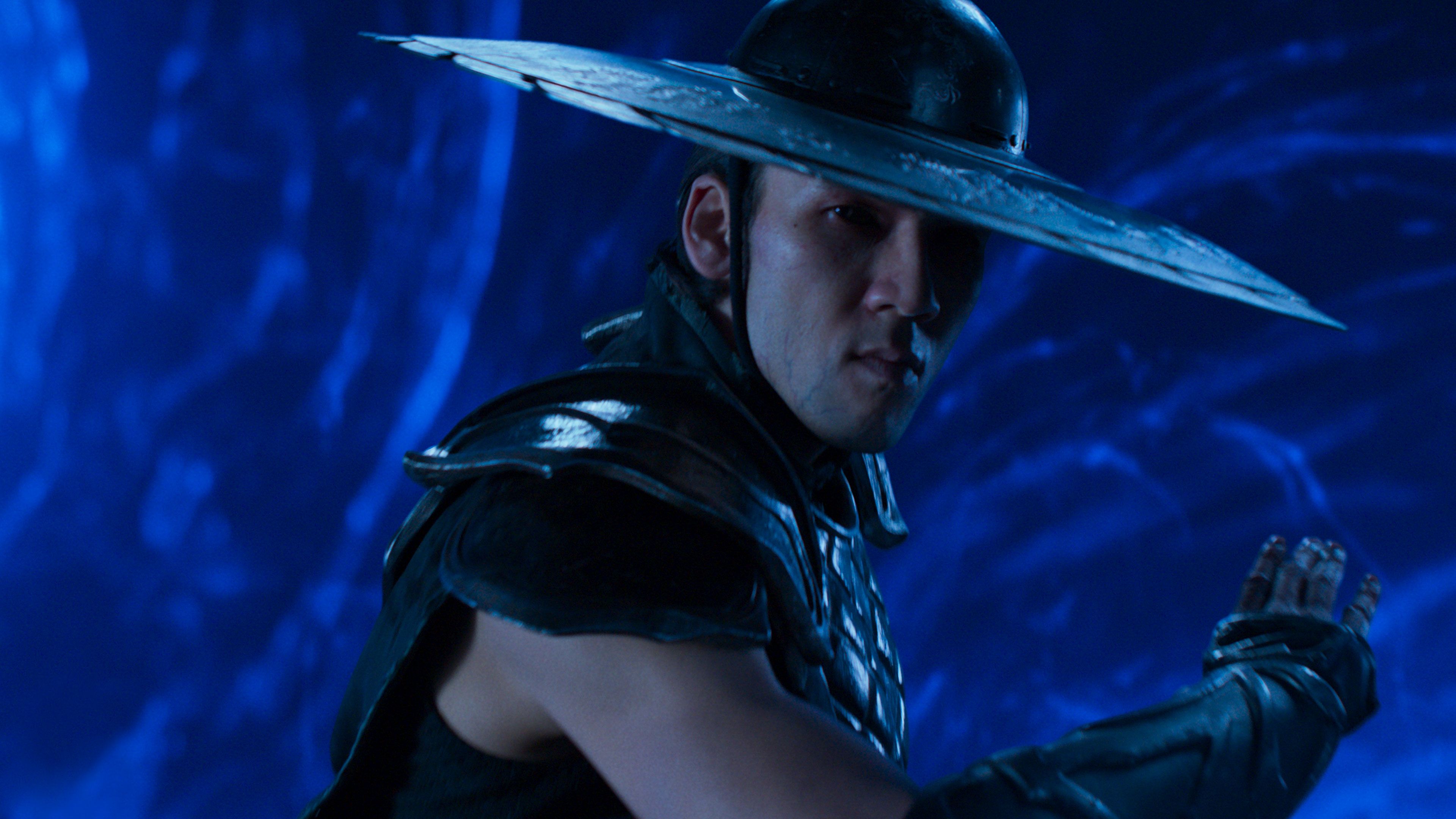
One of the most emotionally charged and fan-pleasing moments of Mortal Kombat 2 was undoubtedly the devastating confrontation between a zombified Kung Lao (Max Huang) and the chosen one, Liu Kang (Ludi Lin). Set against a stage that beautifully paid homage to the classic Blue Portal, this fight was intentionally designed for stylistic symmetry and, at one point, served as the film's precise midpoint. McQuoid elaborated on the profound importance of this gut-wrenching battle.
"Liu Kang and Kung Lao had this really special relationship," McQuoid shared, emphasizing the depth he aimed to convey. "That led us to a place where Liu Kang needed to have an, I'll say, 'exit' because it matched the nobility, spirituality, dignity and the positive power of Liu Kang. Ludi did an amazing job of really landing that." While Liu Kang secured a technical victory, he lost his brother in spirit, vowing to somehow bring him back. But what about Liu Kang himself?
The Fiery Exit of Our Chosen Champion
The ending of Mortal Kombat 2 leaves Liu Kang's own destiny shrouded in mystery. After being dealt a mortal blow by the fearsome Shao Kahn, our hero transforms into a column of flame and vanishes. It wasn't a typical death, and that was by design.
McQuoid explained the creative intent behind this ambiguous departure: "The way he was going to die — or exit —you know, it's a really, really important character. So we knew we had to do something that was more unique and special." He added that the team desired a "certain amount of freshness with what happened [to characters] each time, so you were always like, OK, we don't know what's gonna happen next." The ultimate goal, according to McQuoid, was to strategically "set up the next chapter in their relationship" and leave the audience with a sense of intrigue, rather than a definitive end.
Mortal Kombat 3: Is It Time for Round Three?
So, what's the official word on a Mortal Kombat 3? McQuoid is playing it close to the chest, but his comments offer a cautious glimmer of hope. "It was really about making sure that there were doors left open, rather than closed," he affirmed. He quickly tempered expectations with a touch of humor: "It's kind of what we did in the first [Mortal Kombat], like, don't get overconfident. [laugh] The audience tells you if there [should be] another one." He stressed that the guiding principle for the creative team has always been to do "what's right for the truth of the characters."
When pressed further on the current status of MK3 conversations, McQuoid deferred with a laugh, stating, "I don't know whether I'm ready to divulge that one." He feels it's still too soon, as Mortal Kombat 2 hasn't completed its "full life cycle" in terms of audience reception and home media performance. He advised, "let it have its full life cycle and then, um, ask me in a few months."
Relive the Konquest: Mortal Kombat 2's Home Release
For those eager to re-watch Mortal Kombat 2 and scour for clues or simply enjoy the fatalities again, the film is currently available to rent and purchase digitally. If you prefer your cinematic battles on physical media, mark your calendars: Mortal Kombat 2 will be released on 4K UHD, Blu-ray, and DVD on July 28. A streaming release date for HBO Max has not yet been announced, so stay tuned for that ultimate home-viewing convenience.
FAQ
Q: Has Mortal Kombat 3 been officially greenlit?
A: No, not at this time. While screenwriter Jeremy Slater previously indicated a sequel was greenlit, director Simon McQuoid states it's too early to confirm, citing the need for Mortal Kombat 2 to complete its "full life cycle" in terms of audience performance across all platforms.
Q: What happened to Liu Kang at the end of Mortal Kombat 2?
A: After being mortally wounded by Shao Kahn, Liu Kang transformed into a column of flame and disappeared. Director Simon McQuoid designed this as a "unique and special" exit to leave "doors left open" for future story exploration, rather than a definitive death.
Q: Was Mortal Kombat 2 a box office success?
A: Mortal Kombat 2 grossed $129 million worldwide against an $80 million budget. While this is an improvement over the 2021 reboot, director Simon McQuoid acknowledged it was a "meager performance" and doesn't guarantee a sequel without strong streaming and home media sales.
Related articles

TCG Pocket Responds: A Much-Needed Pace Shift for Pokémon Fans
Pokémon TCG Pocket is rolling out a major update for its second anniversary, primarily addressing player concerns about overwhelming content releases by shifting to a six-week set schedule. This aims to curb player decline and improve overall engagement by giving trainers more time to collect and strategize. The update also adds new collection methods, improved deck-building features, and enhanced trading functionality.

Mark Wahlberg on using AI in film ‘the right way’ and being open to
Actor Mark Wahlberg believes AI has a place in filmmaking if used responsibly for enhancement, not script generation or actor replacement. At TechCrunch Disrupt, he expressed openness to an AI likeness carrying on his legacy, managed by his family, and emphasized storytelling.

Kojima Compares Divisive New Film 'Digger' to MGS2's Prescient Vision
Gaming icon Hideo Kojima has praised the divisive 2026 film *Digger*, drawing intriguing parallels to his own prophetic game, *Metal Gear Solid 2*. Both works, he explains, uniquely explore the dangers of misinformation and a fragmented digital reality, anxieties he shares with *Digger*'s director, Alejandro González Iñárritu.

Ubisoft Proposes German Studio Workforce Reduction Amidst
Ubisoft is planning a voluntary departure program for about 100 employees across its Düsseldorf, Berlin, and Mainz studios in Germany. This move is part of a larger, ongoing cost-reduction and restructuring effort by the publisher, aiming to better position its studios for future projects.

TGS 2026: These Forward-Looking Cosplays Are Already Living in the
Tokyo Game Show 2026 showcased incredible cosplay, with many fans embodying characters from unreleased games like *Blast Blade* and *Mononoke No Kuni*. This gallery highlights the community's foresight, alongside debut *Palworld* cosplay and refreshed takes on classics. It’s a testament to the passion that brings gaming's future to life.

Beyond the Bugs: Conquering Studio Headaches in Indie Dev
This guide, part three in a series on running an indie studio, tackles the crucial but often overlooked aspect of dealing with non-development related issues. It introduces creating a shared 'studio backlog' for collective problems and using the IDS (Identify, Discuss, Solve) framework to address them constructively. The core message is to build powerful habits that keep studios from getting quietly derailed by lingering challenges.