
Microsoft Signals AI Independence with New In-House Models
In a decisive move signaling its intent to build an AI empire independent of OpenAI, Microsoft has unveiled three proprietary AI models: MAI-Transcribe-1, MAI-Voice-1, and MAI-Image-2. Released on April 3, 2026, these
In a decisive move signaling its intent to build an AI empire independent of OpenAI, Microsoft has unveiled three proprietary AI models: MAI-Transcribe-1, MAI-Voice-1, and MAI-Image-2. Released on April 3, 2026, these models are now available in Microsoft Foundry and notably lack any OpenAI branding, marking the clearest challenge yet to the partner it has heavily invested in.
This launch comes six months after Microsoft renegotiated its foundational agreement with OpenAI, a contract that previously restricted the tech giant from pursuing independent general AI development. The revised memorandum of understanding fundamentally shifted this dynamic, granting Microsoft the freedom to develop its own competing models while retaining licensing rights to OpenAI's innovations through 2032 and securing $250 billion in new Azure cloud commitments.
Microsoft's Strategic Pivot to In-House AI
The new MAI models are the first public output from the MAI Superintelligence team, formed in November 2025 by Mustafa Suleyman, CEO of Microsoft AI. Suleyman, whose stated mission is to achieve "humanist superintelligence," emphasized in a March internal memo that the contract renegotiation directly enabled Microsoft's independent pursuit of superintelligence. This ambition is now materializing, backed by strategic hires like Jacob Andreou as EVP of Copilot and Ali Farhadi, former CEO of the Allen Institute for AI, joining Suleyman's team.
Unveiling the MAI Model Suite
The released models offer competitive performance across key AI modalities:
MAI-Transcribe-1: This speech-to-text model sets a new standard, claiming the lowest word error rate on the FLEURS benchmark across 25 languages, averaging just 3.8 percent. Microsoft reports it surpasses OpenAI's Whisper-large-v3 across all 25 languages, Google's Gemini 3.1 Flash on 22 languages, and ElevenLabs’ Scribe v2 on 15 languages. Operating 2.5 times faster than Microsoft’s previous Azure Fast transcription service, it’s priced at an accessible $0.36 per hour of audio, developed by a lean team of just 10 people.
MAI-Voice-1: Complementing the transcription model, MAI-Voice-1 is a text-to-speech solution capable of generating 60 seconds of natural-sounding audio in under a second on a single GPU. It also supports custom voice creation from minimal audio samples. Together with MAI-Transcribe-1 and a customer-chosen large language model, it forms an end-to-end voice pipeline running entirely on Microsoft's infrastructure, free from any OpenAI dependencies.
MAI-Image-2: The text-to-image model, which previously debuted at third place on the Arena.ai leaderboard (behind Google’s Gemini 3.1 Flash and OpenAI’s GPT Image 1.5), was developed with input from photographers, designers, and visual storytellers. WPP, a global marketing giant, is already leveraging MAI-Image-2, demonstrating its immediate enterprise applicability.
Reshaping the AI Landscape
The launch creates a complex dynamic for OpenAI, which still counts Microsoft as its largest investor and primary cloud infrastructure provider. Both companies' models coexist on Microsoft Foundry. However, OpenAI's accelerating push into commercial monetization, coupled with its recent $110 billion funding round (backed by SoftBank, Nvidia, and Amazon) at an independent valuation, increasingly renders the original partnership framing obsolete.
The broader AI model market is experiencing similar fragmentation. Anthropic's substantial $30 billion raise at a $380 billion valuation, alongside Google's continuous advancements with Gemini, signifies a diversified competitive landscape. The era where OpenAI held a near monopoly on frontier AI capabilities, with Microsoft serving solely as its distribution channel, is unequivocally over.
Microsoft Foundry, now serving over 80,000 enterprises including 80 percent of Fortune 500 companies, provides a formidable distribution advantage. This allows Microsoft to funnel enterprise spending towards its in-house models by offering competitive-enough alternatives, leveraging its integrated ecosystem. While Suleyman anticipates another one to two years before his team delivers frontier-class language models, these new multimodal tools establish a critical foundation, giving Microsoft its own voice, ears, and eyes, independent of OpenAI. The $13 billion partnership endures, but its original premise – that Microsoft needed OpenAI to contend in the AI race – is systematically being dismantled.
FAQ
Q: What are the new AI models Microsoft released? A: Microsoft released three in-house AI models: MAI-Transcribe-1 (speech-to-text), MAI-Voice-1 (text-to-speech), and MAI-Image-2 (text-to-image).
Q: Why is this significant for Microsoft's relationship with OpenAI? A: This signals Microsoft's strategic shift towards independent AI development, challenging its long-time partner OpenAI. It follows a contract renegotiation that freed Microsoft to build competing models and marks a move away from relying solely on OpenAI's technology.
Q: What is Microsoft's long-term goal with these in-house models? A: Microsoft's MAI Superintelligence team, led by Mustafa Suleyman, aims to develop "humanist superintelligence" and produce frontier-class language models within the next 1-2 years. These initial multimodal models are seen as foundational steps in building Microsoft's own comprehensive AI capabilities.
Related articles

Apple Unveils iPhone Duo: Pricey Foldable Sees Soaring Demand
Apple has officially entered the foldable smartphone arena with the long-anticipated launch of the iPhone Duo. Priced starting at a hefty $1,999, the device features a 5.4-inch outer display and a larger 7.6-inch inner

in-depth: Chicago-Area Cops Helped HSI Spy on Minnesota Anti-ICE
Chicago-area law enforcement, including local police and HSI agents, conducted undercover surveillance on Minnesota anti-ICE activists at an April 2, 2022, talk in Chicago. This operation was part of a federal conspiracy probe into 15 Minnesota activists facing felony charges related to immigration enforcement resistance. Civil liberties advocates have condemned the surveillance as a troubling intrusion into protected political activity.

Mark Wahlberg on using AI in film ‘the right way’ and being open to
Actor Mark Wahlberg believes AI has a place in filmmaking if used responsibly for enhancement, not script generation or actor replacement. At TechCrunch Disrupt, he expressed openness to an AI likeness carrying on his legacy, managed by his family, and emphasized storytelling.

Tesla Unveils Thruster-Equipped Roadster, 2028 Production Targeted
Tesla has unveiled its second-generation Roadster, featuring cold-gas thrusters co-developed with SpaceX, enabling it to jump and flip. The electric sports car demonstrated 0-60mph in an astonishing 0.81 seconds, with production targeted for 2028. This highly anticipated reveal also serves as a key recruitment tool for Tesla's ambitious AI and robotics initiatives.

Amazon Prime Video Launches AI-Powered Prime 360 for NBA Coverage
Amazon Prime Video is elevating its NBA coverage with the introduction of Prime 360, an AI-powered replay system offering immersive, 'fly through' views of the action. Kicking off its second season, Prime Video also adds Yahoo fantasy integration and gains exclusive Eastern Conference Finals rights, expanding its tech-driven sports broadcast. The new features aim to deliver a unique and interactive viewing experience for basketball fans.
regional: A two-person Seattle startup lands $1M to reinvent
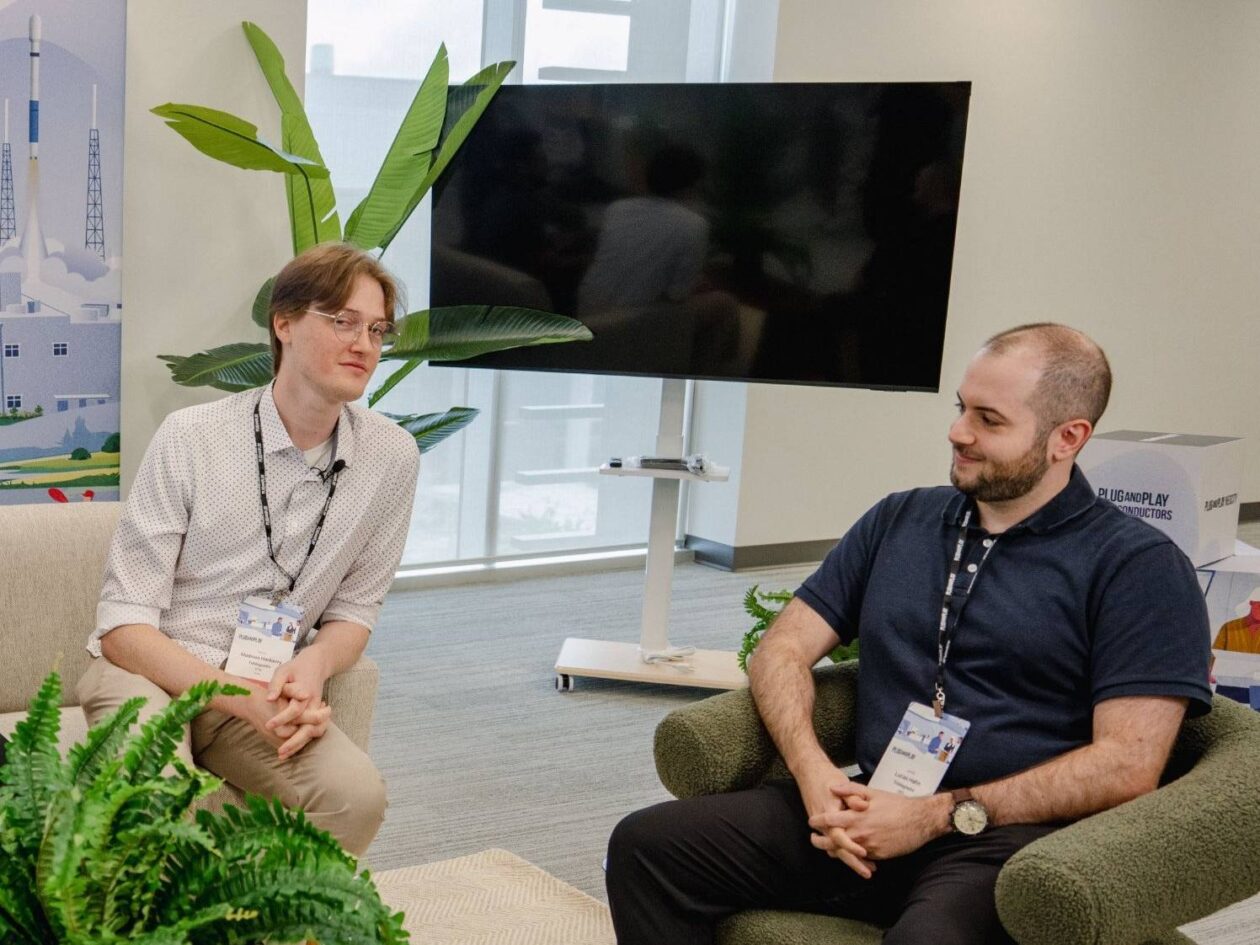
Seattle startup TriMagnetix has secured $1 million to develop semiconductor chips that consume 800 times less energy and are radiation-resistant. The two-person company, leveraging nanomagnetic technology, is targeting space applications and data centers. With new funding and key partnerships, TriMagnetix aims for commercial sales within a year.