
Meta's Paid Link-Sharing: A Flawed Rollout for Nonprofits & Gov
Verdict: A Costly Communication Barrier Meta's latest foray into subscription services, specifically the integration of link-sharing limits into its Meta One plans for government and nonprofit Facebook pages, is a
Verdict: A Costly Communication Barrier
Meta's latest foray into subscription services, specifically the integration of link-sharing limits into its Meta One plans for government and nonprofit Facebook pages, is a perplexing and, frankly, detrimental move. While Meta frames this as an “experiment” aimed at creators and businesses, its misapplication to essential public service and charitable organizations has created significant communication hurdles, financial strain, and widespread confusion. This isn't innovation; it's a regression of a fundamental platform utility, turning a free public resource into an unexpected, and often unaffordable, gate. For entities reliant on Facebook to disseminate vital information, this policy is a significant step backward, forcing them to choose between paying a premium for basic functionality or drastically altering their outreach strategies.
The New Landscape: Links as a Premium Feature
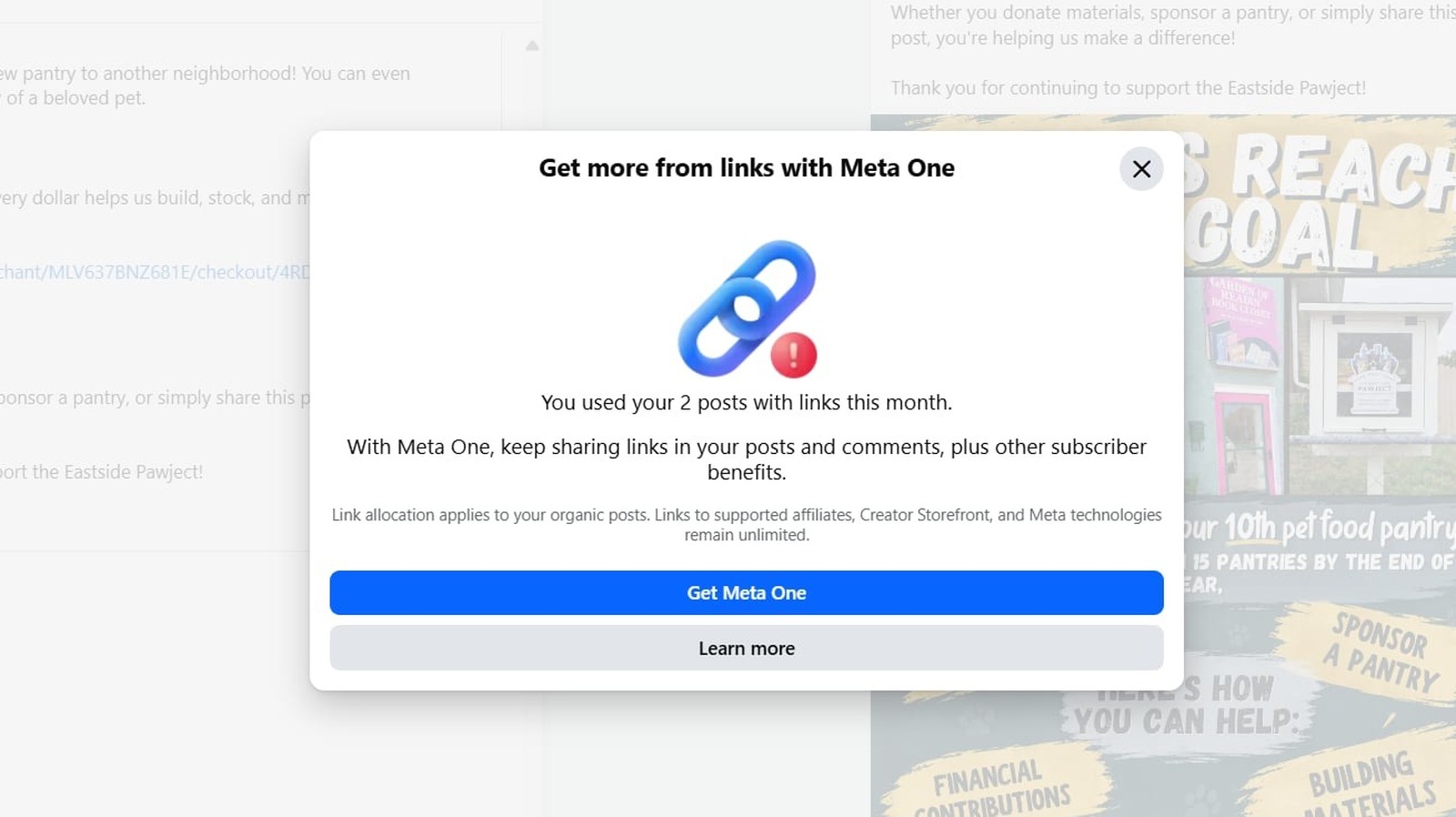
Meta has been testing various paid link-sharing models for nearly a year, initially integrating them into Meta Verified subscriptions and now prominently featuring them as a benefit of its AI-centric Meta One plans. The core detail is simple: for many government and nonprofit Facebook pages, the ability to post external links directly within posts is no longer unlimited and free. Instead, it's tied to a monthly subscription.
Here’s a breakdown of the Meta One tiers and their Facebook link-sharing entitlements, as reported:
- $14.99/month: No additional link-sharing privileges on Facebook (though it includes an Instagram bio link page).
- $49.99/month: Eight links per month on Facebook.
- $149.99/month: Twenty links per month on Facebook.
- $499.99/month: "Unlimited" links on Facebook.
Crucially, Meta stated this test explicitly should not affect nonprofits or government entities. However, numerous organizations, despite being properly identified and even verified for Meta's fundraising tools, have been caught in this net. The company's subsequent explanation – that pages must specifically list "nonprofit" in their category section – highlights a significant flaw in their system's identification process, suggesting a disconnect between policy intent and technical execution.
User Experience: Confusion, Frustration, and Broken Trust
The real impact of this policy shift is best illustrated through the experiences of those on the front lines. Daniel Starks, communications manager for Greenville, Texas, found his city library's page restricted to just two links per month, with additional links requiring a Meta One subscription of $50 or more. For a governmental entity needing to link to crucial information on its website, this poses a severe threat to public communication. Starks' team was forced to adopt a cumbersome workaround: posting URLs in comments, a less effective and less accessible method.
Nonprofit leaders report similar frustrations. Bethany English, co-president of the East Side Pawject in Indianapolis, discovered her small pet food pantry organization was limited to two links monthly. The "expert" plan offering 20 links would cost $150 a month – a prohibitive sum for a small nonprofit. She's now contemplating unconventional solutions, such as asking board members to post links from their personal, exempt profiles, or relying more heavily on dedicated Facebook events.
Jeff Bannister, marketing manager for SparkPoint, a public health nonprofit in North Carolina, echoed the sentiment, calling the $50 for eight links "crazy" and questioning the return on investment for any organization, let alone a nonprofit. His organization, too, is exploring avenues to reduce dependence on Facebook.
Adding to the confusion, the policy's implementation has been inconsistent. Some users reported being able to post links in comments while others couldn't. Even more baffling, David Diskin of California Freethought Day experienced an abrupt reversal of the restriction after his organization's major fundraiser had passed, with no explanation from Meta. This erratic behavior indicates a poorly managed rollout, leaving vital organizations in a state of uncertainty and undermining their ability to plan effective outreach.
Meta's explanation that Meta One plans are meant to "unlock more specialized capabilities" and AI features rings hollow when a basic function like sharing a URL – a feature that requires no AI tokens and has been fundamental to the platform since its inception – is placed behind a paywall.
Pros and Cons: A Lopsided Equation
From Meta's perspective, this move is clearly about revenue generation and incentivizing users to subscribe to its new AI-focused Meta One plans. It also potentially encourages pages to keep content within Facebook rather than linking out, theoretically boosting engagement on the platform itself. However, for government and nonprofit entities, the cons far outweigh any perceived benefits:
Cons (for Government & Nonprofits):
- Increased Costs: Forces organizations with limited budgets to pay for a previously free, essential service.
- Communication Breakdown: Limits the ability to share critical information, event details, volunteer opportunities, and fundraising appeals effectively.
- Reduced Reach & Engagement: Workarounds like putting links in comments are less visible and cumbersome, likely reducing user engagement and access to information.
- Operational Inefficiency: Requires staff to spend time devising and implementing workarounds instead of focusing on their core mission.
- Confusion and Frustration: Inconsistent application and unclear communication from Meta lead to widespread user bewilderment and distrust.
- Equity Concerns: Disproportionately impacts smaller organizations with fewer resources, potentially widening the gap in access to public information and charitable support.
- Broken Trust: Meta's assurance that these entities wouldn't be affected was contradicted by the actual rollout, damaging the relationship with key user groups.
Recommendation: Adapt, Advocate, Evaluate Alternatives
For government and nonprofit pages currently impacted, direct payment for Meta One subscriptions specifically for link sharing is a difficult recommendation, particularly at the higher tiers. The stated prices of $50 for eight links or $150 for 20 links represent a significant, often unjustifiable, burden on tight budgets, and the ROI appears negative given the core functionality it provides.
Instead, I recommend a multi-pronged approach:
- Verify Page Category: Ensure your Facebook page is explicitly categorized as "nonprofit" or a relevant government entity in the page settings, as Meta claims this is how their systems identify such accounts. While this didn't prevent issues for all, it's a necessary first step.
- Advocate & Provide Feedback: Continue to communicate frustrations and the critical nature of link-sharing for public service to Meta directly and through public channels. Collective feedback may prompt Meta to refine its policy or exempt these crucial sectors entirely.
- Explore Workarounds (Short-term): Until Meta clarifies or reverses this policy, continue to experiment with:
- Posting links in the first comment of a post. While not ideal, some users reported success.
- Creating more Facebook Events, which often allow for direct links.
- Using personal profiles of staff/board members to share vital links, though this lacks the authority of an official page.
- Embedding key information directly into Facebook posts via text or graphics, reducing the need for external links where possible.
- Diversify Outreach (Long-term): Reduce reliance on Facebook. Invest in other platforms and communication channels where possible:
- Email Newsletters: Direct, controlled communication with interested parties.
- Dedicated Websites: Ensure your own website is the primary hub for all information.
- Other Social Media: Explore platforms like Instagram (for visual content), X (for quick updates), or community-specific forums that align with your audience.
- Local Partnerships: Collaborate with other community organizations to cross-promote information, as SparkPoint is doing.
Paying for basic link-sharing should be a last resort, thoroughly evaluated against its cost-effectiveness versus other outreach methods. It's a premium price for a feature that was once foundational and should remain accessible for public interest organizations. Meta's current policy is ill-conceived for these vital sectors, creating more problems than solutions.
FAQ
Q: Why is Meta charging government and nonprofit pages to post links? A: Meta states it's part of an ongoing "experiment" to test whether sharing links should be part of its Meta One subscription, which aims to unlock more specialized capabilities and AI features. The company also claims it's explicitly not supposed to affect nonprofits or government entities, indicating a technical or policy implementation failure on their part.
Q: What are the subscription costs and link limits for Meta One? A: The Meta One plans range from $14.99 to $499.99 per month. The tiers that offer increased Facebook link-sharing are $49.99/month for eight links, $149.99/month for 20 links, and $499.99/month for "unlimited" links. The cheapest $14.99/month plan offers no additional Facebook link privileges.
Q: What should affected organizations do if they cannot afford a Meta One subscription? A: Organizations should first verify their page category is explicitly listed as "nonprofit" or government. If restrictions persist, consider posting links in the comments section of posts, creating more dedicated Facebook Events, utilizing personal profiles for sharing, and developing a broader communication strategy that diversifies away from heavy reliance on Facebook, such as email newsletters and official websites.
Related articles

Apple's Touchscreen MacBook Pro: A Long-Awaited Touch
The Verdict Apple's rumored touchscreen MacBook Pro represents a long-overdue evolution, promising to blend the convenience of direct screen interaction with the powerful macOS laptop experience. While not an essential

The Super Mouse puts a touchscreen macro pad under your hand: Tech
Arctic Fox Technologies has launched the Super Mouse, an innovative peripheral featuring a 3.1-inch touchscreen for dynamic app controls, macros, and enhanced productivity. Available on Kickstarter for $199, this wired mouse aims to consolidate multiple desktop devices into one intuitive command center. Its contextual display and advanced features redefine user interaction.

CMF Watch 3 Pro: Affordable Style Meets Solid Performance
CMF Watch 3 Pro: Affordable Style Meets Solid Performance In the crowded market of smartwatches, finding a device that balances features, design, and affordability can be a challenge. Enter the CMF Watch 3 Pro, a

Love Island Australia S8 Guide: Navigating the Stream, Mostly Free
Love Island Australia Season 8 Streaming Guide: Navigating the Digital Waters Verdict: TechRadar's guide to watching Love Island Australia Season 8 is a generally useful, if somewhat navigationally challenged, resource

Sculpture Re-creates Lycurgus Cup Effect: A Glimmering Triumph of Art
The University of Sheffield successfully re-creates the 1,600-year-old dichroic glass recipe of the Lycurgus Cup. A new sculpture by artist Elliott Walker displays the stunning green-to-red optical effect, blending ancient tech with modern art. A significant scientific and artistic achievement.

OpenAI's Deepfake Defense: A Timely, Imperfect Solution
Quick Verdict OpenAI's new safeguard against political deepfakes, by forcing politically sensitive image generations into a cartoon style, is a practical and timely step to protect election integrity. While not a