
Managing Fungal Invasions: A Case Study in Ecosystem Resilience
An invasive golden oyster mushroom, originally cultivated for food, is now rapidly disrupting North American forest ecosystems. This article explores the ecological challenges posed by such biological 'rogue processes' and delves into citizen science-driven mitigation strategies, including genetic preservation through cloning, offering parallels to software development challenges.
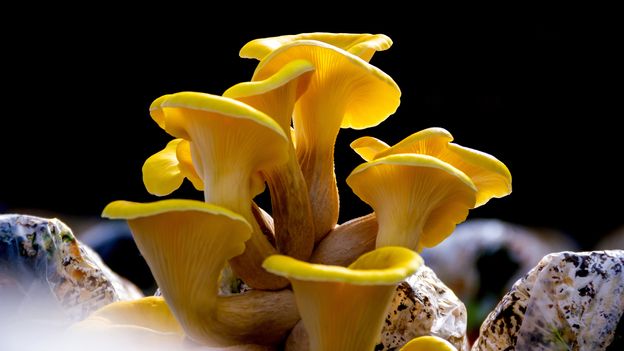
As software developers, we're accustomed to dealing with complex systems, managing dependencies, and mitigating systemic risks. Imagine an ecological system facing a similar challenge: a highly performant, rapidly propagating entity that, while seemingly innocuous, threatens to destabilize the entire architecture. This isn't a new library with a memory leak, but a mushroom – the golden oyster mushroom (Pleurotus citrinopileatus) – now tearing through North American forests with alarming efficiency.
The Problem: A Rogue Process Disrupting Forest Ecosystems
Native to Asia, the golden oyster mushroom was introduced to North America in the early 2000s for cultivation. Its appealing neon yellow cap and high yield made it popular among professional and home growers. However, its success as a cultivated food source inadvertently created an ecological vulnerability. This prolific fungus, now detected across 25 US states, one Canadian province, and parts of Europe, has escaped its controlled environments and established itself as an invasive species.
From a systems perspective, the golden oyster operates as an aggressive, self-replicating process. It primarily colonizes dead or dying hardwood trees, efficiently breaking down tough wood fibers. As a gilled mushroom, a single fruiting body can release billions of microscopic, airborne spores, ensuring rapid propagation across vast distances. Furthermore, oyster mushrooms are unique in their carnivorous nature, preying on nematode worms, which might give them an additional competitive edge.
The Mechanism of Invasion and Systemic Impact
The invasive golden oyster mushroom lives most of the year as a mycelial network – fungal strands invisible within the wood. However, beginning in spring, it manifests as huge yellow clusters cascading from logs and trees. Research by mycologists like Aishwarya Veerabahu at the University of Wisconsin-Madison has illuminated the golden oyster's detrimental impact. Studies involving drilling into trees revealed that those colonized by the golden oyster exhibited, on average, half the fungal biodiversity compared to uncolonized trees.
This loss of diversity indicates that the golden oyster is aggressively outcompeting native fungi, which have coevolved with local trees and plants over millions of years. This isn't just a minor resource contention; it's a fundamental alteration of the forest's microbial architecture. The long-term implications are profound and unpredictable. Dead wood is a critical habitat for various organisms and tree seedlings. A rapid change in the rate of wood decay, driven by this highly efficient decomposer, could alter carbon emission rates and trigger cascading effects throughout the entire ecosystem, much like an unmanaged process consuming disproportionate system resources or disrupting critical background services.
It's not an isolated incident. Other invasive fungal species, such as deadly death caps (Amanita phalloides) and the slender golden bolete (Aureoboletus projectellus), are spreading globally, often exacerbated by climate change altering their suitable habitats. The strikingly orange 'ping pong bat fungus' (Favolaschia calocera), originally from tropical Madagascar, is now found in temperate regions like southern England, indicating a broader trend of ecological instability.
Mitigation Strategies: Fungal 'Version Control' and Genetic Backups
While completely halting the golden oyster's spread might be impractical, mitigation strategies focus on bolstering native species and preserving genetic diversity. This is where citizen science and dedicated enthusiasts are making a tangible difference, akin to open-source contributors maintaining critical libraries.
One key strategy involves the meticulous cloning of native mushroom species. Andy Knott, a former engineer and founder of Jurassic Coast Mushrooms, highlights the need to preserve native genetics against the threat of more vigorous, non-native fungi. His work involves a process that developers can appreciate for its precision and systematic approach:
- Sterile Environment Setup: Working in a clean space, often with alcohol sanitization and air filters, to minimize airborne contaminants – much like setting up a clean development environment.
- Mushroom Dissection: Carefully pulling apart a native mushroom (e.g., a grey oyster) to expose its sterile interior flesh.
- Tissue Transfer: Using a sterile scalpel, a small piece of this internal flesh (about the size of a sesame seed) is excised.
- Agar Plating: This tissue is then carefully transferred to an agar plate, a nutrient-rich jelly providing a growth medium, and the plate is immediately sealed.
- Incubation: The sealed plate is kept in a warm, dark place for several weeks, allowing the mycelium (the fungal network) to grow out from the tissue sample.
This process creates an exact genetic copy of the native mushroom. These genetic backups can then be propagated into grain spawn, which can be supplied to home growers or even deliberately spread in local forests and gardens to give native species a much-needed boost against their invasive competitors. It's a proactive version control system for biological data, ensuring that valuable genetic information is preserved and can be redeployed.
The Developer's Role in Ecosystem Integrity
Fungi perform indispensable 'foundational services' for virtually all terrestrial ecosystems. They are the primary decomposers, nutrient recyclers, and habitat creators. Over two million species of fungi are estimated to exist globally, and the vast majority of plants rely on them for nutrient uptake. As Matthew Wainhouse, a fungi specialist at Natural England, states, "No fungi, no plants." Furthermore, fungi create essential habitats, such as the tree cavities that 1,800 bird species globally depend on. The loss of fungal diversity isn't merely aesthetic; it's a threat to core system functionalities.
Historically, fungal conservation has been underfunded and underappreciated compared to animal and plant conservation – perhaps lacking the 'charisma' to attract public attention. However, this is changing, with the International Union for Conservation of Nature (IUCN) significantly expanding its Red List of threatened fungal species. The golden oyster mushroom's rapid spread, often driven by strains specifically bred for fast growth and dispersal, underscores the critical need for proactive engagement.
As developers, understanding these systemic ecological challenges can inspire us to consider similar vulnerabilities within our own digital ecosystems. The principles of redundancy, diversity, careful dependency management, and proactive monitoring resonate strongly. Practical takeaways include supporting responsible cultivation practices, reporting sightings of invasive species to local mycological societies, and recognizing that even seemingly small, distributed efforts in 'biological version control' can contribute significantly to preserving ecosystem integrity.
FAQ
Q: What makes the golden oyster mushroom particularly invasive compared to native species?
A: Its rapid growth rate, high spore production (billions from a single fruiting body), and a history of cultivation breeding for vigor make it a highly effective competitor. It aggressively colonizes dead hardwood, significantly reducing native fungal biodiversity by outcompeting local species for resources.
Q: How does cloning native fungi contribute to ecosystem resilience?
A: Cloning allows for the precise preservation and propagation of specific genetic strains of native fungi. By creating "genetic backups," conservationists and citizen scientists can reintroduce or bolster native populations, helping them to better compete against invasive species and maintain essential forest ecosystem services like decomposition and nutrient cycling.
Q: Are there parallels between managing invasive species and managing software systems?
A: Absolutely. An invasive species can be seen as an uncontrolled "rogue process" or "unmanaged dependency" that consumes disproportionate resources and disrupts stable "system architecture" (the ecosystem). Conservation efforts like genetic cloning parallel "version control" and "disaster recovery" strategies, while citizen science acts as a distributed monitoring and incident response network, highlighting the importance of understanding and actively managing complex, interconnected systems.
Related articles

AI's Confidence vs. Formal Methods' Rigor: Design Flaws & Verification
While AI accelerates code generation, formal methods remain critical for ensuring system correctness. Languages like TLA+ and tools like Quint enable developers to model and verify system designs before coding, catching subtle flaws. Quint makes formal methods more accessible with developer-friendly syntax and executability. This approach is vital for verifying AI-generated code through trace validation and model-based testing, ensuring reliability against real-world data.

Ephemeral PR Preview Environments on GKE: A Deep Dive
Every development team eventually grapples with the limitations of shared staging environments. The familiar scenario: multiple features deployed simultaneously, database migrations clashing, and the phrase "it works on

Secure Internal API Access for AI Agents with MCP
AI agents accessing internal APIs directly pose significant risks, including identity loss, unrestricted queries, and security bypasses. The Model Context Protocol (MCP) offers a solution by defining explicit tools. A secure architecture involves an MCP server wrapping the API with strict input validation, coupled with a gateway that handles authentication, rate limiting, and audit logging, ensuring safe and accountable access.

TGS 2026: These Forward-Looking Cosplays Are Already Living in the
Tokyo Game Show 2026 showcased incredible cosplay, with many fans embodying characters from unreleased games like *Blast Blade* and *Mononoke No Kuni*. This gallery highlights the community's foresight, alongside debut *Palworld* cosplay and refreshed takes on classics. It’s a testament to the passion that brings gaming's future to life.

NVIDIA DLSS: A Powerful AI Upscaling Game-Changer
NVIDIA DLSS, or Deep Learning Super Sampling, has become a cornerstone technology for PC gamers with RTX graphics cards. It's a proprietary upscaling solution designed to boost game performance and, in some cases,

Apple's HomeView & New Smart Home: A Promising, Pricey Ecosystem
Apple's HomeView smart display leads a substantial expansion into the smart home market, alongside new Apple TV 4K, HomePod Mini 2, and third-party accessories. This new lineup offers deep ecosystem integration but comes with premium pricing and staggered release dates.