
Malta's AI Leap: ChatGPT Plus for All and Dev Implications
The digital landscape is constantly evolving, and a recent announcement from OpenAI and the Government of Malta signals a potentially transformative shift in how artificial intelligence is integrated into society. This
The digital landscape is constantly evolving, and a recent announcement from OpenAI and the Government of Malta signals a potentially transformative shift in how artificial intelligence is integrated into society. This partnership, hailed as a world-first, aims to equip every Maltese citizen with access to ChatGPT Plus, a premium AI tool, coupled with essential AI literacy training. For us, as developers, this initiative isn't just a headline; it's a glimpse into a future where AI becomes a foundational utility, much like electricity, and understanding its implications is crucial.
AI as a National Utility: The Maltese Model
OpenAI's vision of turning intelligence into a "global utility" takes a concrete step forward with this Maltese partnership. The core idea is that AI, like other essential services, should be readily available for individuals, businesses, and institutions to leverage. However, access alone isn't enough; responsible and effective use requires education.
Malta's "AI for All" initiative is designed to address this dual challenge. It mandates that citizens first complete a comprehensive AI literacy course developed by the University of Malta. This course is crucial, as it aims to demystify AI, outlining what it is, its capabilities, its limitations, and critically, how to use it responsibly in daily life and professional settings. Only upon successful completion of this educational program will citizens gain access to ChatGPT Plus for a full year, entirely at no cost. This phased approach, managed by the Malta Digital Innovation Authority (MDIA), began in May, with plans to scale access as more residents complete the course.
This model underscores a strategic understanding: democratizing AI isn't solely about distributing tools, but about cultivating a knowledgeable and confident user base. As Minister Silvio Schembri highlights, the goal is to empower citizens with the skills needed to thrive in a digital world, preventing anyone from being left behind in the rapidly advancing digital age.
Developer Implications: Building in an AI-Literate World
For developers, this partnership in Malta presents several compelling considerations and potential shifts in our operational environment:
1. The Rise of an AI-Literate User Base
Imagine a user base where a significant portion has undergone formal AI literacy training. This changes our assumptions about user understanding. We might encounter users who:
- Understand AI's fundamental concepts: They're less likely to be surprised by AI's probabilistic nature or common limitations (e.g., hallucinations, data biases).
- Are more adept at prompt engineering: Having learned responsible use, they may formulate clearer, more effective prompts, leading to better AI interactions.
- Expect AI integration: With personal experience using advanced tools like ChatGPT Plus, citizens may increasingly expect AI-powered features in the applications we build, from customer service bots to intelligent productivity tools.
This shift implies that developers might spend less time educating users on what AI is and more time focusing on building intuitive interfaces and robust applications that leverage AI effectively and ethically.
2. Democratization of Advanced AI Tools
Widespread, government-backed access to ChatGPT Plus means that a powerful, generative AI model will be in the hands of many citizens. For developers, this provides both opportunities and challenges:
- New use cases: An AI-savvy public might discover novel ways to use generative AI that we, as developers, can then build upon or integrate into our solutions.
- Higher expectations: Users accustomed to a sophisticated AI assistant might have higher expectations for the intelligence and responsiveness of the AI components we integrate into our applications.
- Focus on integration and customization: Instead of building foundational AI models from scratch, developers might increasingly focus on integrating existing models like those from OpenAI into custom workflows, fine-tuning them for specific domain tasks, and building user-friendly front-ends.
3. The 'OpenAI for Countries' Blueprint
Malta's initiative isn't an isolated event. It's part of OpenAI's broader "OpenAI for Countries" program, which aims to support governments in strategic national AI adoption. The program is flexible, adapting to local priorities such as education, workforce training, public services, or startup support. We're already seeing OpenAI collaborate with nations like Estonia and Greece on their national education systems.
This signals a global trend where governments will likely play a more active role in AI adoption and regulation. For developers, this means staying informed about national AI strategies, understanding potential funding opportunities, and adapting to frameworks that might prioritize responsible AI development, data privacy, and ethical guidelines.
4. Reinforcing Responsible AI Development
The strong emphasis on responsible AI use within Malta's literacy course directly aligns with the growing importance of ethical considerations in software development. Developers are increasingly tasked with building AI systems that are fair, transparent, secure, and respectful of user privacy. Malta's initiative serves as a societal-level reinforcement of these principles, potentially leading to a more informed public that can identify and report issues related to AI bias or misuse.
Practical Takeaways for the Dev Community
- Prioritize AI Literacy: Even as technical professionals, deepening our understanding of AI's societal implications, ethical frameworks, and responsible use cases is paramount. Consider engaging with resources that mirror Malta's AI literacy goals.
- Anticipate User Evolution: Design applications with the expectation that users will be more AI-literate. Focus on how your software can augment their existing AI tools or provide specialized AI capabilities.
- Watch for National AI Strategies: Keep an eye on similar government-led AI adoption programs in your region or target markets. These initiatives can unlock new opportunities or introduce new compliance requirements.
- Embrace Responsible AI by Design: Integrate ethical AI principles from the outset of your projects, considering potential biases, data privacy, and user consent, knowing that public awareness of these issues is on the rise.
This partnership represents a bold move towards widespread AI integration. For developers, it's a call to consider not just how we build with AI, but for whom and within what societal context.
FAQ
Q: What is the technical prerequisite for Maltese citizens to access ChatGPT Plus under this partnership?
A: To gain access to ChatGPT Plus for one year at no cost, Maltese citizens must first successfully complete an AI literacy course developed by the University of Malta. This course focuses on understanding AI, its capabilities and limitations, and responsible usage.
Q: How does this national initiative differ from a standard individual ChatGPT Plus subscription?
A: Unlike a standard individual subscription, this initiative is a government-sponsored program providing access conditional on educational attainment. It's designed for national-scale AI literacy and adoption, managed by the Malta Digital Innovation Authority, rather than being a direct commercial offering to individuals.
Q: Is this partnership model expected to be replicated globally by OpenAI?
A: While tailored to Malta's specific needs and national AI priorities, this initiative is part of OpenAI's broader "OpenAI for Countries" program. This program supports governments in strategic national AI adoption, suggesting that similar models, customized to local contexts (e.g., education, workforce training, public services), could be implemented in other countries.
Related articles

AI's Confidence vs. Formal Methods' Rigor: Design Flaws & Verification
While AI accelerates code generation, formal methods remain critical for ensuring system correctness. Languages like TLA+ and tools like Quint enable developers to model and verify system designs before coding, catching subtle flaws. Quint makes formal methods more accessible with developer-friendly syntax and executability. This approach is vital for verifying AI-generated code through trace validation and model-based testing, ensuring reliability against real-world data.

Ephemeral PR Preview Environments on GKE: A Deep Dive
Every development team eventually grapples with the limitations of shared staging environments. The familiar scenario: multiple features deployed simultaneously, database migrations clashing, and the phrase "it works on

Secure Internal API Access for AI Agents with MCP
AI agents accessing internal APIs directly pose significant risks, including identity loss, unrestricted queries, and security bypasses. The Model Context Protocol (MCP) offers a solution by defining explicit tools. A secure architecture involves an MCP server wrapping the API with strict input validation, coupled with a gateway that handles authentication, rate limiting, and audit logging, ensuring safe and accountable access.
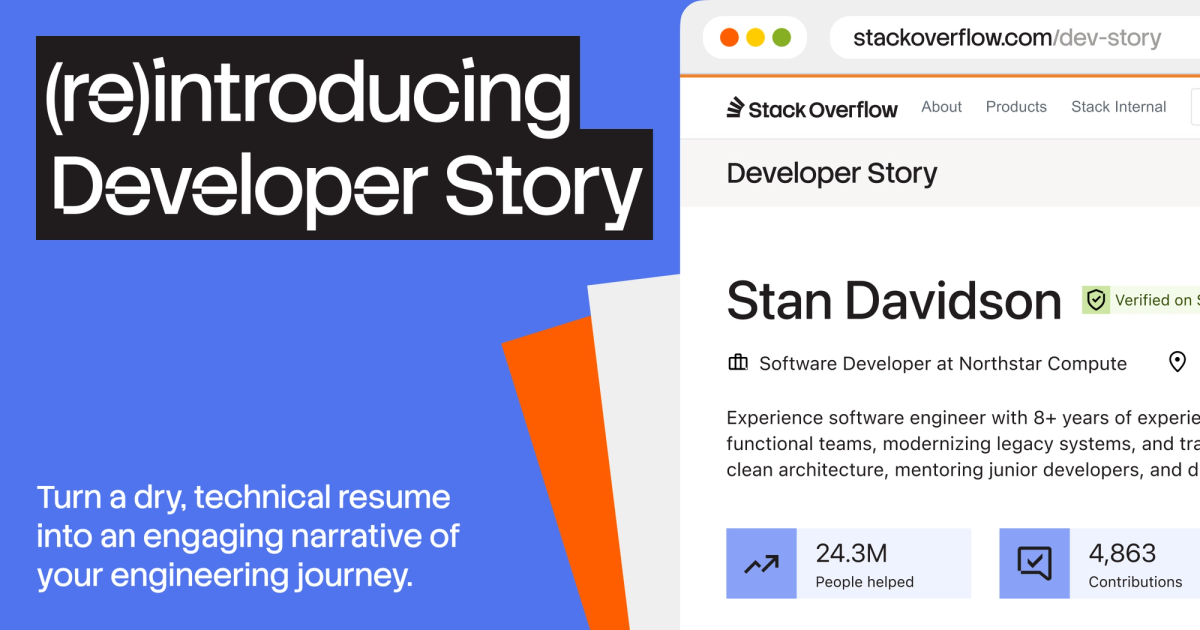
Beyond the Resume Noise: Developer Story Rethinks Tech Hiring
Stack Overflow is addressing the growing challenges in tech hiring, exacerbated by AI's influence leading to untrustworthy and generic resumes. Their solution, the re-introduced Developer Story, offers a platform for developers to authentically showcase their work, expertise, and impact through verifiable contributions and personal projects. This aims to provide hiring teams with more objective insights and help genuine talent stand out in a crowded market.

Adding & Validating JSON-LD Structured Data in Next.js
When we build websites, we want them to be discoverable and accurately understood by search engines. This isn't just about keywords and meta descriptions anymore; it's about providing explicit, machine-readable context.

Amazon Alexa Tablets: A Premium Leap Forward
Amazon's new Alexa Tablets mark a significant departure from their budget-focused Fire line, offering premium hardware, robust Alexa+ integration, and, crucially, native Google Play access. This trio of devices, including a powerful 12-inch Pro model, positions Amazon as a more serious contender in the broader Android tablet market, moving towards a "Pro" build and experience for work and entertainment. While they come with a higher price tag, the upgrades are substantial.