
Magic Designer Wants to Resurrect a Forgotten Horror Story Card
A *Magic: The Gathering* designer wants to revive Vengeful Pharaoh, a 15-year-old card from *Magic 2012* that perfectly tells a miniature mummy horror story through its unique mechanics. Despite its brilliant top-down design, the card was ultimately too clunky for widespread play, creating a "curse" for the player who included it in their deck.
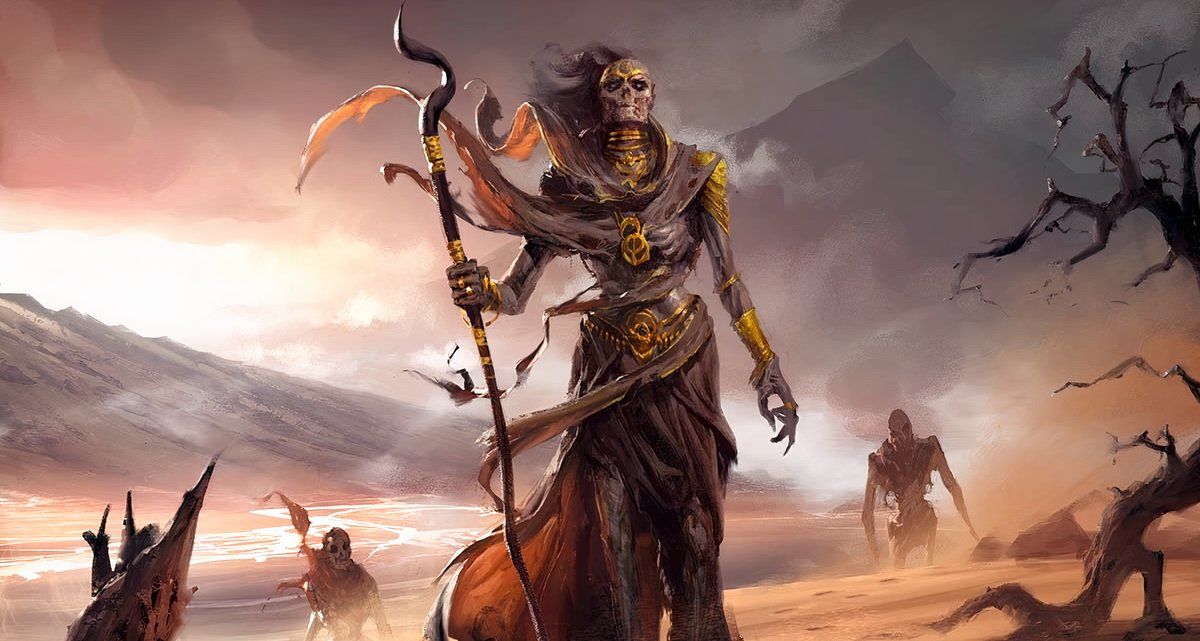
Magic Designer Unearthed a Miniature Mummy Horror Story on a Card
We all know the classic mummy tale: brave but often foolish adventurers disturb an ancient tomb, ignoring dire warnings. Traps are dodged, treasures are plundered, and inevitably, the sarcophagus is opened. The mummy rises, seeking vengeance, first claiming an immediate victim, then relentlessly hunting down the survivors, often cursing them along the way. It’s a timeless narrative, and incredibly, Magic: The Gathering once encapsulated this entire chilling saga within the mechanics of a single, often overlooked card. It’s a card that, according to one of its designers, deserves to see the light of day once more.
In a recent conversation with Polygon, Magic vice president of design Aaron Forsythe and senior creative designer Doug Beyer reminisced about the 15th anniversary of Magic 2012, a core set from the bygone era of 2011. When asked if any cards from that set surprised them by fading into obscurity, Beyer immediately pointed to a decidedly spooky contender: Vengeful Pharaoh.
"I definitely thought Vengeful Pharaoh would see a bit more play," Beyer noted. "It was such a flavorful top-down design — a creepy mummy who was cursed to leap back to life whenever someone dared to disturb your hallowed tomb."
The Miniature Horror Story on a Card
Despite Magic 2012 featuring no legendary creatures, Vengeful Pharaoh feels like it should have been one. For five mana (two colorless and three black), you summon a 5/4 Zombie with deathtouch. Right off the bat, that’s pitch-perfect flavor for an ancient, vengeful mummy – a mere touch means certain doom. It’s a powerful but slow threat, made even trickier by its triple black mana requirement, which can be a stretch in multi-color decks.
The true genius, however, lies in its second ability:
Whenever combat damage is dealt to you or a planeswalker you control, if this card is in your graveyard, destroy target attacking creature, then put this card on top of your library.
This ability isn't just a mechanic; it’s a narrative masterpiece. An opponent daring to attack you or your planeswalker is akin to disturbing the mummy's sacred resting place. If Vengeful Pharaoh is buried in your graveyard, it immediately awakens, claiming an attacking creature as its first victim. Then, chillingly, it begins its slow, inexorable crawl back to the surface, moving to the top of your library, ready to be drawn again. It perfectly captures the persistent, inescapable nature of a mummy's curse, ensuring its return to haunt its trespassers.
A Pharaoh's Curse for the Player?
So, if the design is so brilliant, why did Vengeful Pharaoh remain largely forgotten? Beyer himself acknowledged the card's inherent irony: "I think the curse ended up landing mostly on the person who chose to put it in their deck!" This is where the card's flavor clashes with its practical playability.
While the instant-kill effect is undeniably strong, its drawback of returning to the top of your library means you’ll likely need to draw it, pay its hefty five mana cost again, and then have it die in combat once more for its ability to re-trigger. This creates a slow, clunky loop that punishes the player almost as much as the opponent. To truly harness the Pharaoh's power, you need to build your entire strategy around it, typically incorporating mill effects (to put it in the graveyard without casting) or sacrifice outlets (to get it back into the graveyard quickly after casting). The numbers speak for themselves: out of nearly 5 million Commander decks tracked on EDHREC, Vengeful Pharaoh appears in a mere 0.14%, almost exclusively in Zombie-themed decks. Commanders like Egon, God of Death (which mills cards) or Taigam, Sidisi’s Hand (which manipulates the top of the deck) can make it work, but it highlights the card’s significant inflexibility.
The Golden Age of Core Set Ingenuity
Forsythe revealed that Vengeful Pharaoh emerged from an internal design contest aimed at creating the most flavorful versions of resonant concepts, a contest he himself won with this very card. Magic head designer Mark Rosewater once wrote in a 2011 blog post that Vengeful Pharaoh was a prime example of a major shift in Magic's design philosophy at the time. Prior to Magic 2010, annual core sets were just reprints. But Forsythe's insight revolutionized this.
Rosewater explained that a key discovery was that Magic needed a home for "cool card designs that don't easily fit anywhere else." The idea was that Vengeful Pharaoh shouldn't have to wait for an Egyptian-themed set to be printed. Core sets, from Magic 2010 to Magic 2015, served as this crucial nexus, allowing for unique, setting-agnostic concepts to flourish and showcase Magic's ability to craft resonant, impactful individual cards without being tied to a specific plane's lore.
What Was Lost in the Sands of Time
This annual core set model, which provided a temporary home for cards like Vengeful Pharaoh, was eventually replaced. In 2024, Magic introduced Foundations, a definitive core set designed to remain Standard-legal for several years. Forsythe reflected on this evolution, admitting, "Honestly, I now think that the annual core set model was a little flawed." While he’s "much happier with the Foundations model we have now," which offers a more stable backbone for the Standard format, he also implicitly acknowledges what was left behind.
While Foundations brings stability, it means we’ve lost that annual space for quirky, self-contained designs like Vengeful Pharaoh. These were cards that, despite their niche playability, excelled at telling a complete, miniature story within their art and mechanics. They were fleeting glimpses of design brilliance, much like a tomb discovered and then re-sealed.
Resting in the Graveyard, for Now
Vengeful Pharaoh stands as a testament to Magic's capacity for ingenious top-down design, where flavor and mechanics intertwine to create a truly immersive experience. It's a perfect horror story, distilled onto a piece of cardboard. While its stringent play requirements mean it remains largely confined to the graveyard of Magic history for now, Doug Beyer’s hope that "Maybe someday it’ll hop back out of the graveyard once more" echoes the card's own narrative. Perhaps, like any good mummy, it’s merely waiting for the right moment, and the right deck, to awaken again.
FAQ
Q: What makes Vengeful Pharaoh's design so unique?
A: Its unique strength is how perfectly its mechanics – a powerful zombie with deathtouch that returns from the graveyard to destroy an attacker and then goes to the top of your library – mirror the classic horror story of a mummy's curse and its relentless return, all on one card.
Q: Why didn't Vengeful Pharaoh see more widespread play?
A: Despite its flavorful design, the card is quite inflexible. Its ability sends it back to the top of your library, requiring you to draw and recast it for its effect to trigger again, making it mana-intensive and slow unless you build your deck specifically around graveyard and milling strategies.
Q: What was the purpose of core sets like Magic 2012 for card design?
A: Historically, core sets like Magic 2012 served as a crucial home for unique, self-contained card designs that weren't tied to any specific plane's lore. They allowed designers to create resonant, flavorful cards like Vengeful Pharaoh without having to wait for a thematically appropriate expansion set.
Related articles

TCG Pocket Responds: A Much-Needed Pace Shift for Pokémon Fans
Pokémon TCG Pocket is rolling out a major update for its second anniversary, primarily addressing player concerns about overwhelming content releases by shifting to a six-week set schedule. This aims to curb player decline and improve overall engagement by giving trainers more time to collect and strategize. The update also adds new collection methods, improved deck-building features, and enhanced trading functionality.

Kojima Compares Divisive New Film 'Digger' to MGS2's Prescient Vision
Gaming icon Hideo Kojima has praised the divisive 2026 film *Digger*, drawing intriguing parallels to his own prophetic game, *Metal Gear Solid 2*. Both works, he explains, uniquely explore the dangers of misinformation and a fragmented digital reality, anxieties he shares with *Digger*'s director, Alejandro González Iñárritu.

Ubisoft Proposes German Studio Workforce Reduction Amidst
Ubisoft is planning a voluntary departure program for about 100 employees across its Düsseldorf, Berlin, and Mainz studios in Germany. This move is part of a larger, ongoing cost-reduction and restructuring effort by the publisher, aiming to better position its studios for future projects.

TGS 2026: These Forward-Looking Cosplays Are Already Living in the
Tokyo Game Show 2026 showcased incredible cosplay, with many fans embodying characters from unreleased games like *Blast Blade* and *Mononoke No Kuni*. This gallery highlights the community's foresight, alongside debut *Palworld* cosplay and refreshed takes on classics. It’s a testament to the passion that brings gaming's future to life.

Beyond the Bugs: Conquering Studio Headaches in Indie Dev
This guide, part three in a series on running an indie studio, tackles the crucial but often overlooked aspect of dealing with non-development related issues. It introduces creating a shared 'studio backlog' for collective problems and using the IDS (Identify, Discuss, Solve) framework to address them constructively. The core message is to build powerful habits that keep studios from getting quietly derailed by lingering challenges.

Nvidia's RTX 5090 Reportedly Scrapped: Is AI Eating Our Flagship GPUs
Nvidia has reportedly halted production of the GeForce RTX 5090, with leaked factory notices suggesting its core chip will be repurposed for AI and data center cards. This move positions the RTX 5080 24GB as the new flagship gaming GPU in the 50-series. The decision is linked to an industry-wide memory shortage, heavily influenced by surging AI demand, impacting consumer tech across the board.