
MacBook Neo vs. Air: The Entry-Level Choice Demystified
Deciding between Apple's budget-friendly MacBook Neo and the more powerful MacBook Air can be tricky. This detailed review breaks down specs, performance, and value to help you choose the best entry-level Mac for your needs.

Choosing an entry-level MacBook just got more complex. The new $599 MacBook Neo offers an incredibly budget-friendly entry for light tasks. However, the $1,099 MacBook Air remains the performance king for demanding workloads. Your ideal choice hinges on your budget and primary use case within Apple's portable ecosystem.
For years, the 13-inch MacBook Air was Apple's undisputed entry-level laptop. It perfectly balanced portability, performance, and the macOS experience. Now, with the MacBook Neo, consumers face a genuine choice. Both are lightweight (2.7 pounds) and physically similar, with the Air's 13.6-inch display only marginally larger than the Neo's 13-inch. Both support Apple Intelligence, but beneath the surface, price, processor, and overall capability diverge significantly, making the decision nuanced.
Apple's build quality is present in both. The Air features a 13.6-inch Liquid Retina display (2,560x1,664 pixels), slightly sharper than the Neo’s 13-inch Liquid Retina (2,408x1,506 pixels). Both screens provide 500 nits of brightness. A key aesthetic difference is the Neo's vibrant colors – Indigo, Blush, Citrus, and Silver – contrasted with the Air's traditional Sky Blue, Silver, Starlight, and Midnight. The Air also includes a Force Touch trackpad, a step up from the Neo's Multi-Touch version, offering a more refined control experience.
Here lies the most significant distinction. The MacBook Neo uses the A18 Pro chip, also found in the iPhone 16 Pro, while the latest MacBook Air features the M5 chip – Apple's dedicated M-class processor for desktop tasks. This performance gap is substantial.
RAM and storage also differ greatly. The base Neo includes 8GB of non-upgradable RAM. Storage starts at 256GB, with a $100 upgrade to 512GB, which also adds Touch ID. The base Air, however, starts with a more robust 16GB of RAM (upgradable to 32GB) and 512GB of storage (up to 4TB), with Touch ID included. These specs underscore the Air's greater capacity for demanding applications and longevity.
Battery life is crucial for portability. The Neo offers up to 16 hours from its 36.5-watt-hour battery. The Air, with its larger 53.8-watt-hour battery, slightly outperforms it at up to 18 hours. Both provide excellent all-day endurance. For wireless, the Air boasts Wi-Fi 7, potentially offering faster connections than the Neo's Wi-Fi 6E. Both feature Bluetooth 6.
The Neo's starting price of $599 is its biggest draw, making it an incredibly accessible MacBook. Even at $699 for the 512GB/Touch ID model, it offers exceptional value. In stark contrast, the M5 MacBook Air starts at $1,099.
A used M2 MacBook Air, often found around $700 for 8GB RAM/256GB storage, can offer M-series performance at a Neo-like price. However, a new Neo guarantees a full factory warranty and pristine condition, which a used device cannot.
Who Should Choose the MacBook Neo?
- Budget-Minded Users: At $599, it's the most affordable new MacBook.
- Light Task Performance: Handles web browsing, email, streaming, and basic productivity effortlessly.
- Secondary/Travel Laptop: Its lightness, long battery, and lower cost make it ideal for casual use or travel.
- Value Newness & Warranty: Offers peace of mind with a full warranty, unlike used alternatives.
Who Should Choose the MacBook Air?
- Performance Demands: Essential for professionals (developers, graphic designers, video editors) needing the M5 chip's power for intensive tasks.
- Future-Proofing & Expandability: More RAM and storage options provide better longevity and adaptability.
- Advanced Features: Wi-Fi 7 and Force Touch trackpad contribute to a premium experience.
- Used M-series Consideration: An older M2 Air (around $700 used) can offer M-series performance for those with a tighter budget, but with caveats.
| Feature | MacBook Neo | M5 MacBook Air |
|---|---|---|
| Display | 13-inch Liquid Retina (2408x1506, 500 nits) | 13.6-inch Liquid Retina (2560x1664, 500 nits) |
| Weight | 2.7 pounds (1.23 kg) | 2.7 pounds (1.23 kg) |
| Processor | Apple A18 Pro chip | Apple M5 chip |
| RAM | 8GB (non-upgradable) | 16GB/24GB/32GB |
| Storage | 256GB/512GB | 512GB/1TB/2TB/4TB |
| Battery | 36.5-watt-hour (Up to 16 hours) | 53.8-watt-hour (Up to 18 hours) |
| Camera | 1080p FaceTime HD camera | 12MP Center Stage camera with Desk View |
| Connectivity | Wi-Fi 6E, Bluetooth 6 | Wi-Fi 7, Bluetooth 6 |
| Touch ID | On 512GB model only | Standard |
| Price | Starting at $599 | Starting at $1,099 |
Your choice depends squarely on your priorities. For ultimate affordability, everyday tasks, or as a secondary device, the $599 MacBook Neo is a fantastic option, offering a true Apple laptop experience at an unprecedented price. Its vibrant design and solid performance for light use are compelling.
However, if you require serious processing power for professional software, extensive multitasking, or simply want the best performance and future-proofing in a portable Apple laptop, the M5 MacBook Air is the clear winner. Its M-series chip, superior RAM, and advanced features justify the higher investment for power users. While a used M2 Air offers a cost-effective route to M-series power, remember the benefits of a brand-new device with a full warranty. Both are excellent, but they cater to very different needs and budgets.
FAQ
Q: Is the MacBook Neo powerful enough for everyday use?
A: Yes, for most common tasks like web browsing, email, streaming videos, word processing, and light photo editing, the MacBook Neo's A18 Pro chip is more than sufficient and provides a smooth user experience.
Q: What's the biggest advantage of the MacBook Air over the Neo?
A: The biggest advantage of the MacBook Air is its M5 processor, which offers significantly greater performance for demanding tasks like video editing, graphic design, and software development. It also comes with more base RAM (16GB vs 8GB) and storage (512GB vs 256GB) with more upgrade options.
Q: Should I consider a used MacBook Air instead of a new Neo?
A: A used M2 MacBook Air (around $700) can offer M-series performance at a price closer to the Neo. However, a new Neo comes with a full one-year warranty, is free of prior wear and tear, and offers a choice of vibrant colors. The decision depends on whether you prioritize raw M-series power on a budget or a brand-new device with a warranty.
Related articles
Android 17 QPR2 Beta 7.1: The Performance Relief You've Been Waiting
Android 17 QPR2 Beta 7.1: Finally Fixing the QPR1 Performance Woes Verdict: Android 17 QPR2 Beta 7.1 is a crucial and highly anticipated software update for Google Pixel users, specifically targeting and resolving the

DJI Solo Video Setups: Smart Choices for Lone Creators
This review delves into DJI's recommended solo video setups, highlighting the Osmo Pocket 3 Creator Combo as a top pick for its integrated camera, gimbal, and mic. It also covers stabilizers like the Osmo Mobile 8 and RS 4, and the DJI Mic Mini series for enhanced audio, providing honest pros, cons, and clear buying advice.

Ars Technica's Rocket Report: Your Essential Space Industry Briefing
Quick Verdict Ars Technica's Rocket Report, presented by veteran space reporter Stephen Clark, offers an invaluable and meticulously organized weekly (or similar frequency, implied by "Edition 9.15") digest of the most

Apple iPhone Duo: A Daring Debut with Notable Compromises
Apple's highly anticipated iPhone Duo, priced at $2,000, has gone on pre-order. While hailed as "Apple's most exciting device in a decade" for its innovative foldable design and immersive display, it comes with significant drawbacks like the absence of FaceID and a premium camera.
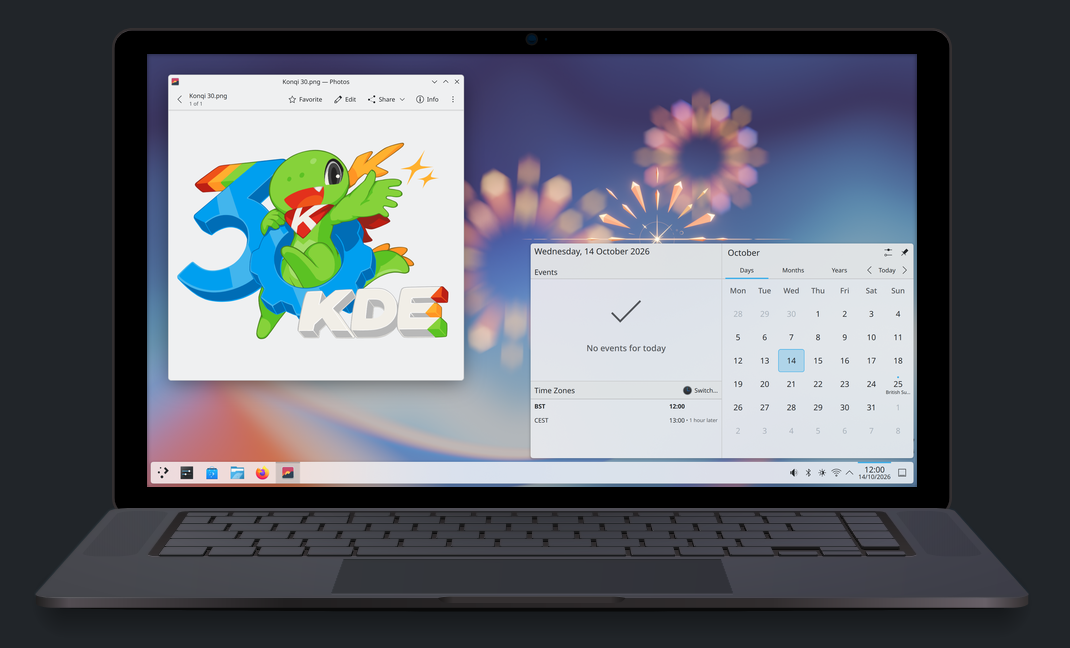
KDE Plasma 6.8: A Future-Focused 30th Anniversary Update
Quick Verdict KDE Plasma 6.8, arriving as the "30th Anniversary Edition," is a pivotal release that decisively pushes the desktop environment into the future. With a definitive farewell to native X11 sessions and a
Galaxy Watch One UI 9 Beta: Promising Progress, But Patience Needed
Galaxy Watch 8, Watch Ultra, and Watch 7 are receiving a new One UI 9 Watch beta build with bug fixes and a security patch. Active development signals progress, but a stable release date remains elusive.