
Klipsch ProMedia Lumina Review: A Bass-Light Remake
The Klipsch ProMedia Lumina 2.1 offers a sleek design and good mids/highs, but its significant flaw is underwhelming bass, diminishing the value of its slim subwoofer and high price tag. A solid 2.0 system might offer better value.
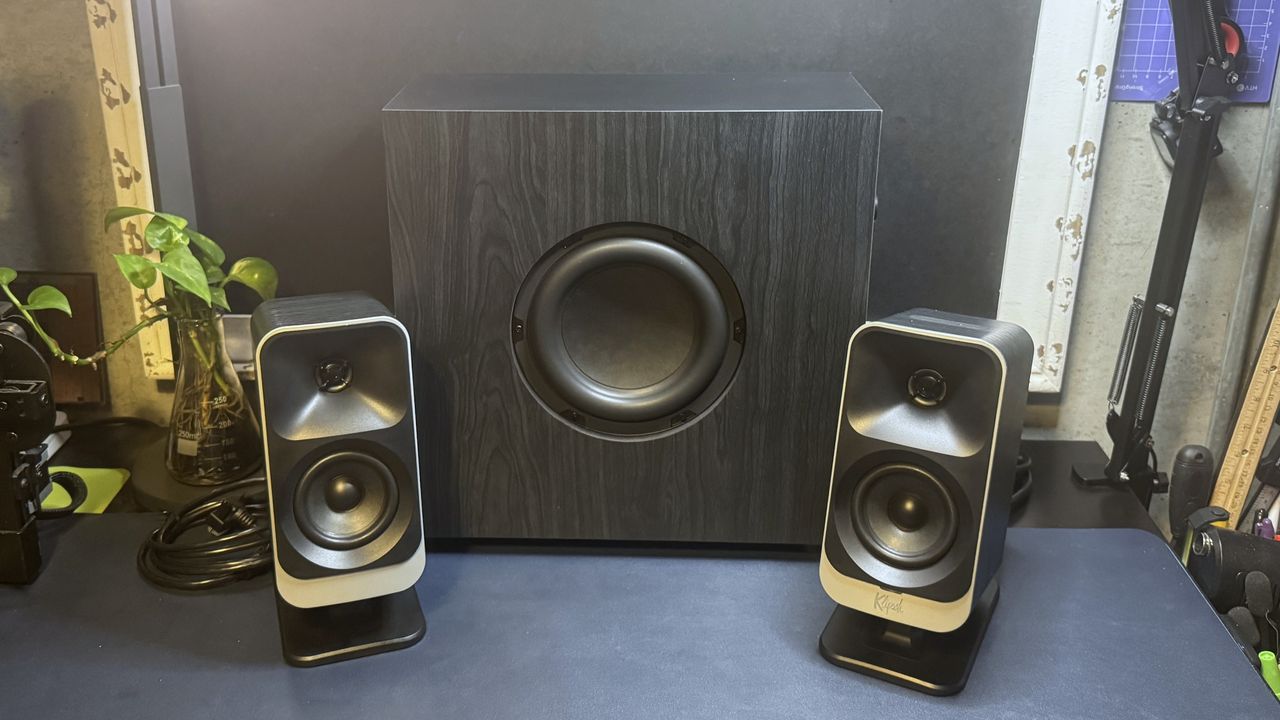
The Klipsch ProMedia Lumina 2.1 system offers a sleek, redesigned aesthetic and solid midrange and treble performance, making it suitable for general media consumption and gaming. However, its most significant flaw lies in its underwhelming bass response, which severely diminishes the value of its "slimmed-down" subwoofer and questions its nearly $400 price tag.
The Klipsch ProMedia series has long been a staple in PC audio, with its 2.1 system, first introduced over two decades ago, becoming a recognized classic. While audio technology often endures, design trends and connectivity options evolve. Klipsch addresses this with the new ProMedia Lumina 2.1, a significant redesign that swaps the familiar cube-shaped subwoofer for a much slimmer profile and introduces modern aesthetics and features. Retailing at $380, and currently available for $319.99, the Lumina aims to rejuvenate a classic. But does this refresh hit all the right notes, or does its new form come at a functional cost?
Design & Build Quality
The Lumina immediately distinguishes itself with a visual overhaul. The satellite speakers are now large, rectangular units with soft, rounded corners and a sophisticated matte black finish. They feature light silver driver trim and are encased in a black woodgrain-finish vinyl, giving them a premium, almost bookshelf-speaker aesthetic. While attractive, there's a minor concern that this vinyl wrap might not possess the legendary durability of its predecessors, potentially showing wear over decades of use.
Each satellite also incorporates a built-in plastic stand with a non-stick base, allowing for an 18-degree backward tilt – a thoughtful addition for speakers typically placed on a desk. A unique visual element is the backward-facing lighting block on each satellite, providing a customizable, diffused glow that can integrate with your setup’s ambiance.
The redesigned subwoofer is the most striking physical change. Departing from the traditional cube, it’s now a slim, side-firing unit measuring about 14 inches tall by 13.88 inches wide, and only 6 inches deep. This slimmer footprint, along with its relatively light 11-pound weight, makes it far more convenient for placement compared to many other gaming PC subwoofers. It shares the same woodgrain vinyl sides as the satellites, though its matte black top features a subtly shiny, black-on-black Klipsch logo.
Features & Connectivity
Controls for the Lumina system are primarily located on the right satellite. A trio of rubber buttons on top handles volume adjustments and acts as a multifunction control for power, lighting brightness, and cycling through five lighting presets. While functional, the tactile feedback from these buttons isn't particularly satisfying. Thankfully, Klipsch offers companion PC and mobile apps for more intuitive control.
The right satellite also features a small utility button on the back to switch between Bluetooth, AUX, USB-C, and a 3.5mm headset passthrough. An LED indicator on the front changes color to reflect the active connection. Bluetooth pairing is initiated by holding this utility button. The left satellite is simpler, featuring only a USB-C charging passthrough port.
Both satellites connect to the subwoofer via thick, 6.5-foot cables with proprietary DB9 connectors. While the cable length is generally adequate, their thickness can make cable management challenging, even with the subwoofer's integrated cable clips. On the back of the subwoofer, alongside the DB9 ports and AC input, you'll find additional USB-C and 3.5mm AUX ports, plus a gain adjustment knob for the subwoofer.
Key Specifications
The Klipsch ProMedia Lumina 2.1 system comprises two satellite speakers and a side-firing subwoofer. Each satellite houses a 1-inch Mylar tweeter stacked above a 3-inch midrange driver. The subwoofer features a 6.5-inch woofer. The system boasts a frequency response of 40 Hz to 20,000 Hz @ -6dB and a signal-to-noise ratio (SNR) of 98 dB. Connectivity options include USB-C, 3.5mm AUX, and Bluetooth 5.3. The satellites measure 9.75 x 6.5 x 4 inches and weigh 2.1 lbs each, while the subwoofer is 14 x 13.88 x 6 inches and weighs 11 lbs.
Audio Performance
When it comes to sound, the ProMedia Lumina speakers deliver a mixed bag. The system truly shines in the midrange, offering solid, present, and well-rounded audio that makes tracks like K-391's "Lonely World" feel vibrant and dynamic. Highs are also commendably strong without becoming overly sharp or painful, even with notoriously bright songs such as Britney Spears' "Toxic." This strong performance in the mid and high frequencies makes the speakers quite good for general media consumption, including gaming, where clear footsteps and gunshots are often critical without being jarring.
However, the Achilles' heel of the ProMedia Lumina 2.1 system is its bass response. Despite the inclusion of a dedicated subwoofer, its contribution to the overall sound profile is notably underwhelming. Even with the subwoofer's gain turned up to maximum, the system struggles to deliver the impactful "oomph" expected from a 2.1 setup, particularly one implicitly aimed at gamers with its flashy LED lighting. The bass feels lackluster, to the point where the reviewer felt that removing the subwoofer might not significantly alter the sound experience. The system's strong lower midrange helps to mask this deficiency to some extent, allowing most media to still sound "pretty good," but the absence of deep, resonant bass is a glaring omission. Adding to the frustration, the proprietary DB9 connectors mean you cannot simply swap out the underperforming subwoofer for a third-party alternative. This forces users to either accept the weak bass or look elsewhere entirely.
Software & Customization
The Klipsch Control app, available on both PC and mobile, provides additional customization options beyond the physical controls. While the LED backlighting isn't as extensively customizable as some competitor offerings (like Razer's Nommo V2 Pro), it allows for some tweaking of presets and includes a "screen react" mode for a more immersive experience. For those seeking highly granular, game-reactive lighting, other solutions might be more suitable.
The software also includes useful audio features such as virtual surround sound and a 6-band EQ with several built-in presets. Unique settings like "night mode," which reduces bass by 50%, and controls for auto standby and function sounds, offer practical enhancements not accessible via the on-speaker controls.
Value & Competition
With a retail price of $380, the Klipsch ProMedia Lumina 2.1 isn't positioned as a budget-friendly option. While a sale price of $319.99 makes it slightly more accessible, its primary drawback—the unimpressive bass response—significantly impacts its value proposition. Given that its subwoofer's contribution is so minimal, one might question the necessity of a 2.1 system at all, suggesting that a cheaper, high-quality 2.0 system might offer comparable or even superior overall audio quality without the bass compromises.
The source mentions the Razer Nommo V2 as a "closer equivalent" to the ProMedia Lumina, priced at $299.99. This makes the Nommo V2 a compelling alternative, offering potentially better value at a lower price point, although specific performance details for the Nommo V2 aren't provided in the source. For users seeking robust, customizable lighting and more powerful bass, systems like the even pricier Razer Nommo V2 Pro (which the source mentions but does not directly compare in price/specs) might be considered, though they operate in a different price bracket. The Lumina's proprietary subwoofer connection means there's no upgrade path for improving the bass, further highlighting its poor value for money in this crucial area.
Buying Recommendation
The Klipsch ProMedia Lumina 2.1 presents a visually appealing, modernized take on a classic PC speaker system. Its redesigned aesthetic, slim subwoofer, and strong performance in mids and highs make it a decent choice for general desktop audio and gaming. However, its significant Achilles' heel is the disappointingly weak bass response, which undermines the very purpose of a 2.1 system and its premium price tag. If crisp mids and clear highs are your absolute priority and bass is an afterthought, or if the sleek design and convenient subwoofer placement are paramount, the Lumina could be considered, especially at its sale price.
However, if you expect a truly impactful audio experience with deep, resonant bass from a 2.1 system, you will likely be disappointed. For nearly $400, or even the sale price, the Lumina struggles to justify its cost when a good 2.0 system might offer similar sonic benefits (minus the weak bass) for less, or when alternatives like the Razer Nommo V2 provide competitive features at a lower price point. Unless future firmware updates dramatically improve the bass, or the price drops significantly, we recommend exploring other 2.1 systems or investing in a quality 2.0 setup if bass isn't a top priority.
FAQ
Q: Is the Klipsch ProMedia Lumina 2.1 suitable for gaming?
A: Yes, the Lumina's strong midrange and clear highs make it quite good for gaming, allowing gunshots and footsteps to be heard distinctly without being overly bright or fatiguing. However, if you prefer powerful, immersive bass for explosions and impacts, you might find the subwoofer's performance lacking.
Q: Can I replace the subwoofer with a different one?
A: No, the satellite speakers connect to the subwoofer using proprietary DB9 connectors. This means you cannot swap out the included subwoofer for a third-party unit, limiting your options for improving the bass response of the system.
Q: Are there any significant downsides to the new design?
A: While the redesigned speakers and slim subwoofer look premium, the woodgrain vinyl wrap might not prove as durable over decades as previous Klipsch systems, raising concerns about long-term aesthetic wear. Additionally, the thick proprietary cables can make cable management challenging.
Related articles
Android 17 QPR2 Beta 7.1: The Performance Relief You've Been Waiting
Android 17 QPR2 Beta 7.1: Finally Fixing the QPR1 Performance Woes Verdict: Android 17 QPR2 Beta 7.1 is a crucial and highly anticipated software update for Google Pixel users, specifically targeting and resolving the

DJI Solo Video Setups: Smart Choices for Lone Creators
This review delves into DJI's recommended solo video setups, highlighting the Osmo Pocket 3 Creator Combo as a top pick for its integrated camera, gimbal, and mic. It also covers stabilizers like the Osmo Mobile 8 and RS 4, and the DJI Mic Mini series for enhanced audio, providing honest pros, cons, and clear buying advice.

Ars Technica's Rocket Report: Your Essential Space Industry Briefing
Quick Verdict Ars Technica's Rocket Report, presented by veteran space reporter Stephen Clark, offers an invaluable and meticulously organized weekly (or similar frequency, implied by "Edition 9.15") digest of the most

Apple iPhone Duo: A Daring Debut with Notable Compromises
Apple's highly anticipated iPhone Duo, priced at $2,000, has gone on pre-order. While hailed as "Apple's most exciting device in a decade" for its innovative foldable design and immersive display, it comes with significant drawbacks like the absence of FaceID and a premium camera.
KDE Plasma 6.8: A Future-Focused 30th Anniversary Update
Quick Verdict KDE Plasma 6.8, arriving as the "30th Anniversary Edition," is a pivotal release that decisively pushes the desktop environment into the future. With a definitive farewell to native X11 sessions and a

Ephemeral PR Preview Environments on GKE: A Deep Dive
Every development team eventually grapples with the limitations of shared staging environments. The familiar scenario: multiple features deployed simultaneously, database migrations clashing, and the phrase "it works on