
iPhone LiDAR's Corner-Peeking Power: A Glimpse into the Future
For years, the LiDAR sensor on Apple's premium devices like the iPhone Pro and iPad Pro has been a powerful, yet often underutilized, piece of hardware. While it enhances augmented reality (AR) experiences and improves

For years, the LiDAR sensor on Apple's premium devices like the iPhone Pro and iPad Pro has been a powerful, yet often underutilized, piece of hardware. While it enhances augmented reality (AR) experiences and improves low-light focusing, a recent breakthrough from MIT Media Lab researchers hints at a truly revolutionary application: the ability to detect and track objects completely out of sight, effectively letting your iPhone 'see' around corners.
Quick Verdict
This isn't a feature you can download today, but it's arguably one of the most exciting developments for consumer-grade LiDAR. MIT's research demonstrates that the existing, low-power LiDAR in your iPhone or iPad Pro is capable of sophisticated Non-Line-of-Sight (NLOS) imaging. While currently confined to the lab and requiring raw data access from Apple, this technology promises transformative applications in robotics, autonomous systems, and potentially, future consumer experiences. It's a tantalizing peek into what our current tech could be capable of, even if it's not yet a reality for everyday users.
The Technology: Seeing Beyond the Obvious
Non-line-of-sight (NLOS) imaging, the ability to reconstruct scenes from light that has bounced off hidden objects, is not a brand-new concept. Historically, it demanded high-end, expensive lab equipment. What makes this MIT research so compelling is its successful implementation using the exact same low-power LiDAR sensor found in off-the-shelf iPhones and iPad Pros. This democratizes a capability once reserved for specialized scientific facilities, bringing it within reach of consumer electronics.
At its core, LiDAR (Light Detection and Ranging) works by emitting laser pulses and measuring the time it takes for them to return, creating a detailed 3D map of the environment. For 'seeing around corners,' the MIT team employs an ingenious method they call an 'aperture sampling model.' The secret ingredient is motion. As your device moves, the system doesn't just collect individual data points; it simultaneously tracks the hidden object's shape, its precise position, and the camera's own changing position over time. This dynamic data collection is crucial.
By stitching together a series of these often noisy and imperfect readings, the system can infer a progressively richer understanding of what's hidden. It’s not about capturing a crisp photograph of an unseen item; rather, it’s akin to echolocation, but utilizing light. The output provides valuable inferences: it can confirm the presence of an object, deduce how it's moving, and even give a rough estimate of its shape. This iterative process of data collection and inference allows the system to overcome the limitations of indirect light returns, converting what would otherwise be useless scattered information into meaningful intelligence.
Demonstrated Capabilities and Future Impact
The MIT team showcased four distinct and impressive capabilities of their consumer-grade LiDAR NLOS system:
- Tracking a single object: The system can accurately follow the movement of an individual object that is entirely out of the camera's direct line of sight.
- Reconstructing its shape: Beyond mere detection, the system can develop an approximate three-dimensional outline of the hidden object, providing more context than just its presence.
- Tracking multiple objects at once: This is a significant step, showing the system's ability to differentiate and monitor several hidden items simultaneously.
- Camera self-localization using hidden landmarks: This capability is particularly impactful for autonomous systems. Imagine a robot or self-driving car that can precisely orient itself within an environment by recognizing objects it cannot directly 'see' with its primary cameras. This gives it a massive advantage in navigation, mapping, and especially in obstacle avoidance, where early detection of unforeseen hazards could be life-saving. Applications in self-driving vehicles or delivery drones for enhanced accident avoidance are clear and exciting.
User Experience and Availability (The Catch)
Currently, the user experience for this groundbreaking technology is limited to researchers. You cannot simply update your iPhone or download an app to gain this 'around-the-corner' vision. The primary hurdle is access to raw LiDAR data from Apple, which the company typically does not release to the public. Without this low-level data access, consumer applications remain out of reach. However, the researchers have made their code publicly available, and the core sensor hardware can be assembled for less than $50 for those looking to replicate the experiments, highlighting the accessibility of the underlying tech.
Pros and Cons
Pros:
- Leverages existing hardware: Utilizes the LiDAR sensor already present in many iPhones and iPad Pros, meaning no new hardware is needed for compatible devices.
- Cost-effective research: Achieves advanced NLOS imaging with low-power, consumer-grade components, making research and development more accessible.
- Significant potential applications: Offers major advancements for robotics, autonomous navigation, accident avoidance in self-driving tech, and potentially new forms of human-computer interaction.
- Open-source code: Researchers have shared their code, fostering further development and innovation in the field.
Cons:
- Not consumer-ready: The technology is currently a research project and cannot be used by average iPhone/iPad Pro owners.
- Requires raw data access: Depends on tech companies like Apple releasing raw LiDAR sensor data, which is not currently standard practice.
- Inferences, not perfect images: The output consists of 'progressively richer inferences' about objects, not crisp, high-resolution visual feeds.
- Relies on device motion: The 'aperture sampling model' fundamentally requires the device to be in motion to stitch together meaningful data.
Buying Recommendation
As exciting as this research is, it's crucial to understand that it's a peek into the future, not a present-day product. There is no 'buying recommendation' in the traditional sense, as this capability is not yet available for consumers. If you own an iPhone Pro or iPad Pro, you already possess the hardware capable of this feat, but the software and access necessary to unlock it are not in your hands. This breakthrough does, however, add significant future potential value to the LiDAR sensor in your device, hinting at innovative applications that may one day become standard. For now, it's a testament to the untapped power within our current smartphones, urging tech companies to explore these advanced possibilities.
FAQ
Q: Can I use this 'see around corners' feature on my iPhone today? A: No, this is currently a research breakthrough by MIT Media Lab and not a feature available to consumers. It would require Apple (or other manufacturers) to release raw LiDAR data, which they don't typically do.
Q: Is this technology only for iPhones? A: The research successfully used the LiDAR sensor found in iPhones and iPad Pros, demonstrating that consumer-grade hardware is sufficient. The underlying principles could potentially be applied to other devices with similar LiDAR capabilities if raw data access becomes available.
Q: What are the main real-world benefits of this technology once it's available? A: The most significant benefits are expected in autonomous systems like robotics, self-driving cars, and delivery drones, allowing them to better navigate, orient themselves using hidden landmarks, and avoid accidents by detecting unseen obstacles. Future consumer applications could emerge in areas like advanced augmented reality or accessibility.
Related articles

Apple Unveils iPhone Duo: Pricey Foldable Sees Soaring Demand
Apple has officially entered the foldable smartphone arena with the long-anticipated launch of the iPhone Duo. Priced starting at a hefty $1,999, the device features a 5.4-inch outer display and a larger 7.6-inch inner
Android 17 QPR2 Beta 7.1: The Performance Relief You've Been Waiting
Android 17 QPR2 Beta 7.1: Finally Fixing the QPR1 Performance Woes Verdict: Android 17 QPR2 Beta 7.1 is a crucial and highly anticipated software update for Google Pixel users, specifically targeting and resolving the

DJI Solo Video Setups: Smart Choices for Lone Creators
This review delves into DJI's recommended solo video setups, highlighting the Osmo Pocket 3 Creator Combo as a top pick for its integrated camera, gimbal, and mic. It also covers stabilizers like the Osmo Mobile 8 and RS 4, and the DJI Mic Mini series for enhanced audio, providing honest pros, cons, and clear buying advice.

in-depth: Chicago-Area Cops Helped HSI Spy on Minnesota Anti-ICE
Chicago-area law enforcement, including local police and HSI agents, conducted undercover surveillance on Minnesota anti-ICE activists at an April 2, 2022, talk in Chicago. This operation was part of a federal conspiracy probe into 15 Minnesota activists facing felony charges related to immigration enforcement resistance. Civil liberties advocates have condemned the surveillance as a troubling intrusion into protected political activity.

Ars Technica's Rocket Report: Your Essential Space Industry Briefing
Quick Verdict Ars Technica's Rocket Report, presented by veteran space reporter Stephen Clark, offers an invaluable and meticulously organized weekly (or similar frequency, implied by "Edition 9.15") digest of the most
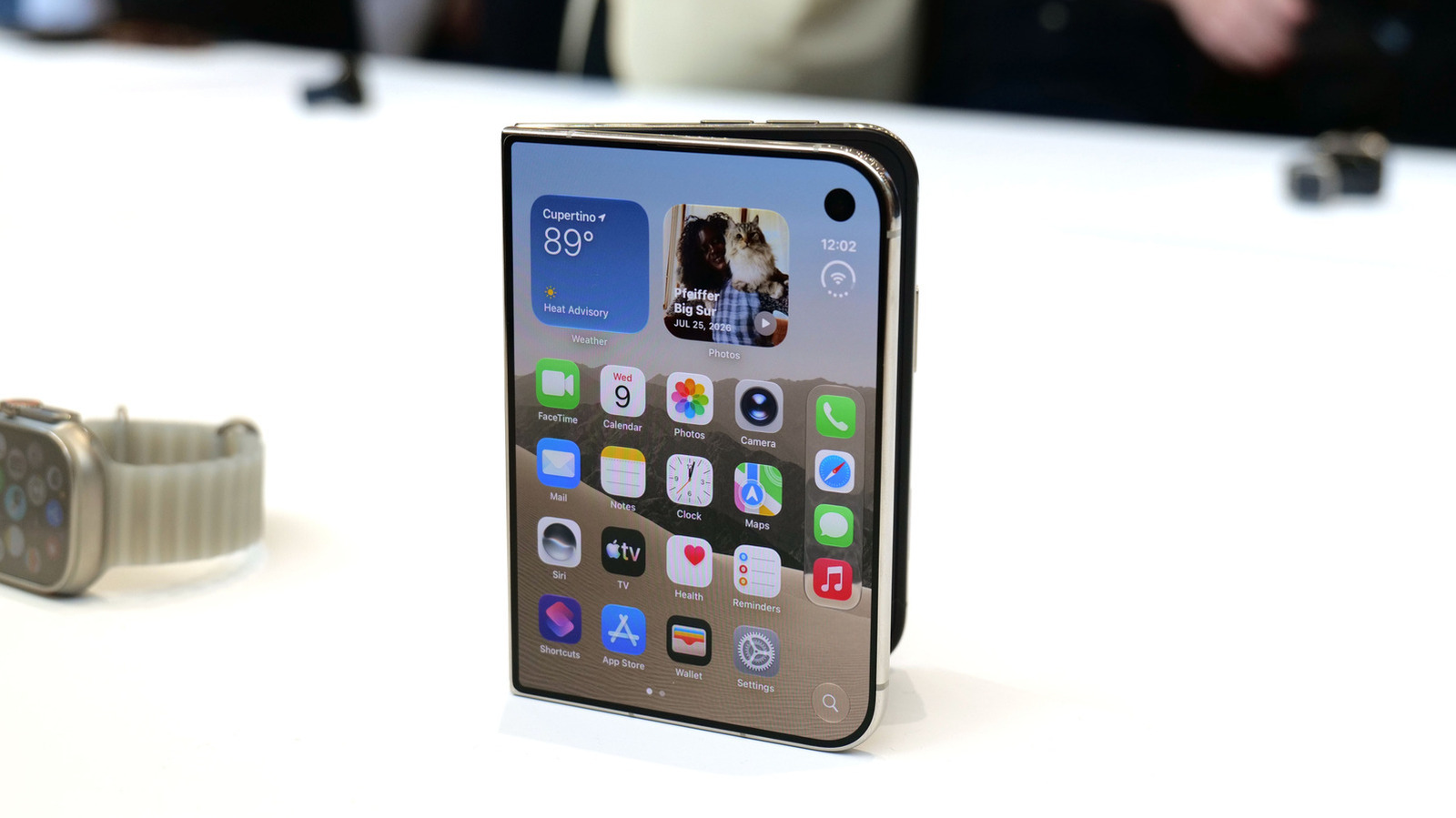
Apple iPhone Duo: A Daring Debut with Notable Compromises
Apple's highly anticipated iPhone Duo, priced at $2,000, has gone on pre-order. While hailed as "Apple's most exciting device in a decade" for its innovative foldable design and immersive display, it comes with significant drawbacks like the absence of FaceID and a premium camera.