
iPhone 17e & M4 iPad Air Review: Modest Upgrades, Familiar Faces
Apple's iPhone 17e offers solid upgrades like double storage and faster charging at $599. The M4 iPad Air brings significant performance boosts over M1 models, retaining price despite more RAM. Both deliver welcome improvements for their segments.
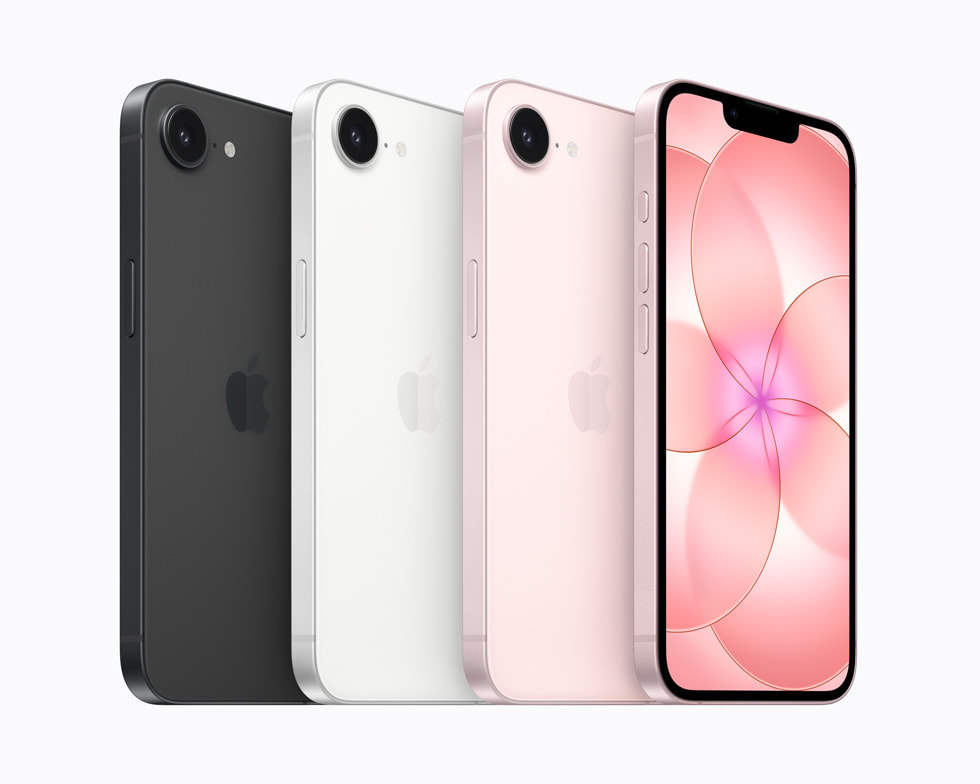
Quick Verdict
Apple's latest announcements, the iPhone 17e and M4 iPad Air, present a mixed bag of refinements rather than revolutionary leaps. The iPhone 17e delivers solid, if somewhat expected, spec bumps like double the base storage and improved cellular speeds, all while holding its price. The M4 iPad Air, while boasting a significant performance upgrade from its M1 predecessor, still lags behind the Pro lineup in terms of cutting-edge silicon and retains an older display tech. Both devices offer meaningful improvements for those coming from significantly older models, but current-generation owners might find less compelling reasons to upgrade.
Apple's Early Announcements: Setting the Stage
Apple kicked off what it promised would be a "big week" with a pair of significant product announcements: the iPhone 17e and the M4-powered iPad Air. While a full in-person event is still on the horizon, these early reveals give us a good indication of Apple's immediate strategy for its mid-range phone and tablet offerings. Let's dive into the details of what Cupertino has brought to the table.
iPhone 17e: Enhanced Essentials
Apple's entry-level iPhone, the 17e, arrives with a starting price of $599, maintaining accessibility while injecting several noteworthy upgrades. The most immediate benefit for users is the doubled base storage, now a more generous 256GB, alleviating common storage anxieties. Charging also sees a boost with MagSafe support and Qi2 wireless charging speeds up to 15W, effectively doubling the speed of its predecessor.
Design and Display
Visually, the iPhone 17e is a familiar sight. Apple has opted to keep the design largely identical to the previous generation, meaning no radical aesthetic changes. However, beneath the surface, the 6.1-inch Super Retina display is now fortified with Ceramic Shield 2, promising "3x better scratch resistance than the previous generation and reduced glare." This is a welcome improvement for daily durability, offering users more peace of mind against accidental scuffs.
Performance and Connectivity
Under the hood, the iPhone 17e borrows the A19 chip from the iPhone 17, ensuring compatibility with Apple Intelligence AI tools and smooth operation on iOS 26. For connectivity, Apple has integrated its C1X cellular modem, which it claims is up to two times faster than the C1 found in the iPhone 16e. This translates to quicker downloads and more reliable cellular connections. The device also carries an IP68 rating for water and dust resistance, along with the promise of "all-day battery life" and support for satellite-powered features like Emergency SOS, Roadside Assistance, Messages, and Find My.
Camera
Curiously, Apple seems to be sticking with the same 48MP Fusion camera system that debuted in the iPhone 16e. While a capable system, it means photographic capabilities remain unchanged from the previous generation.
iPhone 17e Pros and Cons
Pros:
- Double the base storage (256GB) at the same $599 price point.
- Faster Qi2 wireless charging (15W) with MagSafe support.
- Enhanced display durability with Ceramic Shield 2 and reduced glare.
- Faster cellular performance thanks to the C1X modem.
- Includes A19 chip, enabling Apple Intelligence AI tools.
- IP68 water and dust resistance and satellite-powered safety features.
Cons:
- Design is identical to its predecessor, offering no fresh look.
- Camera system remains the same 48MP Fusion setup as the previous generation.
- Not a groundbreaking upgrade for users of the immediate prior model.
iPhone 17e vs. iPhone 16e at a Glance
| Feature | iPhone 17e | iPhone 16e |
|---|---|---|
| Base Storage | 256GB | 128GB |
| Wireless Charge | 15W Qi2 with MagSafe | 7.5W Qi2 (or less) |
| Display Durability | Ceramic Shield 2 (3x better scratch res.) | Ceramic Shield 1 |
| Cellular Modem | C1X (up to 2x faster) | C1 |
| Processor | A19 (supports Apple Intelligence) | (Not specified, likely A18 from iPhone 16) |
| Pricing | Starts at $599 | Starts at $599 |
M4 iPad Air: Power Meets Familiarity
The latest iPad Air is making headlines for its inclusion of Apple's M4 chip. This places the mid-range iPad a year behind the top-tier iPad Pro, which now features the M5 chip, making the M4 nearly two years old by comparison. Nevertheless, for the iPad Air line, this represents a significant performance leap, especially for those upgrading from older models.
Performance and Pricing
While not the absolute latest, the M4 chip in the iPad Air will be more than sufficient for most users, particularly for casual tasks like streaming, web browsing, and email. However, its true potential shines in more resource-intensive applications such as video editing, where it will outperform previous iPad Air models. Apple claims the M4 delivers up to 2.3 times faster performance compared to the M1 iPad Air and boasts over 4x faster 3D pro rendering with ray tracing. Both the 11-inch and 13-inch M4 iPad Air models retain the same starting prices as their predecessors: $599 and $799 respectively, each with 128GB of storage. A $50 discount is available for educational use.
RAM and Connectivity
Surprisingly, Apple has also bumped up the RAM from 8GB in the last-gen model to 12GB. Given the recent surge in RAM prices, maintaining the existing price points for the iPad Air is a consumer-friendly move. The new iPad Air also gets internal connectivity upgrades with Apple's N1 and C1X chips, making it the first iPad Air to support Wi-Fi 7. As expected, 5G cellular connectivity remains an option.
Design and Display
Similar to the iPhone 17e, the M4 iPad Air does not bring any major design overhauls. It appears Apple has stuck with the same LCD display technology used in the last two iterations of the tablet, rather than adopting the more advanced OLED screens seen in the Pro models. The rear-facing camera and dual-speaker setup also remain unchanged.
M4 iPad Air Pros and Cons
Pros:
- Significant performance upgrade with the M4 chip, especially for users coming from M1 or older.
- Increased RAM to 12GB, providing better multitasking and future-proofing.
- Introduction of Wi-Fi 7 support for faster wireless connectivity.
- Maintained price points despite hardware upgrades (M4 chip, 12GB RAM).
- Capable of handling resource-intensive tasks much better than previous Air models.
Cons:
- M4 chip, while powerful, is not Apple's latest silicon (M5 is in the Pro lineup).
- Retains the older LCD display technology, lacking the contrast and color vibrancy of OLED.
- Design is unchanged, including the camera and speaker setup.
- Still positions the Air as a step down from the Pro line in key areas.
M4 iPad Air vs. M1 iPad Air: Performance Highlights
| Feature | M4 iPad Air | M1 iPad Air |
|---|---|---|
| Processor | M4 (almost 2x faster than M1) | M1 |
| RAM | 12GB | 8GB |
| Performance Claim | Up to 2.3x faster CPU, 4x faster 3D render | Baseline for comparison |
| Wi-Fi Support | Wi-Fi 7 | (Likely Wi-Fi 6/6E) |
| Display | Same LCD as previous 2 iterations | Same LCD as previous iterations |
| Pricing (11"/13") | $599 / $799 (128GB) | $599 / $799 (128GB) |
Buying Recommendation
For the iPhone 17e, this device is an excellent option for anyone coming from an iPhone 15e or older, or those looking for a capable iPhone without breaking the bank. The doubled storage, improved durability, faster charging, and access to Apple Intelligence make it a compelling upgrade. If you own an iPhone 16e, the identical design and camera might make it a less urgent upgrade, unless the faster cellular and increased storage are absolutely critical for your workflow.
As for the M4 iPad Air, it stands out as a strong choice for users who need more power than a standard entry-level iPad but don't want to splurge on the iPad Pro. If you're still using an M1 iPad Air or an even older model, the performance gains and increased RAM are substantial, making it a highly recommended upgrade. The Wi-Fi 7 support is a nice bonus for future-proofing. However, if the latest display technology (OLED) and the absolute fastest M5 chip are paramount to your professional needs, the iPad Pro remains the superior, albeit more expensive, option.
FAQ
Q: Should I upgrade to the iPhone 17e if I have the iPhone 16e?
A: The iPhone 17e offers double the base storage, faster wireless charging, a more durable screen, and a faster cellular modem. If these improvements, particularly storage and durability, are important to you, then it could be a worthwhile upgrade. However, the design and camera system remain unchanged, so if those are your primary concerns, you might not find it compelling.
Q: Is the M4 iPad Air powerful enough for professional tasks like video editing?
A: Yes, the M4 chip represents a significant leap in performance over previous iPad Air models, making it much more adept at handling resource-intensive tasks like video editing. Apple claims it delivers up to 2.3 times faster performance than the M1 iPad Air, and over 4 times faster 3D pro rendering, making it a very capable machine for creative professionals who don't require the very latest M5 chip or an OLED display.
Q: Why does the M4 iPad Air still use an LCD display instead of OLED?
A: Apple appears to be segmenting its iPad lineup, reserving the more advanced and costly OLED display technology for its iPad Pro models. By sticking with an LCD display on the iPad Air, Apple can maintain its competitive price points for the mid-range tablet, making it more accessible while still offering substantial internal upgrades like the M4 chip and increased RAM. This allows them to differentiate the Pro and Air lines more clearly.
Related articles

Apple Unveils iPhone Duo: Pricey Foldable Sees Soaring Demand
Apple has officially entered the foldable smartphone arena with the long-anticipated launch of the iPhone Duo. Priced starting at a hefty $1,999, the device features a 5.4-inch outer display and a larger 7.6-inch inner
Android 17 QPR2 Beta 7.1: The Performance Relief You've Been Waiting
Android 17 QPR2 Beta 7.1: Finally Fixing the QPR1 Performance Woes Verdict: Android 17 QPR2 Beta 7.1 is a crucial and highly anticipated software update for Google Pixel users, specifically targeting and resolving the

MapQuest's ALPR Feature: Navigating Surveillance with Intelligence
Quick Verdict MapQuest's latest "Surveillance" feature is a compelling and timely addition, offering users the ability to identify automated license plate reader (ALPR) cameras in their vicinity. While its data sourcing

"thegentlemanpervert": A Catastrophic Failure in Digital Ethics and
"thegentlemanpervert" review: An AI CSAM production and distribution operation, led by a NJ prosecutor, proved to be an absolute and catastrophic failure, resulting in felony charges and a stark warning about digital culpability.

DJI Solo Video Setups: Smart Choices for Lone Creators
This review delves into DJI's recommended solo video setups, highlighting the Osmo Pocket 3 Creator Combo as a top pick for its integrated camera, gimbal, and mic. It also covers stabilizers like the Osmo Mobile 8 and RS 4, and the DJI Mic Mini series for enhanced audio, providing honest pros, cons, and clear buying advice.

Ars Technica's Rocket Report: Your Essential Space Industry Briefing
Quick Verdict Ars Technica's Rocket Report, presented by veteran space reporter Stephen Clark, offers an invaluable and meticulously organized weekly (or similar frequency, implied by "Edition 9.15") digest of the most