
Intel Xeon 6+ 'Clearwater Forest': High Core Density with Trade-offs
Intel's Xeon 6+ 'Clearwater Forest' pushes data center compute density with up to 288 E-cores on 18A. While claiming significant per-thread gains over AMD and generational uplifts, its focused benchmarks and higher TDP warrant careful consideration.
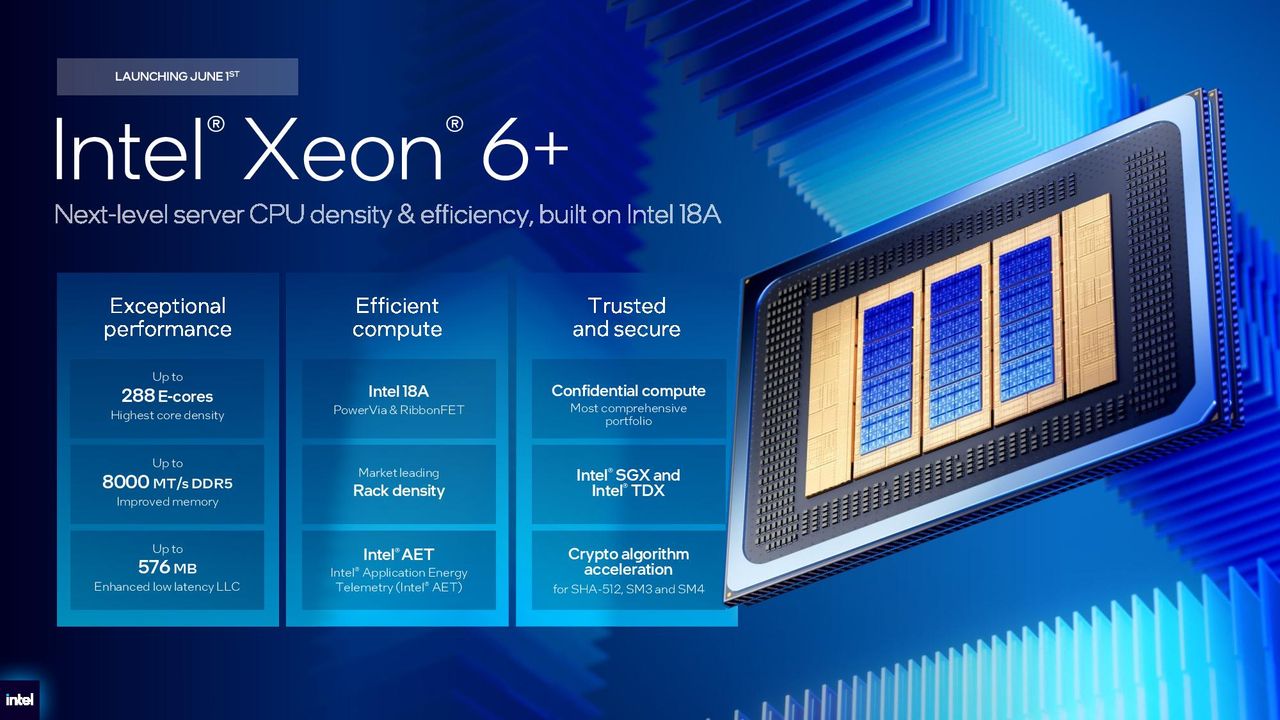
Intel's Xeon 6+ 'Clearwater Forest' marks an aggressive push into the data center with its E-core-only design, offering unprecedented core density and significant generational performance leaps. The use of Intel 18A process and a disaggregated architecture is genuinely impressive. While Intel's claims of up to 30% better performance per thread against AMD's EPYC 9965 are compelling for specific workloads, the higher power envelopes and the deliberate focus on per-thread metrics rather than overall chip performance demand a careful, workload-specific evaluation from potential adopters. This isn't a universally superior option, but a powerful, specialized tool for the right applications.
Intel Xeon 6+ 'Clearwater Forest': A Deep Dive into Density and Efficiency
Intel is making a significant statement in the data center market with its new Xeon 6+ processors, codenamed 'Clearwater Forest'. This E-core-only lineup, powered by the advanced Intel 18A process, is designed to deliver extreme compute density, with the flagship Xeon 6990E+ boasting a staggering 288 Darkmont cores. This review will dissect what these new chips bring to the table, analyzing their architecture, performance claims, and potential implications for modern data centers.
Architectural Prowess and Core Density
The Xeon 6+ series represents the culmination of Intel's disaggregated chip design strategy. The processors feature 12 CPU chiplets, each containing 24 Darkmont E-cores, all built on the cutting-edge Intel 18A process. These chiplets are integrated onto three base tiles, which manage the L3 cache and memory, constructed using Intel 3. Further enhancing the package are two I/O chiplets fabricated on Intel 7. The entire intricate stack is brought together by 12 EMIB 2.5D silicon bridges, highlighting a complex yet sophisticated manufacturing approach aimed at maximizing core count and efficiency.
The flagship Xeon 6990E+ packs 288 cores and a substantial 576 MB of L3 cache, supporting dual-socket configurations to achieve an astounding 576 cores in a single system. This level of core density is clearly geared towards workloads that thrive on massive parallel processing, making it a strong contender for high-throughput data center applications.
Key Specifications
The Xeon 6+ lineup offers a range of options, each designed to balance performance and power.
| Model | Cores / Threads | Base Clock (GHz) | All-Core Turbo (GHz) | L3 Cache | TDP |
|---|---|---|---|---|---|
| 6990E+ | 288 / 288 | 2.2 | 2.8 | 576MB | 450W |
| 6990E+ (L) | 288 / 288 | 1.7 | 2.4 | 576MB | 330W |
| 6980E+ | 264 / 264 | 2.1 | 2.7 | 528MB | 400W |
| 6980E+ (L) | 264 / 264 | 1.6 | 2.2 | 528MB | 300W |
| 6970E+ | 192 / 192 | 2.3 | 3.0 | 480MB | 400W |
| 6960E+ | 144 / 144 | 2.4 | 3.0 | 432MB | 330W |
All models share common platform features, including support for 12-channel DDR5 memory up to 8000MT/s, 96 PCIe 5.0 lanes (with 64 CXL 2.0 lanes), and compatibility with existing LGA 4710 Xeon 6 platforms. It's worth noting the increased TDP figures compared to the previous-generation Sierra Forest, with a floor of 300W and a ceiling of 450W, indicating a shift towards higher power budgets for enhanced performance. The substantial increase in L3 cache across the board, up to five times that of the previous flagship, is a critical improvement for data-intensive workloads.
Performance Claims and Critical Analysis
Intel presents a compelling performance narrative for Xeon 6+. Generational improvements are substantial, with the 6990E+ claiming an average 2.26x uplift over the last-gen Xeon 6780E. This massive gain is expected, given the 6990E+ has twice the threads and a significantly higher TDP than its predecessor. Intel's internal benchmarks show more than double the performance across all tested workloads, alongside an impressive 55% average efficiency improvement.
More critically, Intel directly challenges AMD's Epyc 9965, claiming a 30% higher performance per thread and 30% better average performance per thread per watt for the Xeon 6990E+. These figures are important for specific applications that scale well with thread count, such as integer and floating-point throughput, where Intel claims a 30-38% advantage. However, a significant caveat is Intel's deliberate focus on per-thread performance. Unlike AMD's EPYC 9965 which uses simultaneous multithreading (SMT) and has 192 cores, the 288-core Xeon 6990E+ does not. This means a direct, holistic comparison of overall chip performance (or "performance per die") against AMD's offerings is absent, leaving a gap in understanding how these chips stack up in total throughput for broader, non-per-thread-optimized workloads. While Intel indicates efficiency gets tighter at higher CPU utilization, actual system-level benchmarks will be crucial to validate these claims in diverse data center environments.
Power Management and Enhanced Features
A new addition to the Xeon 6+ CPUs is Intel Application Energy Telemetry (AET). This hardware-based tool offers granular insights into energy usage, from individual software threads to containers and VMs. This level of detail could prove invaluable for data center operators looking to optimize power consumption and allocate resources more efficiently, a critical consideration given the increased TDPs.
Beyond raw compute, these chips come equipped with a suite of hardware accelerators, including Intel QAT for cryptography, DLB for load balancing, DSA for data streaming, and IAA for in-memory analytics. The flagship 6990E+ integrates 16 such accelerators (four of each type), enhancing performance for specific tasks. Confidential computing capabilities are also bolstered with Intel SGX for application isolation and TDX for VM isolation.
A notable omission, however, is the lack of AVX10 support, or even AVX-512, with the chips topping out at AVX2. This could be a limiting factor for certain high-performance computing (HPC) and AI workloads that leverage these more advanced instruction sets.
Who Should Consider Xeon 6+ 'Clearwater Forest'?
Intel's Xeon 6+ 'Clearwater Forest' processors are clearly designed for specific segments of the data center market. Organizations prioritizing maximum core density for highly parallelizable workloads, such as specific types of scientific simulations, high-volume transaction processing, or microservices architectures, will find these chips highly appealing. The impressive generational leaps in performance and efficiency are undeniable.
However, the increased TDPs and the lack of comprehensive "total performance" comparisons against AMD mean that potential buyers must rigorously evaluate their specific workload characteristics. For those heavily invested in AVX-512 or AVX10-optimized applications, the lack of support is a definite drawback. The new AET feature, coupled with the integrated accelerators, makes them attractive for environments requiring detailed power telemetry and specialized hardware acceleration.
Ultimately, while Intel claims "Clearwater Forest" compares favorably to ARM-based options, the absence of independent benchmarks makes it challenging to draw definitive conclusions without real-world testing.
Pros and Cons
Pros:
- Exceptional Core Density: Up to 288 E-cores per socket, 576 in dual-socket systems.
- Significant Generational Performance: 2.26x average uplift over Sierra Forest flagship.
- Advanced Architecture: Intel 18A process, disaggregated design, substantial L3 cache.
- Improved Efficiency: Up to 55% better performance per watt generationally.
- Hardware Accelerators: Integrated QAT, DLB, DSA, IAA for specialized tasks.
- Granular Power Telemetry: New Intel Application Energy Telemetry (AET) for detailed energy insights.
- Enhanced Security: Robust confidential computing with SGX and TDX.
Cons:
- Higher TDPs: Increased power consumption compared to previous generation.
- Limited Competitive Benchmarks: Intel focuses on "per-thread" performance against AMD, not overall chip throughput.
- No AVX10 or AVX-512 Support: Tops out at AVX2, potentially limiting for specific HPC/AI workloads.
- No Direct ARM Comparison Data: Official benchmarks against growing ARM competition are absent.
- Workload-Specific Advantage: "Per-thread" performance doesn't guarantee overall system advantage.
Buying Recommendation
The Intel Xeon 6+ 'Clearwater Forest' is a powerful, specialized solution. If your data center workloads are highly parallelizable, benefit immensely from a high core count, and can effectively utilize the integrated hardware accelerators, then these processors are a top-tier contender. However, for general-purpose compute or applications heavily reliant on advanced vector extensions, you'll need to carefully benchmark against alternatives. Consider the higher TDPs and ensure your cooling infrastructure is adequate. Don't simply take "per-thread" claims at face value; focus on how your specific applications perform on such a high-density, E-core-only architecture.
FAQ
Q: Are Xeon 6+ processors compatible with existing infrastructure?
A: Yes, Xeon 6+ chips are designed to work with existing Xeon 6 platforms using the LGA 4710 socket, making them a potential upgrade path for some existing deployments.
Q: How does the lack of AVX-512 or AVX10 affect performance?
A: For most general data center workloads, the lack of these advanced vector extensions might not be a major issue. However, for specialized high-performance computing (HPC) or AI tasks that are heavily optimized to leverage AVX-512 or AVX10 instructions, this could represent a significant performance bottleneck.
Q: Should I be concerned about the higher TDPs of the Xeon 6+ series?
A: The increased TDPs (up to 450W) mean that system designers and data center operators must account for higher power consumption and heat generation. While Intel claims significant efficiency improvements, ensuring adequate power delivery and cooling infrastructure is crucial to fully realize the performance potential without thermal throttling.
Related articles
Android 17 QPR2 Beta 7.1: The Performance Relief You've Been Waiting
Android 17 QPR2 Beta 7.1: Finally Fixing the QPR1 Performance Woes Verdict: Android 17 QPR2 Beta 7.1 is a crucial and highly anticipated software update for Google Pixel users, specifically targeting and resolving the

DJI Solo Video Setups: Smart Choices for Lone Creators
This review delves into DJI's recommended solo video setups, highlighting the Osmo Pocket 3 Creator Combo as a top pick for its integrated camera, gimbal, and mic. It also covers stabilizers like the Osmo Mobile 8 and RS 4, and the DJI Mic Mini series for enhanced audio, providing honest pros, cons, and clear buying advice.

Ars Technica's Rocket Report: Your Essential Space Industry Briefing
Quick Verdict Ars Technica's Rocket Report, presented by veteran space reporter Stephen Clark, offers an invaluable and meticulously organized weekly (or similar frequency, implied by "Edition 9.15") digest of the most
Apple iPhone Duo: A Daring Debut with Notable Compromises
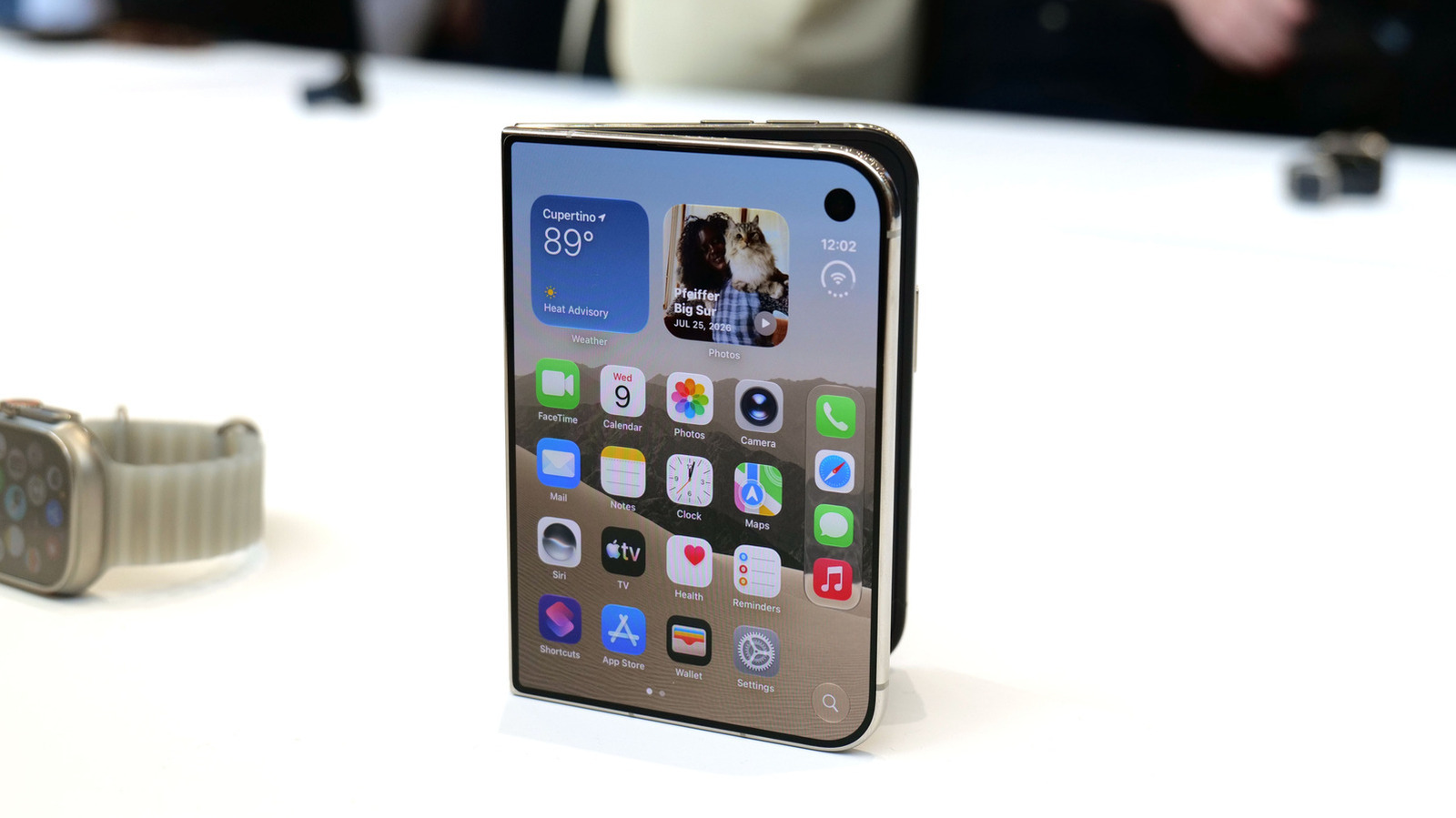
Apple's highly anticipated iPhone Duo, priced at $2,000, has gone on pre-order. While hailed as "Apple's most exciting device in a decade" for its innovative foldable design and immersive display, it comes with significant drawbacks like the absence of FaceID and a premium camera.

Tesla Unveils Thruster-Equipped Roadster, 2028 Production Targeted
Tesla has unveiled its second-generation Roadster, featuring cold-gas thrusters co-developed with SpaceX, enabling it to jump and flip. The electric sports car demonstrated 0-60mph in an astonishing 0.81 seconds, with production targeted for 2028. This highly anticipated reveal also serves as a key recruitment tool for Tesla's ambitious AI and robotics initiatives.
KDE Plasma 6.8: A Future-Focused 30th Anniversary Update
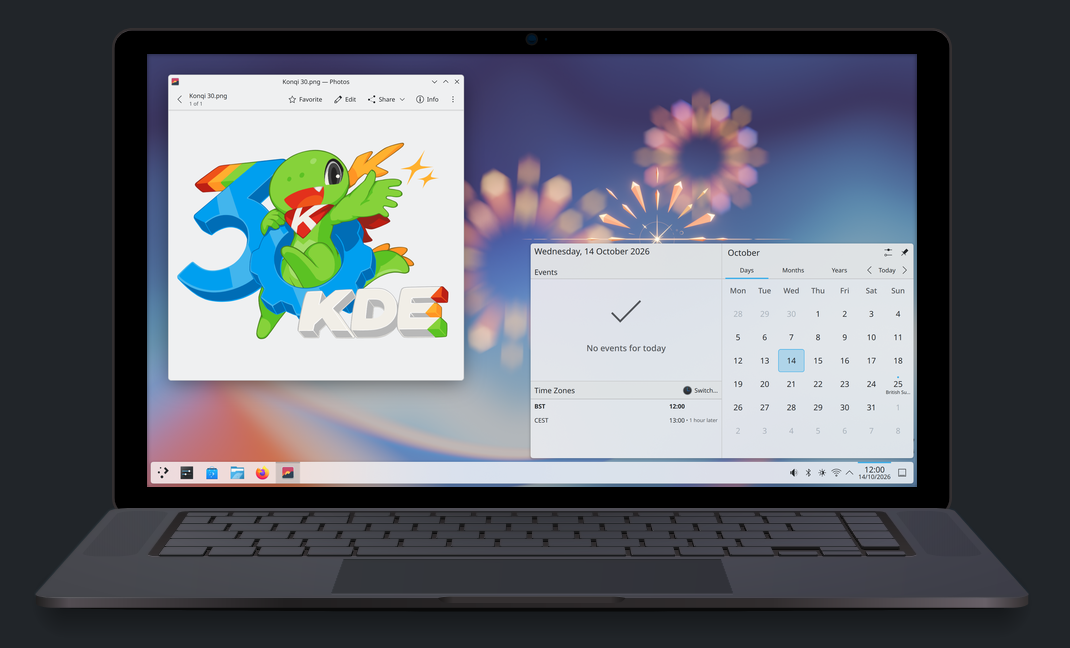
Quick Verdict KDE Plasma 6.8, arriving as the "30th Anniversary Edition," is a pivotal release that decisively pushes the desktop environment into the future. With a definitive farewell to native X11 sessions and a