
Intel Joins Elon Musk’s Terafab Chips Project
Intel has joined Elon Musk's Terafab chips project, partnering with SpaceX and Tesla to build a new semiconductor factory in Texas. This collaboration leverages Intel's chip manufacturing expertise to produce 1 TW/year of compute for AI, robotics, and other advanced applications, significantly bolstering Intel's foundry business.

Intel has officially thrown its considerable weight behind Elon Musk's ambitious Terafab chips project, joining SpaceX and Tesla in their efforts to construct a cutting-edge semiconductor manufacturing facility in Texas. The partnership, confirmed by Intel on April 7, 2026, aims to deliver a staggering one terawatt (TW) per year of compute power, primarily earmarked for accelerating advancements in artificial intelligence (AI) and robotics.
Intel's Crucial Role in Terafab
This collaboration provides a vital answer to lingering questions about how Musk’s companies, which lack prior experience in semiconductor fabrication, intended to undertake such a monumental industrial endeavor. Intel, a long-standing giant in silicon production and actively expanding its foundry business, brings indispensable expertise and established infrastructure to the table.
In a corporate post on X, Intel affirmed its commitment, stating that its "ability to design, fabricate, and package ultra-high-performance chips at scale will help accelerate Terafab’s aim to produce 1 TW/year of compute." While the exact scope of Intel's contributions remains unspecified, its involvement suggests that Terafab will leverage existing industry capabilities rather than pursuing an entirely novel "greenfield" approach.
Origins and Ambitions of Terafab
Elon Musk originally unveiled the Terafab project in March 2026, outlining a vision for SpaceX and Tesla to collaboratively develop proprietary chips. These semiconductors were intended for a broad array of advanced applications, including powering demanding AI compute tasks, supporting SpaceX’s satellite constellations and a proposed space data center, and fulfilling the intense processing requirements for autonomous Tesla vehicles and future robotics initiatives.
Building a state-of-the-art chip fabrication plant, or "fab," is widely recognized as one of the most complex, time-consuming, and capital-intensive infrastructure projects globally. Such facilities typically necessitate years of development and investments often exceeding $20 billion. They house vast, meticulously controlled clean rooms filled with thousands of ultra-precise machines designed to intricately carve silicon wafers.
The initial announcement from Musk, involving companies without direct experience in this highly specialized sector, had naturally raised questions about the feasibility and efficiency of executing such a massive undertaking. Intel's entry now resolves much of that uncertainty.
A Strategic Win for Intel Foundry
For Intel, securing this partnership represents a significant strategic victory for its growing foundry business. The company has been actively seeking large anchor customers to solidify and expand this segment, positioning itself as a key contract manufacturer for external chip designers. Enlisting both SpaceX and Tesla as clients provides substantial validation and momentum for Intel's efforts to regain ground in the competitive semiconductor manufacturing landscape.
News of the deal was positively received by investors, with Intel's stock rising more than 3% on the day of the announcement, trading at $52.28 by 2 p.m. ET. Once the undisputed leader in U.S. silicon production, Intel has, in recent years, seen rivals such as Nvidia and AMD surge ahead in developing advanced processors. These competitors have largely adopted a "fabless" business model, where they focus on chip design while outsourcing the actual manufacturing to specialized foundries. Intel’s commitment to Terafab underscores its renewed focus on internal manufacturing capabilities and its ambition to serve as a leading foundry for other tech innovators.
Scarcity of Details
Despite the high-profile nature of the announcement and its potential implications for the semiconductor industry, concrete details about the partnership are still scarce. Intel notably declined to provide further comment on the collaboration when contacted, and SpaceX did not respond to TechCrunch's inquiries for additional information. This lack of specifics leaves many aspects of the joint venture, particularly the division of labor and financial commitments, open to speculation.
FAQ
Q: What is the primary goal of the Terafab chips project? A: The Terafab chips project, now with Intel's involvement, aims to build a new U.S. semiconductor factory capable of producing one terawatt (TW) per year of compute power. This output is intended to fuel future advancements in AI and robotics, alongside supporting SpaceX’s satellite operations, a potential space data center, and autonomous Tesla vehicles.
Q: Why is Intel’s participation crucial for Terafab? A: Intel's deep expertise in designing, fabricating, and packaging high-performance chips addresses a critical challenge for the Terafab project. Without Intel, SpaceX and Tesla, which lack experience in chip manufacturing, faced an arduous and exceptionally costly path to establishing such a complex facility. Intel's involvement provides the necessary manufacturing prowess and infrastructure.
Q: How does this partnership benefit Intel? A: Joining Terafab provides Intel with major anchor customers—SpaceX and Tesla—for its burgeoning foundry business. Intel has been actively seeking large clients to bolster its contract manufacturing services for other companies, and this high-profile collaboration offers significant validation and growth opportunities in a competitive market.
Related articles

Apple Unveils iPhone Duo: Pricey Foldable Sees Soaring Demand
Apple has officially entered the foldable smartphone arena with the long-anticipated launch of the iPhone Duo. Priced starting at a hefty $1,999, the device features a 5.4-inch outer display and a larger 7.6-inch inner
Android 17 QPR2 Beta 7.1: The Performance Relief You've Been Waiting
Android 17 QPR2 Beta 7.1: Finally Fixing the QPR1 Performance Woes Verdict: Android 17 QPR2 Beta 7.1 is a crucial and highly anticipated software update for Google Pixel users, specifically targeting and resolving the

in-depth: Chicago-Area Cops Helped HSI Spy on Minnesota Anti-ICE
Chicago-area law enforcement, including local police and HSI agents, conducted undercover surveillance on Minnesota anti-ICE activists at an April 2, 2022, talk in Chicago. This operation was part of a federal conspiracy probe into 15 Minnesota activists facing felony charges related to immigration enforcement resistance. Civil liberties advocates have condemned the surveillance as a troubling intrusion into protected political activity.
TCG Pocket Responds: A Much-Needed Pace Shift for Pokémon Fans
Pokémon TCG Pocket is rolling out a major update for its second anniversary, primarily addressing player concerns about overwhelming content releases by shifting to a six-week set schedule. This aims to curb player decline and improve overall engagement by giving trainers more time to collect and strategize. The update also adds new collection methods, improved deck-building features, and enhanced trading functionality.

Mark Wahlberg on using AI in film ‘the right way’ and being open to
Actor Mark Wahlberg believes AI has a place in filmmaking if used responsibly for enhancement, not script generation or actor replacement. At TechCrunch Disrupt, he expressed openness to an AI likeness carrying on his legacy, managed by his family, and emphasized storytelling.
Apple iPhone Duo: A Daring Debut with Notable Compromises
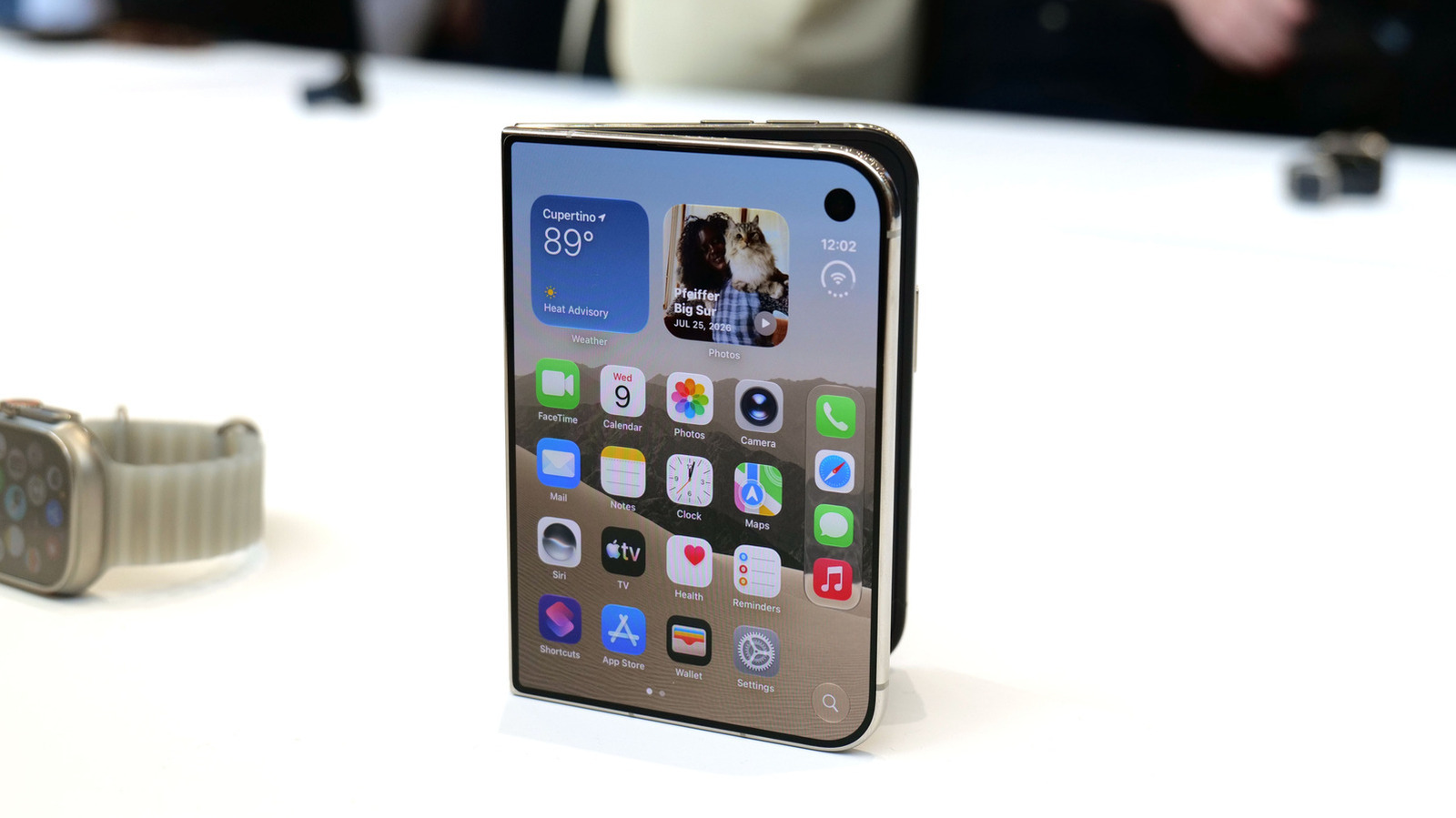
Apple's highly anticipated iPhone Duo, priced at $2,000, has gone on pre-order. While hailed as "Apple's most exciting device in a decade" for its innovative foldable design and immersive display, it comes with significant drawbacks like the absence of FaceID and a premium camera.