
in-depth: The Data Centers Have Arrived at the Edge of the Arctic
The Nordic region is experiencing an unprecedented boom in data center construction, driven by the insatiable energy demands of artificial intelligence. Tech giants and specialized 'neocloud' providers are flocking to countries like Norway, Sweden, and Finland, drawn by abundant, cheap, and renewable energy, naturally cool climates, and available land. This shift marks a strategic move away from traditional European tech hubs, positioning the Arctic edge as a vital new frontier for AI infrastructure.

Major technology companies and data center developers are rapidly expanding their infrastructure into the Nordic region, particularly near the Arctic Circle, driven by the escalating computational demands of artificial intelligence. With traditional European tech hubs facing severe power shortages, countries like Norway, Sweden, and Finland offer a compelling solution: abundant, affordable, and renewable energy sources, coupled with vast tracts of available land and a naturally cool climate ideal for cooling massive server farms. This unprecedented migration signifies a strategic pivot in AI infrastructure development, with the Arctic edge emerging as a critical new frontier.
The AI Gold Rush Reshapes Europe's Data Landscape
This surge, which has intensified dramatically since mid-2023, is transforming the Nordics into Europe's fastest-growing hub for data center capacity, according to research by consulting firm CBRE. This dramatic shift is primarily fueled by the burgeoning requirements of AI models, which necessitate immense processing power, often facilitated by tens of thousands of GPUs. Unlike latency-sensitive applications that historically required data centers close to financial and metropolitan centers like London or Frankfurt, AI workloads are less dependent on instantaneous data transfer, freeing developers to seek out more remote, energy-rich locations.
Why the Arctic Edge? A Unique Proposition
The Nordic countries present an almost ideal environment for this new generation of power-hungry AI infrastructure. The region boasts some of Europe's cheapest electricity, overwhelmingly generated from renewable hydropower and wind sources. This not only provides a sustainable power supply but also helps data center operators meet increasingly stringent European Union emissions targets. Furthermore, the naturally cold climate significantly reduces the energy needed for cooling hardware, offering both operational cost savings and environmental benefits.
Phillipe Sachs, chief business officer at neocloud firm Nscale, which already hosts major players like OpenAI and Microsoft in Norway, emphasizes the region's distinct advantages. He states that companies are "gaining an enormous amount: abundant green contiguous power with little competing industrial demand." This unique combination, he believes, makes the Nordics "far and away the best place" to construct the "very, very large, giga-factory-style compute clusters" required for advanced AI.
Major Investments and Rapid Scale
The scale of this expansion is substantial and accelerating. Last year, OpenAI announced plans to deploy 100,000 GPUs in a small Norwegian fjord town within the Arctic Circle, with Microsoft quickly following suit. More recently, French AI lab Mistral committed to leasing $1.4 billion worth of infrastructure at a new "mega-campus" developed by EcoDataCenter in Borlänge, Sweden, on a site previously occupied by a paper mill. EcoDataCenter's CEO, Peter Michelson, noted the symbolic transition, stating, "Now, Borlänge will produce the raw material for AI and the next information age."
Additional significant projects include atNorth's announcement of a 300MW facility in Sollefteå, Sweden, and Dayone DC's plans to more than double Finland's current data center capacity. These numerous developments highlight the rapid pace at which the Nordics are being reshaped into a global powerhouse for AI computation. Kevin Restivo, director of data center research at CBRE, confirms that "Norway specifically has absolutely exploded as a data center hotbed."
Economic Revitalization and Future Outlook
This influx of investment carries the promise of revitalizing rural Nordic economies, many of which have seen traditional industries like mining, lumber, and paper decline. Municipalities are reportedly eager for this new wave of development, which is already driving up land prices in remote areas. Jouni Salonen, a data center specialist at Business Finland, observes that the value of forest land zoned for data center use can now be four to nine times higher than normal.
However, the rapid growth isn't without its complexities. There are concerns that some hyperscale operators might be acquiring and holding suitable sites without immediate development plans, effectively "hoarding" resources to prevent competitors from accessing them. Nevertheless, as power scarcity continues to be the "biggest constraining factor" for data center expansion in Western Europe, according to Andrew Jay, head of data center solutions EMEA at CBRE, the Nordics are poised for sustained growth as the preferred destination for the future of AI infrastructure.
FAQ
Q: Why are data centers moving to the Nordics now, instead of traditional European tech hubs? A: The primary reason is the acute shortage of land and sufficient energy supply in established European data center markets like Frankfurt, London, and Dublin. The Nordics offer abundant, cheap, and renewable power, vast land availability, and a naturally cool climate, which are crucial for the energy-intensive demands of AI workloads that are less sensitive to latency.
Q: What kind of energy powers these new data centers in the Arctic Circle region? A: The Nordic region predominantly relies on renewable energy sources, particularly hydropower and wind power. This allows data center operators to power their facilities with green energy, reducing their carbon footprint and helping them adhere to European Union emissions targets, while also benefiting from lower operational costs.
Q: What are "neoclouds" and how do they relate to this trend? A: Neoclouds are specialized cloud companies that provide access to large fleets of GPUs, primarily catering to AI workloads. Unlike traditional cloud services that prioritize low latency for diverse applications, neoclouds serve AI operations where latency is less critical. This flexibility allows them to establish data centers in more remote, energy-rich locations like the Nordics, driving a significant portion of the region's data center capacity growth.
Related articles

Apple Unveils iPhone Duo: Pricey Foldable Sees Soaring Demand
Apple has officially entered the foldable smartphone arena with the long-anticipated launch of the iPhone Duo. Priced starting at a hefty $1,999, the device features a 5.4-inch outer display and a larger 7.6-inch inner
Android 17 QPR2 Beta 7.1: The Performance Relief You've Been Waiting
Android 17 QPR2 Beta 7.1: Finally Fixing the QPR1 Performance Woes Verdict: Android 17 QPR2 Beta 7.1 is a crucial and highly anticipated software update for Google Pixel users, specifically targeting and resolving the

in-depth: Chicago-Area Cops Helped HSI Spy on Minnesota Anti-ICE
Chicago-area law enforcement, including local police and HSI agents, conducted undercover surveillance on Minnesota anti-ICE activists at an April 2, 2022, talk in Chicago. This operation was part of a federal conspiracy probe into 15 Minnesota activists facing felony charges related to immigration enforcement resistance. Civil liberties advocates have condemned the surveillance as a troubling intrusion into protected political activity.

TCG Pocket Responds: A Much-Needed Pace Shift for Pokémon Fans
Pokémon TCG Pocket is rolling out a major update for its second anniversary, primarily addressing player concerns about overwhelming content releases by shifting to a six-week set schedule. This aims to curb player decline and improve overall engagement by giving trainers more time to collect and strategize. The update also adds new collection methods, improved deck-building features, and enhanced trading functionality.
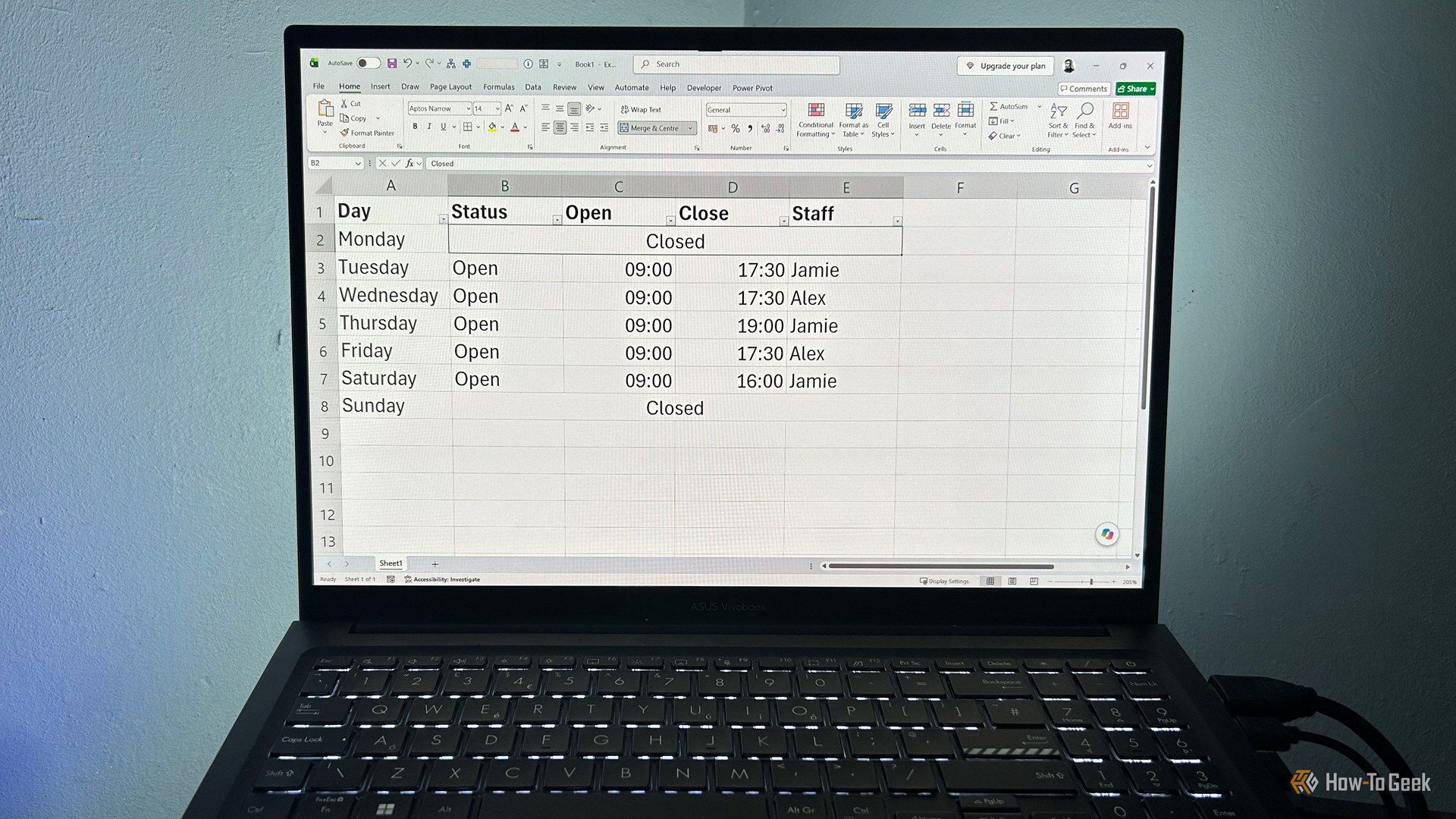
Ditch Merge & Center: The Better Way to Align Text in Excel
Learn to use Excel's "Center Across Selection" to align text across cells without merging, avoiding common data manipulation issues. This guide provides steps to utilize this newly accessible feature and add it to your Quick Access Toolbar.

Mark Wahlberg on using AI in film ‘the right way’ and being open to
Actor Mark Wahlberg believes AI has a place in filmmaking if used responsibly for enhancement, not script generation or actor replacement. At TechCrunch Disrupt, he expressed openness to an AI likeness carrying on his legacy, managed by his family, and emphasized storytelling.