
Human Touch or AI Glitch? Gaming Awards Need Oscar-Level Clarity
The Oscars are banning AI films, urging gaming awards to define their AI stance. With human creators at risk, major gaming award shows must champion human artistry and integrity with clear, human-first guidelines for AI content.
Human Touch or AI Glitch? Gaming Awards Need Oscar-Level Clarity
Alright, fellow gamers, let's talk about something big brewing in the entertainment world that has massive implications for our beloved industry: AI. The Academy of Motion Picture Arts and Sciences, the folks behind the Oscars, just dropped a bombshell set of new rules. Their message is loud and clear: if you want to win an Oscar, it needs to be made by humans, from script to screen. No AI-generated performances, no posthumous CGI recreations getting nominations – just good old-fashioned human creativity and effort.
This isn't just about movie stars; it's a monumental moment that sets a precedent for every awards body, including ours. While Hollywood grapples with its AI-infused future, with some big-name directors openly embracing it and countless artists horrified by job displacement, the Oscars have drawn a firm line. But what about gaming? Our industry's awards scene is, to put it mildly, a bit more... fuzzy when it comes to respecting its creators, let alone tackling the elephant in the room that is generative AI.
Hollywood's Human-First Stance Sets a Precedent
The Academy's new regulations, hot off the press, are a breath of fresh air for many. They've tightened rules around eligibility and nominations, explicitly stating that all contributions, from legal credits to on-screen performances, must come from consenting human beings. This move directly addresses the creeping trend of AI firms looking to leverage superstar likenesses without genuine creative input, or the unsettling idea of awarding a CGI ghost of an actor. The Academy even reserves the right to investigate the level of AI involvement in a film, which is a powerful deterrent.
It’s a stark contrast to some other major awards. The Grammys, for instance, initially took a harder line against AI-generated music back in 2023 but have seemingly softened their stance since then. This back-and-forth highlights the confusion and lack of clear direction across entertainment. But the Oscars, as a beacon of artistic recognition, have firmly planted their flag in the "human creativity first" camp. Now, the big question looms: will gaming awards follow suit, or continue to drift in the AI-generated murk?
The Game Awards: Still Shying Away From Human Recognition?
When we look at gaming's biggest night, The Game Awards, the picture isn't pretty, even before we bring AI into the mix. While AI had a surprisingly quiet presence at the most recent show, TGA has a long and frankly frustrating history of sidelining the very human creators it purports to celebrate. How many times have we seen developers, after years of grueling work, get their acceptance speeches rudely cut short, even for the top prize? It’s a recurring sore point for players and creators alike.
Many in the community view The Game Awards less as a true celebration of artistry and more as a prime-time commercial slot for new titles, mobile games, and ARK expansions. This inherent focus on industry promotion over individual recognition creates an environment where the subtle, insidious creep of AI could easily go unaddressed. If the human element is already de-emphasized, what hope is there for clear guidelines protecting it from AI encroachment?
BAFTAs and Indie Awards: A Spectrum of AI Policies
Beyond the glitz of TGA, other gaming award bodies show a mixed bag. The BAFTAs, generally considered more artistically respected, appear to be treading cautiously. While their submission rules request a declaration of AI usage, they don't explicitly ban games that incorporate it. This ambiguity has led to some uncomfortable situations, like Sorry We're Closed co-creator C. Bedford discovering their photo was used without consent to promote a BAFTA panel on AI in games, despite their personal stance against generative AI. It's a clear indicator that even with disclosure, the broader implications and creator rights remain ill-defined.
However, there's a shining example of clarity: the Indie Game Awards (IGAs). Last year, they took a remarkably firm stance, retracting the nominations for Clair Obscur: Expedition 33 due to its use of AI. This happened right after the game had a controversial sweep at other, less scrupulous awards shows. The IGAs' direct action sent a powerful message: for them, indie means human-made, through and through. It proves that clear, principled regulations are possible, even if they sometimes mean pushing back against popular trends.
AI's Shady Corner in Game Development
AI isn't just a theoretical threat; it's already a messy reality in game development. Sometimes, studios are transparent, even proud, about their AI implementations. Other times, it's more "accidental," with AI-generated assets "slipping into the final product," as we've seen with games like Crimson Desert. Then there are the outright controversies, such as the Kingdom Come: Deliverance 2 AMA turning into a disaster over allegations of a fired translator and AI involvement, or Square Enix's Koji Fox drawing criticism for using AI art at a Final Fantasy 14 Fan Fest panel, openly citing the company CEO's "keen" interest in AI tools.
This isn't just about developers being replaced; it's about the very integrity of the art form. The public, it turns out, is largely against paying for AI-created works and remains generally "aghast" with the technology, even among those who might dabble in it themselves. The constant stream of news about sweeping layoffs across the industry, with many speculating AI's role, only exacerbates these fears. Disney's recent mass firings, particularly in Marvel Studios' visual departments, have further fueled the narrative that artists are being replaced by algorithms.
It's Time for Gaming Awards to Pick a Side
The incentives for integrating AI into game development are undeniably strong for an industry that unfortunately, often prioritizes cost-cutting and efficiency over stable employment. But if gaming awards truly aspire to be the Oscars of our medium, they need to prioritize the human element. The Academy's bold move isn't just about protecting actors; it's about preserving the sanctity of human artistry. Gaming awards, especially the high-profile ones, have a moral obligation to protect and celebrate the incredibly talented individuals who pour their hearts and souls into creating the experiences we love.
Clear, unambiguous regulations regarding generative AI are not just ideal; they are essential. Without them, we risk diluting the very meaning of artistic achievement and turning our celebrations into mere showcases of efficiency, rather than genuine human triumph. It's time for The Game Awards and others to stop being "fuzzy" and take a definitive stand. Our creators, and our community, deserve that clarity.
FAQ
Q: What exactly did the Oscars announce regarding AI? A: The Academy of Motion Picture Arts and Sciences (AMPAS) recently updated its rules, explicitly stating that all eligible contributions for an Oscar, from writing to performance, must come from human beings. They also reserve the right to investigate AI involvement in film creation and exclude posthumous CGI recreations from nominations.
Q: How do the major gaming awards currently handle AI-generated content? A: It's a mixed bag. The Game Awards have largely avoided the topic and have a history of minimizing human creators. The BAFTAs ask for AI disclosure but don't ban its use, leading to some ambiguity. In contrast, the Indie Game Awards have a firm stance, retracting nominations for games found to use generative AI, such as Clair Obscur: Expedition 33.
Q: Why is clarity on AI important for gaming awards? A: Clarity is crucial to protect human creativity and the integrity of the art form. With AI tools becoming more prevalent in game development, clear rules help ensure that awards celebrate genuine human achievement, alleviate public concerns about AI-generated works, and prevent the industry from further devaluing the labor of its artists and developers, who are already facing widespread layoffs.
Related articles
Android 17 QPR2 Beta 7.1: The Performance Relief You've Been Waiting
Android 17 QPR2 Beta 7.1: Finally Fixing the QPR1 Performance Woes Verdict: Android 17 QPR2 Beta 7.1 is a crucial and highly anticipated software update for Google Pixel users, specifically targeting and resolving the
TCG Pocket Responds: A Much-Needed Pace Shift for Pokémon Fans
Pokémon TCG Pocket is rolling out a major update for its second anniversary, primarily addressing player concerns about overwhelming content releases by shifting to a six-week set schedule. This aims to curb player decline and improve overall engagement by giving trainers more time to collect and strategize. The update also adds new collection methods, improved deck-building features, and enhanced trading functionality.

Mark Wahlberg on using AI in film ‘the right way’ and being open to
Actor Mark Wahlberg believes AI has a place in filmmaking if used responsibly for enhancement, not script generation or actor replacement. At TechCrunch Disrupt, he expressed openness to an AI likeness carrying on his legacy, managed by his family, and emphasized storytelling.

Apple iPhone Duo: A Daring Debut with Notable Compromises
Apple's highly anticipated iPhone Duo, priced at $2,000, has gone on pre-order. While hailed as "Apple's most exciting device in a decade" for its innovative foldable design and immersive display, it comes with significant drawbacks like the absence of FaceID and a premium camera.
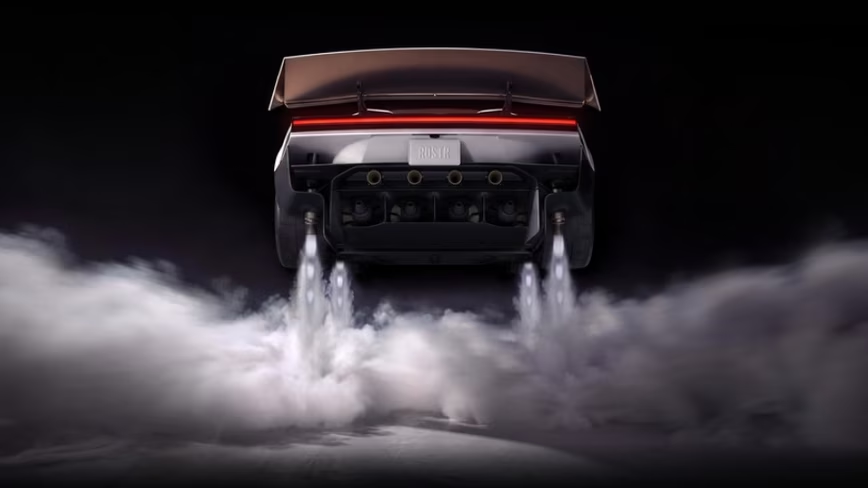
Tesla Unveils Thruster-Equipped Roadster, 2028 Production Targeted
Tesla has unveiled its second-generation Roadster, featuring cold-gas thrusters co-developed with SpaceX, enabling it to jump and flip. The electric sports car demonstrated 0-60mph in an astonishing 0.81 seconds, with production targeted for 2028. This highly anticipated reveal also serves as a key recruitment tool for Tesla's ambitious AI and robotics initiatives.

AI's Confidence vs. Formal Methods' Rigor: Design Flaws & Verification
While AI accelerates code generation, formal methods remain critical for ensuring system correctness. Languages like TLA+ and tools like Quint enable developers to model and verify system designs before coding, catching subtle flaws. Quint makes formal methods more accessible with developer-friendly syntax and executability. This approach is vital for verifying AI-generated code through trace validation and model-based testing, ensuring reliability against real-world data.