
Google SynthID & Omni: A Double-Edged Sword
Review of Google's Omni AI model and SynthID verification tool. Omni offers immense creative power, but also highlights the challenge of AI-generated "fiction." SynthID is a necessary step, but its control and effectiveness are debated.
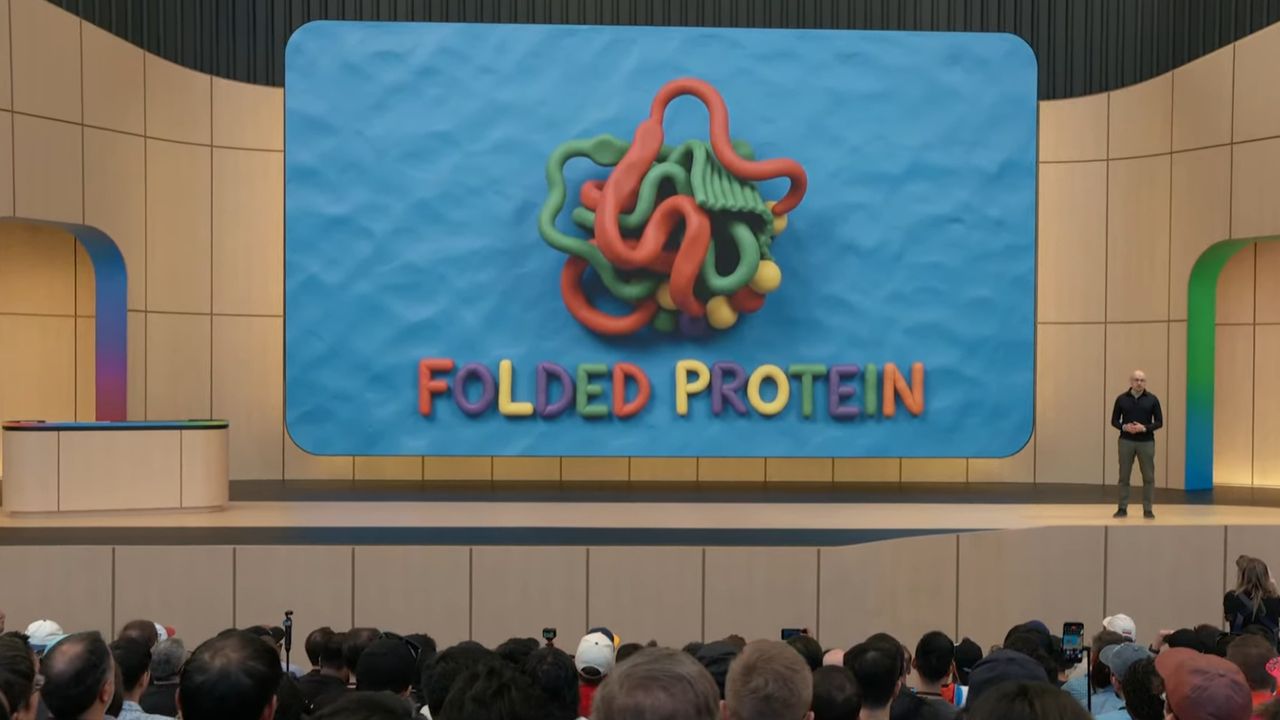
Google's recent announcements at I/O 2026 present a compelling, yet concerning, duality. While Omni showcases incredible generative AI power, capable of creating near-indistinguishable content, SynthID attempts to provide a much-needed antidote by watermarking AI-generated media. However, the timing and the inherent conflict raise significant questions about Google's role in both fostering and attempting to clean up the "AI mess."
At Google I/O 2026, the tech giant unveiled two significant innovations: Omni, a powerful new generative AI model, and SynthID, a tool designed to verify the authenticity of digital content. On the surface, this might seem like a balanced approach – creating advanced AI while simultaneously offering solutions to identify its output. However, a deeper look reveals a complex scenario where Google appears to be both the architect of an increasingly believable digital "fiction" and the provider of a partial solution to identify it. This review will delve into the implications of both technologies, exploring their capabilities, the user experience they offer, and the broader societal challenges they present.
What is Omni?
Omni, launched at Google I/O 2026, stands out for its impressive ability to generate highly realistic content. Described as "insanely good," its output can be so convincing that distinguishing it from human-crafted content is a significant challenge. The reviewer notes that despite its complex capabilities, Omni is not exceptionally fast in all tasks. For instance, generating a short video altering a user's image took under a minute, while creating a claymation video on combustion engines was observed to take nearly an hour.
This multi-talented model seems to break down creative barriers, allowing users to transform good ideas into tangible output with remarkable ease. Its power lies in its ability to take diverse inputs and, through simple prompts, produce almost anything imaginable. The user experience with Omni is depicted as "limitless," enabling individuals without specialized artistic or coding skills to manifest complex creative visions.
The Power of Omni (Pros)
The allure of Omni is undeniable. Its capabilities represent a significant leap forward in generative AI, offering unprecedented creative potential. Users can input short video clips and request transformations, or prompt it to generate intricate animations from scratch. The immediate takeaway is that Omni empowers individuals by removing technical hurdles, allowing a "really good prompt" to suffice for creating compelling content. This makes advanced content creation accessible to a much broader audience, fostering innovation and personal expression without the need for extensive training or expensive software. The idea that a powerful AI can bridge the gap between imagination and output, especially for those lacking traditional artistic or coding expertise, is genuinely exciting.
The Problem Omni Creates (Cons)
However, the very power that makes Omni so appealing also presents its most significant drawback: the potential for widespread "generative AI fiction." The source explicitly states that Omni's output is "insanely good," making it "hard to tell what's hand-crafted and what's been generated." This capability directly contributes to the growing concern that we can no longer trust our eyes and ears in the digital realm. As models like Omni become more advanced and accessible, instances of individuals being fooled by highly realistic AI-generated content are "sure to rise." The reviewer criticizes Google for this apparent disconnect, noting the disingenuousness of launching such a powerful tool that exacerbates the problem, while simultaneously offering a solution. Google acknowledges the use of its models for generative content but, according to the source, doesn't adequately acknowledge its role, and that of companies like OpenAI, in fueling public anxiety about distinguishing reality from AI-generated fiction.
Enter SynthID
SynthID is Google's proposed answer to the challenge of identifying AI-generated content. Now integrated into the Gemini app, SynthID's primary function is to assist in the verification of images, audio, and video. Its core mechanism involves watermarking AI content, which the source suggests is "about the only way for us to catch and remove fake images, audio, and video." The existence of SynthID is welcomed by the reviewer as a necessary tool in an increasingly complex digital landscape, especially in an era where trust in visual and auditory information has been eroded by sophisticated AI. It represents an effort by AI developers to provide a means for users to discern the origin and potential alteration of media.
Google's Dilemma & Disconnect
The central critique leveled in the source is the perceived "disingenuousness" of Google's approach. Unveiling Omni, a tool capable of creating almost anything from any input, in the "same breath" as announcing efforts like SynthID to identify generative content, creates a glaring contradiction. The article highlights Google's statement, "As generative media becomes more advanced and accessible, it’s helpful to know where content comes from, and whether it’s been altered," and retorts that the content "comes from you." While Google uses C2PA Content Credentials to identify content provenance, the reviewer feels the company doesn't adequately acknowledge its role, and that of companies like OpenAI, in fueling public anxiety about distinguishing reality from AI-generated fiction. This simultaneous creation and "cleanup" effort raises questions about responsibility and transparency within the AI industry.
Who Should Control SynthID?
A critical point raised by the reviewer is the assertion that SynthID, despite being developed by Google, should not remain exclusively in its hands. The argument is made for a third-party entity, ideally one independent of the AI industry and with expertise in intellectual property, content verification, and digital media (potentially a news organization), to control SynthID's "use and development." This independence would, according to the source, offer a perspective "unavailable to Google and its partners," who are likely more focused on developing the "next best AI model" rather than ensuring the trustworthiness of content. Such a move would aim to build greater public trust and ensure the tool serves broader societal interests rather than potentially conflicting corporate objectives.
Comparison to Alternatives
The source content does not explicitly mention direct, comparable alternatives to Omni or SynthID that would warrant a detailed comparison table. However, it does touch upon related initiatives. Google, for instance, touts its use of C2PA Content Credentials. These credentials are described as "useful for identifying the provenance of generative and non-generative content." While C2PA (Coalition for Content Provenance and Authenticity) is an industry-wide standard focused on content origin and changes, SynthID appears to be Google's proprietary watermarking solution specifically for AI-generated content. C2PA provides a broader framework for transparency across all digital media, whereas SynthID is a targeted tool for AI identification. The primary "alternative" or contrasting approach isn't a competing product, but rather the general state of unverified digital content that Omni contributes to. The struggle to identify what is real underscores the critical need for tools like SynthID, or industry standards like C2PA, but the efficacy and widespread adoption of such solutions remain a challenge given the rapid advancement of generative AI.
Recommendation
For consumers, the arrival of Omni and SynthID creates a complex landscape. While Omni represents an unparalleled tool for creative expression, unlocking potential for individuals without specialized skills, users must approach its output, and indeed all digital content, with increased skepticism. SynthID is a welcome development and a necessary step towards digital truth, but its effectiveness relies on widespread adoption and, ideally, oversight beyond a single AI developer.
Our Recommendation: Embrace Omni for its immense creative capabilities if you're looking to generate content with ease and high fidelity. However, always exercise extreme caution and critical thinking when consuming digital media, especially anything that seems too perfect or too outlandish. For those concerned about content authenticity, keep an eye on the development and integration of SynthID and similar verification tools. Acknowledge that while Google is offering a solution, the problem of AI-generated misinformation is escalating with the very technology they are releasing.
Conclusion
Google's dual presentation of Omni and SynthID at I/O 2026 encapsulates the ongoing paradox of generative AI. On one hand, Omni pushes the boundaries of creativity, offering a seemingly limitless canvas for anyone with an idea. Its ability to produce "insanely good" content, from melting videos to intricate claymation, marks a significant technological achievement. On the other hand, this power intensifies the very problem SynthID aims to address: the proliferation of AI-generated "fiction" that can easily deceive. The call for SynthID to be controlled by an independent third party underscores the profound trust issues inherent when the creator of the problem also controls the solution. Ultimately, while SynthID offers a vital mechanism for verification, the sheer power and accessibility of models like Omni suggest that humanity will be in a perpetual struggle to keep pace with the distinction between genuine and artificially crafted reality.
FAQ
Q: Is Omni worth using for content creation?
A: Yes, if you're looking for a powerful and accessible tool for creative content generation, Omni appears to be a highly capable model. Its ability to create "insanely good" output from simple prompts can break down artistic and coding barriers, allowing users to manifest complex ideas with relative ease. However, be mindful of the ethical implications and the potential for its output to be indistinguishable from human-crafted content.
Q: How effective is SynthID at identifying AI-generated content?
A: SynthID aims to watermark AI content, which the source suggests is a crucial method for identifying and removing fake images, audio, and video. While its existence is welcomed and necessary, the article implies that its ultimate effectiveness will depend on widespread adoption and its ability to keep pace with ever-improving generative AI models like Omni. The reviewer also suggests that its control by an independent third party would bolster trust in its capabilities.
Q: Should I trust all content I see online, given tools like Omni?
A: No, the review strongly suggests that with the advent of powerful models like Omni, trusting your eyes and ears online has become increasingly difficult. The output from such models can be "insanely good" and capable of fooling the average human. It is crucial to approach all digital content with skepticism and to seek verification through tools like SynthID or content credentials where available, understanding that the line between real and AI-generated is becoming increasingly blurred.
Related articles

Ars Technica's Rocket Report: Your Essential Space Industry Briefing
Quick Verdict Ars Technica's Rocket Report, presented by veteran space reporter Stephen Clark, offers an invaluable and meticulously organized weekly (or similar frequency, implied by "Edition 9.15") digest of the most

Apple iPhone Duo: A Daring Debut with Notable Compromises
Apple's highly anticipated iPhone Duo, priced at $2,000, has gone on pre-order. While hailed as "Apple's most exciting device in a decade" for its innovative foldable design and immersive display, it comes with significant drawbacks like the absence of FaceID and a premium camera.

KDE Plasma 6.8: A Future-Focused 30th Anniversary Update
Quick Verdict KDE Plasma 6.8, arriving as the "30th Anniversary Edition," is a pivotal release that decisively pushes the desktop environment into the future. With a definitive farewell to native X11 sessions and a
Galaxy Watch One UI 9 Beta: Promising Progress, But Patience Needed
Galaxy Watch 8, Watch Ultra, and Watch 7 are receiving a new One UI 9 Watch beta build with bug fixes and a security patch. Active development signals progress, but a stable release date remains elusive.

Enterprise AI Beyond Chatbots: A Vision for Actionable Intelligence
Quick Verdict: Redefining Enterprise AI's Potential TechRadar Pro's opinion piece, "What it takes to move enterprise AI beyond the chatbot," delivers a refreshingly honest and vital perspective on the current state and

Prototype Racing 2030: A Unified Future Driven by Software
Prototype racing is heading towards a unified, LMDh-based rule set by 2030, promising greater stability, cost-effectiveness, and a focus on software-driven innovation for OEMs, despite current economic challenges.