
Google Stock Dips as Nobel-Winning AI Pioneer Steps Aside From
Google's stock dipped by approximately 4 percent after Nobel Prize-winning AI pioneer Demis Hassabis stepped aside from his leadership role in the company's AI division. Hassabis, who previously headed Google's AI efforts following the rise of ChatGPT, will now focus on using AI for scientific breakthroughs like drug development. Koray Kavukcuoglu will succeed him, while another executive, Jeff Dean, is also departing.

SAN FRANCISCO — Google’s stock experienced a notable downturn Wednesday afternoon, dropping approximately 4 percent, following the announcement that Demis Hassabis, a Nobel Prize-winning artificial intelligence pioneer, is stepping down from his executive role leading the company’s comprehensive AI efforts.
Hassabis, a pivotal figure in the AI landscape, will remain with Google but will redirect his formidable expertise towards leveraging AI for scientific breakthroughs. This strategic shift comes as the tech giant faces increasing pressure to maintain its competitive edge in the rapidly evolving and fiercely contested artificial intelligence market.
Hassabis’s journey within Google began in 2014 when the company acquired DeepMind, the London-based AI laboratory he co-founded in 2010. His ascent to head all of Google’s AI endeavors in 2023 marked a direct and urgent response to the dramatic emergence of OpenAI’s ChatGPT, which sent shockwaves through Silicon Valley and prompted Google to consolidate and accelerate its own AI initiatives.
A testament to his profound impact on science, Hassabis shared the Nobel Prize in Chemistry in 2024. This prestigious award recognized DeepMind’s groundbreaking work in accurately predicting the intricate process of how protein molecules fold, a monumental achievement with far-reaching implications for biological research and medicine. His new focus will see him delve deeper into such transformative applications, including the development of innovative pharmaceutical drugs, aiming for similar high-impact discoveries.
The market’s immediate negative reaction, seen in the dip of Google's stock, underscores broader investor anxieties. Analysts have consistently questioned Google's ability to keep pace with agile, younger AI rivals. Companies like OpenAI, creators of ChatGPT (with whom The Washington Post has a content partnership), and Anthropic, developer of the Claude chatbot, are perceived as significant challengers in the race for AI dominance, making leadership stability a key concern for investors.
In the wake of Hassabis’s transition, Google has announced that Koray Kavukcuoglu, another veteran executive and long-time researcher from DeepMind, will assume leadership of the company’s AI efforts. This appointment signals a continuity of expertise from within the DeepMind lineage. Adding to the executive shake-up, Jeff Dean, another seasoned Google AI executive, is also departing to establish a startup dedicated to building AI for scientific discovery, mirroring Hassabis’s renewed focus and indicating a potential trend among top AI talent.
This high-profile leadership change suggests a recalibration within Google’s expansive AI strategy. While the company loses a central figure from the direct oversight of its broad AI portfolio, the move could also signify a concentrated effort to double down on high-impact, long-term AI research with tangible real-world applications beyond immediate consumer-facing products. This balancing act of foundational science and market-ready innovation remains a critical challenge.
The unfolding events highlight the intense pressure and dynamic nature of the AI sector. Strategic decisions, particularly those involving key personnel at the highest levels, are under close scrutiny as Google navigates the complex landscape of aggressive innovation, competitive threats, and investor expectations in a field that continues to reshape technological frontiers at an unprecedented pace.
FAQ
Q: Why did Demis Hassabis step aside from leading Google’s AI division?
A: Demis Hassabis stepped aside to focus his time on using AI to make new scientific breakthroughs, such as creating new pharmaceutical drugs, leveraging his expertise from DeepMind's Nobel-winning work.
Q: How did Google’s stock react to this news?
A: Google’s stock was down approximately 4 percent on Wednesday afternoon following the announcement, reflecting investor concerns about the company's competitive position in the AI race.
Q: Who will be taking over Demis Hassabis’s role as head of Google’s AI efforts?
A: Koray Kavukcuoglu, another longtime Google executive and DeepMind researcher, will now lead the company’s AI efforts.
Related articles

Apple Unveils iPhone Duo: Pricey Foldable Sees Soaring Demand
Apple has officially entered the foldable smartphone arena with the long-anticipated launch of the iPhone Duo. Priced starting at a hefty $1,999, the device features a 5.4-inch outer display and a larger 7.6-inch inner
Android 17 QPR2 Beta 7.1: The Performance Relief You've Been Waiting
Android 17 QPR2 Beta 7.1: Finally Fixing the QPR1 Performance Woes Verdict: Android 17 QPR2 Beta 7.1 is a crucial and highly anticipated software update for Google Pixel users, specifically targeting and resolving the

in-depth: Chicago-Area Cops Helped HSI Spy on Minnesota Anti-ICE
Chicago-area law enforcement, including local police and HSI agents, conducted undercover surveillance on Minnesota anti-ICE activists at an April 2, 2022, talk in Chicago. This operation was part of a federal conspiracy probe into 15 Minnesota activists facing felony charges related to immigration enforcement resistance. Civil liberties advocates have condemned the surveillance as a troubling intrusion into protected political activity.
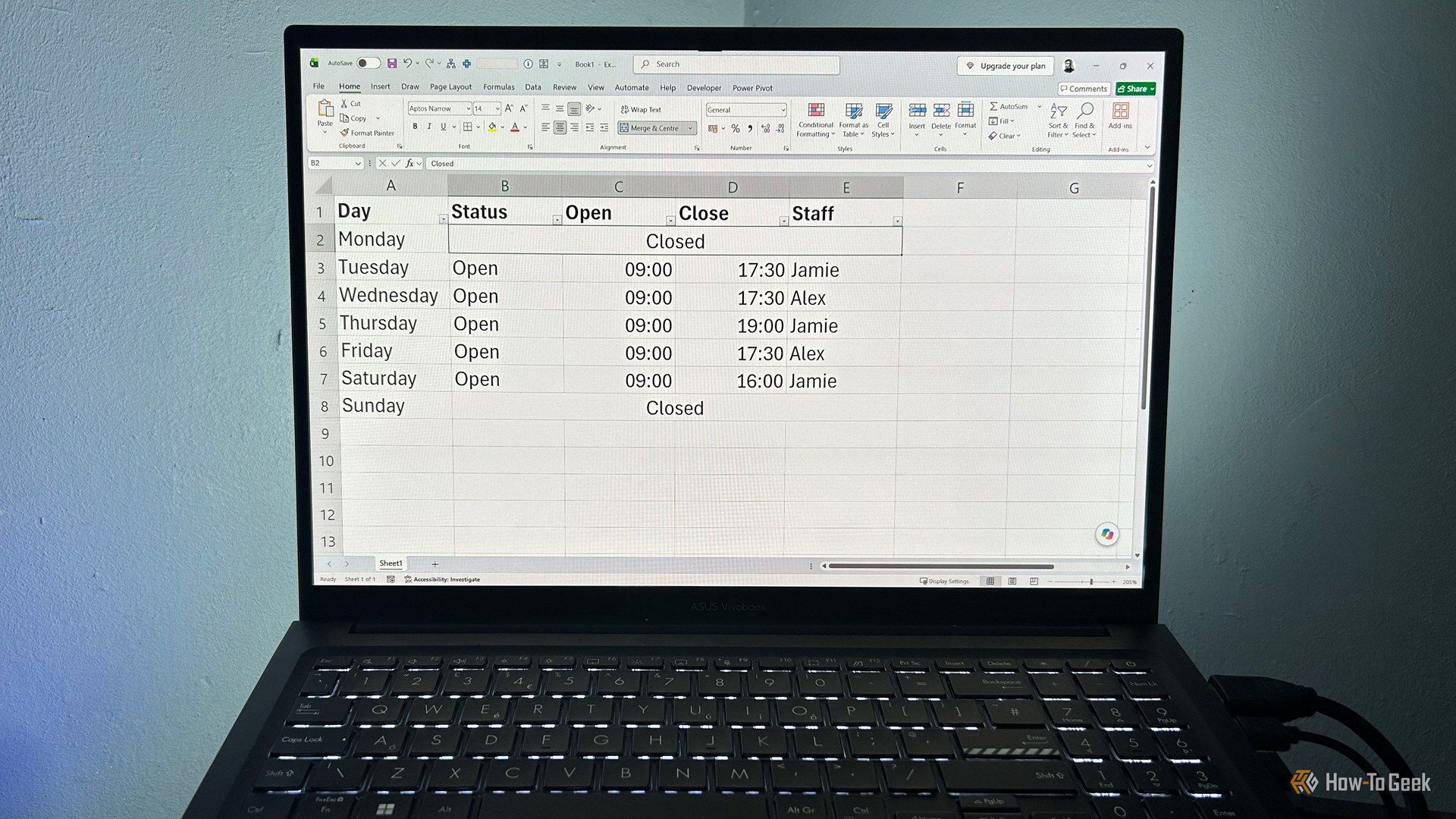
Ditch Merge & Center: The Better Way to Align Text in Excel
Learn to use Excel's "Center Across Selection" to align text across cells without merging, avoiding common data manipulation issues. This guide provides steps to utilize this newly accessible feature and add it to your Quick Access Toolbar.

Mark Wahlberg on using AI in film ‘the right way’ and being open to
Actor Mark Wahlberg believes AI has a place in filmmaking if used responsibly for enhancement, not script generation or actor replacement. At TechCrunch Disrupt, he expressed openness to an AI likeness carrying on his legacy, managed by his family, and emphasized storytelling.

Tesla Unveils Thruster-Equipped Roadster, 2028 Production Targeted
Tesla has unveiled its second-generation Roadster, featuring cold-gas thrusters co-developed with SpaceX, enabling it to jump and flip. The electric sports car demonstrated 0-60mph in an astonishing 0.81 seconds, with production targeted for 2028. This highly anticipated reveal also serves as a key recruitment tool for Tesla's ambitious AI and robotics initiatives.