
Google Maps Settings: Unlocking Your Navigation Superpowers
Google Maps Hidden Settings: A Comprehensive Review Verdict This ZDNET guide, "Master your navigation: 41 hidden Google Maps settings you should know," serves as an invaluable resource for anyone looking to transcend

Google Maps Hidden Settings: A Comprehensive Review
Verdict
This ZDNET guide, "Master your navigation: 41 hidden Google Maps settings you should know," serves as an invaluable resource for anyone looking to transcend basic navigation and truly harness the full capabilities of Google Maps. While many users treat Google Maps as a simple point-A-to-B tool, this extensive list reveals a treasure trove of granular controls and advanced features that significantly enhance convenience, safety, privacy, and efficiency. From customizing routes for EV drivers to managing personal data and leveraging AR for walking directions, the insights shared here transform Google Maps from a utility into a highly personalized and powerful travel companion. It’s a must-read for existing users and a compelling argument for those considering switching from alternative navigation apps.
Diving Deep into Google Maps' Capabilities
Google Maps has evolved far beyond its original purpose, becoming a robust ecosystem of navigational, planning, and exploratory tools. ZDNET's comprehensive article effectively pulls back the curtain on 41 often-overlooked settings and features, demonstrating just how much control and customization users have at their fingertips. The article covers a broad spectrum of functionalities, which can be broadly categorized into navigation enhancements, personalization and display options, trip planning and organization, privacy controls, accessibility features, and advanced utilities.
Navigation Refinements
The most immediate benefit of exploring these settings comes in refining your actual navigation experience. Basic annoyances, like a map that stubbornly refuses to face north, are easily remedied by toggling the "Keep map north up" setting. For drivers, the ability to "Avoid tolls, highways, or ferries" by default is a significant convenience, allowing for preferred routes without repeated manual adjustments. The push for environmental consciousness and cost-saving is supported by the "Prefer fuel-efficient routes" option, which intelligently suggests optimal paths with similar arrival times.
What truly impressed me was the depth of customization for specific vehicle types. Users can now specify their engine type (gas, diesel, hybrid, electric), and for EV owners, even provide "your EV model and charging plug" details. This level of integration means Google Maps can intelligently filter charging stations and recommend routes tailored to an EV's battery needs, a game-changer for electric vehicle travel planning. Other navigation perks include the crucial ability to "Add multiple stops to a route" for multi-errand trips, and planning tools like "Set a departure time" and "Set a reminder to leave" that consider live traffic to ensure timely arrivals without needing separate alarms.
For improved safety and convenience during active navigation, "Glanceable Directions" keep turns visible on the lock screen, saving battery and minimizing distractions. Voice commands are made more accessible with the option to "Use voice directions" by tapping the microphone or enabling hands-free "OK Google" commands. The inclusion of "Show the speedometer and speed limits" is a fantastic safety feature, providing peace of mind when driving in unfamiliar areas. Options to adjust voice guidance volume, "Turn off voice over Bluetooth," and even get "detailed audio cues while walking" round out a very strong suite of navigational tools.
User Experience and Customization
Beyond just getting from point A to B, Google Maps offers rich personalization options. "Change your vehicle avatar" adds a touch of fun, while "Change to dark mode (night mode)" improves visibility and reduces eye strain. The ability to "Toggle 3D buildings" and understand various map "layers, like air quality and satellite," allows users to tailor the visual information to their preference. Customizing "units and map scale" further refines the map display to individual needs.
Google Maps also shines in its planning and organizational capabilities. Users can "Make collections or lists of places" and "Save your trips," fostering better organization for travel or frequent destinations. Setting "home and work addresses" streamlines daily commutes, and the essential feature to "Download maps for offline use" is a lifesaver for areas with poor cell service or when traveling abroad. "Label places for easy access" adds another layer of personal organization.
Privacy and Data Management
For those concerned about their digital footprint, the article highlights several critical privacy controls. The "Go incognito" mode allows for searches and navigation without saving location history. More extensively, users can "View, turn off, and delete your timeline" and "Manage your history," providing robust control over personal location data. The option to "Delete recent searches" offers quick cleanup of activity. These features demonstrate Google's commitment (albeit with user intervention) to giving users agency over their data, and the guide does an excellent job of pointing them out.
Accessibility and Advanced Features
Google Maps has made significant strides in accessibility. The ability to "Find accessible places" and utilize "wheelchair accessible transit routes" is crucial for inclusivity, and these settings are easy to find and activate. The feature to "Share your real-time location" can be a safety net for friends and family.
Some of the more unique, almost whimsical, features include "Use Street View to time travel," allowing a glimpse into past street views, and "Try Lens with Gemini," hinting at future AI integration for enhanced real-world interaction. The opportunity to "Contribute to Google Maps" allows users to actively improve the data for others.
Cons and Limitations
While the sheer breadth of features is impressive, the primary 'con' stems from the very premise of the article: these are "hidden" settings. Many users may never stumble upon them without such a guide, suggesting a discoverability issue within the app's interface. Furthermore, one notable limitation highlighted is that "Power saving mode" is currently exclusive to Pixel 10 and newer devices, which is a significant drawback for non-Pixel Android and iOS users who also struggle with battery drain during navigation.
Regarding alternatives, the article briefly mentions Waze and CoMaps. Waze is implicitly positioned as a competitor for real-time traffic, a feature Google Maps has increasingly integrated. CoMaps is presented as a "free Google Maps alternative that doesn't track my location (or kill my phone battery)." While Google Maps offers privacy controls and a power-saving mode (for some), the existence of alternatives like CoMaps underscores the ongoing user demand for enhanced privacy and battery efficiency, areas where Google Maps still faces competition despite its advancements.
Recommendation
For any Google Maps user, whether casual or a heavy traveler, integrating these tips and tricks is highly recommended. The benefits in terms of convenience, efficiency, and personalization are substantial. The guide itself is clear, concise, and actionable, making it easy to implement the suggested changes. While some features are less accessible or platform-limited, the vast majority offer immediate and noticeable improvements to the overall Google Maps experience. For those considering switching navigation apps due to specific needs (like EV charging, accessibility, or detailed planning), this deep dive into Google Maps' hidden potential might just convince you that the solution you need is already at your fingertips.
FAQ
Q: Is Google Maps suitable for power users who need advanced navigation and planning features?
A: Absolutely. As this guide demonstrates, Google Maps is packed with advanced settings for multi-stop routes, EV-specific navigation, detailed planning, and customization, making it a very capable tool for power users once these "hidden" features are uncovered.
Q: Are the "hidden" settings difficult to find and activate?
A: While the article labels them as "hidden," ZDNET provides clear, step-by-step instructions to access and activate each setting, typically found within the Profile icon > Settings > Navigation menu. This guide makes them easily discoverable and manageable.
Q: Does Google Maps adequately address privacy concerns with its location tracking and data collection?
A: Google Maps offers several robust privacy controls, including an Incognito mode, options to view and delete your location Timeline, manage your activity history, and delete recent searches. While it does collect data for personalized experiences, users have significant power to manage and limit this collection through the app's settings.
Related articles
Android 17 QPR2 Beta 7.1: The Performance Relief You've Been Waiting
Android 17 QPR2 Beta 7.1: Finally Fixing the QPR1 Performance Woes Verdict: Android 17 QPR2 Beta 7.1 is a crucial and highly anticipated software update for Google Pixel users, specifically targeting and resolving the

DJI Solo Video Setups: Smart Choices for Lone Creators
This review delves into DJI's recommended solo video setups, highlighting the Osmo Pocket 3 Creator Combo as a top pick for its integrated camera, gimbal, and mic. It also covers stabilizers like the Osmo Mobile 8 and RS 4, and the DJI Mic Mini series for enhanced audio, providing honest pros, cons, and clear buying advice.

Ditch Merge & Center: The Better Way to Align Text in Excel
Learn to use Excel's "Center Across Selection" to align text across cells without merging, avoiding common data manipulation issues. This guide provides steps to utilize this newly accessible feature and add it to your Quick Access Toolbar.

Ars Technica's Rocket Report: Your Essential Space Industry Briefing
Quick Verdict Ars Technica's Rocket Report, presented by veteran space reporter Stephen Clark, offers an invaluable and meticulously organized weekly (or similar frequency, implied by "Edition 9.15") digest of the most

Apple iPhone Duo: A Daring Debut with Notable Compromises
Apple's highly anticipated iPhone Duo, priced at $2,000, has gone on pre-order. While hailed as "Apple's most exciting device in a decade" for its innovative foldable design and immersive display, it comes with significant drawbacks like the absence of FaceID and a premium camera.
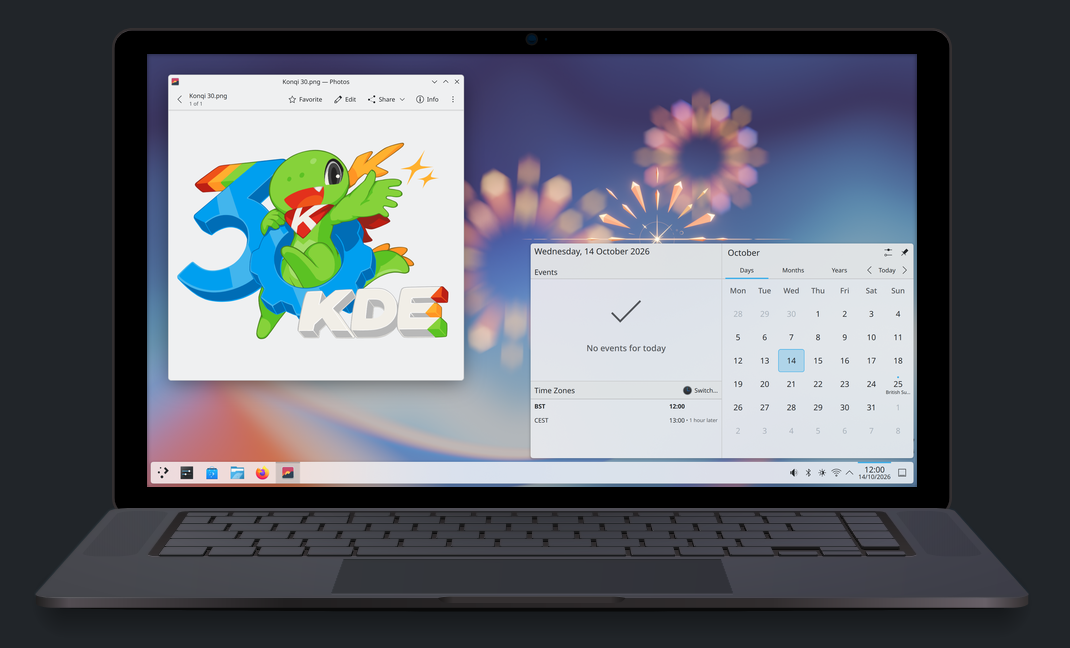
KDE Plasma 6.8: A Future-Focused 30th Anniversary Update
Quick Verdict KDE Plasma 6.8, arriving as the "30th Anniversary Edition," is a pivotal release that decisively pushes the desktop environment into the future. With a definitive farewell to native X11 sessions and a