
FAA Mach Flight Clearance: A Supersonic Leap Forward
Verdict: A Sonic Boom for Future Travel The Federal Aviation Administration (FAA) has just laid crucial groundwork for a new era of air travel, announcing proposed noise-based certification standards that could
Verdict: A Sonic Boom for Future Travel
The Federal Aviation Administration (FAA) has just laid crucial groundwork for a new era of air travel, announcing proposed noise-based certification standards that could eventually see commercial flights soaring at Mach 1 speeds or greater. This isn't an announcement of a new plane you can book today, but it's a monumental regulatory step that could slash travel times by nearly half. For anyone dreaming of a world where coast-to-coast or intercontinental journeys are significantly shorter, this news is a powerful signal that supersonic passenger flights are finally moving from science fiction back into the realm of possibility.
The Groundwork: Key Details of the FAA's Move
The core of the FAA's recent announcement is a proposed rule designed to create the very first noise-based certification standards specifically for a new generation of supersonic passenger aircraft. This is a critical development because, since the 1970s, overland supersonic flights have been severely restricted due to the disruptive sonic boom generated when aircraft break the sound barrier. The FAA's shift indicates a belief that modern aerospace engineering, advanced materials science, and improved noise reduction technologies can allow future aircraft to fly at supersonic speeds without creating that traditional ground-level sonic boom.
This proposed rule addresses a significant regulatory barrier, but it's important to understand it's only the first piece of the puzzle. The agency has also stated its intention to introduce a second set of rules later in the year, specifically targeting noise during takeoff and landing. The FAA's goal is to finalize both sets of regulations by mid-2027, providing manufacturers a much clearer path for certifying future supersonic aircraft.
The Promise of Speed: User Experience Implications
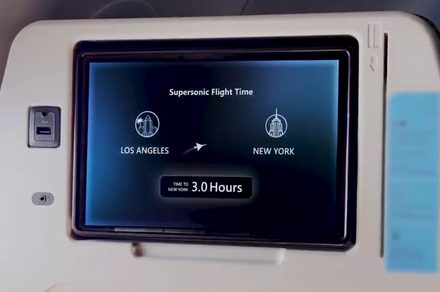
The most exciting aspect of this development, from a consumer perspective, is the potential for drastically reduced travel times. Today's commercial airliners typically cruise at speeds between 550 to 600 mph. In contrast, Mach 1 aircraft travel at approximately 770 mph or more. This substantial speed difference translates directly into significant time savings. The FAA suggests that journeys currently taking around six hours could potentially be completed in as little as three hours. Imagine a cross-country flight, or even certain international routes, being cut almost in half. This would fundamentally alter the experience of long-distance travel, making destinations more accessible for both passengers and cargo.
The prospect of flying faster than the speed of sound without the accompanying disruptive sonic boom opens up domestic and international overland routes that were previously off-limits. This is crucial for commercial viability, as passengers wouldn't need to endure a deafening sonic boom, nor would communities below be subjected to it. The focus on “ground-level sonic boom” mitigation is key to making this a palatable and widespread commercial reality.
Pros and Cons: A Look at the Landscape
Like any significant technological and regulatory advancement, there are clear upsides and considerations.
Pros:
- Dramatic Travel Time Reduction: The most obvious benefit is the potential to cut flight durations nearly in half, making travel more efficient for business and leisure.
- Regulatory Clarity for Manufacturers: By establishing noise-based certification standards, the FAA provides a concrete framework for aerospace companies to design, develop, and test their next-generation supersonic aircraft. This removes a major unknown.
- Innovation Catalyst: This regulatory shift is expected to spur significant innovation in aerospace engineering, materials science, and noise reduction technologies.
- Potential for a New Golden Age of Travel: The ability to travel faster could revitalize the air travel industry, offering a premium experience distinct from current subsonic flights.
- Sonic Boom Mitigation: The focus on allowing supersonic speeds without a disruptive ground-level sonic boom is a critical technological and environmental advancement.
Cons:
- Not an Immediate Reality: It's crucial to remember this is a regulatory announcement, not a product launch. Actual supersonic commercial flights are still years away, requiring new aircraft to be designed, built, tested, and certified.
- Further Regulations Pending: While the overland noise standards are proposed, regulations for takeoff and landing noise are still to come, adding another layer to the certification process.
- Requires Manufacturer Innovation: The success hinges on aircraft manufacturers actually developing planes that can meet these new, stringent noise standards while achieving supersonic speeds.
- Limited Source Information on Broader Impacts: The source focuses purely on speed and noise, without touching on factors like potential ticket costs, environmental footprint beyond sonic boom (e.g., emissions), or accessibility for the average traveler, which are future considerations.
Compared to Current Commercial Flights
Comparing this potential future to current commercial flights is straightforward: it's all about speed. Today's jets operate at speeds roughly between 550-600 mph. The FAA's announcement paves the way for Mach 1+ aircraft, translating to 770 mph or more. This isn't just an incremental improvement; it's a step change, promising a travel experience that significantly redefines travel duration. While existing aircraft are optimized for efficiency at subsonic speeds, future supersonic jets will prioritize speed without sacrificing noise comfort for those on the ground. The difference will be less about the in-flight amenities (though those will surely evolve) and more about the fundamental commodity of time.
Buying Recommendation: What to Expect
Don't go selling your traditional airline miles just yet, but do pay close attention to this space. This FAA announcement is a strong endorsement of the technical feasibility and regulatory intent behind a return to supersonic commercial travel. For consumers, this means that while true Mach flights won't be available overnight, the path to them is now significantly clearer. Keep an eye on aerospace companies like Boom Supersonic and others who have been working on these aircraft, as they now have concrete targets to aim for. The next few years will be about design, testing, and manufacturing, with the mid-2027 finalization of regulations as a key milestone. If you value time above all else in travel, this development suggests a very exciting — albeit distant — future. This isn't a product to buy, but a future travel option to anticipate.
FAQ
Q: When can I expect to fly on a supersonic commercial plane?
A: While the FAA has cleared significant regulatory hurdles, this is not an immediate change. The proposed rules are expected to be finalized by mid-2027. After that, manufacturers will still need to design, build, test, and certify new aircraft to these standards, which will take several more years. Commercial flights are likely still several years away, not months.
Q: Will these new supersonic flights still create a loud sonic boom?
A: The FAA's proposed rules specifically aim to allow supersonic flights without producing the traditional ground-level sonic boom. Advances in aerospace engineering and noise reduction technologies are central to this goal, meaning the experience for people on the ground should be significantly less disruptive than with previous supersonic aircraft like the Concorde.
Q: How much faster will these new planes be compared to current flights?
A: Today's commercial airliners typically fly at 550-600 mph. The new Mach 1+ aircraft will travel at 770 mph or more, potentially cutting travel times by nearly half. A journey that currently takes six hours could theoretically be reduced to around three hours.
Related articles
Android 17 QPR2 Beta 7.1: The Performance Relief You've Been Waiting
Android 17 QPR2 Beta 7.1: Finally Fixing the QPR1 Performance Woes Verdict: Android 17 QPR2 Beta 7.1 is a crucial and highly anticipated software update for Google Pixel users, specifically targeting and resolving the

DJI Solo Video Setups: Smart Choices for Lone Creators
This review delves into DJI's recommended solo video setups, highlighting the Osmo Pocket 3 Creator Combo as a top pick for its integrated camera, gimbal, and mic. It also covers stabilizers like the Osmo Mobile 8 and RS 4, and the DJI Mic Mini series for enhanced audio, providing honest pros, cons, and clear buying advice.

Ars Technica's Rocket Report: Your Essential Space Industry Briefing
Quick Verdict Ars Technica's Rocket Report, presented by veteran space reporter Stephen Clark, offers an invaluable and meticulously organized weekly (or similar frequency, implied by "Edition 9.15") digest of the most

Apple iPhone Duo: A Daring Debut with Notable Compromises
Apple's highly anticipated iPhone Duo, priced at $2,000, has gone on pre-order. While hailed as "Apple's most exciting device in a decade" for its innovative foldable design and immersive display, it comes with significant drawbacks like the absence of FaceID and a premium camera.
KDE Plasma 6.8: A Future-Focused 30th Anniversary Update
Quick Verdict KDE Plasma 6.8, arriving as the "30th Anniversary Edition," is a pivotal release that decisively pushes the desktop environment into the future. With a definitive farewell to native X11 sessions and a
Galaxy Watch One UI 9 Beta: Promising Progress, But Patience Needed
Galaxy Watch 8, Watch Ultra, and Watch 7 are receiving a new One UI 9 Watch beta build with bug fixes and a security patch. Active development signals progress, but a stable release date remains elusive.