
Duolingo Revisited: A Once-Great Language App's Disappointing Decline
After a year away, Duolingo's free experience has worsened significantly with aggressive ads, limited energy, and an overemphasis on gamification, overshadowing its core language learning purpose. Combining it with AI like Gemini offers a more effective solution.
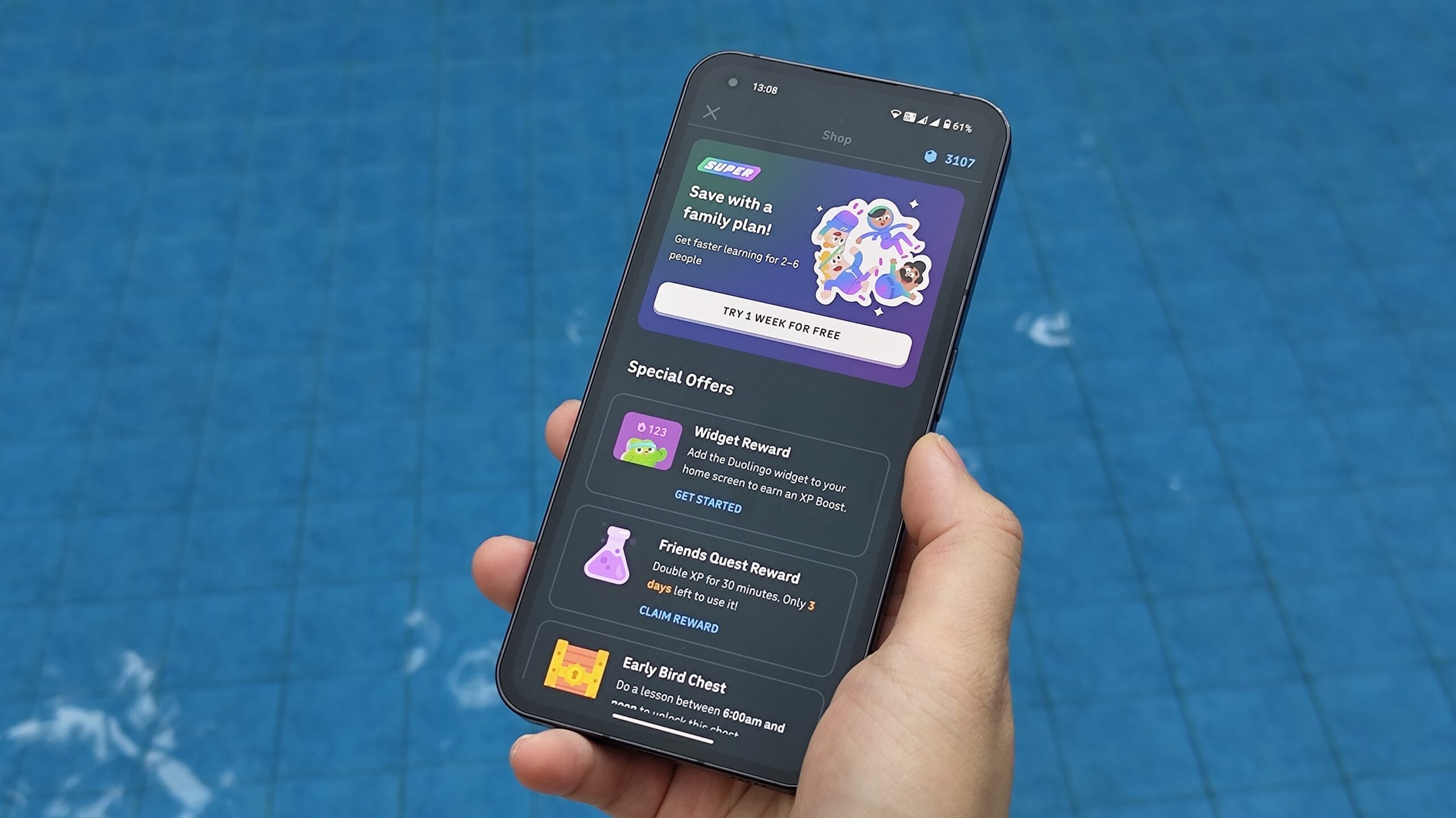
My recent return to Duolingo after a year-long hiatus revealed a platform far removed from the dedicated language tutor I once knew. What began as an attempt to refresh my German skills for an upcoming trip quickly turned into a frustrating encounter with an app that has, regrettably, gone downhill. The core issue is a significant shift in focus, where aggressive monetization and gamification now overshadow the actual learning experience, making the free tier feel almost unusable. This isn't the Duolingo many long-term users remember; it's a more bloated version, riddled with ads and features tangential to language acquisition.
The User Experience: More Obstacles, Less Learning
The initial login was an immediate red flag, as Duolingo aggressively pushed its paid "Super" subscription before I could even check my past progress. Simply wanting to assess my current German proficiency before committing to anything, I found myself navigating a gauntlet of premium prompts. After a brief refresher course, the app even encouraged downloading "Brawl Stars," a mobile game, as part of an ongoing collaboration – a curious and irrelevant detour from language learning.
Once I finally reached the home page, the core learning experience for free users proved equally frustrating. I was granted 25 "energy" to begin, an amount sufficient for only two to three lessons. Mistakes deplete this energy more rapidly, forcing users to either watch an advertisement or expend accumulated gems to continue. While the gem system has always been a limiting factor, it's notably more restrictive now; a year ago, I could complete at least five lessons with the same energy allowance, which was adequate for a busy schedule. Today, three lessons without resorting to ads or gems feels like a luxury.
Beyond third-party ads, Duolingo's own in-house advertisements relentlessly push users to upgrade to Super or Max tiers. Even a trial of the Super version, while removing energy limits, still prioritized gamified elements like maintaining streaks and achieving higher ranks over the genuine pursuit of knowledge. This emphasis on competitive play and arbitrary progression metrics ultimately detracts from the app's educational purpose, turning learning into a chore rather than an enriching activity.
Exploring Alternatives: Gemini Steps Up
Facing Duolingo's diminished utility, I sought alternatives. My previous go-to, Gemini, offered a refreshing contrast. I found Gemini more beginner-friendly than other AI bots like ChatGPT and Claude, partly due to its Gemini Notebook feature and built-in presets. As an AI Plus subscriber (bundled with a Google One subscription), I had access to its full capabilities.
Gemini excels in flexibility and responsiveness. Users can kickstart their language journey by requesting a custom study plan, providing their goals and current proficiency. The AI then adapts, allowing for schedule customization or the addition of specific challenges. Crucially, Gemini allows for dynamic interaction: I could ask follow-up questions, adjust the difficulty of lessons, or redirect the focus as needed, a stark difference from Duolingo's rigid path.
My preferred method involved Gemini Notebook, where I created a "Learn German" notebook set to "Study and Learn." The notebook intelligently incorporated past conversations about visiting Berlin and learning conversational German, gradually populating with priorities and practice quizzes. This personalized approach allowed me to choose my starting point and easily adjust the lesson type or intensity.
One of Gemini's most significant advantages is the absence of external pressure. There are no streaks to maintain, no energy bars to deplete, and no anxiety associated with making grammatical errors. I could learn at my own pace, dedicating an hour on some days or skipping others entirely without penalty. However, Gemini isn't without its limitations; constructing a curriculum from scratch can be challenging without prior language knowledge, and its ability to correct pronunciation or nuanced word choice in voice lessons is notably poor.
Duolingo vs. Gemini: A Feature Comparison
| Feature | Duolingo (Free Tier, as reviewed) | Gemini (AI Plus tier, as reviewed) |
|---|---|---|
| User Experience | Heavy ads, aggressive premium pushes, restrictive energy system, focus on streaks/gamification. | Flexible, responsive, no ads, no energy/streaks, user-driven curriculum. |
| Learning Pace | Pressure to maintain daily streaks, limited lessons per session. | Self-paced, learn when and how long desired, no pressure. |
| Guidance/Structure | Clear, guided modules for proficiency levels. | Requires user to formulate curriculum; provides adaptive learning. |
| Monetization | Free tier heavily restricted, constant upgrade prompts, third-party ads. | Paid AI Plus tier (bundled with Google One) for full features, no ads within learning. |
| Pronunciation Check | Offers voice lessons, visually engaging feedback (though not always perfect). | Poor at correcting pronunciation or word choice directly. |
| Learning Environment | Gamified, anxiety-inducing due to energy/streaks, competitive leagues. | Stress-free, conversational, adaptable, no competitive elements. |
The Best of Both Worlds: A Combined Approach
Despite its flaws, I've chosen to keep Duolingo as part of my language learning toolkit, leveraging its strengths to fill gaps where Gemini falls short. Duolingo's structured modules serve as an excellent guide through proficiency levels, and its occasional games and voice lessons are more visually engaging than Gemini's offerings. The solution lies in using them synergistically.
To mitigate Duolingo's downsides, I've discovered a few workarounds. Accessing Duolingo through a web browser with an ad blocker eliminates external ads and replaces the restrictive energy system with "hearts." These hearts can be replenished by completing practice lessons. Once those are exhausted, switching back to the mobile app often grants a full energy bar. Additionally, disabling competitive leagues and leaderboards, which can only be done via privacy settings in a web browser, removes the pressure of keeping up with other users.
My current workflow involves completing Duolingo's daily tasks until I run out of hearts or energy, then transitioning to Gemini for more interactive and in-depth lessons. Duolingo acts as the structured "teacher," guiding me through core concepts, while Gemini functions as the "helpful seatmate," providing deeper explanations, contextual understanding, and flexible practice sessions. This dual approach allows me to absorb Duolingo's structured curriculum and simultaneously gain a richer understanding of the language through Gemini, especially when Duolingo skims over important grammar points.
Verdict: Duolingo's Decline and a Hybrid Future
Duolingo, once a groundbreaking tool for language learning, has unfortunately shifted its focus, making the free user experience increasingly frustrating. The aggressive monetization, pervasive ads, and restrictive energy system now overshadow its educational value, turning what should be an enjoyable learning journey into a constant battle against limitations and distractions. While its structured lessons and gamified elements still hold some appeal, they come at the cost of a less fluid and more anxiety-inducing experience for non-paying users.
For serious language learners today, relying solely on Duolingo, particularly its free tier, is no longer the optimal path. The "Super" or "Max" subscriptions address some of the barriers but don't fundamentally change the app's shift towards gamification over pure learning. However, by strategically combining Duolingo (preferably via a web browser with ad-blocking and disabled competitive features) with a responsive AI tutor like Gemini, learners can craft a comprehensive, less stressful, and highly effective language acquisition strategy. This hybrid approach allows for the best of both worlds: structured guidance from Duolingo and personalized, in-depth interaction from Gemini, ultimately fostering learning without the added stressors of a profit-driven platform.
FAQ
Q: Is Duolingo's free tier still effective for learning?
A: Based on recent experience, Duolingo's free tier is significantly more restrictive than before, with heavy ads, limited energy, and a focus on gamification. It can provide basic exposure but is frustrating for serious learning due to constant interruptions and pressure.
Q: What are the main disadvantages of Duolingo compared to AI tools like Gemini?
A: Duolingo suffers from aggressive monetization, pervasive ads, a limiting energy system, and an overemphasis on gamified streaks and leaderboards. Gemini, on the other hand, offers a flexible, ad-free, personalized learning experience without pressure, allowing for deeper contextual understanding, though it currently lacks a structured curriculum and strong pronunciation correction features.
Q: Can Duolingo still be part of an effective language learning strategy?
A: Yes, but ideally in conjunction with other tools. By using Duolingo on a web browser with ad-blocking and disabling competitive features, and then supplementing its structured lessons with an AI tutor like Gemini for interactive, in-depth practice, learners can leverage Duolingo's strengths while mitigating its current drawbacks.
Related articles

TCG Pocket Responds: A Much-Needed Pace Shift for Pokémon Fans
Pokémon TCG Pocket is rolling out a major update for its second anniversary, primarily addressing player concerns about overwhelming content releases by shifting to a six-week set schedule. This aims to curb player decline and improve overall engagement by giving trainers more time to collect and strategize. The update also adds new collection methods, improved deck-building features, and enhanced trading functionality.

Ars Technica's Rocket Report: Your Essential Space Industry Briefing
Quick Verdict Ars Technica's Rocket Report, presented by veteran space reporter Stephen Clark, offers an invaluable and meticulously organized weekly (or similar frequency, implied by "Edition 9.15") digest of the most

Apple iPhone Duo: A Daring Debut with Notable Compromises
Apple's highly anticipated iPhone Duo, priced at $2,000, has gone on pre-order. While hailed as "Apple's most exciting device in a decade" for its innovative foldable design and immersive display, it comes with significant drawbacks like the absence of FaceID and a premium camera.

AI's Confidence vs. Formal Methods' Rigor: Design Flaws & Verification
While AI accelerates code generation, formal methods remain critical for ensuring system correctness. Languages like TLA+ and tools like Quint enable developers to model and verify system designs before coding, catching subtle flaws. Quint makes formal methods more accessible with developer-friendly syntax and executability. This approach is vital for verifying AI-generated code through trace validation and model-based testing, ensuring reliability against real-world data.

KDE Plasma 6.8: A Future-Focused 30th Anniversary Update
Quick Verdict KDE Plasma 6.8, arriving as the "30th Anniversary Edition," is a pivotal release that decisively pushes the desktop environment into the future. With a definitive farewell to native X11 sessions and a
Galaxy Watch One UI 9 Beta: Promising Progress, But Patience Needed
Galaxy Watch 8, Watch Ultra, and Watch 7 are receiving a new One UI 9 Watch beta build with bug fixes and a security patch. Active development signals progress, but a stable release date remains elusive.