
Delft's Whisker Drone: Revolutionizing Navigation in Darkness
Quick Verdict This innovative drone from Delft University of Technology introduces a revolutionary tactile navigation system, perfect for environments where conventional sensors fail. Its sub-100g weight and minimal
Quick Verdict
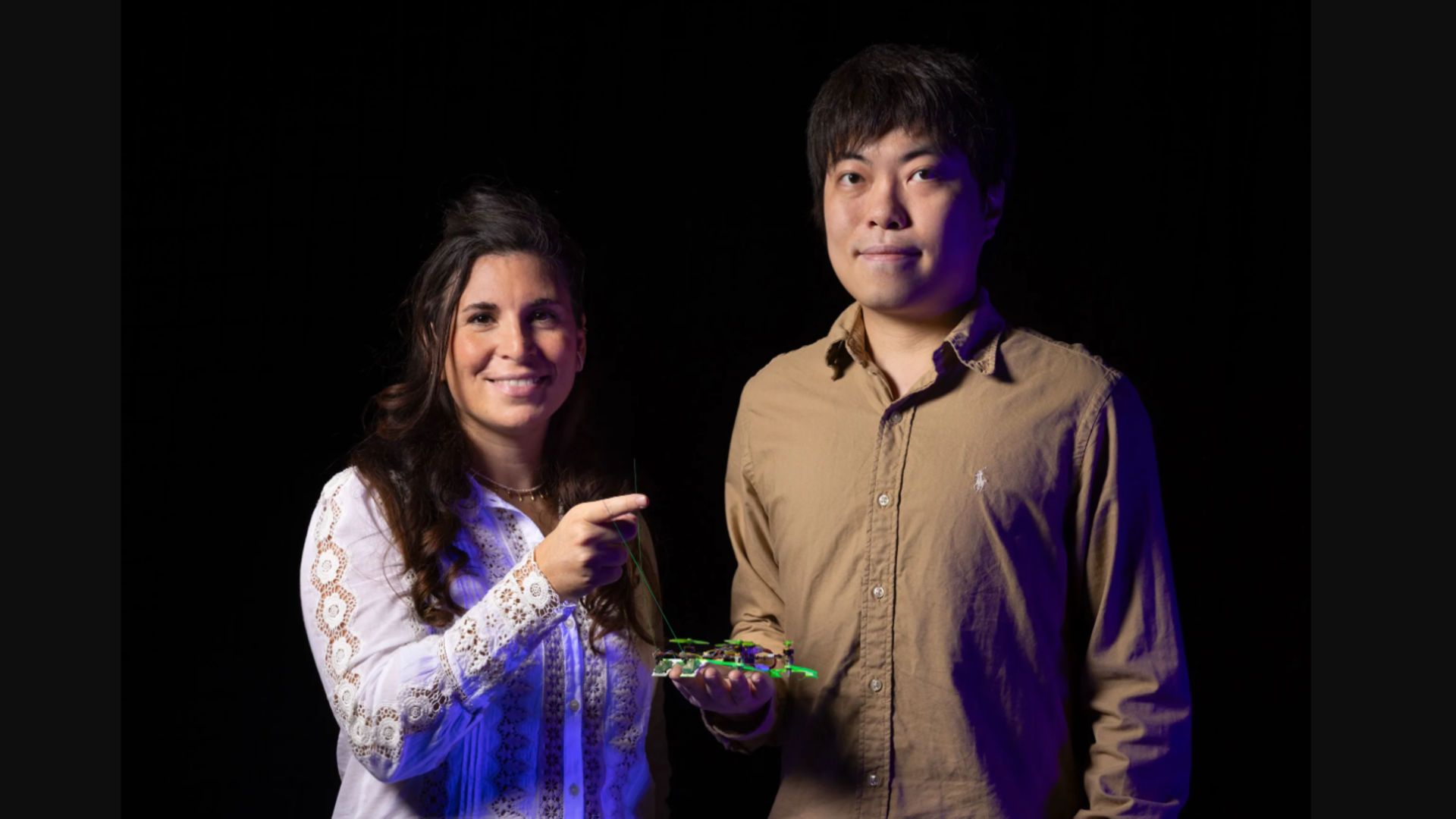
This innovative drone from Delft University of Technology introduces a revolutionary tactile navigation system, perfect for environments where conventional sensors fail. Its sub-100g weight and minimal processing demands make it a game-changer for rescue and exploration in darkness, smoke, or dust.
Introduction
In the ever-evolving world of drone technology, innovation often comes from unexpected places. Delft University of Technology has unveiled a new, exceptionally lightweight drone (under 100 grams) that promises to redefine autonomous navigation in the most challenging conditions. Moving beyond conventional cameras and GPS, this drone leverages a bio-inspired 'whisker' system, granting it a unique sense of touch that allows it to "see" in the dark, through smoke, or in dusty battlefields and collapsed structures. This isn't just an incremental improvement; it's a fundamental shift in how small aerial vehicles perceive their surroundings.
Key Features & Specifications
The Delft University drone stands out with a carefully optimized design focused on tactile sensing and efficiency:
- Weight: An impressive less than 100 grams, ensuring extreme portability and agility, especially in confined spaces.
- Navigation System: It incorporates two slender, upward-angled artificial whiskers strategically placed near the drone's nose.
- Sensing Mechanism: Miniature pressure sensors are integrated at the base of each whisker. These sensors instantly detect physical contact with any surface, providing crucial navigational data.
- Data Processing: Despite its sophisticated capabilities, the drone's onboard software is remarkably lightweight, occupying just 34 kilobytes of memory for processing tactile information.
- Precision: The system boasts millimetric accuracy, capable of distinguishing genuine surface contact from airflow turbulence in real-time.
- Autonomy: Designed for independent operation, it processes environmental information directly without relying on external computing power or constant human intervention.
- Environmental Resilience: This drone is specifically engineered to excel in adverse conditions where traditional visual or GPS-based navigation systems struggle or fail entirely, such as complete darkness, dense smoke, heavy dust, or areas with compromised satellite signals.
Innovation & Design Philosophy
The core of this drone's ingenuity lies in its brilliant application of biomimicry. The Delft researchers drew profound inspiration from the natural world, specifically from animals like rodents, which expertly navigate complex, confined environments using their facial whiskers as primary sensory tools. This natural blueprint has been meticulously translated into an elegant, minimalist design for the drone.
These two artificial filaments function as dynamic tactile probes, constantly feeling out the immediate environment. When a whisker makes contact with an object, the subtle pressure change at its base is instantly registered by sensitive sensors. This continuous feedback loop allows the drone to dynamically map its immediate surroundings, identify and avoid obstacles, and even maintain physical contact with structures for more stable navigation. Essentially, it builds a rich, albeit touch-based, understanding of the space it inhabits.
A significant design challenge for the team was the need to differentiate genuine tactile input from the aerodynamic disturbances and turbulence inherent in drone flight. The research team tackled this with sophisticated, yet extremely efficient, software. By developing a specialized processing program that occupies a mere 34 kilobytes of memory, they ensured that the drone could interpret environmental information in real-time with sub-millimeter precision, without burdening its limited computational resources. This is a stark contrast to the robust computing power typically required by camera-based or LiDAR systems found in larger drones, making this lightweight solution particularly suitable for its ultra-compact category.
Performance & Potential Use Cases
While this drone might not be built for high-speed aerial acrobatics, its true performance shines brightly in situations where other drones would be rendered blind or entirely useless. Imagine critical rescue operations in a collapsed building, where thick smoke fills the air, heavy dust obscures all vision, and GPS signals are non-existent. A human rescuer might face insurmountable challenges, but this whisker drone could venture ahead, mapping intricate pathways and identifying stable structures through its sense of touch, relaying vital information back to human teams.
The ability to navigate effectively without optical sensors or satellite positioning opens up a plethora of previously impossible applications. Beyond disaster relief, this technology holds immense promise for industrial inspections in dusty factories, dark underground pipelines, or even military reconnaissance in obscured battlefields. Its low memory footprint and efficient onboard processing mean it doesn't need to transmit vast amounts of data for external analysis, enhancing its operational independence and potentially reducing vulnerabilities in sensitive missions. The true beauty of this system lies in its inherent simplicity and remarkable robustness, offering a crucial alternative when traditional sensing methods inevitably fail.
Pros and Cons
Pros:
- Exceptional Navigation in Challenging Environments: Operates effectively in complete darkness, dense smoke, heavy dust, and GPS-denied areas where other drones struggle.
- Ultra-Lightweight Design: Weighs less than 100g, significantly enhancing portability and maneuverability, especially in tight and unstable spaces.
- Low Computational Demands: The onboard software requires only 34KB of memory, making the system highly efficient and suitable for miniature hardware.
- Bio-Inspired Tactile Sensing: Utilizes a novel and robust approach to environmental perception, mimicking natural biological systems.
- High Precision: Achieves millimetric accuracy in detecting surface contact, allowing for detailed environmental mapping through touch.
- Potential for Critical Applications: Offers significant advantages for search and rescue, hazardous environment inspection, and specialized military uses.
Cons:
- Not for High-Speed Applications: The tactile navigation system is optimized for precision in complex environments, not for rapid, high-speed flight.
- Currently a Research Project: As an academic prototype, it is not yet a commercially available product, meaning pricing and widespread availability are unknown.
- Limited "Vision" Range: Relies on physical contact, providing only immediate proximity awareness compared to the broader range of optical sensors.
- Potential Whisker Fragility: Although bio-inspired, the long-term durability of artificial whiskers in extremely harsh, abrasive environments might be a consideration.
Buying Recommendation
As a research prototype, the Delft University whisker drone isn't something you can purchase off the shelf today. However, its innovative approach to navigation represents an incredibly promising future for small, autonomous aerial vehicles. This technology has the potential to pave the way for a new generation of drones capable of operating in conditions previously thought impossible for unmanned flight. For organizations involved in disaster relief, defense, industrial inspection of hazardous environments, or even scientific exploration, keeping a close eye on the continued development and potential commercialization of this tactile sensing system is highly recommended. It represents a significant leap forward in creating truly resilient and versatile drone platforms.
FAQ
Q: What makes this drone unique compared to other small drones?
A: Its primary unique feature is the bio-inspired 'whisker' system for navigation. Unlike most drones that rely on cameras, LiDAR, or GPS, this drone uses physical touch to sense its environment, allowing it to operate effectively in conditions like darkness, smoke, or dust where other sensors would be rendered ineffective.
Q: What are the main applications for a drone with this technology?
A: The drone is particularly well-suited for applications in challenging and hazardous environments. Key use cases include search and rescue operations in collapsed or smoke-filled buildings, inspection of industrial areas with low visibility, and military reconnaissance in obscured battlefields, especially in situations where GPS signals may be unavailable.
Q: Is this drone available for purchase now?
A: No, this drone is currently a research prototype developed by Delft University of Technology. While it showcases groundbreaking technology, it is not yet a commercially available product for consumers or businesses. Further development and commercialization efforts would be required before it could be brought to market.
Related articles
Android Auto Signal Bars: A Long-Awaited Return
Quick Verdict After months of user frustration, Android Auto’s cellular signal strength indicator is finally making its comeback to dashboards. This isn't a groundbreaking new feature, but rather the restoration of a

Kindle Colorsoft Bundle Review: A Colorful Steal for Avid Readers
Quick Verdict The Amazon Kindle Colorsoft Essentials Bundle, now available for an impressive $202 – a saving of $145 – presents a compelling opportunity for dedicated readers. While it's the previous generation ahead of

Lyft's Driver Settlement: A Win, But How Big
Quick Verdict: A Significant, Yet Incomplete, Victory Lyft has reached a landmark $272.5 million settlement in California, addressing allegations that it improperly classified its drivers as independent contractors

ChatGPT Scam: Malware Trap Identified - A Critical Warning
Quick Verdict In an increasingly sophisticated digital landscape, a new ChatGPT-themed scam has emerged, posing a significant threat to unsuspecting users. This elaborate trap, leveraging sponsored Google search

Google Wallet on Pixel: Tap-to-Pay Troubles Persist
Google Wallet's tap-to-pay feature is failing intermittently or completely on many Pixel phones, including Pixel 9 series and later, despite Wallet's expanded utility. Google has not acknowledged the bug, but user-reported fixes like restarting, clearing cache, or using a smartwatch offer temporary relief for this frustrating reliability issue.

Agentic AI in Financial Services: Unseen Workflow Risks
This review analyzes the risks of agentic AI in financial services, highlighting the 'black-box journey flow' problem and lack of accountability. It stresses the need for robust governance, end-to-end visibility, and effective human oversight to scale AI responsibly.