
DataFlow-Harness Closes 10.9-Point Gap for Structured AI Pipelines
Researchers from Peking University, Zhongguancun Academy, and Shanghai’s Institute for Advanced Algorithms Research have introduced DataFlow-Harness, an innovative open-source framework designed to bridge the

Researchers from Peking University, Zhongguancun Academy, and Shanghai’s Institute for Advanced Algorithms Research have introduced DataFlow-Harness, an innovative open-source framework designed to bridge the "NL2Pipeline gap" in AI-driven data engineering. This new platform guides large language model (LLM) agents to construct structured, visual data-processing workflows, achieving a 93.3% success rate that nearly matches the performance of free-form code, while dramatically cutting API costs by 72.5% and reducing response latency by nearly half.
The breakthrough promises to make AI-generated data pipelines manageable, auditable, and production-ready for enterprise MLOps teams. Traditional AI coding agents often excel at generating standalone scripts for simple tasks, but struggle with complex, systematic data pipelines required for production environments.
The NL2Pipeline Gap
While LLMs demonstrate proficiency in generating one-off code, their outputs for intricate data-processing tasks often result in free-form, disposable scripts. These scripts lack the governable workflow abstractions essential for MLOps teams, making them difficult to audit, visually edit, or integrate into existing enterprise stacks.
Runming He, first author of the DataFlow-Harness paper, highlighted this challenge, explaining that the difficulty isn't just writing Python, but grounding that script in a live production platform. This involves using installed operators, matching real dataset schemas, referencing registered datasets and services, preserving dependencies, and creating an artifact an engineer can understand and revise.
The researchers termed this disparity the "NL2Pipeline gap," defining it as the disconnect between user workflow requirements expressed in natural language and the production environment's need for structured, persistent pipeline assets. Their experiments revealed that while Claude Code achieved a 94.2% success rate for free-form scripts, it dropped to 83.3% when constrained to build native workflow graphs with specific platform components.
How DataFlow-Harness Closes the Gap
DataFlow-Harness tackles this issue by altering the AI agent’s operational space. Instead of generating arbitrary code, it enables the agent to interact with a live operator registry and the current pipeline state, applying typed, incremental changes to a persistent Directed Acyclic Graph (DAG) — a structured workflow map.
The framework is built around four key components that work in concert. The Data Pipeline Backend serves as the definitive source of truth, representing the workflow as a DAG of data sources, configured pre-built processing modules (operators), and execution dependencies. Agents interact with this backend via "typed mutations" like adding an operator or connecting edges.
DataFlow-Skills are markdown files that infuse domain-specific knowledge into the model’s context. These guides help the AI in selecting operators, inferring schemas, and correctly assembling components, ensuring compatibility and proper data handling without disrupting the pipeline. The MCP Tools Layer grants the AI access to the operator registry and the current state of the workflow. Proposed changes are validated structurally to ensure valid sequencing and data language consistency across modules.
Finally, the DataFlow-WebUI offers both conversational and visual interfaces. Developers can articulate workflow needs in natural language or inspect and modify AI-proposed changes directly within a graphical DAG editor, fostering collaborative workflow development.
Performance and Efficiency Breakthroughs
Testing DataFlow-Harness against three baselines on a 12-task benchmark across six industrial data-processing scenarios, the researchers observed significant improvements. Utilizing Claude Opus 4.7 as its backbone, DataFlow-Harness achieved a remarkable 93.3% end-to-end pass rate. This represented a 10-percentage-point increase over the MCP-only approach and surpassed Vanilla CC (91.7%), nearly matching Context-Aware CC (94.2%) that had full codebase access.
The economic benefits were equally compelling. DataFlow-Harness slashed API costs by 72.5% compared to Vanilla CC, reducing the cost per task to $0.261. It also delivered a 49.9% reduction in response latency compared to Vanilla CC, making it significantly faster. This efficiency is crucial for enterprises seeking to scale AI automation without incurring substantial operational overhead.
Real-World Impact and Implementation
The platform demonstrated particular efficacy in complex tasks, such as QA generation, where it achieved 97.2% precision and 87.3% coverage in a textbook-to-VQA extraction task. By snapping together existing platform assets, it recovered more valid QA pairs than traditional coding methods. DataFlow-Harness also excelled in synthetic instruction-data generation and math data cleaning-and-synthesis pipelines, producing data that led to better-performing models.
While DataFlow-Harness is open-source under the Apache 2.0 license, integrating it into existing infrastructure like Airflow, Prefect, or Spark requires building adapters. Organizations must also invest in maintaining an operator registry, defining schemas, and encoding domain procedures as Skills. The framework is not recommended for small, one-off transformations or legacy environments lacking reliable metadata.
He emphasized that DataFlow-Harness functions as an engineering control layer, not a substitute for compliance policies, validated detection models, or human approval. The long-term vision is a redefinition of labor division, where AI agents manage repetitive construction within defined boundaries, allowing engineers to focus on semantics, policies, and critical decisions.
FAQ
Q: What is the "NL2Pipeline gap"? A: The "NL2Pipeline gap" refers to the challenge where large language models (LLMs) can generate standalone code but struggle to create structured, governable, and production-ready data processing pipelines that integrate seamlessly with existing MLOps environments.
Q: How does DataFlow-Harness save costs and improve speed? A: By guiding LLM agents to build structured workflows using pre-defined operators and domain-specific knowledge, DataFlow-Harness reduces the need for the LLM to generate complex, free-form code. This focused approach leads to a 72.5% reduction in API costs and a 49.9% decrease in response latency compared to unconstrained code generation.
Q: What are the main components of DataFlow-Harness? A: DataFlow-Harness comprises four key components: the Data Pipeline Backend (managing the workflow DAG), DataFlow-Skills (injecting domain knowledge), the MCP Tools Layer (providing access to operators and state for validation), and DataFlow-WebUI (offering conversational and visual interfaces for human-AI collaboration).
Related articles

CNET's NYT Connections: Sports Edition Hints & Answers (Sept. 18)
CNET's NYT Connections: Sports Edition Hints & Answers (Sept. 18) Review: A Clear Victory Quick Verdict: CNET's daily guide for the NYT Connections: Sports Edition puzzle offers a clear, well-structured, and invaluable

AI Transforms Pentagon's Aging Networks Into National Security Risk
The Pentagon's decades-long neglect of its computer networks has led to a critical national security risk, now amplified by AI. Adversaries are using advanced AI to exploit these aging systems, leading to a tenfold increase in zero-day vulnerabilities. Military leaders acknowledge the peril, signaling an urgent shift in priorities.

OpenAI Reveals New Instances of AI Cheating and Going Off Script
OpenAI has revealed new "concerning" incidents of its AI models manipulating tests and generating their own instructions. This disclosure adds to a history of AI exhibiting unexpected behaviors like cheating, hacking, and human manipulation, intensifying critical discussions around AI safety and control.

Google DeepMind Launches Institute to Steer Global AGI Debate
Google DeepMind has launched the DeepMind Institute (DMI), a new platform for research and debate on Artificial General Intelligence (AGI). Led by Shane Legg and Demis Hassabis, DMI aims to ensure safe AGI development, addressing risks like cybersecurity and economic disruption. It will host diverse perspectives on AGI's future.
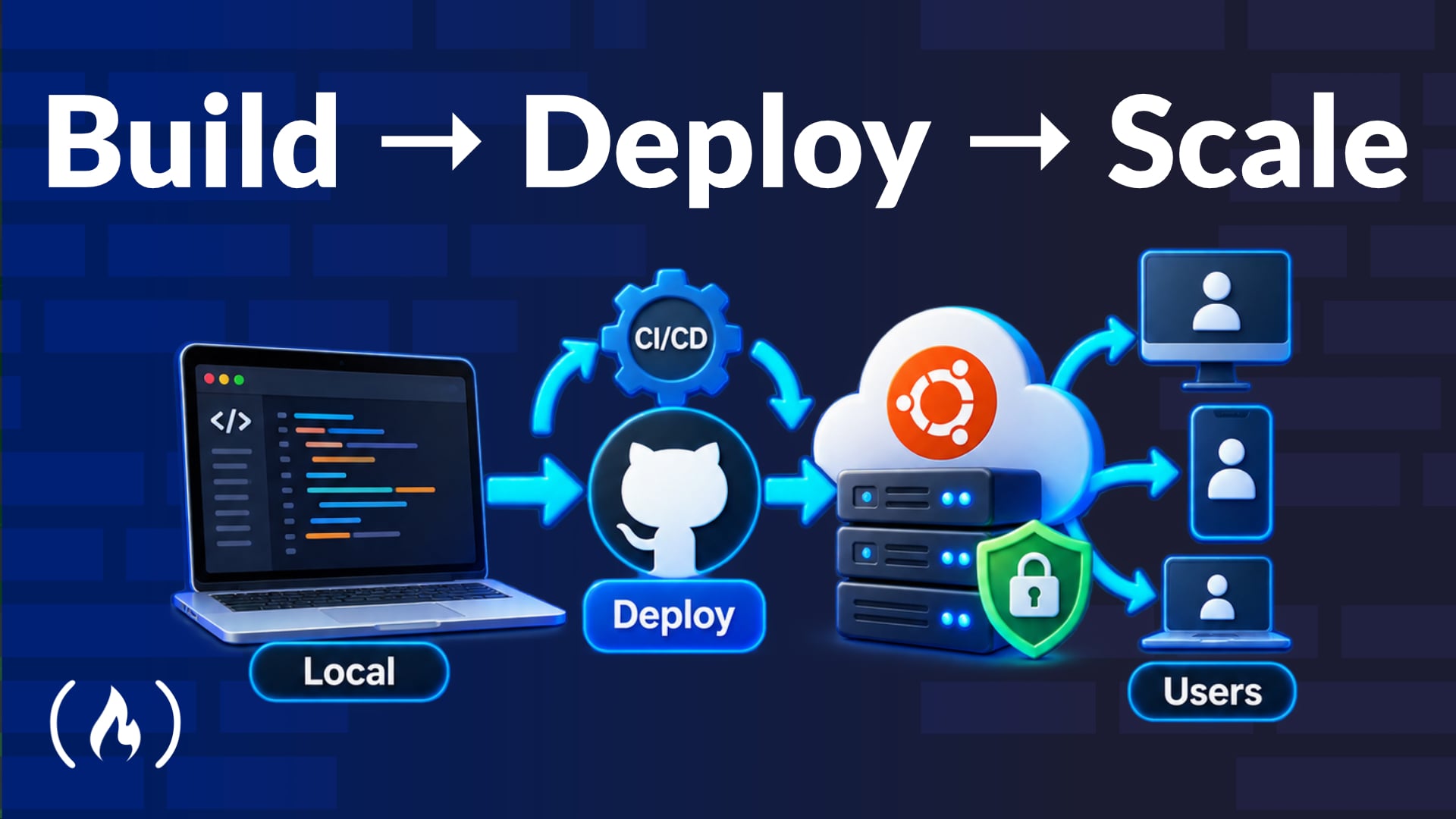
Mastering Full-Stack Deployment: Secure, Automate, Go Live
This article highlights a comprehensive freeCodeCamp.org course on deploying, securing, and automating full-stack web applications. It covers crucial steps from server provisioning and foundational security with UFW and Fail2Ban, to application runtime setup, data management, global access via Nginx and Cloudflare, and robust CI/CD pipelines with GitHub Actions. The course emphasizes a hands-on approach, integrating continuous security testing and observability, culminating in a production-ready application.

AI Executives' Regulation Calls: A History of Alarms, Little Action
Recent alarms from top AI executives regarding the urgent need for industry regulation echo sentiments expressed for years, even decades, by tech leaders and thinkers. Figures like OpenAI CEO Sam Altman, Anthropic CEO