
Czinger 21C Review: The Wildest Hypercar Yet
Czinger 21C review: A revolutionary hybrid hypercar combining extreme performance with groundbreaking 3D-printed components and generative design, setting new benchmarks for speed and manufacturing innovation.
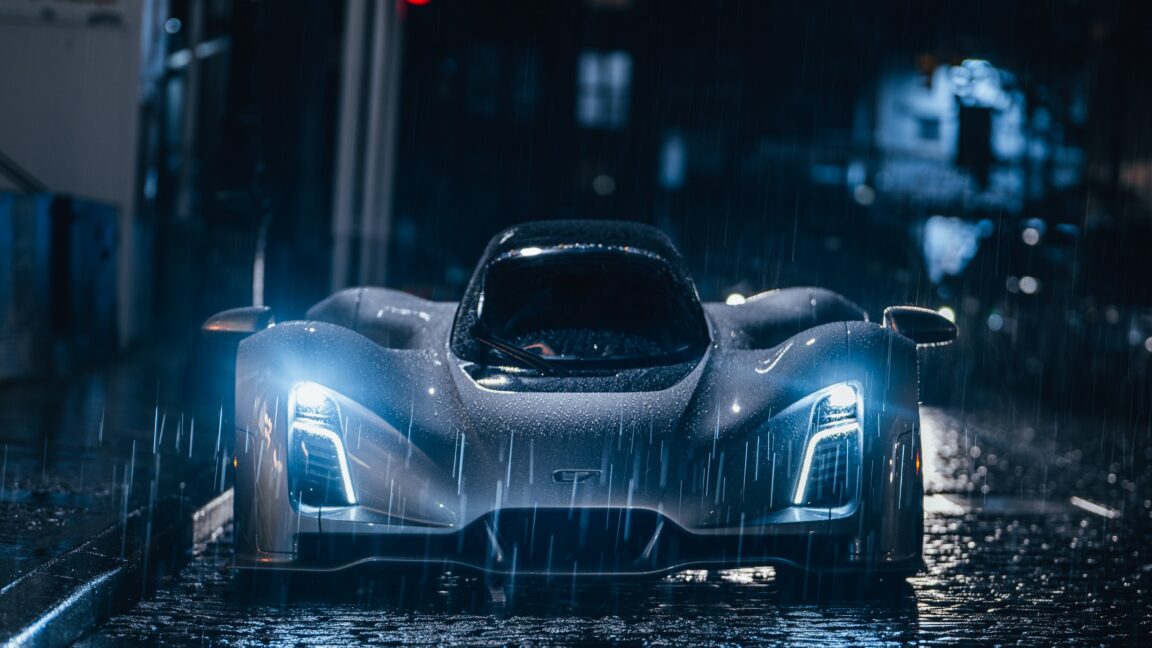
The Czinger 21C isn't just another hypercar pushing the boundaries of speed; it's a profound statement on the future of automotive manufacturing. This hybrid V8 monster combines mind-bending performance with groundbreaking 3D-printing and generative design techniques, setting lap records and challenging conventional notions of vehicle construction. It's wildly extreme, yet surprisingly accessible, making it a truly unique offering in the hypercar segment and potentially the wildest car we'll encounter all year.
Unpacking the Extremes: Performance & Price
At its heart lies a bespoke 2.88-liter twin-turbocharged flat-plane crank V8 engine, an engineering marvel capable of screaming to an astonishing 11,000 rpm. This combustion engine is paired with a sophisticated three-motor electric system, with individual electric motors driving each front wheel and a third acting as a crank-driven starter-generator. The combined output is a staggering 1,250 horsepower (932 kW) and 691 lb-ft (937 Nm) of torque, all managed by a lightweight, seven-speed automated manual transaxle chosen for its torque capacity and compact packaging.
Weighing in at under 3,700 lbs (1,678 kg) with fluids, the 21C Vmax model catapults from 0 to 60 mph (97 km/h) in a mere 1.92 seconds, demolishes the quarter mile in 8.6 seconds, and reaches a top speed of 253 mph (378 km/h). For those focused on track prowess, the 21C High Downforce model has already proven its mettle by securing lap records at five different Californian racetracks. With a price tag of $2,350,000 and production limited to just 80 units, the Czinger 21C firmly places itself among an elite echelon of hypercars.
Beyond the Numbers: Revolutionary Manufacturing
What truly differentiates the Czinger 21C from its ultra-exclusive peers isn't just its raw performance, but how that performance is achieved. Czinger Vehicles operates as an extension of Divergent Technologies, an engineering firm specializing in generative design and large-scale metal additive manufacturing. Unlike traditional automotive engineering, which designs components within existing manufacturing constraints, Divergent reverses this process. Software optimizes a component's structure based on precise parameters like load requirements, stiffness, crash performance, and packaging. This iterative process explores millions of geometries, resulting in designs where material is placed only where structurally necessary, an approach known as Pareto optimization.
The physical manifestation of this methodology is components that often resemble organic, skeletal forms or branching lattice structures, a stark contrast to conventional machined parts. Once finalized, these designs are brought to life by massive 3D printers, constructing parts from powdered metals. This innovative method is applied to everything from suspension components to the gearbox case. For example, a complex component like the rear subframe can be printed in about two days, significantly streamlining development and production. While current production is limited and largely hand-assembled, Czinger envisions this vehicle-agnostic manufacturing process extending to higher-volume segments, touting it as "the golden goose of manufacturing" due to its zero turnover time and adaptability. The main structure itself is a single-piece, in-house-developed carbon-fiber safety cell, placing the driver centrally with a tandem passenger seat behind—a layout more common in fighter jets than road cars.
Behind the Wheel: The Czinger Experience
Getting into the 21C’s cockpit is certainly an event; it's less of a "hop in" and more of a "controlled descent." The substantial door sills, which cleverly house a 2.2-kWh battery pack in each side, demand a specific technique involving sitting, rotating, and swinging your legs in. Once settled, the carbon fiber-rich interior immediately communicates the car's track-focused intent. The central seating provides excellent forward visibility, though rear visibility is almost non-existent. Switchgear is minimal, largely confined to the steering wheel, and a utilitarian central display manages both instrumentation and infotainment. The seats, while comfortable enough for longer drives, prioritize lateral stability to keep you planted during high-g maneuvers.
On the road, the 21C constantly reminds you of its competition-derived nature through a symphony of mechanical and electrical hums. While it can operate purely on electricity at lower speeds in Street mode, the V8 is active from the moment the car starts. Four distinct drive modes—Street, Sport, Track, and Track+—tailor the car's behavior. Street mode offers a surprisingly compliant ride for such a capable machine, a welcome feature on public roads. Sport mode engages both powerplants for full output, sharpening responses and firming damping. Track mode further intensifies the experience with heavier steering, quicker throttle calibration, and aggressive energy recuperation.
Unleashed on an open stretch, the Czinger 21C is an absolute beast. The hybrid system skillfully masks some of the transmission's low-speed quirks, but the single-clutch transaxle still delivers a discernible "shunt" on full-throttle upshifts as the V8 howls toward its stratospheric redline. The exhaust note is a visceral, superbike-esque symphony, even more intense than the Lamborghini Temerario, partly due to Czinger's obsessive weight reduction. Through corners, its low mass and wide Michelin Pilot Sport Cup 2 tires translate to immediate turn-in that remains intuitive and predictable, inspiring confidence rather than apprehension. The braking system, with its six-piston front and four-piston rear calipers gripping large carbon ceramic discs, provides immense stopping power. The pedal feel, much like a race car, has initial travel before firming up, prioritizing precision. Despite its extreme capabilities and a few eccentricities like the central seating causing unconscious lane positioning, the 21C is remarkably easy to adapt to, allowing drivers to quickly tap into its immense potential.
The Good, The Bad, and The Unique
Pros:
- Revolutionary Manufacturing: Utilizes generative design and large-scale 3D printing for optimized, lightweight, and incredibly strong components, representing a potential paradigm shift in automotive production.
- Extreme Performance: Boasts hypercar-level acceleration (0-60 mph in 1.92s), quarter-mile time (8.6s), and top speed (253 mph), along with proven lap-record-breaking track capabilities.
- Bespoke, High-Revving V8: A unique 2.88L twin-turbo flat-plane crank V8 that revs to an exhilarating 11,000 rpm, delivering a visceral driving experience.
- Agile & Intuitive Handling: Despite its extreme power, the low mass and precise tuning result in predictable and confidence-inspiring dynamics.
- Surprisingly Compliant: Offers a "Street" mode that provides a reasonably comfortable ride for public roads, defying typical hypercar harshness.
- Exclusivity: Limited production run of only 80 units ensures significant rarity.
Cons:
- Exorbitant Price: At $2,350,000, it's firmly in the realm of ultra-exclusive collectors' items.
- Challenging Entry/Exit: The unique seating position and substantial sills make ingress and egress undignified and somewhat difficult.
- Single-Clutch Transmission Characteristics: While chosen for mass and torque capacity, the automated manual delivers a noticeable "shunt" on full-throttle upshifts.
- Poor Rear Visibility: Typical of such performance-focused machines, rearward visibility is severely limited.
- Track-Focused Ergonomics: The interior is designed for performance, not luxurious grand touring comfort, with minimal switchgear and a utilitarian display.
- Central Seating Learning Curve: The driver's central position might require some adjustment to maintain optimal lane positioning.
Competition in the Hypercar League
While the Czinger 21C positions itself against established hypercar royalty like the Koenigsegg Jesko and Aston Martin Valkyrie in terms of performance and price, the source content primarily details the Czinger's unique specifications and groundbreaking manufacturing process. Therefore, a direct, spec-by-spec comparison table with these alternatives is not feasible based solely on the provided information, as detailed figures for Jesko and Valkyrie are not present here. What we can infer is that the 21C offers a similar echelon of extreme speed, agility, and exclusivity, but distinguishes itself with its radical approach to vehicle construction.
Who Should Buy This?
The Czinger 21C is not for everyone, nor is it trying to be. This is a machine for the discerning enthusiast, the tech visionary, and the collector who demands not just blistering performance but also a profound technological statement. If you have a multi-million-dollar budget and are looking for a hypercar that is genuinely revolutionary in its construction, shatters performance benchmarks, and offers a driving experience that is both brutal and surprisingly intuitive, the 21C is a compelling, perhaps even essential, acquisition. It's a road-legal race car wrapped in a futuristic package, showcasing what's possible when manufacturing constraints are thrown out the window. For those seeking the bleeding edge of automotive innovation and performance, the Czinger 21C represents a new frontier.
FAQ
Q: Is the Czinger 21C comfortable for daily driving?
A: While it features a "Street" mode designed for public roads and offers a surprisingly compliant ride for a hypercar, its competition-derived nature, challenging entry/exit process, and track-focused interior suggest it is not optimized for daily comfort but is remarkably tolerable given its extreme capabilities.
Q: What makes the Czinger 21C's manufacturing process unique?
A: The 21C leverages Divergent Technologies' generative design software to holistically optimize component structures for strength and minimal mass. These uniquely shaped parts are then produced using large-scale metal 3D printing, moving beyond traditional manufacturing constraints to create highly efficient, organic-looking components.
Q: How limited is the Czinger 21C's production?
A: Production of the Czinger 21C is strictly capped at a total of 80 units. This extremely limited run underscores its exclusivity and status as a collector's item.
Related articles
Android 17 QPR2 Beta 7.1: The Performance Relief You've Been Waiting
Android 17 QPR2 Beta 7.1: Finally Fixing the QPR1 Performance Woes Verdict: Android 17 QPR2 Beta 7.1 is a crucial and highly anticipated software update for Google Pixel users, specifically targeting and resolving the

DJI Solo Video Setups: Smart Choices for Lone Creators
This review delves into DJI's recommended solo video setups, highlighting the Osmo Pocket 3 Creator Combo as a top pick for its integrated camera, gimbal, and mic. It also covers stabilizers like the Osmo Mobile 8 and RS 4, and the DJI Mic Mini series for enhanced audio, providing honest pros, cons, and clear buying advice.

Ars Technica's Rocket Report: Your Essential Space Industry Briefing
Quick Verdict Ars Technica's Rocket Report, presented by veteran space reporter Stephen Clark, offers an invaluable and meticulously organized weekly (or similar frequency, implied by "Edition 9.15") digest of the most

Apple iPhone Duo: A Daring Debut with Notable Compromises
Apple's highly anticipated iPhone Duo, priced at $2,000, has gone on pre-order. While hailed as "Apple's most exciting device in a decade" for its innovative foldable design and immersive display, it comes with significant drawbacks like the absence of FaceID and a premium camera.

KDE Plasma 6.8: A Future-Focused 30th Anniversary Update
Quick Verdict KDE Plasma 6.8, arriving as the "30th Anniversary Edition," is a pivotal release that decisively pushes the desktop environment into the future. With a definitive farewell to native X11 sessions and a

Ephemeral PR Preview Environments on GKE: A Deep Dive
Every development team eventually grapples with the limitations of shared staging environments. The familiar scenario: multiple features deployed simultaneously, database migrations clashing, and the phrase "it works on