
Cyborg Cockroaches: A Promising, Albeit Creepy, Rescue Tech
Quick Verdict These 'cyborg cockroaches' represent a groundbreaking, albeit potentially unsettling, leap in disaster rescue technology. Developed by Australian engineers, these insect-robot hybrids are designed to
Quick Verdict
These 'cyborg cockroaches' represent a groundbreaking, albeit potentially unsettling, leap in disaster rescue technology. Developed by Australian engineers, these insect-robot hybrids are designed to navigate the tightest spaces in collapsed structures, equipped with cameras and tiny injectors for delivering emergency aid. While early trials show high success rates in navigation (95%), the full sequence of precision movement and injection dips to a still respectable 72%. The concept offers immense potential for reaching inaccessible survivors, but significant hurdles remain, particularly around consistent accuracy for medical intervention and public acceptance.
Introduction: The Unconventional Lifesavers
In the wake of natural disasters, finding survivors trapped beneath rubble is a race against time, often hampered by inaccessible spaces too small or dangerous for human rescue teams or conventional robots. This is where a radical new concept from researchers at the University of Queensland and the University of New South Wales (UNSW) in Australia enters the scene: cyborg cockroaches. These aren't your average pests; they're biologically augmented rescue units, envisioned as a critical tool for urban search and rescue operations. By merging insect biology with miniature electronics, these tiny machines promise to extend the reach of emergency services into areas previously deemed impossible.
Key Details and Functionality
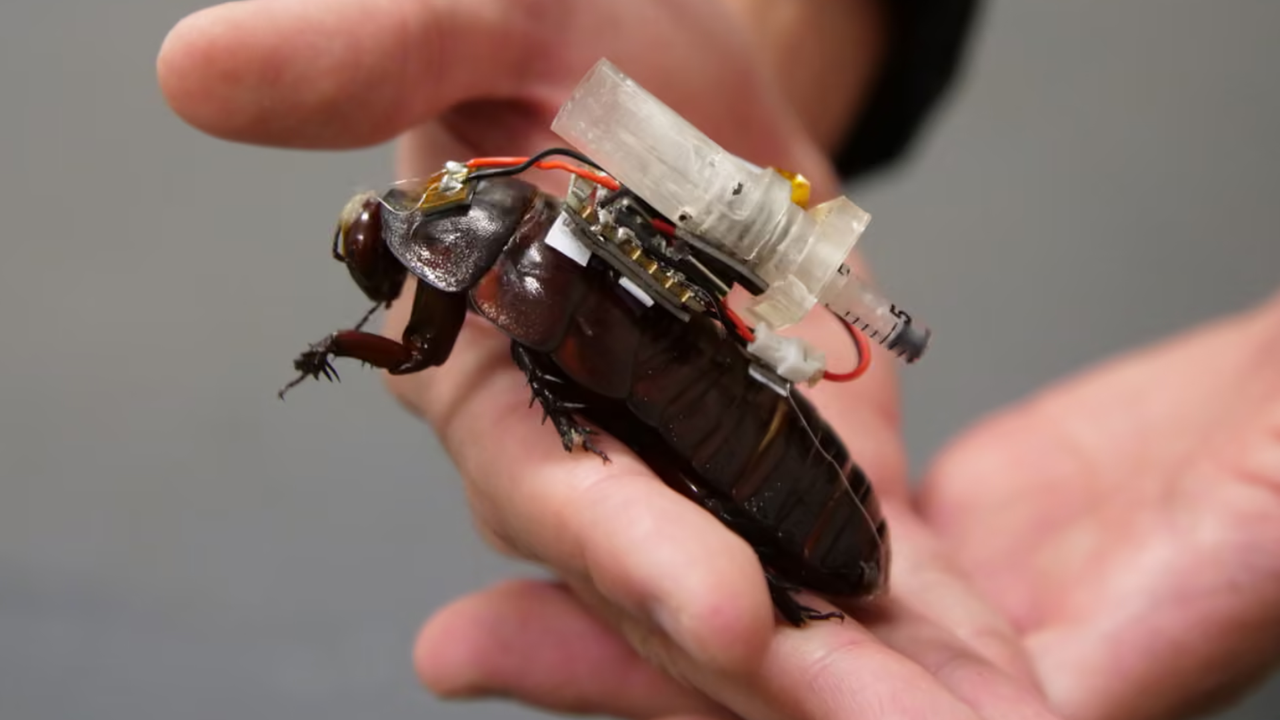
At the core of this innovation are live cockroaches, meticulously fitted with lightweight electronic systems. During the process, the insects are sedated, and researchers report that they survive without apparent harm. The 'cyborg' augmentation includes electrode harnesses that likely enable guided movement, alongside a micro-camera for visual reconnaissance and a tiny injector. This injector is designed for delivering close-range emergency assistance, implying the potential for delivering life-saving medications or fluids to trapped individuals. The entire setup is built to be lightweight, specifically tailored for navigating the precarious and debris-filled environments found in collapsed structures.
Deployment and Performance in Trials
The real test of any rescue technology lies in its performance under simulated conditions. In controlled trials, these cyborg cockroaches demonstrated impressive navigational capabilities, guiding themselves to designated targets with a 95% success rate. This high figure for reaching a location suggests their effectiveness in initial reconnaissance and pinpointing areas of interest. However, the mission often requires more than just arrival; it demands precision. When measuring the complete sequence – encompassing movement, accurate alignment, and the critical injection task – the success rate saw a notable drop to 72% across all trials.
This difference highlights a key engineering challenge, as explained by PhD candidate Hai Nhan Le: achieving steady, accurate movement for the injection itself. The insect-robot must not only reach the target but also position itself with sufficient stability to perform the delicate task. While 72% is still a strong result for such a complex, bio-mechanical system, it indicates areas for further refinement, especially where a missed injection could have severe consequences for a survivor.
Design and Engineering Adaptation
The ingenuity of this project lies in its seamless integration of natural biomechanics with cutting-edge electronics. Rather than attempting to build a robot from scratch that mimics insect movement, the engineers leveraged the cockroach's inherent ability to traverse challenging terrain. The lightweight electronics are custom-built to minimize impact on the insect's natural mobility, ensuring it can still squeeze through tight crevices and navigate uneven surfaces. This hybrid design philosophy allows the system to harness millions of years of evolutionary engineering, providing a level of agility and resilience that might be difficult to achieve with purely mechanical systems of a similar size. The focus is on augmenting, not replacing, the insect's natural capabilities.
The Pros: Reaching the Unreachable
- Access to Confined Spaces: The primary advantage of these cyborg insects is their unparalleled ability to access narrow, debris-filled spaces where human rescuers or larger mechanical robots cannot go. This significantly expands the search area and increases the chances of locating survivors.
- Timely Emergency Assistance: By delivering vital emergency assistance directly to a trapped individual, these units could buy critical time, potentially making a 'real difference between life and death,' as stated by researcher Hai Nhan Le.
- Extending Rescue Capabilities: Fire and Rescue NSW Superintendent Tim Hassiotis acknowledges the potential for these innovations to 'extend how far response teams can operate,' viewing them as a valuable future tool in urban search and rescue.
- Future Specialization: The long-term vision includes deploying groups of specialized insects, each performing different supporting functions, suggesting a sophisticated, multi-faceted rescue system in the future.
The Cons: Technical Hurdles and Public Perception
- Precision for Medical Tasks: The drop in success rate from 95% for navigation to 72% for the full sequence (including injection) highlights the difficulty in achieving the precise, stable movements required for critical medical intervention. Further engineering is needed to improve this accuracy.
- Public Acceptance: Perhaps the most significant non-technical challenge is public reaction. As Le points out, 'A lot of people might not like the sight of a giant cockroach scurrying towards them,' especially when they are at their most vulnerable. Overcoming this natural aversion will be crucial for widespread adoption.
- Development Timeline and Resources: The project is still in early stages, with a hopeful deployment target of 'five to 10 years.' This timeline suggests considerable further trials, significant funding, and regulatory approval will be necessary.
- Ethical Considerations: While not explicitly detailed in the source, the concept of biologically augmenting living creatures for tasks inherently raises ethical questions that will need careful consideration as the technology progresses.
Comparison to Alternatives
Currently, there isn't a direct commercial alternative to these cyborg cockroaches that combines live insect biomechanics with remote-controlled medical intervention capabilities. The closest 'alternatives' are miniature robots or drones, or indeed human rescue teams. However, the core differentiating factor of these cyborg insects is their ability to leverage the inherent size, agility, and resilience of an insect to access spaces that are simply too small or complex for existing robotic solutions or human entry.
While other robotic systems excel in tasks like lifting heavy debris or providing wider area surveillance, they lack the specific capability of infiltrating extremely tight, unstable crevices to deliver targeted, close-range medical aid. Therefore, these cyborg cockroaches aren't necessarily replacing existing rescue tools but rather filling a critical niche that current technology struggles to address.
Recommendation for Future Adoption
Based on the promising initial results and the clear unmet need in disaster rescue, the concept of cyborg cockroaches is undeniably a technology worth pursuing. While not a 'product' for consumer purchase, we recommend that emergency services and relevant scientific bodies continue to support and monitor this research. The potential for these insect-robot hybrids to provide timely, life-saving assistance in situations where all other options fail is too significant to ignore.
However, it's crucial that future development focuses not only on improving the technical accuracy of interventions but also on addressing the very real concerns around public perception and ethical implications. Successful deployment will depend on robust trials, secure funding, regulatory frameworks, and strategies to build public trust and understanding. If these hurdles can be overcome, 'cyborg insect rescue teams' could indeed become an invaluable asset in the future of disaster response.
FAQ
Q: How are the cockroaches controlled and equipped?
A: The cockroaches are fitted with electrode harnesses and tiny electronic devices while sedated. These devices likely allow for guided movement, and they are also equipped with miniature cameras for reconnaissance and small injectors for delivering emergency assistance.
Q: What is the main benefit of using cyborg cockroaches over traditional rescue robots?
A: The primary benefit is their ability to access extremely narrow, debris-filled spaces within collapsed structures that are inaccessible to human rescue teams or larger, conventional robots. Their natural small size and agility allow them to navigate complex environments more effectively.
Q: What are the biggest challenges facing the widespread use of this technology?
A: The biggest challenges include further improving the accuracy and stability for precision tasks like injections (currently 72% success for the full sequence), gaining public acceptance given people's natural aversion to large insects, and securing the necessary funding and regulatory approvals for further trials and eventual deployment.
Related articles
Android 17 QPR2 Beta 7.1: The Performance Relief You've Been Waiting
Android 17 QPR2 Beta 7.1: Finally Fixing the QPR1 Performance Woes Verdict: Android 17 QPR2 Beta 7.1 is a crucial and highly anticipated software update for Google Pixel users, specifically targeting and resolving the

DJI Solo Video Setups: Smart Choices for Lone Creators
This review delves into DJI's recommended solo video setups, highlighting the Osmo Pocket 3 Creator Combo as a top pick for its integrated camera, gimbal, and mic. It also covers stabilizers like the Osmo Mobile 8 and RS 4, and the DJI Mic Mini series for enhanced audio, providing honest pros, cons, and clear buying advice.

Ars Technica's Rocket Report: Your Essential Space Industry Briefing
Quick Verdict Ars Technica's Rocket Report, presented by veteran space reporter Stephen Clark, offers an invaluable and meticulously organized weekly (or similar frequency, implied by "Edition 9.15") digest of the most

Apple iPhone Duo: A Daring Debut with Notable Compromises
Apple's highly anticipated iPhone Duo, priced at $2,000, has gone on pre-order. While hailed as "Apple's most exciting device in a decade" for its innovative foldable design and immersive display, it comes with significant drawbacks like the absence of FaceID and a premium camera.

KDE Plasma 6.8: A Future-Focused 30th Anniversary Update
Quick Verdict KDE Plasma 6.8, arriving as the "30th Anniversary Edition," is a pivotal release that decisively pushes the desktop environment into the future. With a definitive farewell to native X11 sessions and a
Galaxy Watch One UI 9 Beta: Promising Progress, But Patience Needed
Galaxy Watch 8, Watch Ultra, and Watch 7 are receiving a new One UI 9 Watch beta build with bug fixes and a security patch. Active development signals progress, but a stable release date remains elusive.