
CXMT Memory on MSI AMD Boards: A Speed Breakthrough
Quick Verdict MSI has delivered a significant boost to AMD AM5 users, with new beta BIOS updates validating China-made CXMT DDR5 memory at previously unattainable speeds. Dual-DIMM configurations can now hit an
Quick Verdict
MSI has delivered a significant boost to AMD AM5 users, with new beta BIOS updates validating China-made CXMT DDR5 memory at previously unattainable speeds. Dual-DIMM configurations can now hit an impressive DDR5-8200, while quad-DIMM setups are validated for DDR5-7200. This development signals CXMT's growing prominence in the high-performance memory market, offering an exciting, albeit currently regional, alternative for enthusiasts.
The Rise of CXMT and MSI's Support
The landscape of DDR5 memory is constantly evolving, and a recent development from MSI is set to shake things up for AMD users. MSI has rolled out new beta BIOS versions for its AM5 motherboards, specifically designed to unlock the full potential of memory modules manufactured by ChangXin Memory Technologies (CXMT), a prominent Chinese DRAM producer. This move is particularly notable given the previous limitations, where CXMT-based RAM typically maxed out around DDR5-6800 MT/s, despite the underlying hardware being capable of much higher frequencies. This isn't MSI's first foray into optimizing Chinese memory; they previously extended similar support to Intel's 800-series motherboards in China, highlighting a broader trend of integrating new memory suppliers into the mainstream market.
Performance & Overclocking Capabilities
With these new BIOS updates, the performance ceiling for CXMT memory on MSI's AMD motherboards has been substantially raised. For dual-DIMM motherboards, 24Gbit (3GB) CXMT modules have been successfully validated up to a blistering DDR5-8200 MT/s. Even 16Gbit (2GB) chips demonstrated impressive stability at DDR5-8000 MT/s. These validations were rigorous, with MemTest showing 101% coverage, indicating robust stability at these high speeds. This is a considerable leap from the prior ~6,800 MT/s limitation, promising a noticeable performance uplift for users.
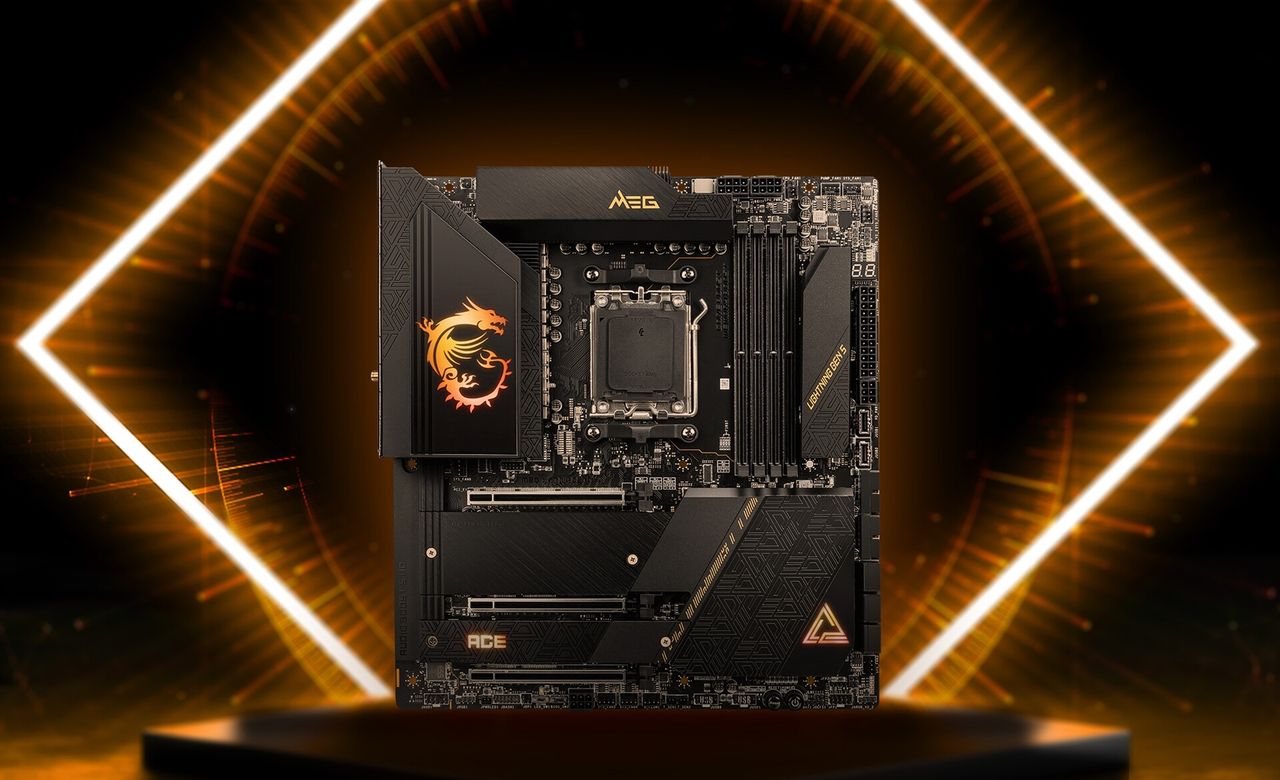
The testing involved several configurations. One setup utilized 24GB sticks (2x24GB) with a standard DDR5-6000 EXPO profile, paired with an AMD Ryzen 7 9700X CPU on an MSI MEG X870E Unify motherboard. Another configuration saw 16GB sticks (2x16GB), starting with an EXPO profile of DDR5-7200, running on a MAG B850 MPower motherboard with a Ryzen 5 9600X CPU. The results from both benches unequivocally demonstrate the enhanced capabilities.
Furthermore, for systems utilizing all four DIMM slots, which often struggle to reach the same high frequencies as dual-DIMM setups, the new BIOS also delivers improvements. Quad-DIMM memory support has been boosted to DDR5-7200 MT/s, up from the previous ~6,800 MT/s. While still lower than the peak dual-DIMM speeds, this is a welcome enhancement for users requiring larger memory capacities without sacrificing too much speed.
User Experience and Availability
The current rollout of these performance-enhancing BIOS updates comes with a few caveats that potential users should be aware of. The new BIOS versions are presently in beta and originate from MSI China's community channels. This means they are not yet part of a global, officially supported release and are only available for a select range of motherboards. For users outside of China, this implies a period of waiting for wider availability and official validation. While enthusiastic early adopters might seek out these beta releases, the general recommendation for most consumers would be to await stable, globally released firmware to ensure maximum compatibility and long-term reliability.
Market Impact and Strategic Importance
This development is more than just a speed bump; it's a significant indicator of CXMT's growing influence in the global memory market. For a long time, the DRAM industry has been dominated by a few major players. The increasing validation and integration of CXMT chips, as seen with MSI's support and CXMT's entry into mainstream consumer products like Corsair Vengeance DDR5 kits, signify a shift towards greater diversification in the supply chain. This trend is further underscored by reports of Chinese memory vendors increasingly prioritizing homegrown silicon from CXMT and YMTC over traditional giants like Samsung, Micron, and SK Hynix. Additionally, AMD's EXPO 1.2 memory-boosting technology now includes support for three Chinese memory vendors, reinforcing the broader industry acceptance of these new players.
For consumers, a diversified memory market could translate into several benefits, including potentially more competitive pricing and reduced vulnerability to shortages caused by reliance on a limited number of manufacturers. It fosters innovation and pushes established brands to continue advancing their offerings. While geopolitical and trade considerations play a role in the broader semiconductor industry, the technical capabilities demonstrated by CXMT, now fully leveraged by MSI, are undeniable.
Pros and Cons
Pros:
- Significant Speed Boost: Unlocks DDR5-8200 on dual-DIMM and DDR5-7200 on quad-DIMM for CXMT memory.
- Enhanced Stability: Successfully passed rigorous MemTest validation at these new, higher speeds.
- Expanded Compatibility: Broadens the range of high-performance memory options for MSI AMD AM5 motherboard users.
- Market Diversification: Boosts a new player (CXMT) in the global memory market, potentially leading to increased competition and better pricing.
- Improved Quad-DIMM Performance: Offers better speeds for systems requiring four memory modules.
Cons:
- Limited Availability: Currently only available via beta BIOSes from MSI China for select motherboards, not a global release.
- Uncertainty of Global Rollout: No definitive timeline for when these optimizations will become widely available to all users.
- Beta Status: As beta firmware, it might not offer the same level of polish or comprehensive support as a final release.
- Regional Focus: Initial benefits are primarily for users in China.
Buying Recommendation
For the discerning PC enthusiast or builder, this development is genuinely exciting, but its immediate impact is somewhat constrained by regional availability. If you're an AMD AM5 user in China with a compatible MSI motherboard and CXMT memory, and you're comfortable experimenting with beta BIOSes, this update could provide a substantial performance boost right now. For everyone else, particularly those in Western markets, this is a promising glimpse into the future. It suggests that CXMT memory, once more broadly available and supported by stable, global BIOS releases, could become a highly competitive and performant option. It's not a reason to rush out and buy unvalidated CXMT memory or try to flash unofficial BIOS versions, but it is a strong signal to keep an eye on CXMT and MSI's future announcements.
While the source mentions other memory brands in a broader market context, it doesn't provide specific alternative products with comparable details for a direct, feature-by-feature comparison table. The focus here is on the performance unlocked for CXMT memory specifically.
FAQ
Q: What does this mean for DDR5 memory prices in general?
A: The increased capability and market presence of CXMT could introduce more competition into the DDR5 market. In the long term, this competition might lead to more diverse product offerings and potentially more competitive pricing for high-speed DDR5 memory modules globally.
Q: Can I get these BIOS updates for my MSI AMD motherboard now if I'm outside of China?
A: Currently, these performance-enhancing BIOS updates are released as beta versions through MSI China's community channels and are intended for select motherboards in that region. A global, stable release has not yet been announced, so users outside China should await official firmware updates for full support and stability.
Q: Is CXMT memory now a viable alternative to established brands like Samsung, Micron, or SK Hynix?
A: This validation by MSI is a strong testament to CXMT's improving technology and increasing competitiveness. Passing rigorous tests like MemTest at high speeds demonstrates significant capability. As CXMT memory gains more widespread support and enters mainstream products (like certain Corsair Vengeance kits), it is indeed solidifying its position as a viable alternative, particularly as more vendors adopt their silicon. However, long-term market performance and consumer feedback will be key to establishing its reputation fully against these long-standing industry giants.
Related articles
Android 17 QPR2 Beta 7.1: The Performance Relief You've Been Waiting
Android 17 QPR2 Beta 7.1: Finally Fixing the QPR1 Performance Woes Verdict: Android 17 QPR2 Beta 7.1 is a crucial and highly anticipated software update for Google Pixel users, specifically targeting and resolving the

DJI Solo Video Setups: Smart Choices for Lone Creators
This review delves into DJI's recommended solo video setups, highlighting the Osmo Pocket 3 Creator Combo as a top pick for its integrated camera, gimbal, and mic. It also covers stabilizers like the Osmo Mobile 8 and RS 4, and the DJI Mic Mini series for enhanced audio, providing honest pros, cons, and clear buying advice.

Ars Technica's Rocket Report: Your Essential Space Industry Briefing
Quick Verdict Ars Technica's Rocket Report, presented by veteran space reporter Stephen Clark, offers an invaluable and meticulously organized weekly (or similar frequency, implied by "Edition 9.15") digest of the most

Apple iPhone Duo: A Daring Debut with Notable Compromises
Apple's highly anticipated iPhone Duo, priced at $2,000, has gone on pre-order. While hailed as "Apple's most exciting device in a decade" for its innovative foldable design and immersive display, it comes with significant drawbacks like the absence of FaceID and a premium camera.
KDE Plasma 6.8: A Future-Focused 30th Anniversary Update
Quick Verdict KDE Plasma 6.8, arriving as the "30th Anniversary Edition," is a pivotal release that decisively pushes the desktop environment into the future. With a definitive farewell to native X11 sessions and a
Galaxy Watch One UI 9 Beta: Promising Progress, But Patience Needed
Galaxy Watch 8, Watch Ultra, and Watch 7 are receiving a new One UI 9 Watch beta build with bug fixes and a security patch. Active development signals progress, but a stable release date remains elusive.