
Biren AI Accelerators: Explosive Growth in a Restricted Market
Biren Technology shows explosive 2,000% revenue growth in China's AI accelerator market, benefiting from US export controls. Despite impressive gains from a small base, challenges in manufacturing and software remain.
Quick Verdict
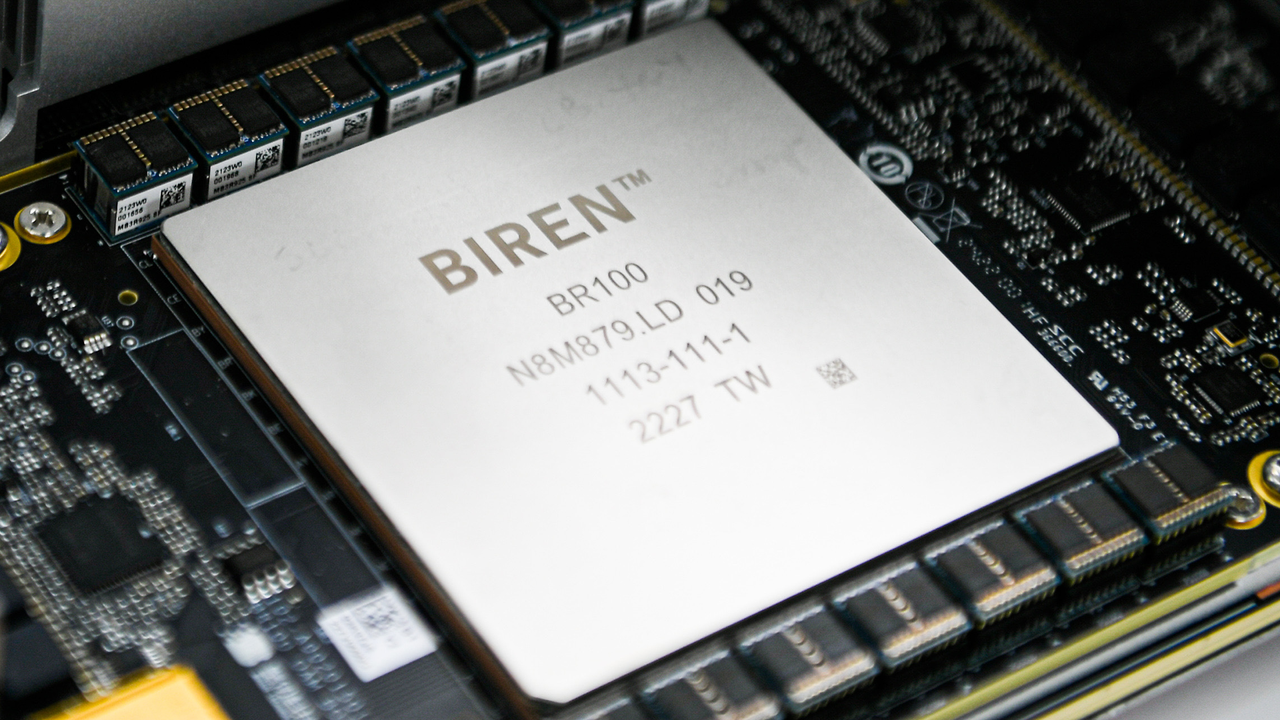
Biren Technology has seen explosive revenue growth in China's AI accelerator market, largely a direct consequence of US export controls pushing out American giants like Nvidia and AMD. While impressive, this growth stems from a very small base and the company faces significant challenges in scaling manufacturing and refining its software ecosystem to truly compete long-term.
Navigating a New Landscape
The global AI hardware landscape is fiercely competitive, dominated by powerhouses like Nvidia and AMD. However, in China, a different narrative is unfolding. Driven by stringent US export controls that have effectively pushed out leading American AI accelerator suppliers, domestic companies are experiencing unprecedented demand. Biren Technology stands out as a prime example, reporting a staggering 2,000% year-over-year revenue surge in the first half of 2026. This monumental increase highlights both the impact of geopolitical tensions on technological supply chains and the nascent potential of China's homegrown chip industry.
Explosive Growth, Modest Scale
Biren's financial performance in the first half of 2026 is undoubtedly eye-catching. The company's revenue skyrocketed to $183.9 million, a nearly 2,000% increase from the $8.665 million reported in the same period of 2025. This rapid escalation in sales commenced in the latter half of 2025, directly following the implementation of US export control measures that restricted Nvidia and AMD from supplying their high-end AI GPUs to the Chinese market.
Accompanying this revenue growth, Biren also saw its gross profit climb to $78.552 million, with a healthy gross margin of 42.7%. Despite these positive financial indicators, the company still reported a net loss of $56.2 million. This deficit is attributed primarily to ongoing significant investments in research and development for new products, including advanced AI accelerators, optically-interconnected rack-scale solutions, and the crucial development of its proprietary software ecosystem.
It's vital to put this "explosive growth" into perspective. While a 2,000% increase is remarkable, it originated from an extremely modest starting point. For the entirety of 2025, Biren's total sales reached $154.17 million, capturing a market share of less than 3% in China's AI accelerator segment, according to TrendForce. To illustrate the scale, in the first half of 2025 alone, before full export controls took effect, Nvidia shipped approximately 2.2 million AI accelerators to China, even with prices for its H20 AI GPU ranging from $12,000 to $15,000. In contrast, Biren's shipments during all of 2025 were in the thousands, perhaps tens of thousands. Even with its recent surge, Biren's current shipment volumes remain minuscule compared to Nvidia's previous presence in the Chinese market. Therefore, while its growth rate is impressive, Biren remains a relatively small player in absolute terms.
Biren's Product Portfolio and Ecosystem
Biren Technology has been actively developing a range of AI accelerators, with its products being relatively well-documented and, on paper, appearing competitive. The company has introduced at least three high-end AI GPUs: the BR106, BR110, and BR166. Looking ahead, Biren is reportedly engaged in the development of next-generation accelerators, specifically the BR20X, BR30X, and BR31X series, according to Jon Peddie Research.
A critical component of Biren's strategy is its proprietary software stack, Birensupa. This software platform is designed to directly challenge Nvidia's ubiquitous CUDA ecosystem, which has long been a significant barrier to entry for competitors. The dominance of CUDA has meant that even if hardware offered comparable raw performance, the lack of a mature and widely adopted software environment often rendered alternative solutions less attractive. Biren's commitment to Birensupa indicates a long-term vision to create a complete, integrated solution for AI developers and enterprises. The company is also working on rack-scale solutions, suggesting an ambition to provide comprehensive AI infrastructure, not just individual chips.
The Impact of Export Controls and Market Dynamics
The dramatic shift in Biren's fortunes can be directly attributed to the US government's export control measures. Historically, despite the availability of domestic alternatives, Chinese customers predominantly preferred AI accelerators from Nvidia and, to a lesser extent, AMD. This preference was driven by the superior performance, advanced software ecosystems (like CUDA), and greater maturity of the American offerings. Even Nvidia's "cut-down" versions, tailored to meet export regulations, were seen as more desirable than many homegrown solutions.
With Nvidia and AMD largely out of the picture for advanced AI accelerators in China, a significant void was created. This vacuum has provided an invaluable opportunity for domestic suppliers like Biren, as well as competitors such as Huawei, Kunlunxin, and Cambricon, to step in and fill the demand. Chinese enterprises, facing limitations on acquiring top-tier foreign hardware, are now increasingly turning to domestic alternatives out of necessity. This dynamic has spurred Biren's rapid sales increase and is expected to lead to a substantial increase in market share for Chinese homegrown accelerators, with projections suggesting they could eventually supply 90% of the country's domestic market.
Challenges and Outlook
While Biren's recent success is undeniable, its path forward is not without considerable hurdles.
Pros:
- Massive Market Opportunity: US export controls have created a protected domestic market with high demand, effectively removing dominant foreign competitors.
- Rapid Revenue Growth: The 2,000% year-over-year increase demonstrates a strong immediate response to market demand.
- Competitive Designs (on paper): Biren's existing and planned accelerators appear to offer solid specifications, indicating a strong R&D effort.
- Developing Ecosystem: The Birensupa software stack and rack-scale solutions show a commitment to building a comprehensive platform.
- Increased Financial Resources: Higher revenues and profits (even with losses due to investment) provide more capital for future development and scaling.
Cons:
- Small Base Effect: The impressive growth percentage is somewhat misleading, as it comes from a very low initial revenue figure. Biren is still a small supplier in absolute terms.
- Manufacturing Capacity: A critical challenge for Biren will be securing sufficient manufacturing capacity. Relying on foundries like SMIC, which itself faces technology limitations compared to global leaders like TSMC (especially concerning advanced process nodes and EUV technology), could constrain Biren's ability to scale production to meet rising demand. The article doesn't specify if Biren is currently manufactured at SMIC, but it raises this as a critical need.
- Performance Gap: The source explicitly notes that even cut-down Nvidia GPUs offered better performance and software than Chinese solutions. While Biren is improving, closing this performance gap, especially for the most demanding AI workloads, will be a continuous challenge.
- Software Ecosystem Maturity: Competing with Nvidia's CUDA, which has decades of development and a vast developer community, is an immense task. Birensupa needs to mature rapidly in terms of features, stability, and developer adoption.
- Domestic Competition: While foreign competition is reduced, Biren still faces formidable domestic rivals like Huawei (with its Ascend series), Kunlunxin, and Cambricon, all vying for the same market share.
Buying Recommendation
For AI infrastructure developers and enterprises operating within China, Biren Technology represents an increasingly viable and strategically important option. With leading international suppliers largely restricted, Biren's accelerators, coupled with its developing Birensupa software stack, are becoming essential for maintaining and expanding AI capabilities. While Biren is starting from a smaller scale and its offerings might not yet match the absolute cutting edge of pre-sanction Nvidia or AMD products, its rapid growth and ongoing investment indicate a commitment to improvement. The key consideration for potential customers will be assessing Biren's ability to reliably deliver sufficient volumes of accelerators and the ongoing maturation of its software ecosystem. For those in China, Biren is no longer just an alternative; it's rapidly becoming a foundational component of a self-reliant AI infrastructure.
FAQ
Q: Is Biren Technology's 2,000% revenue growth indicative of its market dominance? A: While the 2,000% year-over-year revenue growth is significant and impressive, it's crucial to understand that it comes from a very small base. Biren's total revenue in the first half of 2026 was $183.9 million, making it a relatively small player in absolute terms, especially compared to the previous market presence of companies like Nvidia in China. The growth primarily reflects filling a void left by US export controls rather than outright market dominance.
Q: How do Biren's AI accelerators compare to those from Nvidia and AMD? A: According to the source, Biren's products "on paper" appear competitive. However, prior to US export controls, even "cut-down" versions of Nvidia's leading AI GPUs provided better overall performance and a more mature software stack (like CUDA) than domestically developed solutions. Biren is actively developing its own Birensupa software to compete, but closing the performance and ecosystem gap with global leaders remains a significant, ongoing challenge.
Q: What are the main challenges Biren Technology faces moving forward? A: Biren faces several key challenges. First, securing sufficient manufacturing capacity from chip foundries like SMIC is crucial to scale production and meet growing demand. Second, it needs to continue rapidly developing and maturing its Birensupa software ecosystem to offer a comprehensive and user-friendly alternative to established platforms like CUDA. Finally, Biren must contend with strong domestic competition from other Chinese AI accelerator suppliers such as Huawei, Kunlunxin, and Cambricon.
Related articles

Chuwi UniBox AI495 Pro Review: A Mini AI Powerhouse
Chuwi's UniBox AI495 Pro review: A powerful mini workstation with 192GB RAM and an AMD Ryzen AI chip for local LLM processing, packed into a compact, Mac Pro-esque design.
Pixel Connectivity: Battery Drain, Not Data Speed, Is the Real
Google's Pixel series has consistently offered a compelling Android experience, often earning a spot on recommendation lists for its clean software and camera prowess. However, a recurring shadow has loomed over the

CNET's NYT Connections: Sports Edition Hints & Answers - Daily Puzzle
CNET's daily guide for NYT Connections: Sports Edition offers clear, spoiler-protected hints and answers, making it an efficient and reliable resource for sports puzzle enthusiasts.
Unofficial Sony Headphone PC Apps: Ditch Your Phone, Take Control
Tired of Sony's mobile app? These unofficial, open-source PC tools like Sony Device Center and SonyBridge offer desktop control over your Sony headphones' ANC, EQ, and more. A convenient, albeit unofficial, solution for Windows, Linux, and Mac users looking to ditch their phone for audio adjustments.

in-depth: Best Bluetooth Speaker (2026): JBL, Sonos, Marshall, and
WIRED's 2026 guide names the JBL Flip 7 the top Bluetooth speaker, recognizing its balance of sound, durability, and affordability. The updated list highlights significant advancements across the portable audio market, with specialized picks from Sonos, Marshall, and KEF offering enhanced smart features, battery life, and sound quality for diverse user needs.
RAM Crisis Deepens: AI Ramps Up, Severe Shortage by 2027
Analyst firm KB Securities warns of a severe RAM crisis by 2027, blaming surging AI demand. With Samsung and SK Hynix inventories critically low, consumers face higher prices and limited availability for computing components.