
Asus Zenbook A16: A Powerful Leap, But Not Without Quirks
Quick Verdict The Asus Zenbook A16 marks an ambitious step for Windows laptops, packing Qualcomm's new Snapdragon X2 Elite Extreme processor into a sleek, 16-inch ceraluminum chassis with a stunning 3K OLED display.

Quick Verdict
The Asus Zenbook A16 marks an ambitious step for Windows laptops, packing Qualcomm's new Snapdragon X2 Elite Extreme processor into a sleek, 16-inch ceraluminum chassis with a stunning 3K OLED display. While it delivers impressive multi-core performance that challenges Apple's M5 chip and handles demanding tasks admirably, it trades off the previous A14's legendary battery life and feels less premium in certain build aspects. It's a compelling, powerful machine for productivity and some creative workflows, but it's also a first-generation powerhouse with room for refinement, especially given its premium price point.
Introduction: The Challenger Arrives
Last year's Zenbook A14 garnered attention for its impossibly thin and light design and multi-day battery life. For its successor, the Zenbook A16, Asus isn't just scaling up; it's reorienting. This 16-inch model aims squarely at a formidable rival: the MacBook Air. By integrating Qualcomm's formidable Snapdragon X2 Elite Extreme processor, the A16 promises a blend of power and portability that could redefine the premium Windows laptop experience. But does it truly hit its mark, or does its ambition introduce new compromises?
Performance: Snapdragon X2 Elite Extreme Takes Center Stage
The heart of the Zenbook A16 is the Snapdragon X2 Elite Extreme, Qualcomm's highest-end processor for consumer laptops. Built on a 3nm process, this system-in-package (SiP) boasts an impressive 18 CPU cores (12 prime, 6 performance) and an ultra-wide 228 GB/s memory bandwidth. Paired with 48GB of LPDDR5X 9600 memory and a 1TB SSD, the A16 offers a robust foundation for demanding applications.
In my testing, the X2 Elite Extreme showed significant power, especially in multi-core benchmarks, where it notably outpaced the M5 chip found in the 15-inch MacBook Air. This positions the A16 as a strong contender for tasks like video and photo editing (outside of the most professional-grade work) and heavy multitasking. While Apple's M5 still holds the crown for single-core performance, the Snapdragon X2 Elite Extreme proves itself a serious rival to high-end chips like Intel's Panther Lake series and Apple's M5 Pro in overall capability.
Gaming performance on the integrated Qualcomm Adreno X2 GPU also sees a marked improvement over its predecessor. Asus claims up to 2.3 times higher frame rates for games at FHD resolution with medium settings, and my experience supported better baseline performance for mid-range titles. However, it's important to remember that gaming on ARM-based systems can still present challenges due to emulation, leading to steeper performance drops for more graphically intensive games.
Design & Display: A Mixed Bag of Premium and Practicality
Physically, the A16 maintains the distinctive ceraluminum material from its predecessor, known for its textured, smudge-resistant properties. At 2.6 pounds, this 16-inch laptop is impressively light, even managing to shave a fraction of a pound off the 15-inch MacBook Air M5 (2.7 pounds), despite its larger screen size. The standout feature is undoubtedly the 16-inch Lumina Pro 3K WQXGA+ OLED display. With a 120Hz refresh rate and a peak HDR brightness of 1100 nits, it's vibrant, sharp, and truly fantastic to look at. Unlike the A14, it now features an edge-to-edge glass panel, lending it a much more premium aesthetic.
However, the glossy nature of the screen can be a drawback in environments with significant overhead lighting. Furthermore, while the ceraluminum top lid resists smudges effectively, the matte beige bottom proved to be a fingerprint magnet. More concerning for a laptop at the $2,000 price point, the area around the keyboard and trackpad can feel somewhat hollow and plasticky. This contrasts with the more substantial aluminum builds found in competitors like Dell's XPS 14 or the MacBook Air M5, detracting slightly from the overall premium impression.
The "Zabriskie Beige" colorway, while aiming for a neutral stone aesthetic, feels a bit uninspired. I personally wished for a warmer tone or a more metallic silver, as its current hue flirts with the blandness of '90s beige office equipment.
Usability & Connectivity
The keyboard and trackpad are both well-engineered. They are responsive, comfortable to use, and don't feature any distracting design elements. A notable, smart design choice is the small lip around the trackpad, preventing it from extending fully to the laptop's edge. In terms of connectivity, the A16 is well-equipped: a USB-A port, an SD card slot, HDMI 2.1, and two Thunderbolt-4 USB-C ports. A significant advantage over the MacBook Air M5 is its ability to drive three external monitors with the lid open, compared to the Air's limit of two.
Battery Life: Good, But Not a Marathon Runner
One of the A14's biggest draws was its exceptional, multi-day battery life. The A16, with its more powerful processor and larger, brighter display, makes a deliberate trade-off. While Asus advertises 21 hours of video playback from its beefier 70Wh battery, my real-world experience was more varied. For typical office tasks – browsing, video calls, file transfers – the A16 comfortably lasted a full workday, though without much margin. Demanding tasks like gaming or video rendering saw more sporadic depletion patterns, with noticeable drops followed by periods of slower consumption. This variability suggests there may still be firmware optimizations to be made, which is common with new processors.
Overall, the A16 offers perfectly good battery life for most productivity scenarios, similar to hybrid creator/professional laptops like the Lenovo Yoga Pro 9i. However, pushing its hardware for intensive workloads is best done while plugged in. It’s a different beast from its 14-inch predecessor, focusing power over extreme longevity.
Zenbook A16 vs. MacBook Air M5: A Head-to-Head
| Feature | Asus Zenbook A16 | MacBook Air M5 (15-inch) |
|---|---|---|
| Weight | 2.6 pounds | 2.7 pounds |
| Screen Size | 16-inch | 15-inch |
| Processor | Snapdragon X2 Elite Extreme | Apple M5 |
| Multi-core Perf. | Surpasses M5 | Surpassed by A16 |
| Single-core Perf. | Strong, but M5 still king | King |
| External Monitors | 3 (with lid open) | 2 |
| Build Feel | Ceraluminum, some plasticky feel around KB/TP | Substantial aluminum build |
The Verdict: A Powerful, Yet Evolving Contender
The Asus Zenbook A16 is undeniably a significant machine. It's a statement from Asus and Qualcomm that ARM-based Windows laptops are here to compete at the high end. The Snapdragon X2 Elite Extreme is a genuine powerhouse, offering robust performance for a wide range of tasks, and the 3K OLED display is simply gorgeous. Its comprehensive connectivity and ability to drive multiple external displays are also notable advantages.
However, it's also a product in a state of evolution. The trade-off in battery longevity compared to its predecessor, the inconsistent feel of its build materials at its price point, and the still-experimental nature of ARM gaming remind us that this is a pioneering device. Asus has a strong track record of refining its innovative designs (as seen with the Zenbook Duo), which suggests future iterations of the A16 and its Snapdragon chip could become truly exceptional.
Recommendation
If you're looking for a powerful, portable Windows laptop that can tackle demanding multi-core workloads, boasts a stunning OLED screen, and offers excellent connectivity, the Asus Zenbook A16 is a worthy contender. It's particularly appealing if you value screen real estate and external monitor support. However, be aware of its premium price ($2,000 range), the slightly less robust feel of certain build areas, and its departure from the multi-day battery marathon of the A14. If you prioritize absolute single-core performance, or a universally premium, unblemished build feel, you might still lean towards alternatives like the MacBook Air M5 or a Dell XPS 14. This laptop is for early adopters and power users willing to embrace a cutting-edge, yet still maturing, platform.
FAQ
Q: Is the Zenbook A16 a direct replacement for the MacBook Air?
A: Not quite a direct replacement, but a worthy competitor. It challenges the MacBook Air M5 in multi-core performance and connectivity, but the M5 still holds an edge in single-core performance and offers a more consistently premium, all-aluminum build.
Q: How does the Zenbook A16's battery life compare to its predecessor, the A14?
A: The A16's battery life is perfectly good for a full day of typical productivity, but it doesn't match the multi-day longevity of the Zenbook A14. The A16 sacrifices some battery endurance for its more powerful processor and larger, brighter OLED display, making it better suited for power-intensive tasks while plugged in.
Q: Is the Snapdragon X2 Elite Extreme suitable for gaming?
A: The Snapdragon X2 Elite Extreme, with its Adreno X2 GPU, offers significantly improved gaming performance over its predecessor, handling mid-range titles well at FHD resolution. However, performance can drop off for very demanding games, and emulation issues can still make gaming on ARM a tricky experience for some titles.
Related articles
Android 17 QPR2 Beta 7.1: The Performance Relief You've Been Waiting
Android 17 QPR2 Beta 7.1: Finally Fixing the QPR1 Performance Woes Verdict: Android 17 QPR2 Beta 7.1 is a crucial and highly anticipated software update for Google Pixel users, specifically targeting and resolving the

DJI Solo Video Setups: Smart Choices for Lone Creators
This review delves into DJI's recommended solo video setups, highlighting the Osmo Pocket 3 Creator Combo as a top pick for its integrated camera, gimbal, and mic. It also covers stabilizers like the Osmo Mobile 8 and RS 4, and the DJI Mic Mini series for enhanced audio, providing honest pros, cons, and clear buying advice.
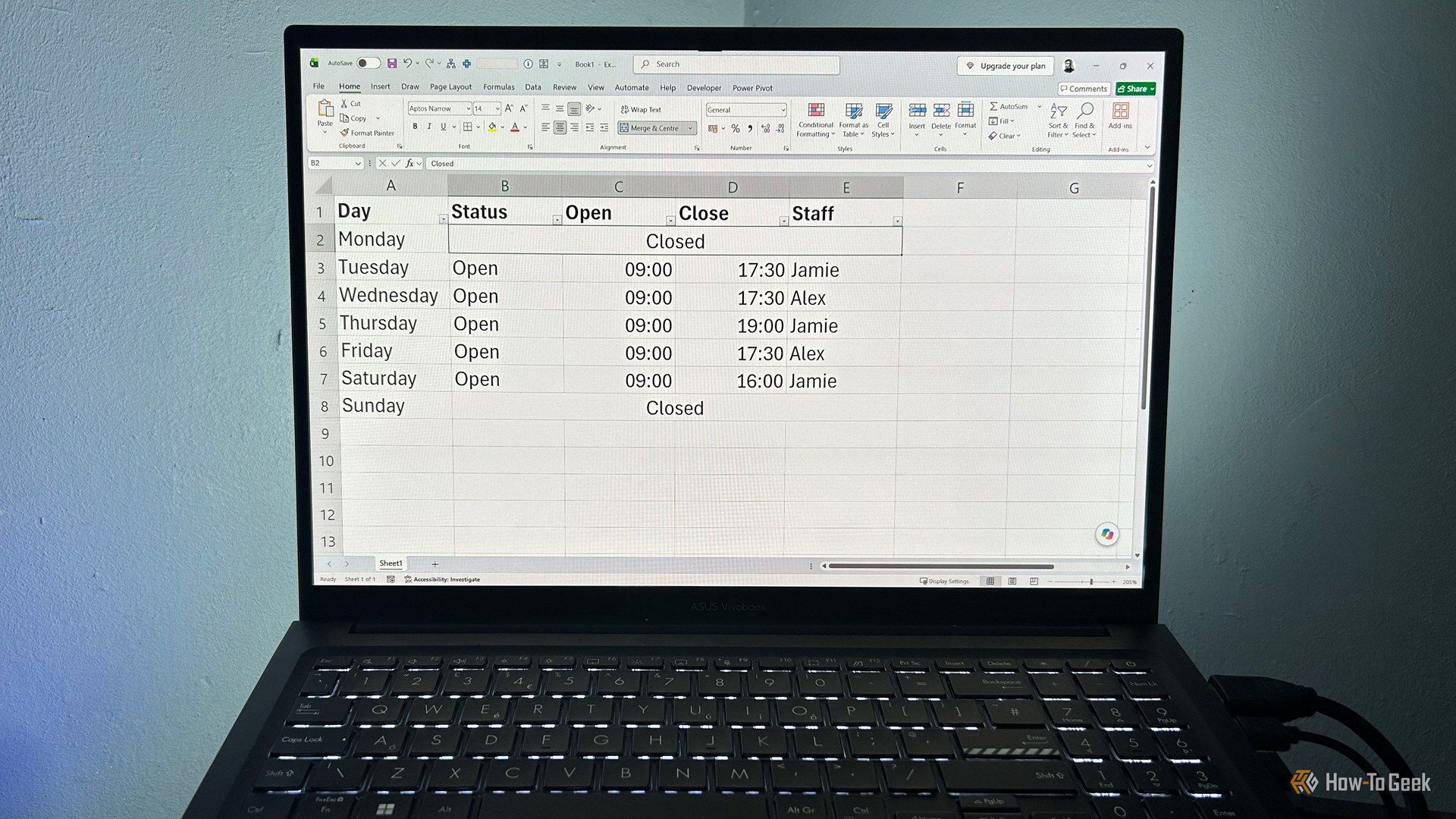
Ditch Merge & Center: The Better Way to Align Text in Excel
Learn to use Excel's "Center Across Selection" to align text across cells without merging, avoiding common data manipulation issues. This guide provides steps to utilize this newly accessible feature and add it to your Quick Access Toolbar.

Ars Technica's Rocket Report: Your Essential Space Industry Briefing
Quick Verdict Ars Technica's Rocket Report, presented by veteran space reporter Stephen Clark, offers an invaluable and meticulously organized weekly (or similar frequency, implied by "Edition 9.15") digest of the most

Apple iPhone Duo: A Daring Debut with Notable Compromises
Apple's highly anticipated iPhone Duo, priced at $2,000, has gone on pre-order. While hailed as "Apple's most exciting device in a decade" for its innovative foldable design and immersive display, it comes with significant drawbacks like the absence of FaceID and a premium camera.
KDE Plasma 6.8: A Future-Focused 30th Anniversary Update
Quick Verdict KDE Plasma 6.8, arriving as the "30th Anniversary Edition," is a pivotal release that decisively pushes the desktop environment into the future. With a definitive farewell to native X11 sessions and a