
Ars Technica's 'Volcanoes That Made History': A Deep Dive into
Verdict Ars Technica's "Volcanoes That Made History" delivers a compelling and insightful exploration into how colossal volcanic eruptions have profoundly shaped Earth's climate and human societies throughout history.
Verdict
Ars Technica's "Volcanoes That Made History" delivers a compelling and insightful exploration into how colossal volcanic eruptions have profoundly shaped Earth's climate and human societies throughout history. This piece serves as an exceptional educational resource, blending rigorous scientific inquiry with captivating historical narratives. For anyone interested in the intersection of geology, climate science, and human civilization, this article is a highly recommended read, offering a balanced perspective on both the destructive power of nature and humanity's resilience.
Performance & Scope: Unearthing Earth's Climatic Footprint
The core "feature set" of this article lies in its meticulous cataloging and explanation of significant historical eruptions and their far-reaching consequences. It meticulously details several key events, starting with the devastating 1883 Krakatau eruption, which, thanks to Victorian-era telecommunications, provided the first near real-time global documentation of a catastrophic volcanic event. The article highlights Krakatau's role in introducing the modern world to climate influence, noting the global spread of volcanic particles, vividly colored sunsets, and a measurable 0.6° Celsius drop in average summer temperatures in non-tropical Northern Hemisphere regions due to sulfur aerosols reflecting sunlight.
Moving chronologically, the article delves into lesser-known but equally impactful events. The mysterious 536 A.D. eruption, identified through polar ice core sulfur deposits, is linked to an 18-month haze, temperature plunges, failed harvests, and the onset of the first global plague. While the specific volcano remains unidentified, its societal implications across Europe, the Middle East, and Asia are powerfully presented. This demonstrates the interdisciplinary nature of the research, bridging historical chronicles with paleoclimatological data.
The 1257 eruption of Indonesia's Samalas volcano is presented as the largest in millennia by sulfur output. Evidence from radiocarbon-dated ash and tree-ring studies confirms extensive cooling across North America and Eurasia from 1257 to 1259, causing famine in England and damaged rice production in Japan. Intriguingly, it’s also posited as a factor in the collapse of the Mongol Empire. A century later, around 1345, another major eruption (or several) is linked to the Black Death. Tree-ring data showing unusually cold and wet summers in southern Europe are used to argue that crop failures and subsequent grain imports from the east, carrying Yersinia pestis-harboring rats, may have initiated the pandemic.
Closer to modern times, the 1783 Laki fissure eruption in Iceland is discussed, notable for its toxic fogs and localized devastation, which Benjamin Franklin astutely connected to widespread European haze. Finally, the 1815 Tambora explosion, leading to the infamous "year without a summer" in 1816, serves as a testament to the broad climatic changes, crop failures, famine, and even cultural impacts (inspiring Mary Shelley's Frankenstein) that a single eruption can cause. The article also wisely notes how access to transportation and trade networks could mitigate or exacerbate these impacts, offering a crucial lesson in societal resilience.
User Interface & Experience: A Clear and Engaging Narrative
From a user experience perspective, "Volcanoes That Made History" excels in its clear, engaging, and well-structured presentation. The article kicks off with a vivid, almost cinematic account of the 1883 Krakatau eruption, immediately hooking the reader with historical telegram snippets. This narrative device sets an excellent tone, demonstrating the immediate, dramatic nature of these events before delving into the scientific details.
The content is logically organized, moving from well-documented recent history to more ancient, scientifically reconstructed events. Each section focuses on a distinct eruption or period, providing context, scientific evidence (like ice cores and tree rings), and the observed societal impacts. The language is accessible, avoiding excessive jargon while maintaining scientific integrity. Complex concepts, such as the formation of sulfur aerosols and their cooling effect, are explained clearly and concisely.
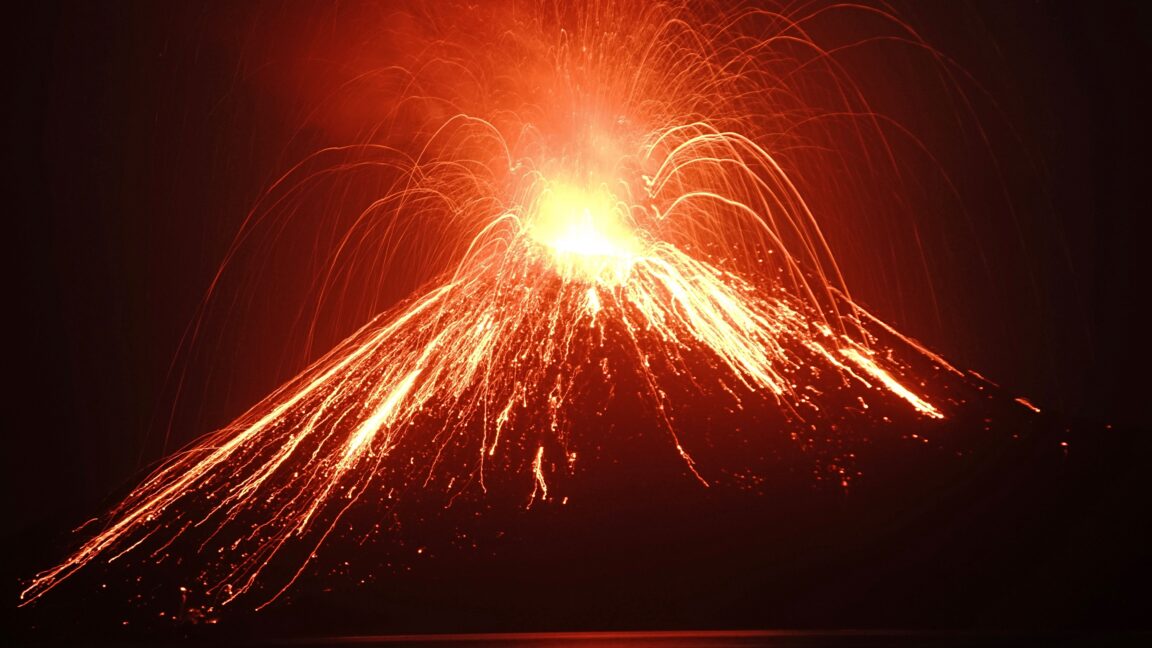
Visual aids are employed effectively. The opening image of Anak Krakatau erupting in 2018 is striking, providing a modern visual link to historical events. Crucially, the embedded graph illustrating "Large volcanic eruptions cool Earth's climate by injecting tiny particles of sulfur high into the atmosphere" visually reinforces the scientific data underpinning the climate impact discussions, making quantitative information easier to digest. The article also integrates quotes from environmental historians and volcanologists, lending expert credibility and varying the textual flow.
While the article is primarily text-based, its internal linking to related Ars Technica content (e.g., a video on responding to science deniers, and a linked author page for Knowable Magazine) enhances its value as part of a broader knowledge ecosystem. The overall flow is smooth, guiding the reader through complex historical and scientific connections without feeling overwhelming.
Pros
- Engaging Narrative: Starts with a captivating historical account of Krakatau, drawing readers in immediately.
- Clear Scientific Explanations: Effectively demystifies concepts like sulfur aerosols and ice core analysis.
- Rich Historical Detail: Covers multiple significant eruptions (Krakatau, 536, Samalas, Black Death, Laki, Tambora) with specific examples of their impact.
- Interdisciplinary Insight: Seamlessly blends volcanology, climate science, environmental history, and societal studies.
- Relevance to Modern Issues: Explicitly connects historical climate shocks to present-day climate change discussions, offering valuable context.
- Credible Sourcing: Mentions specific research methods (radiocarbon dating, tree-ring studies, ice cores) and expert contributors.
- Effective Visuals: Features relevant imagery and a helpful graph to illustrate key scientific data.
Cons
- Limited Direct Comparison: As a standalone article, it doesn't offer a direct comparison of its own research approach or conclusions with alternative scientific interpretations within its text. (This is a limitation of the source material itself, not necessarily a flaw in the article's execution given its scope).
- Implicit "Alternatives": While the article is a strong offering for this type of content, it doesn't discuss alternative formats for consuming such detailed historical and scientific analysis (e.g., documentaries, academic papers, books), which a broader "product review" might touch upon.
- Single Perspective Focus: Primarily presents the established scientific consensus and historical connections, without extensively exploring debates or fringe theories, which some users might seek for a more exhaustive treatment.
Verdict & Recommendation
"Volcanoes That Made History" from Ars Technica is a stellar example of well-researched and engaging science communication. It effectively serves as an illuminating educational tool, meticulously detailing how major volcanic events have been pivotal, if sometimes overlooked, drivers of historical change. The article's ability to synthesize vast amounts of historical, geological, and climatic data into a coherent and digestible narrative is truly commendable.
For students of earth sciences, history buffs, or any intellectually curious individual seeking to understand the profound interplay between our planet's dynamics and human development, this article is an absolute must-read. While it doesn't delve into every conceivable alternative interpretation or offer interactive simulations, its strength lies in its focused, evidence-backed storytelling. We wholeheartedly recommend this piece for its informative content, engaging style, and pertinent insights into both historical resilience and modern climate challenges. It's a prime example of how complex scientific topics can be made accessible and deeply relevant.
FAQ
Q: What makes this article a valuable resource for understanding historical climate change? A: The article is valuable because it leverages scientific evidence like polar ice cores and tree-ring data to identify past volcanic eruptions and then connects these events to documented historical climate shifts, agricultural failures, epidemics, and societal unrest. It clearly explains the mechanism of volcanic cooling (sulfur aerosols) and uses specific historical examples like Krakatau, Samalas, and Tambora to illustrate these connections.
Q: How does this article relate historical volcanic events to current climate change discussions? A: The article explicitly draws parallels between the rapid, planetwide climate shocks caused by large volcanic eruptions and the ongoing challenges humanity faces with present-day global warming. While volcanic eruptions cause cooling and current climate change causes warming, both represent significant, rapid global atmospheric alterations that test societal resilience and adaptive capacities. Studying past volcanic impacts, therefore, provides insights into how societies might react to future climate shifts.
Q: Is the information presented in this article scientifically reliable? A: Yes, the information is presented as scientifically reliable, drawing on interdisciplinary research from volcanologists, environmental historians, and tree-ring specialists. It cites methodologies like ice core analysis, radiocarbon dating, and tree-ring studies, which are established scientific techniques for reconstructing past climate and events. The article also uses cautious language, acknowledging when connections are speculative (e.g., "may have contributed" or "could have been linked"), reflecting a balanced scientific approach.
Related articles
Android 17 QPR2 Beta 7.1: The Performance Relief You've Been Waiting
Android 17 QPR2 Beta 7.1: Finally Fixing the QPR1 Performance Woes Verdict: Android 17 QPR2 Beta 7.1 is a crucial and highly anticipated software update for Google Pixel users, specifically targeting and resolving the

DJI Solo Video Setups: Smart Choices for Lone Creators
This review delves into DJI's recommended solo video setups, highlighting the Osmo Pocket 3 Creator Combo as a top pick for its integrated camera, gimbal, and mic. It also covers stabilizers like the Osmo Mobile 8 and RS 4, and the DJI Mic Mini series for enhanced audio, providing honest pros, cons, and clear buying advice.

Ars Technica's Rocket Report: Your Essential Space Industry Briefing
Quick Verdict Ars Technica's Rocket Report, presented by veteran space reporter Stephen Clark, offers an invaluable and meticulously organized weekly (or similar frequency, implied by "Edition 9.15") digest of the most

Apple iPhone Duo: A Daring Debut with Notable Compromises
Apple's highly anticipated iPhone Duo, priced at $2,000, has gone on pre-order. While hailed as "Apple's most exciting device in a decade" for its innovative foldable design and immersive display, it comes with significant drawbacks like the absence of FaceID and a premium camera.

KDE Plasma 6.8: A Future-Focused 30th Anniversary Update
Quick Verdict KDE Plasma 6.8, arriving as the "30th Anniversary Edition," is a pivotal release that decisively pushes the desktop environment into the future. With a definitive farewell to native X11 sessions and a

Ephemeral PR Preview Environments on GKE: A Deep Dive
Every development team eventually grapples with the limitations of shared staging environments. The familiar scenario: multiple features deployed simultaneously, database migrations clashing, and the phrase "it works on