
Ars Technica's 'So Much Solar': Insightful US Energy Trends Analysis
Ars Technica's 'So much solar' article offers an excellent, data-driven analysis of US power plant additions in H1 2026, highlighting the dominance of utility-scale solar and batteries. Essential reading for energy enthusiasts.
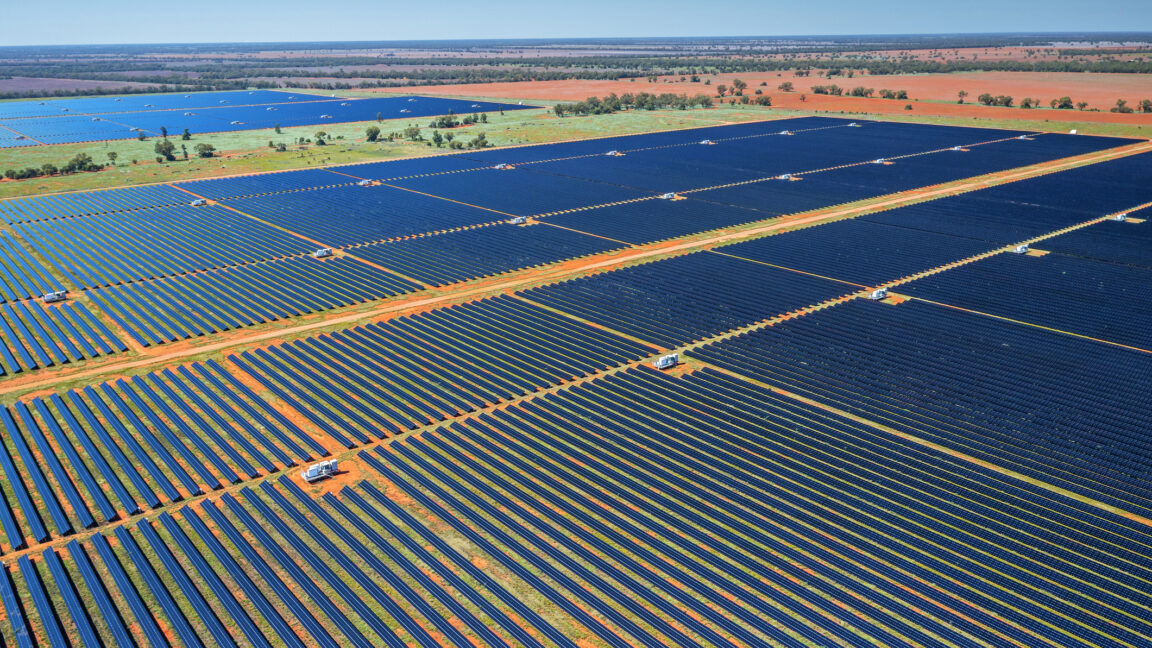
Verdict: A Radiant Deep Dive into US Power Generation
Ars Technica’s article, "So much solar: Digging into the list of every US power plant that went online this year," offers a remarkably clear and data-driven analysis of the US power sector’s evolving landscape. Authored by Dan Gearino of Inside Climate News, this piece stands out for its honest assessment of new utility-scale power plant installations, making complex energy trends accessible. While the underlying website experience comes with typical modern web tracking, the core content is a highly recommended read for anyone interested in the future of US energy, offering a well-researched perspective grounded in real-world data.
Key Data and Analysis
The article meticulously dissects data from the US Energy Information Administration (EIA) for the first half of 2026, focusing on 368 utility-scale power plants that commenced operations. The standout revelation is the overwhelming dominance of utility-scale solar and battery storage in new installations. While large wind projects like SunZia Wind and Vineyard Wind grab headlines, the article clarifies these are often long-gestating projects, not indicative of current onshore wind trends.
Breaking down the numbers:
- Project Count: Utility-scale solar led with 207 projects, followed by batteries at 95. Natural gas combustion turbines and internal combustion engines combined for 43 projects. Onshore wind saw only 9 new projects.
- Generating Capacity: Utility-scale solar contributed a massive 11,458 megawatts. Batteries followed with 8,207 megawatts, and onshore wind (boosted by SunZia) added 5,473 megawatts. Natural gas plants, across all types, accounted for 2,707 megawatts.
An important nuance highlighted is the distinction between different power technologies, acknowledging that solar output varies throughout the day and many gas plants are only used during peak demand. The analysis pinpoints a broad trend of smaller to mid-sized solar projects, often paired with batteries, being built across the country due to their ease of development and diverse site possibilities.
Geographically, Texas, New Mexico, and Arizona emerged as leaders, collectively accounting for roughly half of the new generating capacity. Texas, in particular, showed a blend of batteries and gas, reflecting its policies aimed at grid reliability. Illinois led in the number of small utility-scale solar projects, demonstrating the impact of state-level incentives, even if its overall capacity additions weren't top-tier. The article also sprinkles in interesting local anecdotes, like a hydropower turbine replacement in Minnesota and a biomass plant in Ohio powered by sewage-treatment methane, adding a human touch to the data.
User Experience and Website Presentation
Accessing the article on Ars Technica's platform offers a generally clean and functional experience, though it begins with a prominent privacy consent banner. This banner allows users to manage various cookie categories: Social Media, Essential, Targeted, Performance, Functional, and Audience Measurement. While 'Essential' cookies are mandatory for site functionality, users can opt out of others. This transparency is appreciated, though the initial prompt can be a momentary interruption to content access. The mention of 'Consent powered by Ethyca' adds a layer of professionalism to their privacy management.
Once past the cookie settings, the article itself is well-presented. The layout is clean, with clear headings that guide the reader through the data, making it easy to digest complex information. The inclusion of responsive images and informative charts (a donut chart for project types and a bar chart for state-wise capacity) significantly enhances comprehension and visual appeal. These visuals are attributed to Paul Horn/Inside Climate News, lending credibility to the data presentation.
However, the overall page does feature elements that, while standard for a large publication, don't directly relate to the article's core content, such as an "Ars Video" section promoting unrelated content ("How The Callisto Protocol's Gameplay Was Perfected Months Before Release"). This can be a minor distraction from the central topic. Navigation is straightforward, with clear sections, forum access, and subscription options. The ability to adjust text size, width, and theme (HyperLight, Day & Night, Dark, System) is a thoughtful touch for reader comfort, enhancing accessibility.
Strengths and Weaknesses
Pros:
- Data-Driven Insight: The article is rigorously based on EIA data, providing a solid, factual foundation for its conclusions.
- Clear and Concise: Complex statistics are broken down into understandable chunks, making the article accessible to a broad audience.
- Effective Visuals: The use of charts and relevant imagery effectively supports the text, aiding in data interpretation.
- Honest Trends Analysis: It differentiates between one-off megaprojects and broader market trends, providing a more accurate picture of the energy sector's direction.
- Contextualized Information: The author provides expert commentary (from Eric Gimon of Energy Innovation) and state-specific insights, enriching the analysis.
- Transparency on Limitations: Acknowledges the perpetual caveats in comparing different power plant technologies and the exclusion of small-scale solar, showing a balanced perspective.
- Privacy Control: The website offers detailed cookie consent management, giving users control over their data.
Cons:
- Distracting Page Elements: Non-germane content sections (like "Ars Video") can detract from the article's focus.
- Initial Privacy Barrier: While necessary, the comprehensive cookie consent popup is an initial hurdle to accessing the content.
- No Alternative Analysis Comparisons: The article focuses solely on its own data interpretation without referencing other analyses of similar data, which isn't a flaw of the article itself but means the reader isn't exposed to potentially differing interpretations within this piece.
Recommendation
For anyone with a serious interest in renewable energy, power infrastructure, or environmental policy in the United States, this Ars Technica article is a highly recommended read. It delivers a grounded, honest, and easy-to-understand overview of new power plant developments. While the website experience has standard modern web elements like detailed cookie consent and unrelated content blocks, the quality of the analysis and the clarity of its presentation make it an invaluable resource. This article is particularly suitable for those who appreciate data-backed journalism and seek to understand the practical, rather than just aspirational, shifts in the energy sector.
FAQ
Q: Is this article suitable for readers without a strong background in energy policy?
A: Yes, the article is written in a clear, accessible style and uses straightforward language to explain complex data, making it suitable for a broad audience.
Q: Does the article cover residential or rooftop solar installations?
A: No, the article explicitly states that its data from the US Energy Information Administration (EIA) focuses exclusively on utility-scale power plants and does not include small-scale solar like rooftop installations.
Q: What is the primary takeaway regarding new power plant trends?
A: The main takeaway is that utility-scale solar and battery storage are the leading new power generation technologies in terms of both project count and generating capacity, with natural gas playing a much smaller role in recent additions, and onshore wind seeing a significant drop despite some large legacy projects coming online.
Related articles

TCG Pocket Responds: A Much-Needed Pace Shift for Pokémon Fans
Pokémon TCG Pocket is rolling out a major update for its second anniversary, primarily addressing player concerns about overwhelming content releases by shifting to a six-week set schedule. This aims to curb player decline and improve overall engagement by giving trainers more time to collect and strategize. The update also adds new collection methods, improved deck-building features, and enhanced trading functionality.

Ars Technica's Rocket Report: Your Essential Space Industry Briefing
Quick Verdict Ars Technica's Rocket Report, presented by veteran space reporter Stephen Clark, offers an invaluable and meticulously organized weekly (or similar frequency, implied by "Edition 9.15") digest of the most

Apple iPhone Duo: A Daring Debut with Notable Compromises
Apple's highly anticipated iPhone Duo, priced at $2,000, has gone on pre-order. While hailed as "Apple's most exciting device in a decade" for its innovative foldable design and immersive display, it comes with significant drawbacks like the absence of FaceID and a premium camera.

KDE Plasma 6.8: A Future-Focused 30th Anniversary Update
Quick Verdict KDE Plasma 6.8, arriving as the "30th Anniversary Edition," is a pivotal release that decisively pushes the desktop environment into the future. With a definitive farewell to native X11 sessions and a

regional: A two-person Seattle startup lands $1M to reinvent
Seattle startup TriMagnetix has secured $1 million to develop semiconductor chips that consume 800 times less energy and are radiation-resistant. The two-person company, leveraging nanomagnetic technology, is targeting space applications and data centers. With new funding and key partnerships, TriMagnetix aims for commercial sales within a year.
Galaxy Watch One UI 9 Beta: Promising Progress, But Patience Needed
Galaxy Watch 8, Watch Ultra, and Watch 7 are receiving a new One UI 9 Watch beta build with bug fixes and a security patch. Active development signals progress, but a stable release date remains elusive.