
Apple & Lenovo Laptops: Repairability Failing Grade
Apple and Lenovo received C-minus grades for laptop repairability in a new PIRG report, ranking them among the least repairable. Key issues include difficult disassembly, lack of transparency (Lenovo), and association with anti-right-to-repair lobbying groups.
Quick Verdict
A new report by the Public Interest Research Group (PIRG) Education Fund has delivered a sobering assessment of laptop repairability, placing industry giants Apple and Lenovo at the bottom of the list. Both companies received a C-minus grade for their laptops, primarily due to low scores in physical disassembly and, for many, their association with anti-right-to-repair lobbying groups. While there's a glimmer of hope in some design advancements and improved access to parts, the overall landscape for laptop fixability remains largely stagnant, making independent repairs a significant challenge.
The PIRG Report: "Failing the Fix (2026)"
PIRG's "Failing the Fix (2026)" report meticulously analyzed the 10 newest laptops and phones available in January via manufacturers' French websites. This specific focus on France is crucial, as much of PIRG's criteria is derived from the country's mandatory repairability index. This index, a grading system for device repairability, must be prominently displayed on products sold in France, a standard that right-to-repair advocates hope will be adopted globally.
Grading Methodology
To calculate laptop repairability grades, PIRG adapted the French index but gave substantial extra weight to the "physical ease of disassembling the product." This emphasis reflects what consumers generally expect from a 'repair score.' Other key categories considered include:
- Availability of repair documentation (manuals, service guides).
- Availability of spare parts.
- Affordability of spare parts (calculated as a percentage of the product's total cost).
- Product-specific criteria.
Additionally, companies faced deductions: 0.5 points were subtracted for membership in TechNet or the Consumer Technology Association (CTA), two industry groups actively opposing right-to-repair legislation in the US. Conversely, vendors gained 0.25 points for each piece of right-to-repair legislation they publicly supported with testimony in the past year.
Apple Laptops: A C-Minus Effort
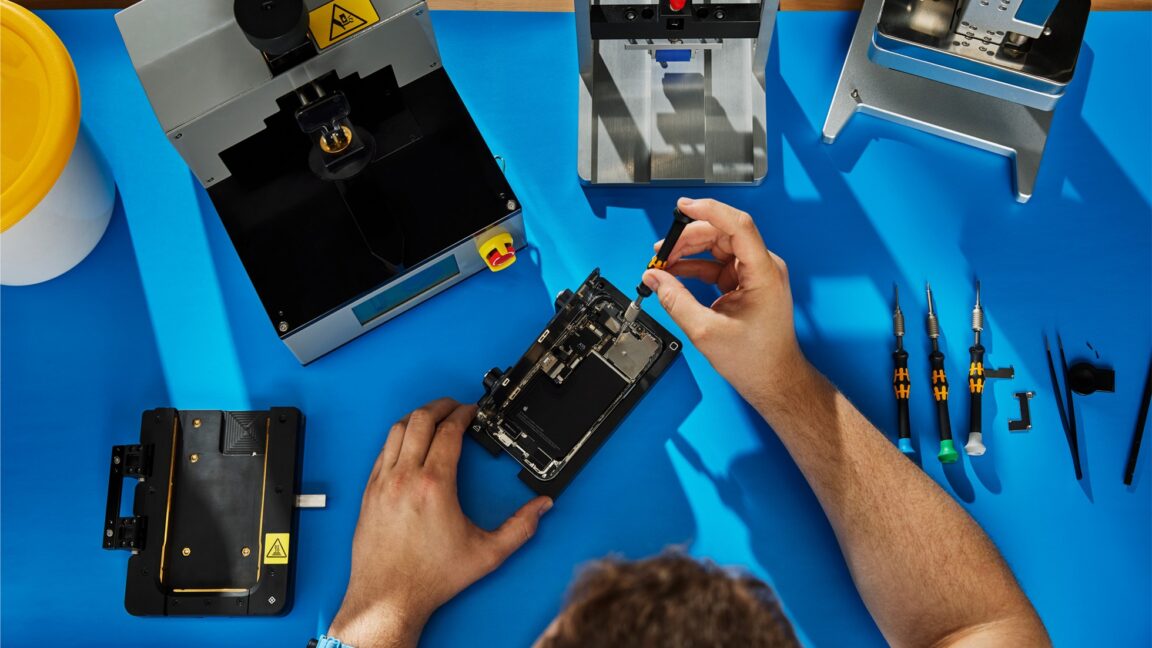
Apple earned the lowest overall grades in the report, receiving a C-minus for laptop repairability and a D-minus for cell phones. For laptops, Apple's poor showing was largely attributed to its consistently low disassembly scores. This means getting into an Apple laptop to perform a repair is inherently difficult for the average user or independent technician.
Furthermore, Apple, alongside Dell and Samsung, faced a full-point deduction (0.5 points per organization) for its membership in TechNet and the CTA. While Senior Director Nathan Proctor of US PIRG's Right to Repair campaign clarified that membership doesn't necessarily mean active opposition from the company itself, funding these organizations works against right-to-repair legislation, impacting their score.
On a positive note, the report did acknowledge Apple's MacBook Neo as a "step in the right direction" regarding design, hinting at potential future improvements in repairability, though its current score reflects the existing challenges.
Lenovo Laptops: Repeating Past Mistakes
Lenovo found itself with the second-worst laptop repairability grade, also a C-minus. Like Apple, Lenovo's score was dragged down by low disassembly scores, making internal access problematic. It also incurred the 0.5-point penalty for its TechNet/CTA membership.
Critically, Lenovo was penalized an additional 0.5 points for failing to properly post PDFs explaining the French repair scores for some of its newest laptops. This isn't a new issue; last year, Lenovo received an F for missing this information on at least 12 laptops. Despite a statement from Lenovo's communications director blaming a "backend web compatibility issue" that was supposedly "widely resolved," the latest report indicates this multi-year problem persists. PIRG urged the company to finally resolve this compliance issue.
The Broader Laptop Landscape: Stagnation and Progress
PIRG's report concluded that, across many of the eight most popular US laptop brands, "laptops are pretty stagnant in terms of repairability." This implies that while some individual efforts are being made, significant widespread improvements in design for repair are slow to materialize.
However, there are pockets of progress. Nathan Proctor noted that consumer access to parts, tools, and information from vendors has improved, which is a positive trend. He also highlighted Asus, which has consistently scored better than other companies for laptop repairability for the third consecutive year.
Phone Repairability: A Different Picture, Still Challenges
While the primary focus of this analysis is laptops, the report also covered phone repairability. Apple again scored low with a D-minus. The phone scores, based on the European Product Registry for Energy Labelling (EPREL) criteria, reflected Apple's commitment to only five years of software updates, rather than longer. Apple has made some strides, moving away from parts pairing (where components require software verification to function) and introducing the Repair Assistant. However, critical issues like non-functional third-party Face ID replacements and the extension of Activation Lock to individual parts (which could "strand large numbers of perfectly functional components") remain significant concerns, reflecting an industry-wide problem with software restrictions.
Interestingly, Lenovo's Motorola brand earned the best grade for phone repairability, indicating a stark contrast in repair-friendly design philosophy compared to its laptop division.
Repairability Grades at a Glance
To give you a clearer picture of where some brands stand, here's a quick overview of the report's findings:
| Brand | Laptop Repairability Grade (PIRG) | Phone Repairability Grade (PIRG) |
|---|---|---|
| Asus | Best (for laptops) | Not specified |
| Apple | C-minus | D-minus |
| Lenovo | C-minus | Not specified (Motorola best) |
| Motorola | Not specified | Best |
Pros and Cons of Current Repairability Trends
Pros:
- Leading Examples: Brands like Asus (laptops) and Motorola (phones) demonstrate that better repairability is achievable.
- Improved Access: Consumers are seeing better access to parts, tools, and repair information from manufacturers.
- Design Progress: Some manufacturers, like Apple with its MacBook Neo, are experimenting with designs that could lead to easier repair in the future.
Cons:
- Poor Disassembly: Apple and Lenovo's consistently low scores for ease of disassembly make repairs difficult and costly.
- Industry Lobbying: Major players' funding of anti-right-to-repair groups undermines efforts to make products more repairable.
- Lack of Transparency: Lenovo's ongoing failure to publish required repair information in France highlights a broader issue of vendor accountability.
- Software Restrictions: Parts pairing and Activation Lock on individual components create artificial barriers to repair, potentially turning functional parts into e-waste.
- Overall Stagnation: Despite some improvements, the general trend for laptop repairability isn't moving fast enough.
Our Recommendation for Consumers
If repairability, longevity, and the potential for cost-saving DIY fixes are high on your priority list, this report offers a clear warning. For laptops, Apple and Lenovo currently present significant challenges for independent repair, scoring poorly in critical areas like ease of disassembly and transparency. Their association with groups opposing right-to-repair legislation is also a concern for consumers who value device ownership and the right to fix their own property.
We recommend that consumers prioritizing repairability look towards brands with a better track record, such as Asus for laptops, which has consistently ranked higher. While Apple's MacBook Neo design signals a positive shift, its current repairability score remains low. For those considering a Lenovo product, be aware of their laptop's repair challenges and their ongoing failure to provide transparent repair information, despite their Motorola brand excelling in phone repairability.
Ultimately, informed purchasing decisions can drive demand for more repairable products, benefiting both your wallet and the environment in the long run.
FAQ
Q: Does a low repairability score mean I shouldn't buy an Apple or Lenovo laptop?
A: Not necessarily, but it means you should be aware that independent repairs will likely be more difficult, costly, or even impossible. You may be more reliant on manufacturer-authorized service, which can be more expensive. If repairability is a high priority, you might consider alternatives with better scores.
Q: What is the "Right to Repair" movement?
A: The Right to Repair movement advocates for legislation that requires manufacturers to provide owners and independent repair shops with access to parts, tools, and documentation needed to repair their devices. This aims to reduce e-waste, save consumers money, and promote competition in the repair market.
Q: How can I find out a laptop's repairability score before buying?
A: For devices sold in France, the repairability index must be displayed. For other regions, organizations like PIRG and iFixit often publish repair scores or teardowns that can give you insight into a product's fixability. Checking reputable tech review sites and advocacy groups' reports (like this one from PIRG) can also provide valuable information.
Related articles

Apple Unveils iPhone Duo: Pricey Foldable Sees Soaring Demand
Apple has officially entered the foldable smartphone arena with the long-anticipated launch of the iPhone Duo. Priced starting at a hefty $1,999, the device features a 5.4-inch outer display and a larger 7.6-inch inner
Android 17 QPR2 Beta 7.1: The Performance Relief You've Been Waiting
Android 17 QPR2 Beta 7.1: Finally Fixing the QPR1 Performance Woes Verdict: Android 17 QPR2 Beta 7.1 is a crucial and highly anticipated software update for Google Pixel users, specifically targeting and resolving the

DJI Solo Video Setups: Smart Choices for Lone Creators
This review delves into DJI's recommended solo video setups, highlighting the Osmo Pocket 3 Creator Combo as a top pick for its integrated camera, gimbal, and mic. It also covers stabilizers like the Osmo Mobile 8 and RS 4, and the DJI Mic Mini series for enhanced audio, providing honest pros, cons, and clear buying advice.

Ars Technica's Rocket Report: Your Essential Space Industry Briefing
Quick Verdict Ars Technica's Rocket Report, presented by veteran space reporter Stephen Clark, offers an invaluable and meticulously organized weekly (or similar frequency, implied by "Edition 9.15") digest of the most

Apple iPhone Duo: A Daring Debut with Notable Compromises
Apple's highly anticipated iPhone Duo, priced at $2,000, has gone on pre-order. While hailed as "Apple's most exciting device in a decade" for its innovative foldable design and immersive display, it comes with significant drawbacks like the absence of FaceID and a premium camera.
KDE Plasma 6.8: A Future-Focused 30th Anniversary Update
Quick Verdict KDE Plasma 6.8, arriving as the "30th Anniversary Edition," is a pivotal release that decisively pushes the desktop environment into the future. With a definitive farewell to native X11 sessions and a