
Ancient Giant Dragonfly Explanation: Old Theory Debunked
Ars Technica's review of new research debunks the long-accepted 'oxygen constraint hypothesis' for ancient giant insects. The study shows insect breathing systems were not a limiting factor for size, shifting focus to predation, thermoregulation, and molting as new potential explanations.
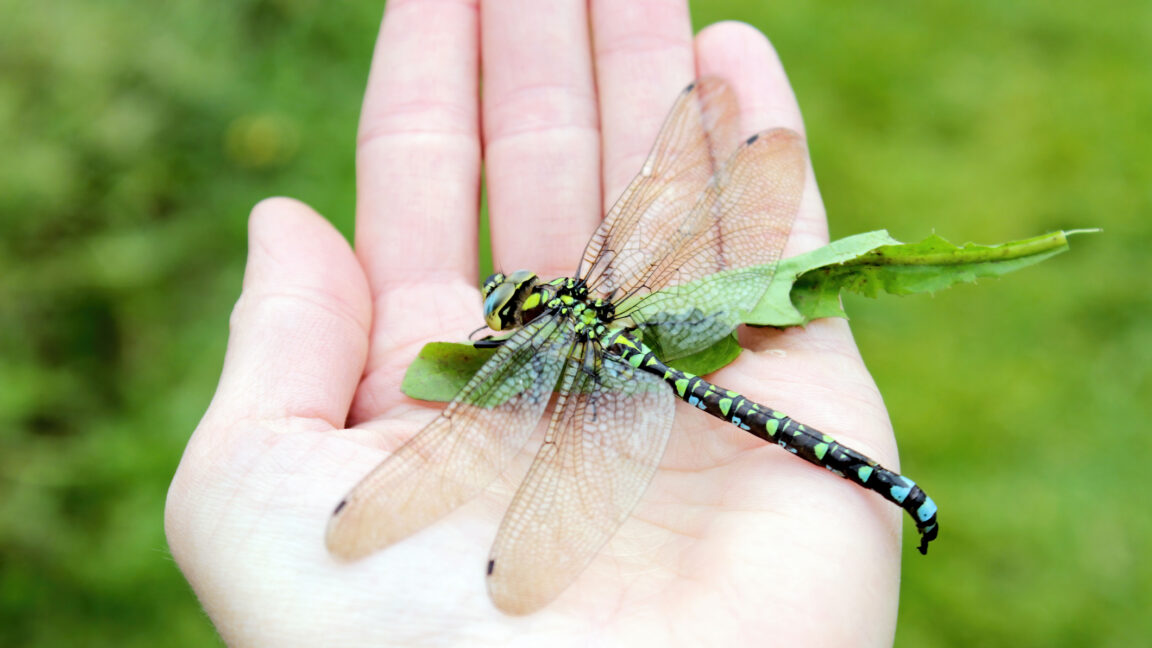
Verdict: A Long-Held Scientific Explanation Gets Squashed
The long-standing "oxygen constraint hypothesis," which proposed that ancient giant insects like two-foot-long dragonflies disappeared due to decreasing atmospheric oxygen levels, has been robustly challenged by new research. While the Ars Technica article reports on a significant scientific debunking, it leaves us with more questions than definitive answers regarding the true reasons for the insects' gigantism and subsequent shrinkage. This piece effectively communicates a major shift in scientific understanding, forcing a re-evaluation of ecological and physiological factors beyond just oxygen.
Challenging the Status Quo: Key Details of the Debunking
For thirty years, the scientific community largely accepted the oxygen constraint hypothesis as the elegant explanation for the disappearance of ancient giant insects such as Meganeuropsis permiana, a predatory insect with a wingspan of over 70 centimeters. The theory posited that insects' inefficient tracheal breathing system, relying on passive diffusion in its smallest tubes (tracheoles), would require progressively more space for breathing tubes as insects grew larger. This would eventually reach a structural tipping point, limiting size, especially after atmospheric oxygen levels dropped from a Palaeozoic peak of around 30 percent to today's 21 percent.
However, a recent Nature study led by Edward Snelling of the University of Pretoria directly tested this assumption. Snelling's team analyzed 44 species of modern flying insects, spanning a 10,000-fold difference in body mass, from the minuscule Trioza erytreae (0.334 mg) to the robust Goliathus albosignatus (7.74 g). Using high-resolution transmission electron microscopes, they measured the tracheolar volume density – the percentage of flight muscle volume occupied by these breathing tubes. The findings were quite striking: in 0.5 milligram insects, tracheoles took up 0.47 percent of muscle space, rising only to 0.83 percent in 5-gram insects. This minor increase of 1.8 times over such a vast body mass range fundamentally undermines the idea of a significant structural limitation. In comparison, mammalian and avian capillaries, which perform a similar oxygen delivery function, typically account for about 10 percent of muscle tissue volume, making insect tracheal systems seem remarkably space-efficient.
Extrapolating these findings, the research suggests that even a giant like Meganeuropsis permiana, estimated at 100 grams, would have had tracheoles occupying only about 1 percent (or up to 3 percent at the absolute statistical limit) of its flight muscle volume. Furthermore, simulations showed that tripling tracheolar density (from 0.6% to 1.8%) could quadruple oxygen-diffusing capacity without significantly impacting flight muscle performance. This suggests that if ancient giants needed more oxygen, a simple physiological upgrade to their tracheal network was entirely feasible without sacrificing power.
The New Landscape: User Experience and Implications
The Ars Technica article does an excellent job of presenting this complex scientific finding in an accessible manner. The explanation of insect breathing mechanics is clear, concise, and easy for a general audience to grasp. The progression from the old hypothesis to the detailed methodology and compelling results of the new study is logical and well-structured, making the debunking feel earned and scientifically sound. The article's "user experience" in conveying this scientific shift is commendable. It highlights the elegance of the old theory before systematically dismantling it with empirical evidence, providing a satisfying narrative arc for the scientific discovery.
While the article skillfully debunks the oxygen constraint hypothesis, it acknowledges that we are now left without a single, definitive answer to the question of why giant insects no longer exist. Instead, the research opens the door to several new hypotheses, shifting the focus from molecular diffusion to a broader consideration of ecology, physical mechanics, and whole-body physiology. This pivot from a singular, simple explanation to a more complex, multi-factorial understanding is a crucial takeaway. It underscores the iterative nature of scientific discovery, where falsified hypotheses pave the way for more nuanced inquiries.
Pros and Cons of the New Understanding
Pros:
- Debunks a Long-Held Myth: Successfully challenges a thirty-year-old, widely accepted explanation, driving scientific progress.
- Opens New Research Avenues: Shifts focus to a wider range of ecological, physiological, and mechanical factors, leading to a more holistic understanding.
- Empirically Supported: Based on extensive comparative study across 44 insect species using advanced microscopy.
- Highlights Insect Physiological Adaptability: Suggests insects have ample capacity to adapt their tracheal systems for oxygen delivery, even at large sizes.
Cons:
- No Single Replacement Explanation: The research doesn't provide a new, singular definitive reason for the disappearance of giant insects, instead offering multiple, less concrete hypotheses.
- Increased Complexity: Moving from one simple explanation to several potential contributing factors can be less intuitively satisfying, though scientifically more accurate.
- Future Research Required: While the tracheoles are cleared, further investigation into upstream breathing mechanics (like air sacs) is still needed, as acknowledged by Snelling, though not expected to revive the oxygen constraint hypothesis.
Shifting Explanations: Old vs. New Hypotheses
The article outlines a fundamental shift in how scientists are now approaching the mystery of ancient insect gigantism. Instead of a single, dominant factor (atmospheric oxygen), the focus has expanded to a suite of interconnected pressures:
- Rise of Aerial Vertebrate Predators: The fossil record shows a correlation between the decline in maximum insect size and the evolution of birds and bats around 135 million years ago. Large insects, being potentially slow to accelerate, could have become easy targets for more agile predators.
- Thermoregulation Challenges: Larger insects might have struggled with dissipating metabolic heat generated during flight due to a lower surface area-to-volume ratio. A denser ancient atmosphere might have aided in cooling, a factor absent today.
- Molting Limitations: Growing an XL-sized exoskeleton requires molting, leaving insects temporarily soft and vulnerable. Basic structural mechanics might make it difficult for very large, soft-bodied insects to maintain their integrity during this vulnerable phase.
- Circulatory System Efficiency: Insects' open circulatory system might be too inefficient to effectively power flapping flight in extremely large bodies.
This move from a simple, elegant theory to a more complex, multi-factorial understanding represents a significant intellectual evolution in the field.
Buying Recommendation
If you're interested in evolutionary biology, insect physiology, or the process of scientific inquiry, this article is a highly recommended read. It serves as an excellent example of how long-held scientific explanations can be challenged and overturned by new empirical evidence. While it doesn't provide a neat, tidy answer, it broadens our understanding and points towards exciting new avenues for future research. It’s a compelling look at the dynamic nature of science.
FAQ
Q: Does this research mean atmospheric oxygen levels played no role in insect evolution or size?
A: Not necessarily. While the study indicates oxygen delivery via tracheoles was not a limiting factor in the way previously thought, it doesn't entirely rule out other, more indirect influences of atmospheric oxygen on insect physiology or ecology. However, its direct role as the primary constraint on maximum insect size, as per the old hypothesis, is largely debunked.
Q: What is the most likely new explanation for why we don't see giant dragonflies today?
A: The article presents several compelling hypotheses, including the rise of agile vertebrate predators (birds and bats), thermoregulation challenges for very large insects, difficulties with molting large exoskeletons, and limitations of the insect's open circulatory system. It's likely that a combination of these factors, rather than a single cause, contributed to the reduction in maximum insect size.
Q: Is more research needed to fully understand insect size limits?
A: Yes. The lead researcher, Edward Snelling, notes that while tracheoles have been extensively studied, the upstream parts of the tracheal system, specifically large air sacs, still need to be investigated. However, he doesn't expect this to revive the oxygen constraint hypothesis, believing there's ample room within the tracheoles to compensate for any upstream limitations.
Related articles
Android 17 QPR2 Beta 7.1: The Performance Relief You've Been Waiting
Android 17 QPR2 Beta 7.1: Finally Fixing the QPR1 Performance Woes Verdict: Android 17 QPR2 Beta 7.1 is a crucial and highly anticipated software update for Google Pixel users, specifically targeting and resolving the

DJI Solo Video Setups: Smart Choices for Lone Creators
This review delves into DJI's recommended solo video setups, highlighting the Osmo Pocket 3 Creator Combo as a top pick for its integrated camera, gimbal, and mic. It also covers stabilizers like the Osmo Mobile 8 and RS 4, and the DJI Mic Mini series for enhanced audio, providing honest pros, cons, and clear buying advice.

Ars Technica's Rocket Report: Your Essential Space Industry Briefing
Quick Verdict Ars Technica's Rocket Report, presented by veteran space reporter Stephen Clark, offers an invaluable and meticulously organized weekly (or similar frequency, implied by "Edition 9.15") digest of the most

Apple iPhone Duo: A Daring Debut with Notable Compromises
Apple's highly anticipated iPhone Duo, priced at $2,000, has gone on pre-order. While hailed as "Apple's most exciting device in a decade" for its innovative foldable design and immersive display, it comes with significant drawbacks like the absence of FaceID and a premium camera.

KDE Plasma 6.8: A Future-Focused 30th Anniversary Update
Quick Verdict KDE Plasma 6.8, arriving as the "30th Anniversary Edition," is a pivotal release that decisively pushes the desktop environment into the future. With a definitive farewell to native X11 sessions and a
Galaxy Watch One UI 9 Beta: Promising Progress, But Patience Needed
Galaxy Watch 8, Watch Ultra, and Watch 7 are receiving a new One UI 9 Watch beta build with bug fixes and a security patch. Active development signals progress, but a stable release date remains elusive.