
AMD Zen 5 Refresh: Powering Up to Compete
AMD, perpetually vying with Intel for CPU supremacy, appears poised to unveil a strategic counter-move with a rumored refresh of its Zen 5 processors. Leaked information suggests the chipmaker is preparing the Ryzen 7
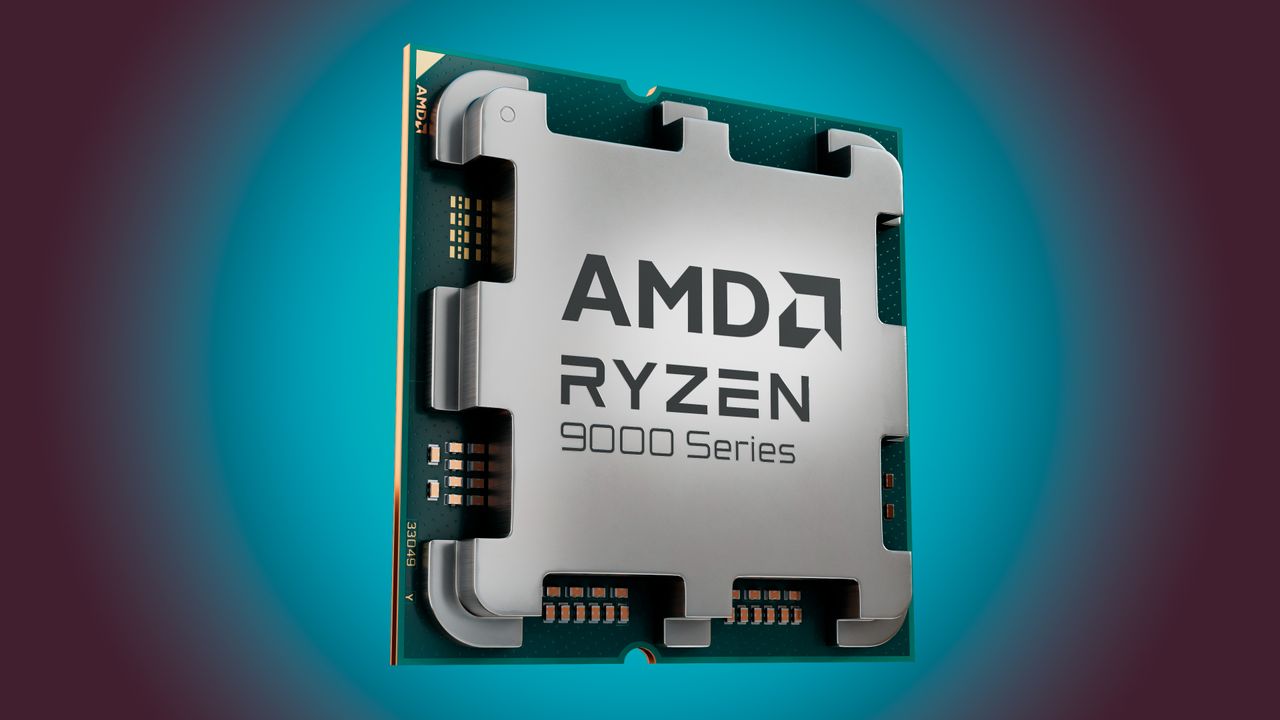
AMD, perpetually vying with Intel for CPU supremacy, appears poised to unveil a strategic counter-move with a rumored refresh of its Zen 5 processors. Leaked information suggests the chipmaker is preparing the Ryzen 7 9750X and Ryzen 5 9650X, aiming to directly challenge Intel's latest Core Ultra 200S Plus (Arrow Lake Refresh) series. This isn't a groundbreaking architectural leap, but rather a focused optimization through increased clock speeds and, notably, a substantial bump in power consumption.
From an initial glance, these refreshed chips look like AMD's attempt to squeeze more performance out of the Zen 5 architecture, specifically targeting the mid-range segment where competition is fierce and sales are strong. The changes, while seemingly iterative on paper, could translate to tangible improvements in real-world performance, albeit with a trade-off in power efficiency.
Quick Verdict
AMD's rumored Zen 5 refresh, featuring the Ryzen 7 9750X and Ryzen 5 9650X, represents a calculated response to Intel's Arrow Lake Refresh. By boosting base clock speeds by 400 MHz and increasing TDP from 65W to 120W, AMD aims to deliver higher sustained performance. While this could significantly improve gaming and demanding workloads, the near doubling of TDP means users will need robust cooling solutions. The success of these chips will hinge heavily on their final pricing against Intel's aggressively positioned alternatives.
Key Specifications and Performance Uplift
At the core of this refresh are clock speed enhancements. Both the Ryzen 7 9750X and Ryzen 5 9650X are expected to retain their respective 8-core/16-thread and 6-core/12-thread configurations, along with 32MB of L3 cache, identical to their non-refresh counterparts. However, the performance gains stem from a notable 400 MHz increase in base clock speeds and a more modest 100 MHz bump in boost clock speeds.
For the Ryzen 7 9750X, this translates to a base clock of 4.2 GHz (up from 3.8 GHz) and a boost clock of 5.6 GHz (up from 5.5 GHz). Similarly, the Ryzen 5 9650X is expected to feature a 4.3 GHz base clock (up from 3.9 GHz) and a 5.5 GHz boost clock (up from 5.4 GHz). This represents an impressive 10% uplift in base clock frequency, which is crucial for sustained multi-core performance, while the boost clock improvement, at around 2%, is more incremental.
The Power Consumption Conundrum
Such performance enhancements rarely come without a trade-off, and in this case, it's increased power consumption. The most significant change accompanying these refreshed chips is a rumored jump in their Thermal Design Power (TDP) from the original 65W to a substantial 120W. This nearly twofold increase is a critical factor for potential buyers.
While 120W is a significant leap from 65W, it's worth noting that AMD had previously introduced 105W TDP options for some of its chips. When viewed from that perspective, the 120W TDP represents a 15W increase, or about 14% higher. Regardless of the reference point, this higher TDP implies that the processors will be able to draw more power, allowing them to maintain higher sustained clock speeds under load. However, this also means users will need more robust cooling solutions than typically required for 65W processors to effectively dissipate the increased heat generated.
It's important to remember that TDP describes the thermal design, not necessarily real-world power consumption, which can vary. Nonetheless, a higher TDP rating indicates a chip designed to operate at higher power envelopes for extended periods, yielding better performance for tasks that stress the CPU continuously.
User Experience and Market Positioning
For consumers, the higher clock speeds and increased TDP of the Ryzen 7 9750X and Ryzen 5 9650X should translate to a noticeably snappier and more responsive experience, particularly in applications that are sensitive to core frequency, such as gaming and certain professional creative workloads. The ability to maintain higher sustained clocks means less performance throttling over prolonged usage sessions.
AMD's decision to refresh these mid-range chips is a strategic one. This segment is a significant revenue driver for the company, and maintaining a strong competitive edge against Intel is paramount for market share. The original Ryzen 7 9700X and Ryzen 5 9600X, initially priced at $359 and $279 respectively, have seen their street prices drop significantly to $307 and $184. This aggressive market dynamics sets the stage for a critical pricing decision for the new refresh models.
Competition and Pricing Strategy
Intel has already positioned its rivaling Core Ultra 7 270K Plus and Core Ultra 5 250K Plus with aggressive price points of $299 and $199, respectively. This puts immense pressure on AMD to price the Ryzen 7 9750X and Ryzen 5 9650X competitively. The success of these refreshed chips will largely depend on whether AMD can deliver a compelling performance-to-price ratio that justifies the increased power consumption.
AMD Zen 5 Refresh vs. Original Specifications
| Processor | Cores / Threads | Base Clock (GHz) | Boost Clock (GHz) | L3 Cache (MB) | TDP (W) | Original MSRP | Current Street Price |
|---|---|---|---|---|---|---|---|
| Ryzen 7 9750X | 8 / 16 | 4.2 | 5.6 | 32 | 120 | ? | ? |
| Ryzen 7 9700X | 8 / 16 | 3.8 | 5.5 | 32 | 65 | $359 | $307 |
| Ryzen 5 9650X | 6 / 12 | 4.3 | 5.5 | 32 | 120 | ? | ? |
| Ryzen 5 9600X | 6 / 12 | 3.9 | 5.4 | 32 | 65 | $279 | $184 |
Specifications for 9x50X series are unconfirmed by AMD. Intel's competitor prices are aggressive at $299 for Core Ultra 7 270K Plus and $199 for Core Ultra 5 250K Plus, though specific specs for those Intel chips were not provided in the source for direct comparison.
Pros and Cons
Pros:
- Tangible Performance Gains: Up to 10% higher base clock speeds should lead to better sustained performance in demanding applications.
- Clearer Naming Convention: The rumored '50X' suffix could make it easier for consumers to identify improved processors.
- Stronger Mid-Range Competition: Reinforces AMD's position in a critical market segment against Intel's latest offerings.
- Higher Sustained Clocks: The increased TDP allows the processors to maintain higher speeds under prolonged load.
Cons:
- Significantly Higher TDP: Nearly doubling the TDP from 65W to 120W means much higher power consumption and heat generation, necessitating more robust and potentially more expensive cooling solutions.
- Not a New Architecture: As a refresh, it's an optimization of existing Zen 5 rather than a brand-new architectural leap, which might temper expectations for revolutionary performance gains.
- Pricing Uncertainty: The success is heavily dependent on AMD's pricing strategy, especially given Intel's aggressive stance.
Buying Recommendation
If these rumored Zen 5 refresh CPUs materialize with the described specifications, they would be most suitable for users seeking a performance boost over the original 65W Zen 5 chips for gaming, content creation, or other CPU-intensive tasks, and who are willing to invest in adequate cooling. The significant jump in TDP makes them less ideal for users prioritizing extreme power efficiency or building compact systems with limited cooling capacity.
Given the strong competition from Intel and the current street prices of the original Zen 5 CPUs, it's crucial for potential buyers to await official announcements, benchmarks, and most importantly, the final pricing. A wait-and-see approach is advisable to ensure these chips offer a compelling value proposition in the rapidly evolving CPU market.
FAQ
Q: Are these new chips a significant upgrade over the original Zen 5 processors?
A: They offer tangible performance gains, particularly with a 10% increase in base clock speeds, which should result in better sustained performance. However, this comes with a significant increase in power consumption.
Q: What kind of cooling will I need for these 120W TDP processors?
A: With a 120W TDP, these chips will require more robust cooling solutions than their 65W predecessors. A capable air cooler or an all-in-one liquid cooler would likely be necessary to manage the increased heat effectively and allow the CPU to maintain its higher clock speeds.
Q: How do these rumored AMD refresh CPUs compare on price to Intel's latest offerings?
A: While specific pricing for the refreshed AMD chips is unknown, Intel has positioned its Core Ultra 7 270K Plus and Core Ultra 5 250K Plus very aggressively at $299 and $199, respectively. AMD will need to price the Ryzen 7 9750X and Ryzen 5 9650X competitively to make them an attractive option. Current street prices for the original AMD Ryzen 7 9700X and Ryzen 5 9600X are $307 and $184, respectively.
Related articles
Android 17 QPR2 Beta 7.1: The Performance Relief You've Been Waiting
Android 17 QPR2 Beta 7.1: Finally Fixing the QPR1 Performance Woes Verdict: Android 17 QPR2 Beta 7.1 is a crucial and highly anticipated software update for Google Pixel users, specifically targeting and resolving the

DJI Solo Video Setups: Smart Choices for Lone Creators
This review delves into DJI's recommended solo video setups, highlighting the Osmo Pocket 3 Creator Combo as a top pick for its integrated camera, gimbal, and mic. It also covers stabilizers like the Osmo Mobile 8 and RS 4, and the DJI Mic Mini series for enhanced audio, providing honest pros, cons, and clear buying advice.

Ars Technica's Rocket Report: Your Essential Space Industry Briefing
Quick Verdict Ars Technica's Rocket Report, presented by veteran space reporter Stephen Clark, offers an invaluable and meticulously organized weekly (or similar frequency, implied by "Edition 9.15") digest of the most

Apple iPhone Duo: A Daring Debut with Notable Compromises
Apple's highly anticipated iPhone Duo, priced at $2,000, has gone on pre-order. While hailed as "Apple's most exciting device in a decade" for its innovative foldable design and immersive display, it comes with significant drawbacks like the absence of FaceID and a premium camera.
KDE Plasma 6.8: A Future-Focused 30th Anniversary Update
Quick Verdict KDE Plasma 6.8, arriving as the "30th Anniversary Edition," is a pivotal release that decisively pushes the desktop environment into the future. With a definitive farewell to native X11 sessions and a
Galaxy Watch One UI 9 Beta: Promising Progress, But Patience Needed
Galaxy Watch 8, Watch Ultra, and Watch 7 are receiving a new One UI 9 Watch beta build with bug fixes and a security patch. Active development signals progress, but a stable release date remains elusive.